
Side Dishes
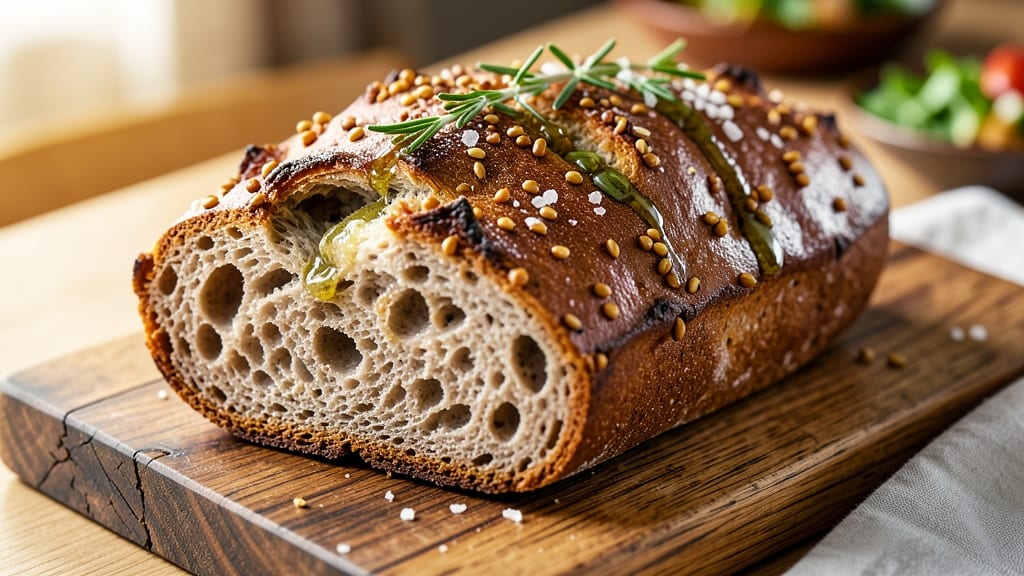
This ancient grains gluten-free bread recipe delivers the perfect balance of nutty crunch and airy crumb—without a single grain of gluten. 💛 The secret lies in combining farro, millet, and spelt with gluten-free binding agents that mimic traditional wheat bread structure while keeping it light and flavorful.
What sets this recipe apart is its adaptability—whether you're using a sourdough starter for depth or a quick-rise option for convenience, the result is consistently excellent. The ancient grains add natural sweetness and chewiness, while xanthan gum ensures the crumb stays tender rather than dense.
By the time it emerges from the oven, you'll have a loaf with a crispy crust and an open, airy interior that's perfect for sandwiches or toast. The nutty flavors develop as it cools, making every slice taste like a gourmet bakery creation.
Gluten-free baking doesn't have to mean compromise—this recipe proves it. Ready to bake with confidence? Here's everything you need to know to achieve the perfect loaf every time.
Ingredients for ancient grains bread recipe gluten free
Nutty ancient grains meet gluten-free science for a loaf that rivals traditional bread.
| Ingredient | Amount | Notes |
|---|---|---|
| Farro 🌾 | 1 cup | Uncooked, rinsed well |
| Millet 🌾 | 1 cup | Uncooked, rinsed well |
| Spelt 🌾 | 1 cup | Uncooked, rinsed well |
| Gluten-Free All-Purpose Flour Blend 🌾 | 2 cups | Bob's Red Mill 1:1 blend |
| Extra-Virgin Olive Oil 🫒 | ½ cup | For dough and crust |
| Active Dry Yeast 🍞 | 2 ¼ tsp | Instant yeast works too |
| Granulated Sugar 🍚 | 1 tbsp | For yeast activation |
| Warm Water 💧 | 1 ¼ cups | 110°F for yeast |
| Xanthan Gum 🧂 | ½ tsp | Essential for structure |
| Salt 🧂 | 1 ½ tsp | Diamond Crystal preferred |
| Large Eggs 🥚 | 2 whole | Room temperature |
| Apple Cider Vinegar 🍏 | 1 tbsp | For sourdough depth |
| Sesame Seeds 🌻 | 2 tbsp | For crust topping |
| Ground Flaxseed 🌱 | 2 tbsp | For egg replacement |
| Water 💧 | ¼ cup | For flax egg |
The grains are the soul of this recipe—Bob's Red Mill has the best farro, millet, and spelt blends, but any organic brand works. Look for certified gluten-free labels to avoid cross-contamination. The gluten-free flour blend should be 1:1 baking blend—King Arthur or Cup4Cup are solid choices. Sesame seeds? Trader Joe's sells them in bulk for half the price. The flaxseed needs to be ground fresh—pre-ground loses its binding power fast.
No xanthan gum? Psyllium husk at double the amount works in a pinch. Substituting yeast? 1 tbsp baking soda + 1 tbsp vinegar mimics the lift. The eggs can be swapped for 2 tbsp aquafaba each if you're strictly vegan (though the texture will differ slightly). Olive oil matters—California Extra Virgin has the best balance of fruitiness and mildness. The apple cider vinegar adds depth, but white vinegar works too if you're in a bind.
Mix the flax egg first and let it sit for 5 minutes to thicken—this is non-negotiable. The dough will be sticky, so wet your hands when handling. Shape the loaf in a 9x5-inch loaf pan lined with parchment. This keeps for 3 days wrapped at room temp, or 1 week frozen. Toast it to revive freshness—game-changer for sandwiches.
Why You'll Love This Recipe
- This bread handles everything: slather it with almond butter for a grab-and-go breakfast, tear it into croutons for salads, or serve it warm with olive oil and sea salt as a side for dinner. Honestly, I keep a loaf in the freezer just for lazy mornings.
- No-Fuss Mix-In: I swear by the 5-minute prep trick: just toast the farro and millet in a dry pan until nutty, then toss them straight into the dough with the spelt. No soaking, no fuss—just a handful of grains that add texture without the work.
- Nutty Crunch Magic: Between us, that combo of farro and millet? It’s like biting into a toasted seed bomb with every slice—chewy, toasty, and packed with flavor. The spelt rounds it out with a warm, almost buttery depth, and the olive oil ties it all together with that rich, fruity finish.
- Weeknight & Weekend Star: This bread handles everything: slather it with almond butter for a grab-and-go breakfast, tear it into croutons for salads, or serve it warm with olive oil and sea salt as a side for dinner. Honestly, I keep a loaf in the freezer just for lazy mornings.
Step-by-step instructions for ancient grains gluten-free bread
Here's how to transform nutty ancient grains into a perfectly textured gluten-free loaf—crisp crust and airy crumb guaranteed!
👨🍳 Step 1: Soak the Ancient Grains for Maximum Flavor
In a large bowl, combine the 1 cup farro, 1 cup millet, and 1 cup spelt with 1.25 cups warm water (about 110°F). Let them soak for at least 4 hours or overnight in the refrigerator. This step is crucial—it softens the grains, enhances their nutty flavors, and prevents a dense crumb.
After soaking, drain the grains using a fine-mesh strainer, pressing gently to remove excess water. The grains should be tender but not mushy. I like to give them a quick rinse under cold water to remove any residual starch that could make the dough gummy.
🍳 Step 2: Activate the Yeast and Mix the Dough
In the bowl of a stand mixer fitted with the dough hook attachment, combine the soaked grains, 2 cups gluten-free all-purpose flour blend, 0.5 tsp xanthan gum, 1.5 tsp salt, and 2.25 tsp active dry yeast. Mix on low speed for 1 minute to distribute everything evenly.
In a separate small bowl, whisk together the 0.5 cup extra-virgin olive oil, 2 whole large eggs, 1 tbsp granulated sugar, 1 tbsp apple cider vinegar, and 0.25 cup water. Pour this mixture into the dry ingredients and mix on low speed for 2 minutes, then increase to medium speed for 5 minutes until the dough comes together and pulls away from the sides of the bowl. The dough will be sticky—this is normal with gluten-free baking!
🥘 Step 3: Prepare the Flax Egg and Shape the Loaf
While the dough mixes, prepare the flax egg by combining 2 tbsp ground flaxseed with 0.25 cup water in a small bowl. Let it sit for 5 minutes to thicken—this acts as an egg substitute to bind the dough. The mixture should be gel-like and slightly sticky.
Transfer the dough to a lightly floured surface and gently fold in the flax egg mixture. Shape the dough into a 9x5-inch loaf pan, pressing down lightly to remove air bubbles. Sprinkle 2 tbsp sesame seeds evenly over the top for that signature crunch. Cover the pan with a damp towel and let the dough rise in a warm place for 1 to 1.5 hours, or until it has visibly doubled in size.
🔥 Step 4: Bake to Golden Perfection
Preheat your oven to 375°F. Place the loaf pan on the middle rack and bake for 45 to 50 minutes, until the top is deep golden brown and the internal temperature reaches 205°F when measured with an instant-read thermometer. The bread should pull away slightly from the sides of the pan and have a hollow sound when tapped on the bottom.
For extra crustiness, I like to broil the bread for 1 to 2 minutes at the end, watching closely to avoid burning. Let the bread cool in the pan for 10 minutes, then transfer to a wire rack to cool completely before slicing. This resting period ensures clean slices and prevents a gummy texture.
⏰ Step 5: Slice and Serve with Confidence
Once fully cooled, slice the bread into ½-inch thick pieces using a serrated knife. Each slice should reveal a light, airy crumb with visible specks of farro, millet, and spelt. The crust should be crisp and nutty, while the interior remains tender with just the right amount of chew.
Serve warm with extra-virgin olive oil drizzled on top or paired with your favorite spreads. This bread keeps well at room temperature for 3 days or can be frozen for up to 3 months—perfect for meal prep! The nutty flavors and gluten-free texture make it a standout loaf that rivals traditional bread.
Pro Tips For Making Ancient Grains Bread Recipe Gluten Free
- SOAK THE FARRO FIRST: I learned this the hard way—skipping the soak means your bread will turn out dense and chewy. Toss the farro in warm water (about 1:2 ratio) for 30 minutes before mixing; it softens the grains and makes the dough way easier to handle.
- USE A HYDRATION TEST: Gluten-free doughs are finicky. After mixing, poke a finger into the dough—if it springs back slowly, it needs more GF flour blend (about 1-2 tablespoons at a time). If it flops like wet sand, add a splash of olive oil (1 tsp) to bind it without drying it out.
- STEAM THE FIRST 15 MINUTES: Preheat your oven to 375°F (190°C), then place a baking tray on the lower rack and fill it with boiling water. Pop your shaped loaf in the oven and close the door fast—this creates steam that helps the crust brown evenly and prevents a rubbery texture.
- MIX IN COLD OIL: Add the extra-virgin olive oil to the dough last, straight from the fridge. Warm oil makes the dough too sticky, and gluten-free blends can’t handle that. A cold, firm pat of oil (about ¼ cup) keeps everything cohesive without overworking the dough.
Creative variations of this dish
Sourdough Starter Swap
Swap the instant yeast for a gluten-free sourdough starter to deepen the flavor profile. Use ½ cup active starter (replaced the yeast and sugar) and reduce water to 1 cup.
Ferment overnight in the fridge for a tangy, artisanal taste. I love using King Arthur gluten-free sourdough starter—it's specifically designed for gluten-free baking. 💛
Sweet Variations
Add ½ cup honey or maple syrup to the dough for a lightly sweetened loaf. The natural sweetness complements the nutty grains beautifully. For extra richness, fold in ¼ cup chopped walnuts or pecans during the mixing stage. This variation pairs perfectly with breakfast spreads or as a dessert toast.
Herb-Infused Crust
Boost the crust with 1 tbsp fresh rosemary or thyme leaves mixed into the olive oil before adding it to the dough. For a Mediterranean twist, sprinkle 1 tsp dried oregano and 1 tsp garlic powder over the sesame seeds before baking.
The herbs add a fragrant depth that elevates every bite. ✨
Seed & Nut Topping
Replace sesame seeds with a mix of 1 tbsp pumpkin seeds, 1 tbsp sunflower seeds, and 1 tbsp chopped almonds for extra crunch and nutrition.
Toast the seeds in a dry pan over medium heat for 2-3 minutes before sprinkling—this enhances their flavor and prevents them from sinking into the dough. 🌱
Quick-Rise Option
For a faster bake, increase the yeast to 3 tsp and reduce the rise time to 30-45 minutes. Use a proofing basket or a bowl lined with a floured towel to help the dough rise more quickly.
This method works well if you're short on time but still want great results. The texture will be slightly less open but still delicious. ⏰
Savory Herb Loaf
Transform this into a savory loaf by omitting the sugar and adding 1 tbsp dried basil, 1 tsp onion powder, and ½ tsp black pepper to the dough.
Top with 2 tbsp chopped fresh parsley before baking. This version is perfect for pairing with soups, stews, or as a base for gluten-free grilled cheese sandwiches. 🌿
Nutrition facts
Frequently asked questions
Can I substitute other gluten-free flours in this recipe?
Yes, but with adjustments! A 1:1 gluten-free baking blend like Bob's Red Mill works best, but you can try almond flour (reduce by ¼ cup and add 1 extra egg) or buckwheat flour (mix 50/50 with the blend). Avoid rice flour alone—it can make the bread gummy. Always include xanthan gum (or psyllium husk) for structure.
Why does my gluten-free bread turn out dense?
Dense texture usually means overmixing, underproofing, or skipping the xanthan gum. Mix only until combined (no more than 5 minutes on medium speed), let the dough rise until doubled (1-1.5 hours), and ensure your oven is fully preheated. Also, don't skip the 10-minute cooling in the pan before slicing!
How do I prevent the crust from being too hard?
For a softer crust, reduce the oven temp to 350°F and tent the loaf with foil after 30 minutes. Brush the top with olive oil during the last 5 minutes of baking, or sprinkle extra sesame seeds (they absorb moisture). Avoid overbaking—pull it out when the internal temp hits 205°F.
Can I make this bread without a stand mixer?
Use a large bowl and a sturdy wooden spoon or your hands (wet them first). Mix the dry ingredients first, then gradually add the wet ingredients while folding gently. The dough will be stickier, so work quickly. A dough scraper helps too—it's your best friend for gluten-free mixing!
What's the best way to store leftovers?
Wrap cooled slices in parchment paper and store in an airtight container at room temp for 3 days. For longer storage, freeze slices individually—wrap each in plastic and stack with parchment between layers. To revive, toast in a 350°F oven for 5-7 minutes or air-fry at 300°F for 3-4 minutes.