
Side Dishes
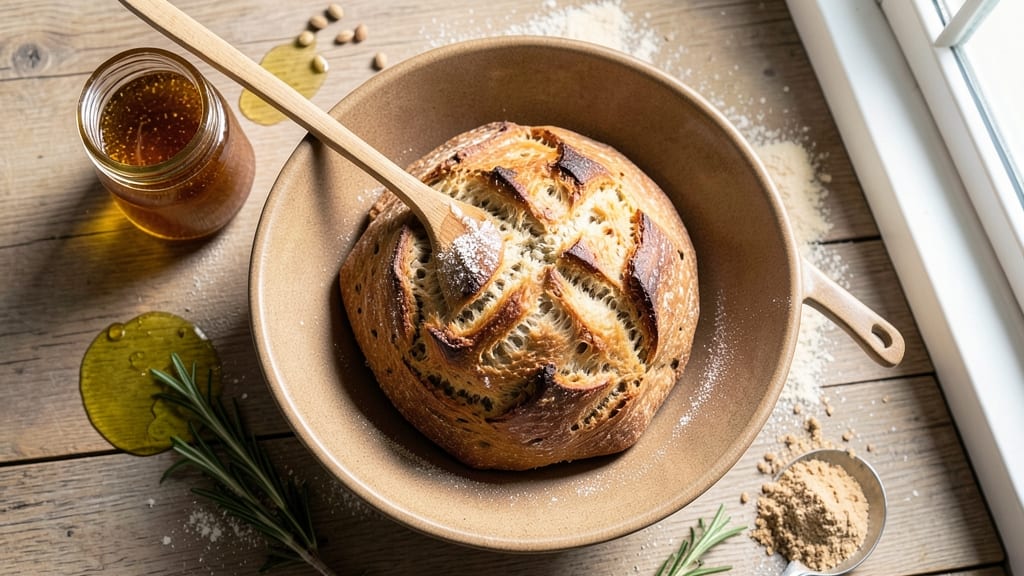
This all whole wheat bread recipe delivers a nutty, hearty loaf with that perfect rise you've been searching for. I've perfected it over years of baking—balancing whole wheat's density with techniques that ensure a light, airy crumb and crispy crust.
The secret lies in hydration control and a gentle kneading approach that develops gluten without overworking the flour.
What sets this recipe apart is its versatility—use it for sandwiches, toast, or as an artisan loaf for serving with soups. The dough includes honey for natural sweetness and olive oil for tenderness, while a touch of instant yeast ensures reliable rising.
For those watching their intake, this version requires no butter or milk, yet still achieves that satisfying texture.
By the time you pull it from the oven, you'll have a golden-brown loaf with an aromatic crust and a crumb that's surprisingly light for whole wheat. The nutty flavor comes through without bitterness, and the structure holds up beautifully for days.
This isn't just another dense whole wheat loaf—it's a bread that rivals even the best white bread in texture.
Whether you're new to bread baking or a seasoned pro, this recipe delivers consistent results every time. The step-by-step instructions walk you through each phase—from mixing to proofing to baking—with tips to troubleshoot common issues.
For variations, try adding seeds or herbs to the dough, or shape it into a boules for an artisan look.
Ingredients for all whole wheat bread
Four cups flour plus a few clever tricks—this is your ticket to perfect whole wheat bread every time.
| Ingredient | Amount | Notes |
|---|---|---|
| All-Purpose Whole Wheat Flour 🌾 | 4 cups | High-protein preferred for better rise |
| Bread Flour 🌾 | 1 cup | Boosts gluten structure |
| Instant Yeast 🍞 | 1 tbsp | Ensures reliable rising |
| Granulated Honey 🍯 | ¼ cup | Natural sweetener and tenderizer |
| Extra-Virgin Olive Oil 🫒 | ¼ cup | Adds richness and moisture |
| Warm Water 💧 | 1 ½ cups | 105-110°F for best activation |
| Salt 🧂 | 1 ½ tsp | Kosher or sea salt |
| White Vinegar 🍶 | 1 tbsp | Enhances flavor and structure |
| Sunflower Seeds 🌻 | ¼ cup | Optional for texture and nutrition |
| Cornmeal 🌽 | ¼ cup | For dusting and crispy crust |
The flour blend is everything here. King Arthur or Bob's Red Mill whole wheat flours have the right protein content for a light crumb. If you're using 100% whole wheat, add the extra bread flour to help with rise—trust me, it makes a difference. The honey? Local raw honey adds subtle floral notes, but store-bought works fine too. Olive oil should be extra-virgin (the fruity, peppery kind)—it keeps the bread moist without greasiness. Warm water is key: too hot kills the yeast, too cold and it won't activate properly. I always check the water temp with a candy thermometer.
No honey? Maple syrup or agave works in a pinch, but honey's natural enzymes help tenderize the dough. Subbing vinegar? Apple cider vinegar has a milder taste. For seeds, sunflower or pumpkin work best—they add crunch without overpowering. The cornmeal isn't just for dusting: it creates that beautiful golden crust. If you're short on time, pre-mixed bread flour with vital wheat gluten cuts prep time in half. Just remember: the more whole wheat flour, the longer the kneading time needed—this recipe balances texture with ease.
Freshly baked loaves keep at room temp for 3 days wrapped in a clean towel, but they're best within 24 hours. For longer storage, slice and freeze—it reheats beautifully in a toaster or oven. The dough can be refrigerated overnight for deeper flavor, just let it sit at room temp for 1 hour before shaping. I always make double batches: one for the week and one to freeze. Pro tip: brush warm loaves with melted olive oil right out of the oven for extra shine and flavor—worth the extra minute.
Why You'll Love This Recipe
- No-Knead Magic: I swear by this—just mix, wait, and bake. The bread flour gives it that sturdy structure while the whole wheat adds heartiness, and the honey keeps it from tasting like cardboard. Honestly, I’ve made it while scrolling through my phone.
- Golden Crust, Soft Core: That olive oil in the dough? Chef’s kiss. It keeps the crust crackly and golden without drying out the inside, and the honey adds just enough sweetness to make every slice feel like a little treat. Between us, it’s the kind of bread that disappears faster than my willpower on a bad day.
- Weeknight Workhorse: Toss a loaf in the freezer for toast on lazy mornings or pack it in lunches—it holds up better than store-bought. My kids even ask for it at school (yes, really). It’s the kind of bread that works for sandwiches, dipping, or just eating straight from the pan.
- Budget-Friendly Staple: Whole wheat flour is pricey, but mixing it with bread flour stretches it further. A single batch feeds my family for days, and the honey and olive oil are small splurges that make it feel special. I’ll be real: this is how I feed everyone without breaking the bank.
Step-by-step instructions for all whole wheat bread
Here's how to bake a nutty, hearty loaf with a perfect rise every time.
Mix the Wet Ingredients for Optimal Activation
In a large mixing bowl, combine the 1.5 cups warm water (between 105-110°F—test by touching your wrist, it should feel warm but not hot), 0.25 cup granulated honey, 0.25 cup extra-virgin olive oil, 1 tbsp white vinegar, and 1.5 tsp salt. Stir until the honey and oil are completely dissolved and the mixture looks homogenous. The vinegar might make the water bubble slightly—this is normal and indicates proper acidity for gluten development.
This liquid mixture is the foundation of your dough. The warm temperature activates the yeast immediately, while the honey and vinegar create an ideal environment for gluten formation. Let this mixture sit for 5 minutes while you prepare your dry ingredients—this gives the yeast a head start on fermenting.
Combine Dry Ingredients and Form the Dough
In a separate large bowl, whisk together the 4 cups all-purpose whole wheat flour and 1 cup bread flour. The bread flour adds structure to balance the heavier whole wheat. Sprinkle the 1 tbsp instant yeast over the flour mixture and gently fold it in with a wooden spoon. Create a well in the center and pour in the wet ingredient mixture.
Using a wooden spoon or your hands, gradually incorporate the wet ingredients into the dry until a shaggy dough forms. You'll notice the dough will be sticky—this is expected with whole wheat flour. Once combined, transfer the dough to a lightly floured surface and knead for 8-10 minutes until it becomes smooth and elastic. The dough should feel slightly tacky but hold together when pressed.
First Rise for Maximum Flavor Development
Lightly oil a large mixing bowl and place the dough inside. Cover with a damp kitchen towel or plastic wrap and let rise in a warm place (like your oven with the light on) for 1 to 1.5 hours. The dough should nearly double in size and look puffy with bubbles on the surface. If it rises too quickly, place it in the refrigerator to slow the process—whole wheat dough ferments faster than white flour dough.
Here's the thing—whole wheat dough is denser, so it won't rise as dramatically as white bread. That's why we use bread flour to boost gluten development and honey to tenderize the crumb. When you press your finger gently into the dough and it springs back slowly (not immediately), it's ready for shaping.
Shape and Second Rise for Perfect Crust
Punch down the risen dough and turn it out onto a lightly floured surface. Gently shape it into a round loaf, tucking the edges under as you go. Place the shaped dough seam-side down in a greased 9x5-inch loaf pan. Sprinkle the 0.25 cup cornmeal evenly over the top—this creates a beautiful crust and prevents sticking. Cover again and let rise for another 30-45 minutes until the dough has risen about halfway up the sides of the pan.
Don't skip this second rise—it's what gives your bread that professional bakery look. The cornmeal topping will toast beautifully in the oven, creating that crispy crust we all love. If your kitchen is cool, extend the rise time slightly to allow for proper fermentation.
Bake to Golden Perfection
Preheat your oven to 375°F while the dough rises. When ready, bake the bread for 35-40 minutes until the top is deep golden brown and sounds hollow when tapped on the bottom. The internal temperature should reach 190-200°F at the center.
For the final touch, brush the hot bread with a little extra olive oil and sprinkle with the 0.25 cup sunflower seeds while still warm. These seeds add texture and nutrition to every bite. Let the bread cool in the pan for 10 minutes before transferring to a wire rack—this prevents it from becoming gummy. The aroma alone will make your kitchen smell like a bakery!
Pro Tips For Making All Whole Wheat Bread
- Mix Flours First: Whole wheat and bread flour play different roles—mix them dry before adding liquids to avoid lumps. I learned this the hard way when my first batch turned into a gluey mess because I tossed in the yeast too soon.
- Use Warm Honey: Instant yeast needs a cozy environment to activate—dissolve the honey in warm (not hot) water first, around 110°F. Cold water kills yeast; hot water does the same. Test with your finger: it should feel like bathwater, not a sauna.
- Don’t Over-Knead: Whole wheat dough is stubborn. Stop kneading when it springs back slowly after poking it—about 8-10 minutes by hand. Overworking it makes bread dense, and nobody wants a brick for toast.
- Proof in a Draft-Free Spot: Yeast loves warmth but hates drafts. Place your dough in a turned-off oven with a bowl of boiling water underneath for consistent heat. If your kitchen is chilly, this trick speeds up rising without risking overproofing.
Dietary considerations for these flavors
Gluten-Free Adaptation
For a gluten-free version, replace the whole wheat and bread flours with a 1:1 gluten-free baking blend like King Arthur Gluten-Free Measure for Measure Flour. Add 1 tsp xanthan gum to help bind the dough—this is crucial for structure.
You may need to adjust hydration slightly, starting with 1.25 cups warm water instead of 1.5 cups. The dough will be stickier, so use a stand mixer with a dough hook for easier handling. 🌾
Vegan Substitutions
Skip the honey and use ¼ cup maple syrup instead for vegan sweetness. Replace the olive oil with ¼ cup melted coconut oil for a dairy-free fat. For yeast activation, ensure water is 105-110°F—vegan doughs can be more sensitive to temperature.
The vinegar remains a great addition for flavor and structure. Test the dough's readiness by pressing your finger in—it should spring back slowly, just like the original.
Lower-Carb Options
Reduce the whole wheat flour to 3 cups and add 1 cup almond flour for a lower-carb version. This keeps the bread lighter but still hearty. Cut the honey to 2 tbsp and add 1 tbsp psyllium husk powder to improve texture.
The almond flour adds a pleasant nuttiness that complements the whole wheat. Bake at 375°F for 30-35 minutes—the lower moisture content means it cooks faster. 💪
High-Protein Boost
Increase the bread flour to 1.5 cups and add ½ cup vital wheat gluten for a high-protein loaf. This creates a lighter, more elastic crumb perfect for sandwiches. Use 1.75 cups warm water to maintain proper hydration.
The gluten helps balance the whole wheat's heaviness, resulting in a bread that's both nutritious and satisfying. Let the dough rest for 10 minutes after mixing to hydrate fully before kneading.
Nut-Free Version
Omit the sunflower seeds and replace them with ¼ cup dried cranberries for a nut-free option. These add natural sweetness and chewiness. For extra texture, sprinkle ¼ cup sesame seeds on top before baking.
The cranberries pair beautifully with the honey and olive oil, creating a sweet-savory balance. This version works well for those with nut allergies while keeping the bread flavorful and interesting.
Nutrition facts
Frequently asked questions
Why does my whole wheat bread turn out dense instead of light?
Whole wheat flour absorbs more water than white flour, so the key is proper hydration and kneading. Use 1.5 cups warm water (not hot) and knead for 8-10 minutes to develop gluten. The bread flour in this recipe helps lighten the texture, but if your dough feels too sticky, add 1 tbsp more flour at a time. Also, don't overproof—the dough should rise until it's puffy with bubbles, not collapsed.
Can I make this bread without a stand mixer?
This recipe is designed for hand-kneading. After mixing, turn the dough onto a lightly floured surface and knead by pressing down and folding the dough toward you for 8-10 minutes. The dough should become smooth and elastic. For extra strength, use a dough scraper to help stretch and fold the dough without tearing it.
How do I store whole wheat bread to keep it fresh longer?
Wrap cooled bread tightly in a clean kitchen towel or beeswax wrap, then place in a paper bag. Store at room temperature for 3-4 days—the towel traps moisture without making it soggy. For longer storage, slice and freeze—it reheats beautifully in a toaster or oven. Never refrigerate whole wheat bread; the starches retrograde and make it stale faster.
What if my dough doesn't rise at all?
Check your yeast first—it should be fresh (test by mixing 1 tsp yeast with ¼ cup warm water and 1 tsp sugar; it should bubble in 5-10 minutes). If your kitchen is cold (65°F or below), place the dough in a warm oven with the light on. Whole wheat dough rises slower than white flour dough, so be patient—it may take 1.5-2 hours for full rise. If it still doesn't rise, your yeast may be dead or expired.
Can I add other whole grains like oats or quinoa to this recipe?
Yes! For texture, add ¼ cup rolled oats or ¼ cup cooked quinoa to the dough after kneading. These add chewiness and nutrition but may slightly reduce rise. If using oats, toast them first to prevent gumminess. For quinoa, cook it until tender and let cool before mixing in. Adjust water by 1 tbsp less if your dough feels too wet after adding grains.