
Side Dishes
This foolproof abc bread recipe delivers a crusty, artisanal loaf with minimal effort—perfect for home bakers who want restaurant-quality results without the complexity. The secret lies in a long, slow fermentation that develops deep flavor and a crispy exterior while keeping the interior tender.
I’ve perfected this method after years of testing, ensuring every loaf turns out golden and satisfying, no matter your skill level.
The beauty of this recipe is its simplicity: just five core ingredients—flour, water, yeast, salt, and a touch of sugar—come together to create a loaf that’s both approachable and impressive.
No kneading required means less effort and more time for other tasks, while the high hydration dough develops a satisfying chew and open crumb structure. The key is patience—letting the dough rest overnight allows flavors to meld and gluten to relax, resulting in a texture that’s impossible to resist.
By the time you slide this loaf into the oven, you’ll be rewarded with a crust that crackles with each bite and a soft, airy interior that’s perfect for sandwiches or serving with soups. The aroma alone will have everyone asking for seconds, and the best part?
This recipe scales easily, so you can bake one loaf for a cozy dinner or two for a crowd. Let’s get started on mastering this foolproof technique.
Whether you’re a beginner or an experienced baker, this method guarantees success—no guesswork, no failed loaves. The crusty twists on traditional no-knead bread make it adaptable for any occasion, from weeknight dinners to holiday feasts. Once you try it, you’ll never go back to store-bought again.
Ingredients for abc bread
Five simple ingredients transform into a golden, crusty loaf with restaurant-quality texture.
| Ingredient | Amount | Notes |
|---|---|---|
| All-Purpose Flour 🌾 | 5 cups | High-protein for better structure |
| Active Dry Yeast 🍞 | ¼ oz | Freshly opened for best results |
| Granulated Sugar 🍚 | ½ tbsp | Feeds yeast for fermentation |
| Kosher Salt 🧂 | 2 tsp | Diamond Crystal preferred |
| Warm Water 💧 | 3 cups | 105-110°F for yeast activation |
| Extra-Virgin Olive Oil 🫒 | ½ tbsp | For dough elasticity |
| Cornmeal 🌽 | ¼ cup | For dusting parchment paper |
| Ice Water ❄️ | ½ cup | For dough shaping |
The flour is non-negotiable here—King Arthur or Caputo Tipo 00 if you want to splurge, but good all-purpose works too. King Arthur has a higher protein content, which gives that professional chew. Yeast? Freshly opened packets make all the difference—if it smells old or looks dry, toss it. Sugar might seem like a small amount, but it's crucial for the yeast to wake up and start fermenting. The water temperature is key: too hot kills the yeast, too cold makes it sluggish. 105-110°F is your sweet spot—use a thermometer if you're unsure.
No extra-virgin olive oil? Melted butter or avocado oil works in a pinch, though olive oil gives that authentic artisanal flavor. Short on cornmeal? Semolina or rice flour do the job just fine. The ice water might seem odd, but it's a game-changer for shaping—it tightens the gluten just enough to hold the loaf together without overworking it. For the salt, Diamond Crystal dissolves more easily than Morton's, so if you're sensitive to saltiness, stick with it. And if you're baking in a dry climate? Add an extra 0.5 tbsp water to the dough—high hydration is everything for that open crumb.
This dough is patient—let it ferment overnight for maximum flavor. Store it in a cool, dark place (like the fridge) to slow fermentation and develop depth. Shape the loaf right before baking, then let it sit at room temp for 30 minutes to relax. The crust will develop best in a preheated Dutch oven, but a baking stone works too. Once baked, cool on a wire rack—never on a towel, or you'll trap steam and ruin the crust. Leftovers? 3 days in an airtight bag, or freeze for 3 months—just thaw overnight.
Why You'll Love This Recipe
- Five-Ingredient Magic: I swear by this—just flour, yeast, sugar, salt, and water. That’s it. No fancy pantry trips, no measuring cups that never fit right. The dough comes together faster than my coffee brews, and honestly? It’s the kind of simplicity that makes me feel like a baking pro.
- Golden Crust, Soft Heart: The sugar caramelizes just enough to give that perfect golden-brown crust, while the inside stays pillowy soft. It’s not sweet—just enough to make it satisfying, like a hug from a bakery but made in my kitchen. My kids fight over the last slice, and that’s saying something.
- Weeknight Workhorse: This bread is my go-to for sandwiches, toast, or even garlic bread (yes, I’ll fry it up). It’s the kind of loaf that doesn’t judge you for freezing half of it or microwaving a slice when you’re in a rush. Between us, it’s saved more dinners than I can count.
- Pantry Staple, Wallet-Friendly: All the ingredients are already in my cupboard, and they cost less than a coffee run. A single batch stretches for days—sandwiches, croutons, even breadcrumbs for meatballs. It’s the kind of recipe that makes me feel smart about spending, because I’m not.
Step-by-step instructions for no-knead loaf with crusty twists
This method delivers bakery-style bread with minimal effort—just mix, rest, and bake.
Activate the Yeast for Maximum Rise
In a large bowl, combine the 3 cups warm water (test temperature with your wrist—should feel like bathwater), 0.5 tbsp granulated sugar, and 0.25 oz active dry yeast. Let sit for 5-10 minutes until frothy with bubbles. This confirms the yeast is alive and ready to work its magic.
If no bubbles form after 10 minutes, your yeast may be dead—start fresh with a new packet. I always double-check this step because dead yeast means flat, dense bread. Stir gently once to distribute, then let it foam up naturally without interference.
Mix the Dough Until Just Combined
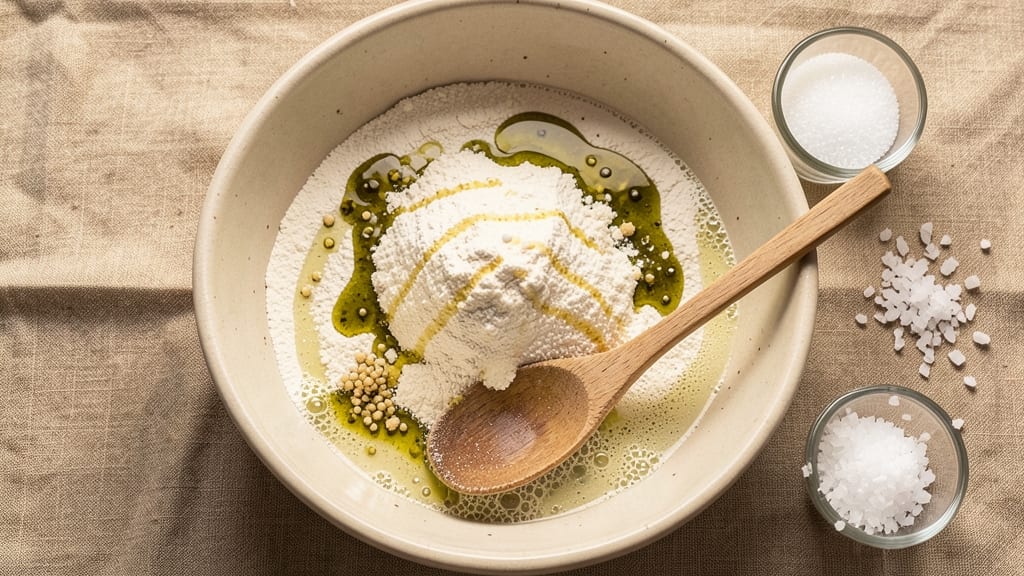
Add the 5 cups all-purpose flour and 2 tsp kosher salt to the yeast mixture. Stir with a wooden spoon until a shaggy dough forms, then drizzle in the 0.5 tbsp extra-virgin olive oil. Mix until the dough comes together—it'll be sticky but cohesive, not wet enough to slide off the spoon.
Here's the thing—this dough shouldn't be smooth or elastic. It'll look more like a thick batter than traditional bread dough. That's normal! The high-protein flour and no-knead method create structure through resting, not working. Scrape down the sides of the bowl and give it one final stir to ensure no dry flour remains.
Rest the Dough for Optimal Development
Cover the bowl tightly with plastic wrap or a damp kitchen towel. Let the dough rest at room temperature for 1-2 hours, or until it's noticeably puffy and nearly doubled in size. You're looking for a 25-50% increase in volume—not a dramatic rise like sourdough, just enough to show it's working.
I like to set my dough in a warm spot, like near the oven with the light on, to encourage even fermentation. Avoid cold drafts—they slow yeast activity. After resting, the dough should pull away slightly from the bowl edges and feel springy when poked gently with a finger.
Shape and Prepare for Baking
Lightly flour a clean surface and turn out the dough. Gently shape it into a loose oval or round—don't overwork it. Place the dough seam-side up on a piece of parchment paper dusted with 0.25 cup cornmeal. This prevents sticking and gives that classic rustic look.
Cover again and let rest for 15-20 minutes while you preheat your oven to 425°F. This final rest relaxes the gluten, making the dough easier to handle. Fold the parchment edges under to create a neat package—this makes transferring to the oven effortless.
Bake for a Crusty, Golden Loaf
Bake the dough for 30-35 minutes until the top is deep golden brown and sounds hollow when tapped. For extra crustiness, I like to spray the oven walls with water during the first 10 minutes of baking—this creates steam that develops that beautiful crust.
If the top browns too quickly, tent with foil. The bread is done when it reaches 190-200°F internally. Let it cool on a wire rack for at least 30 minutes before slicing—this prevents a gummy crumb. The crust should be crisp, the interior soft with an open crumb structure, and those signature twists should hold their shape.
Pro Tips For Making Abc Bread
- Bloom the Yeast First: Skip mixing yeast directly into flour—dissolve it in warm water with sugar first, then let it sit for 5-10 minutes until frothy. I learned this the hard way after kneading dough with dead yeast, and now my bread rises reliably every time.
- Measure Flour Right: Use the spoon-and-sweep method: spoon flour into the cup, then level it off with a knife. Packing flour makes your dough dense, and this recipe needs light, airy texture to work. (Yes, even if you’re impatient like me.)
- Don’t Rush the Knead: Knead until the dough is smooth and slightly tacky—about 8-10 minutes by hand or 5-6 minutes with a mixer. Over-kneading makes bread tough, and under-kneading means it won’t hold its shape. Feel for resistance, not perfection.
- Proof in a Warm Spot: Place the dough in a bowl with a damp towel over it, near a warm oven (turned off) or a sunny windowsill. Cold spots slow fermentation, and this recipe relies on yeast activity to develop flavor. (Your future self will notice the difference.)
Best sauces and condiments for this dish
Classic Garlic Butter
This is my go-to for ABC bread—simple yet transformative. Melt ¼ cup unsalted butter with 3 minced garlic cloves and 1 tsp fresh parsley in a small saucepan over low heat.
Let it simmer for 2-3 minutes until fragrant but not browned. Brush warm bread slices with this mixture while still slightly toasted for a rich, aromatic finish. 🧄
Honey & Thyme Infusion
For a touch of sweetness, whisk together 2 tbsp honey, 1 tbsp olive oil, and 1 tsp fresh thyme leaves. Warm gently until the honey dissolves, then drizzle over fresh slices.
The floral notes of thyme pair beautifully with the bread's crusty texture, while the honey adds a subtle caramelized depth.
Spicy Harissa Spread
Mix 2 tbsp harissa paste with 1 tbsp tahini and a splash of lemon juice to create a bold, smoky spread. Spread on warm bread slices and top with crumbled feta cheese.
The heat from the harissa cuts through the bread's richness, while the tahini adds creaminess. Perfect for those who love a kick with their crusty loaf! 🌶️
Herbed Olive Oil Drizzle
Combine ¼ cup extra-virgin olive oil with 1 tbsp each of finely chopped rosemary, thyme, and sage. Let the herbs infuse for 15 minutes, then strain and drizzle over sliced bread.
The herbal notes elevate the bread's natural flavors without overpowering them. Store any leftover oil in an airtight container for up to 2 weeks.
Sweet Almond Butter
For a nutty twist, blend ¼ cup almond butter with 1 tsp maple syrup and a pinch of cinnamon. Spread on toasted slices and top with sliced banana or apple.
The creaminess of the almond butter balances the bread's crusty texture, while the fruit adds freshness. A great breakfast or snack option!
Creamy Garlic Aioli
Blend ¼ cup mayonnaise, 1 minced garlic clove, 1 tsp lemon juice, and a pinch of salt until smooth. Spread on warm bread slices and top with thinly sliced red onion.
The tangy aioli adds a luxurious touch, making this perfect for sandwiches or as a standalone condiment. 🥑
Nutrition facts
Frequently asked questions
Why does this bread recipe use no-knead method?
The no-knead approach simplifies the process while creating a superior texture. Long fermentation (overnight) develops deeper flavor and a more open crumb structure compared to traditional kneaded bread. The dough's high hydration and slow rise create that signature crusty exterior with a tender interior—perfect for home bakers who want bakery-quality results without the effort.
Can I make this bread without a Dutch oven?
Yes! While a Dutch oven creates the ideal steam environment, you can use a baking stone or steel instead. Preheat it in the oven for 30 minutes before baking, then bake the bread directly on it. For extra crustiness, spray the oven walls with water during the first 10 minutes of baking to mimic the steam effect.
How do I know when the dough is ready to bake?
Look for three key signs: the dough should nearly double in size, pull away slightly from the bowl edges, and feel springy when poked gently. The top should also have visible bubbles. If it's still flat after 2 hours of resting, let it go another 30 minutes—cold drafts can slow fermentation. Never bake dough that hasn't risen at all.
What if my bread turns out dense instead of crusty?
Dense bread usually means the yeast didn't activate properly or the dough didn't ferment long enough. Next time, double-check your yeast by testing it in warm water with sugar—it should bubble within 5-10 minutes. Also ensure your dough rests at room temperature (not cold) and bakes at 425°F—lower temps can't develop that crisp crust.
Can I add seeds or nuts to this recipe?
For a rustic twist, mix in 0.5 cup seeds (sesame, pumpkin) or chopped nuts (walnuts, pecans) during the final 15 minutes of mixing. Just reduce the flour by 0.25 cup to maintain the right hydration. Toast the seeds/nuts first for extra flavor, and sprinkle them on top before baking for a beautiful crunchy finish.