
Side Dishes
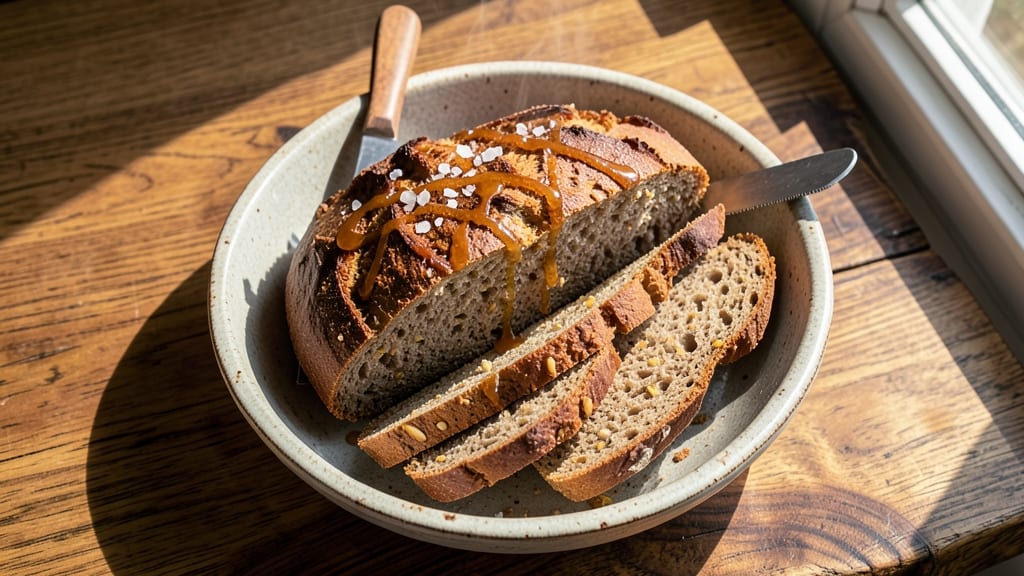
This 50/50 whole wheat sourdough bread recipe delivers the best of both worlds—crispy crust, airy crumb, and nutty depth from the perfect flour blend.
The secret lies in balancing whole wheat’s density with white flour’s elasticity, creating a loaf that’s lighter than traditional whole wheat but packed with fiber and flavor.
I’ve baked countless batches, and this ratio consistently produces a tender crumb with just enough chew, plus a golden crust that crackles with every bite.
The process starts with a robust sourdough starter, then incorporates the flour blend at 75% hydration—just enough moisture to develop gluten without making the dough sticky. No kneading required; we rely on stretch-and-fold techniques during bulk fermentation to build strength.
The result? A loaf with an open crumb structure and that signature sourdough tang, but without the heaviness that often plagues whole wheat bread.
What makes this recipe stand out is how it transforms whole wheat’s natural density into something pillowy and inviting. The dough ferments for 12–16 hours at room temperature, allowing flavors to deepen and gluten to relax.
When baked, the crust achieves that coveted crackly texture while the interior remains soft enough to hold butter without crumbling.
Perfect for sandwiches, toast, or serving alongside soups, this bread proves whole wheat doesn’t have to mean heavy. The nutty notes from the whole wheat flour shine through without overpowering, making it a crowd-pleaser that still delivers on nutrition.
Let’s get baking—your kitchen will smell like a Parisian boulangerie in no time.
Ingredients for 50 50 whole wheat sourdough bread
The perfect flour blend, vibrant starter, and precise hydration create this extraordinary loaf.
| Ingredient | Amount | Notes |
|---|---|---|
| Active Sourdough Starter 🍞 | ½ cup | 100% hydration, bubbly and active |
| All-Purpose Flour 🌾 | 1 ½ cups | King Arthur or similar high-protein |
| Whole Wheat Flour 🌾 | 1 ½ cups | White whole wheat preferred |
| Water 💧 | 1 ½ cups | Lukewarm, filtered preferred |
| Salt 🧂 | 1 ½ tsp | Diamond Crystal kosher salt |
| Honey 🍯 | ½ tsp | Raw, unprocessed preferred |
| Olive Oil 🫒 | 1 tbsp | Extra-virgin, fruity variety |
| Instant Yeast 🍞 | ¼ tsp | Optional for extra lift |
| Cornmeal 🌽 | ¼ cup | For dusting loaf pan |
| Ice Water ❄️ | ½ cup | For shaping final dough |
The flours are the heart of this recipe. White whole wheat flour delivers that signature nutty depth while keeping the crumb lighter than traditional whole wheat. King Arthur all-purpose flour provides the elasticity needed to balance the whole wheat's density—don't substitute with generic brands. For the starter, it needs to be actively bubbling with a 100% hydration ratio. If yours isn't ready, feed it overnight with equal parts flour and water. The honey isn't just for flavor—it helps tenderize the dough and feeds the starter during fermentation. Raw, unprocessed honey works best, but regular honey in a pinch won't ruin it.
Running short on white whole wheat? Substitute with regular whole wheat flour, but expect a denser crumb—this recipe was designed specifically to avoid that. No instant yeast? Skip it entirely—the sourdough starter provides all the leavening you need. For the olive oil, avoid the cheap stuff—you want fruity notes that complement the bread's nutty character. The ice water might sound odd, but it's essential for creating that perfect tension in the dough when shaping. If you're short on time, chill the dough for 2 hours instead of overnight before baking—just don't skip the cold proof.
This dough is a 12-16 hour ferment, so plan ahead. Store bulk fermentation dough in a glass jar or container with a damp towel over it to prevent drying. The shaped loaf keeps 2 days at room temperature wrapped in a towel, or 5 days in the fridge. For long-term storage, freeze the baked loaf wrapped in plastic—it'll stay fresh for 3 months. The best part? This bread improves with age, developing deeper flavor as it sits. I always bake two loaves—one for the week and one to stash in the freezer for when I'm too lazy to bake.
Why You'll Love This Recipe
- Two-Flour Magic: The 50/50 split of whole wheat and all-purpose flour gives you the best of both worlds—no dense, heavy loaf here. That whole wheat adds a subtle nuttiness while keeping the crumb light and airy, thanks to the sourdough’s natural lift.
- Starter Simplicity: Honestly, this is one of those recipes where your sourdough starter does all the heavy lifting. Just feed it, mix it with flour and water, and let time work its magic—no fancy kneading or waiting hours like with yeast bread.
- Weeknight Workhorse: Between us, this bread is my go-to for sandwiches, toast, or even croutons. It freezes beautifully too, so I bake a batch on Sundays and pull out slices all week—no sad, stale bread here.
- Budget Boost: Whole wheat flour is cheaper than buying pre-made whole grain bread, and you’re using a starter instead of yeast. Plus, one loaf stretches across breakfasts, lunches, and snacks—my wallet and my fridge thank me every time.
Step-by-step instructions for 50 50 whole wheat sourdough bread
Here's the method that delivers that perfect balance of pillowy crust and nutty depth—every time.
Mix the Sourdough Discard and Hydrate the Flours
In a large mixing bowl, combine the 0.5 cup Active Sourdough Starter with the 1.5 cups All-Purpose Flour and 1.5 cups Whole Wheat Flour. Use your hands or a wooden spoon to break up any lumps and create a shaggy dough. The starter should be bubbly and active—if it's sluggish, let it sit for another 30 minutes at room temperature before proceeding.
Next, add the 1.5 cups Lukewarm Water and 0.5 tsp Honey to the bowl. The honey helps feed the starter and adds subtle sweetness that balances the earthy whole wheat. Mix until the dough comes together into a sticky, cohesive mass. This initial hydration is crucial—don't rush it. The dough should look like wet sand, clinging to the sides of the bowl but still workable. If it's too dry, add 1 tablespoon of water; if too sticky, sprinkle in 1 tablespoon of flour.
Knead and Develop the Gluten
Transfer the dough to a lightly floured surface and knead for 8-10 minutes by hand, or use a stand mixer with a dough hook on medium speed for 5-6 minutes. You're aiming for a smooth, elastic dough that springs back slowly when poked. The whole wheat flour makes this dough denser than all-purpose, so resist the urge to over-knead—just until it's uniformly smooth and slightly tacky.
Return the dough to the bowl, cover it tightly with plastic wrap or a damp towel, and let it rest at room temperature for 1 hour. This rest period allows the gluten to relax and the flavors to meld. I like to place the bowl in a slightly warm spot, like near the oven with the light on, to encourage fermentation. The dough should nearly double in size during this time, though it won't rise dramatically like with yeasted bread.
Add Olive Oil, Yeast, and Salt for Final Development
After the initial rest, add the 1 tbsp Olive Oil, 1.5 tsp Salt, and 0.25 tsp Instant Yeast directly to the dough in the bowl. Mix these ingredients in thoroughly with your hands or a wooden spoon until evenly distributed. The olive oil adds richness and helps create that coveted pillowy crust, while the yeast gives a gentle lift to complement the sourdough's natural fermentation.
Cover the bowl again and let the dough ferment at room temperature for another 2-3 hours, or until it has risen by about 50%. You'll know it's ready when the dough feels light and airy, and you see small bubbles forming on the surface. If your kitchen is cool, extend the fermentation time to 4 hours—this slow rise enhances flavor development. Poke the dough gently; it should spring back slowly, not immediately.
Shape and Cold Proof for Texture
Lightly dust a work surface with 0.25 cup Cornmeal and turn out the dough. Gently shape it into a loose round by folding the edges toward the center, then roll it into a smooth ball. The cornmeal prevents sticking and adds a subtle crunch to the crust. Place the dough, seam-side up, in a lightly greased loaf pan or a banneton dusted with cornmeal.
Cover the dough and refrigerate for 12-16 hours. This cold proofing step is non-negotiable—it allows the gluten to fully relax and the flavors to deepen. The dough will rise slowly in the fridge, developing a tight, smooth surface. When you're ready to bake, remove the dough from the fridge and let it sit at room temperature for 1 hour to come to ambient temperature. This final rise ensures an even bake and that signature open crumb.
Bake for a Crispy Crust and Open Crumb
Preheat your oven to 375°F with a Dutch oven inside for 30 minutes. The Dutch oven creates steam, which is essential for that pillowy crust and even rise. Carefully transfer the dough (still in its pan or banneton) into the hot Dutch oven and bake, covered, for 30 minutes. Then remove the lid and bake for another 20-25 minutes, until the bread is deep golden brown and sounds hollow when tapped on the bottom.
Let the bread cool in the Dutch oven for 10 minutes, then transfer it to a wire rack. The internal temperature should read 190-200°F at the center. Slice when completely cool—this ensures clean cuts and prevents a gummy texture. The result? A loaf with a crispy, crackly crust, a tender crumb, and that unmistakable nutty depth from the whole wheat. Perfect for toast, sandwiches, or just enjoying with butter straight from the oven.
Pro Tips For Making 50 50 Whole Wheat Sourdough Bread
- Mix the Dough Cold: Whole wheat flour absorbs water like a sponge, so resist the urge to add all the water at once. Start with 60% of the water called for, mix until shaggy, then add the rest gradually—this prevents a gummy, dense loaf. I learned this the hard way after tossing out three batches that felt like hockey pucks.
- Use Lukewarm Water: Cold water stalls fermentation, but hot water kills your starter. Aim for water that’s warm to the touch (around 85°F/29°C)—like a baby’s bath. My grandmother swore by this, and she was right: the dough rises faster without overworking the yeast.
- Skip the Overproofing: Whole wheat dough proofs faster than all-purpose, but it’s easy to let it go too long. Check for doneness when the dough has doubled and springs back slowly when poked—about 30-45 minutes after shaping. Overproofing turns your loaf into a sad, flat pancake.
- Add Vital Wheat Gluten: Whole wheat lacks gluten, so if your dough feels weak or spreads too much, toss in 1-2 tablespoons of vital wheat gluten per batch. It’s a game-changer for structure—doesn’t taste weird, just makes the crumb tighter. I was skeptical until I tried it.
Perfect pairings for this 50 50 whole wheat sourdough bread
Butter Pairings
This bread’s nutty depth pairs perfectly with cultured butter—try Plugrá or Kerrygold for their rich, slightly tangy flavor that complements the whole wheat’s earthiness. For a sweet twist, melt honey butter (mix ¼ cup softened butter with 2 tbsp local honey) and spread warm.
The honey’s floral notes enhance the bread’s subtle sweetness while balancing the sourdough’s tang. 🍯
Soup Companions
Serve alongside roasted tomato soup or creamy butternut squash bisque to highlight the bread’s pillowy texture. The crust’s crackly exterior contrasts beautifully with smooth soups, while the nutty crumb soaks up every drop.
For a lighter option, pair with chilled gazpacho—the cold, vibrant flavors refresh the palate between bites of warm bread.
Cheese Boards
Create a Mediterranean-inspired board with this bread as the base. Top with aged pecorino, sharp manchego, and creamy goat cheese, plus olives, marinated artichokes, and dried figs.
The bread’s open crumb holds up to soft cheeses while its crust provides structure for harder varieties. Add a drizzle of balsamic glaze for a sweet-tangy contrast. 🧀
Breakfast Spreads
Toast slices and top with avocado mash (blend 1 ripe avocado with 1 tsp lemon juice and salt) for a hearty breakfast. For a sweeter option, layer with ricotta cheese, sliced figs, and a sprinkle of flaky sea salt.
The bread’s nutty notes pair surprisingly well with maple syrup or peanut butter, making it a versatile morning staple.
Sandwich Potential
Build open-faced sandwiches with smoked salmon, herbed cream cheese, and cucumber ribbons, or go classic with turkey, Swiss cheese, and honey mustard. The bread’s crisp crust holds up to wet fillings, while its tender crumb prevents sogginess.
For a vegetarian option, try roasted red pepper hummus, arugula, and shaved fennel—the flavors sing together. 🥪
Wine and Beer Pairings
Pair with a dry Riesling (like Dr. Loosen Blue Slate) to cut through the bread’s richness, or a light lager (such as Peroni) for a crisp, refreshing contrast.
For red wine lovers, a Pinot Noir (like Meiomi) complements the nutty depth without overpowering. Avoid heavy, oaky wines—they’ll clash with the bread’s delicate balance of textures. 🍷
Nutrition facts
Frequently asked questions
Why use a 50/50 flour blend instead of 100% whole wheat?
Whole wheat flour absorbs more water and lacks the gluten elasticity of all-purpose flour, which can make bread dense and crumbly. The 50/50 blend balances nutrition with texture—whole wheat adds fiber and nutty flavor while all-purpose creates that signature pillowy crumb. This ratio prevents the heavy, gummy texture common in all-whole-wheat sourdough.
Can I skip the cold proofing overnight in the fridge?
Technically yes, but your bread will lack depth and structure. The 12-16 hour cold proof relaxes gluten and develops complex flavors through slow fermentation. For a quick version, cold-proof for just 2 hours before baking, but expect a less flavorful loaf. The overnight rest is key for that professional bakery-style texture.
What if my sourdough starter isn't ready?
Feed your starter with equal parts flour and water (1:1 ratio) and let it sit for 4-6 hours until bubbly and domed. If it's sluggish, try using 0.25 tsp instant yeast as a backup leavener—just reduce the starter to 0.25 cup to maintain balance. Never use a starter that smells alcoholic or has a grayish hue.
How do I fix a dense or gummy loaf?
Density usually means underproofed dough or overmixed flour. Next time, extend bulk fermentation to 4-6 hours and check dough readiness by doing the "poke test"—it should spring back slowly. For gummy texture, ensure your bread cools completely before slicing and avoid storing it in airtight containers while warm.
Can I make this in a stand mixer?
Use the dough hook attachment on medium speed for 5-6 minutes after adding all ingredients. The whole wheat flour makes this dough stickier than all-purpose, so add 1 tablespoon flour** if needed. Just be careful not to overmix—stop when the dough pulls away from the bowl sides and looks smooth.