
Side Dishes
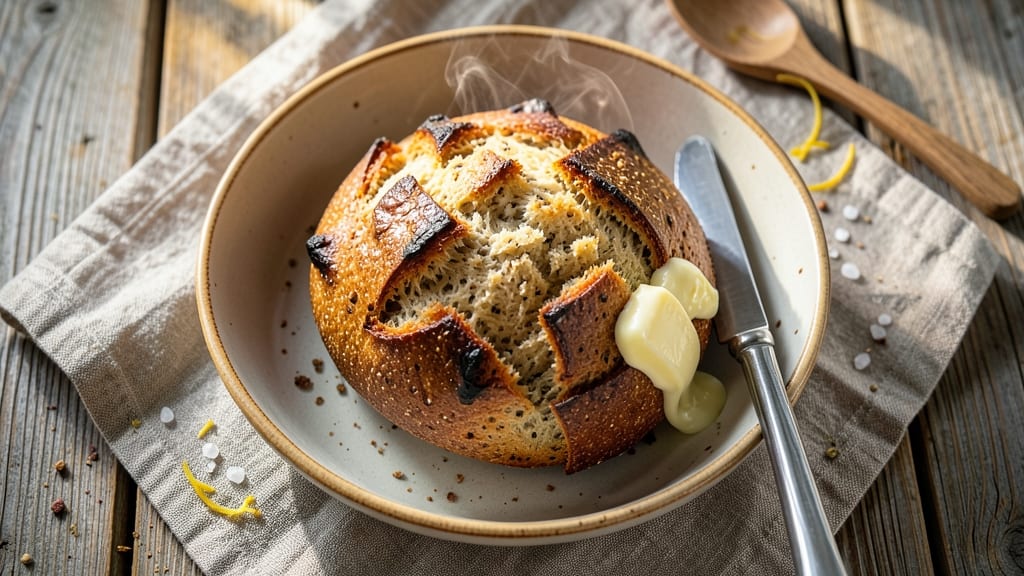
This artisan spelt bread recipe transforms humble ingredients into a rustic loaf with a nutty crust and tender crumb—perfect for sandwiches or toast. Spelt, an ancient grain, adds earthy depth and a satisfying chew that modern wheat simply can't match. The secret lies in slow fermentation and foil-sealing during baking, which creates that signature softness inside while keeping the exterior crisp.
Unlike commercial breads, this recipe demands patience—kneading by hand develops gluten for structure, while overnight proofing deepens flavor. The dough comes together in just 15 minutes, but the magic happens during the 12-hour cold proof and 45-minute bake, where steam works wonders.
No special equipment needed beyond a Dutch oven or heavy baking sheet.
What you'll end up with is a loaf that smells like a European bakery: toasty, nutty, and just slightly sweet. The crust has a satisfying snap, while the interior remains soft and open-crumbbed, ideal for soaking up soups or holding gourmet sandwiches.
This is bread that tastes like tradition—without the fuss of a sourdough starter.
Best of all, the dough keeps for 3 days in the fridge, and baked loaves stay fresh for a week when wrapped tightly. Freeze extras for quick breakfasts or toasty lunches. Let's get started on your first loaf.
Ingredients for artisan spelt bread
Ancient grain meets modern technique—this spelt bread transforms simple ingredients into a loaf with restaurant-quality texture.
| Ingredient | Amount | Notes |
|---|---|---|
| Spelt Flour 🌾 | 3 ½ cups | Stone-ground for optimal texture |
| Active Dry Yeast 🍞 | ¼ oz | Or 2 1/4 tsp (1 packet) |
| Granulated Sugar 🍚 | ½ tsp | Feeds yeast for fermentation |
| Unsalted Butter 🧈 | ½ cup | Cold, cubed for kneading |
| Warm Water 💧 | 1 ¼ cups | 110°F (43°C) ideal temperature |
| Diamond Crystal Kosher Salt 🧂 | 1 ½ tsp | Adjusts to 1 tsp table salt |
| Extra-Virgin Olive Oil 🫒 | ¼ cup | For dough and brushing |
| Honey 🍯 | 1 tbsp | Enhances crust sweetness |
| Whole Milk 🥛 | ¼ cup | For enriched dough |
| All-Purpose Flour 🌾 | ½ cup | Balances spelt's texture |
| Cornmeal 🌽 | ¼ cup | For dusting and scoring |
| Ice Water ❄️ | ¼ cup | For final shaping |
Spelt flour is the heart of this recipe, and Bob's Red Mill or King Arthur brands deliver the most consistent results. Look for stone-ground flour—it retains more nutrients and creates a superior crumb. The yeast should be fresh; if your packet is over six months old, test it in warm water with a pinch of sugar to confirm it foams within 10 minutes. For the butter, Plugrá or Land O'Lakes work well, but avoid salted varieties—the extra sodium can alter the dough's balance. The honey should be raw and unfiltered for optimal flavor, though store-bought brands like Madhava are perfectly fine for baking.
No spelt flour? Substitute whole wheat flour at a 1:1 ratio, though the texture will be denser. Running short on yeast? Active dry yeast and instant yeast are interchangeable, but adjust the activation time slightly—let it proof 5 minutes longer if using instant. For the butter, vegan butter works equally well if you're avoiding dairy, though the flavor will be subtly different. The milk can be swapped for unsweetened almond milk, though the dough may require an extra 10 minutes of kneading for proper gluten development. If you're baking in a high-altitude area, reduce the yeast by 10-15% to prevent overproofing.
The dough keeps for 3 days in the fridge, wrapped tightly in plastic. For longer storage, shape the dough into a log, wrap in plastic, and freeze for up to 3 months. When ready to bake, thaw overnight in the fridge. Baked loaves stay fresh for 5-7 days when wrapped in a clean kitchen towel and stored at room temperature. To revive stale bread, wrap in foil and warm at 350°F (175°C) for 10 minutes—the crust will crisp up beautifully. For scoring, use a sharp razor blade or lamé to create clean cuts that guide the oven spring.
Why You'll Love This Recipe
- No-Knead Magic: I swear by this—just mix spelt flour, yeast, and warm water, let it rise overnight, then bake. The dough practically does all the work while you sleep, and that buttery crust? It’s foolproof.
- Nutty, Rich Crust: Spelt’s natural sweetness and the butter’s richness create a crust that’s crisp yet tender. Honestly, it’s the kind of bread that makes me forget store-bought exists—especially when toasted with jam.
- Meals Made Better: This bread soaks up soups like a dream, pairs perfectly with charcuterie, and even works as a sandwich base. I’ll be real: it’s my go-to for turning simple breakfasts or dinners into something special.
- Budget-Friendly Staple: A loaf costs pennies to make but lasts ages—freeze slices for toast later, or keep it wrapped on the counter. Between us, this is the kind of bread that saves money and impresses guests.
Step-by-step instructions for artisan spelt bread
Mastering this enriched spelt dough requires patience and precision—every step builds the signature nutty crust and tender crumb.
Activate the Yeast with Warm Water and Sugar
In a large mixing bowl, combine the 1.25 cups warm water (tested at 110°F) with the 0.5 tsp granulated sugar and 0.25 oz active dry yeast. Let this sit for 10-15 minutes until you see vigorous bubbling and a frothy foam on top. This confirms your yeast is alive and ready to work.
I always test the water temperature first—too hot kills the yeast, too cold makes it sluggish. The sugar feeds the yeast, jumpstarting fermentation. If no bubbles form after 15 minutes, your yeast may be dead, and you'll need to start over.
Mix the Dough with Butter, Olive Oil, and Milk
Add the 3.5 cups spelt flour, 0.5 cup cold cubed unsalted butter, 0.25 cup extra-virgin olive oil, 0.25 cup whole milk, and 1.5 tsp diamond crystal kosher salt to the yeast mixture. Using a dough whisk or your hands, mix until a shaggy dough forms—this enriched dough will be softer than traditional bread.
The cold butter incorporates differently than melted fat, creating pockets that will yield that signature tender crumb. Mix just until combined—overworking develops gluten too early, which we'll control in the next step. The dough should be tacky but not sticky at this stage.
Knead and Develop Gluten for Structure
Turn the dough onto a lightly floured surface and knead for 8-10 minutes until smooth and elastic. I use the "windowpane test"—stretch a small piece of dough thin enough to see light through it. The dough should resist tearing but remain flexible. Add the 0.5 cup all-purpose flour during kneading if it feels too sticky.
Spelt flour has lower gluten content than wheat, so we need this kneading to build structure while keeping the dough tender. The enriched fats also require more careful handling—press down gently during kneading to avoid overworking the delicate proteins.
First Rise and Shaping for Even Texture
Place the dough in a lightly oiled bowl, cover with a damp towel, and let rise in a warm place (75-80°F) for 1.5-2 hours until nearly doubled in size. Gently press the dough to check for readiness—it should spring back slowly rather than quickly.
After rising, turn the dough onto a floured surface and divide it into 4 equal pieces (about 8 oz each). Shape each into a round boule by pulling the edges toward the center, sealing tightly. The tension in the dough's surface creates that beautiful oven spring we want.
Final Proof and Foil-Sealed Baking
Place the shaped boules on a parchment-lined baking sheet, cover with oiled plastic wrap, and let proof for 30-45 minutes until they've risen 50% and feel light when pressed. Preheat your oven to 425°F with a Dutch oven inside for 30 minutes—this creates the steam environment crucial for that soft interior.
Remove the Dutch oven, carefully transfer the boules in, and bake covered for 25 minutes. Then remove the lid, brush tops with water, and bake 15-20 minutes until the crust reaches a deep golden brown. The foil-sealed method traps steam for maximum tenderness while developing that nutty crust.
Cool and Rest for Optimal Texture
Transfer the bread to a wire rack and let cool for at least 1 hour before slicing. The internal temperature should drop to 120°F before cutting—this prevents a gummy crumb. The bread will continue steaming as it cools, developing its final texture.
For best results, store wrapped at room temperature for 2 days or freeze sliced bread for up to 3 months. The enriched dough stays fresh longer than traditional bread, but the texture is best enjoyed within the first 24 hours when the crumb is at its peak tenderness.
Pro Tips For Making Artisan Spelt Bread
- Mix Yeast with Sugar First: I learned this the hard way—dissolving the yeast in warm water with a pinch of sugar first makes it wake up faster. The sugar jumpstarts fermentation, so by the time you add the spelt flour, your dough will already have a head start on rising.
- Use a Kitchen Scale: Spelt flour is heavier than wheat flour, and eyeballing measurements leads to dense, gummy bread. Weigh your flour in grams—this recipe’s structure depends on precise ratios, and a scale guarantees consistent results every time.
- Let the Dough Rest After Kneading: Skipping the 10-minute rest after kneading means gluten won’t relax, and your bread will turn out tough. Cover the dough loosely and let it sit while you prep the butter—it’s the thing that matters most for a tender crumb.
- Shape Loosely, Not Tightly: Spelt dough is stickier than wheat, so resist the urge to shape it perfectly. A slightly uneven, loose round traps more steam during baking, giving you that open, airy crumb you’re after—yes, even if it looks messy at first.
Perfect pairings for this recipe
Buttery Spreads
Nothing complements spelt bread's nutty depth like a rich, cultured butter. I love European-style cultured butter such as Plugrá or Kerrygold—their tangy notes cut through the bread's earthiness beautifully.
For a quick spread, mix softened butter with 1 tsp honey and a pinch of fleur de sel for a sweet-salty balance. 🧈
For a gourmet touch, try herbed butter with finely chopped rosemary or thyme—the aromatic herbs elevate the bread's rustic character. Simply mix ½ cup softened butter with 1 tbsp chopped herbs and ½ tsp lemon zest, then chill until firm before spreading.
Sweet Toppings
Spelt bread's subtle sweetness pairs wonderfully with fresh fruit compotes. A simple raspberry jam or fig spread adds vibrant acidity that brightens each bite. For a homemade option, simmer 1 cup fresh raspberries with 2 tbsp honey and 1 tsp lemon juice until thickened—perfect for slathering on warm slices.
Nut butters like almond or cashew butter create a satisfying contrast with the bread's chewy texture. I recommend Whole Foods 365 organic nut butters—they're smooth and free from additives. Drizzle with local honey for an extra layer of complexity that feels like a hug from a European bakery. 🍯
Savory Pairings
For a savory approach, try whipped goat cheese mixed with herb-infused olive oil. The tangy cheese and rich oil complement the bread's nutty profile beautifully.
I make mine with ½ cup goat cheese, 1 tbsp olive oil, and 1 tsp chopped chives, then spread it on toasted slices.
Smoked salmon and cream cheese create a luxurious pairing that feels indulgent yet balanced. Spread 2 oz cream cheese on a slice, top with 2 oz smoked salmon, and finish with cucumber ribbons and dill fronds.
The bread's sturdy structure holds up perfectly to these toppings without becoming soggy. 🥗
Cheese Boards
Spelt bread is the ultimate cheese board companion. Its hearty texture stands up to bold cheeses like aged cheddar or blue cheese, while milder varieties like brie or goat cheese highlight its nutty flavor. Arrange slices with cured meats, olives, and dried fruits for a well-rounded spread.
For a vegetarian board, include marinated artichokes, roasted red peppers, and hummus alongside the bread. The bread's open crumb soaks up flavors beautifully, making every bite a symphony of textures.
Nutrition facts
Frequently asked questions
Why does spelt bread need more kneading than regular wheat bread?
Spelt flour has naturally lower gluten content than wheat, so kneading for 8-10 minutes helps develop the structure needed for proper oven spring. The enriched fats in this recipe also require careful handling—overworking can make the dough tough. Think of it as giving the dough's proteins time to align properly while keeping the texture tender.
Can I make this bread without a Dutch oven?
Yes! Use a heavy baking sheet or cast-iron skillet instead. For best results, place a metal bowl filled with hot water on the lower oven rack to create steam during the first 25 minutes of baking. This mimics the Dutch oven's steam retention and helps create that tender interior. The crust may be slightly less crisp, but the texture will still be excellent.
What's the best way to store spelt bread to keep it fresh?
Wrap the cooled loaf tightly in a clean kitchen towel or beeswax wrap, then store at room temperature for up to 5 days. For longer storage, freeze sliced bread in an airtight container for up to 3 months. To revive stale slices, wrap them in foil and warm at 350°F (175°C) for 10 minutes—the crust will crisp up beautifully.
Why does my spelt bread turn out dense instead of light and airy?
This usually happens from overproofing, insufficient kneading, or using too much fat. Make sure your yeast is active (test with warm water and sugar), knead until you can stretch the dough thin enough to see light through it, and proof in a warm (75-80°F) environment. Also, don't skip the cold proof—it helps control fermentation and develop flavor.
Can I substitute spelt flour with whole wheat flour?
You can try a 1:1 substitution, but expect a denser texture and slightly stronger wheat flavor. For best results, use 50% spelt and 50% whole wheat flour—this balances the texture while keeping some of spelt's nutty character. You may also need to add 1-2 extra tablespoons of water as whole wheat absorbs more moisture.