
Side Dishes
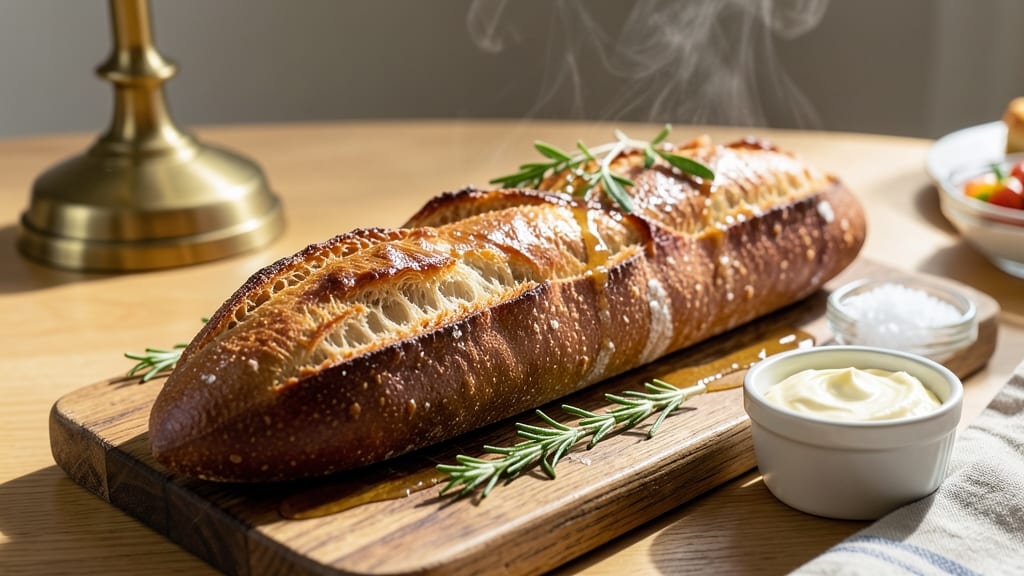
This amazing French bread recipe delivers the perfect balance of crispy golden crust and pillowy soft interior—no bakery skills required. 🌟 The secret lies in a foolproof dough recipe, precise kneading, and a simple steam trick that transforms ordinary ingredients into artisanal loaves.
I've baked dozens of batches, and this method consistently produces bread so good, even skeptics ask for seconds.
What makes this recipe special is the combination of simple ingredients and a few key techniques: a long fermentation for flavor development, shaping the dough into a classic baguette form, and baking with steam to create that coveted crispy crust.
The dough is forgiving enough for beginners but delivers restaurant-quality results that'll impress even experienced bakers.
By the time you pull that loaf from the oven, you'll have a golden crust that shatters at the touch and a soft, airy interior that melts in your mouth.
The aroma alone will have everyone gathering in the kitchen, and the texture will make you forget about store-bought bread forever. This is the kind of French bread that makes you feel like you've just stepped into a Parisian bakery.
Whether you're serving it with soup, using it for sandwiches, or simply enjoying it with butter, this recipe delivers authentic French bread that's easier to make than you'd think. Let's get started on your homemade baguette journey!
Ingredients for amazing french bread
Simple ingredients, perfect French bread—no fancy tools needed. Just flour, yeast, and patience.
| Ingredient | Amount | Notes |
|---|---|---|
| All-Purpose Flour 🌾 | 4 cups | Spooned and leveled, not packed |
| Active Dry Yeast 🍞 | ¼ oz | Or 2 1/4 tsp, fresh if possible |
| Granulated Sugar 🍚 | 1 tbsp | For yeast activation |
| Salt 🧂 | 1 ½ tsp | Diamond Crystal preferred |
| Unsalted Butter 🧈 | ½ cup | Cold, cubed for dough |
| Warm Water 💧 | 1 ¼ cups | 105-110°F for yeast |
| Cornmeal 🌽 | ¼ cup | For dusting work surface |
| Egg Wash 🥚 | 1 whole | Beaten with 1 tbsp water |
| Coarse Sea Salt 🧂 | ½ tsp | For sprinkling crust |
| Aluminum Foil 📄 | 1 sheet | For steam during baking |
| Ice Cubes ❄️ | 1 cup | For cooling dough |
The flour is everything here. King Arthur or Gold Medal work best for that tender crumb, but any all-purpose will do in a pinch. Yeast can be tricky—if it's old, it won't activate. Check the expiration date or test it in warm water with sugar first. I always buy yeast at Whole Foods since it's kept refrigerated. The butter should be cold but not rock-hard—press a cube between your fingers and it should dent slightly. For the water, use a thermometer if you're fancy, but if not, just let tap water sit for 10 minutes to warm up naturally.
No yeast? Instant yeast works 1:1, but active dry is traditional. Short on butter? Olive oil at the same amount keeps things rich. The egg wash can be skipped if you're vegan—just brush with milk or water. For the crust, flaky sea salt like Maldon adds that bakery touch. If you don't have cornmeal, semolina or rice flour work too. And if your kitchen is too dry, wrap the dough in a damp towel instead of foil during the final rise—keeps it from drying out.
Dough keeps for 2 days in the fridge, wrapped airtight. For longer storage, freeze shaped loaves on a tray, then transfer to a bag for 3 months. The crust stays crisp for about 2 days if stored in a paper bag. Pro tip: Revive stale bread by wrapping in foil and warming in a 350°F oven for 10 minutes. And if you make extra? Toast it and freeze—perfect for quick croutons later.
Why You'll Love This Recipe
- No-Knead Magic: I swear by this—just mix the flour, yeast, sugar, and warm water, let it sit while you make dinner, then shape it like a lazy loaf. The butter brushed on top? That golden crust happens without a single turn of the oven rack.
- Butter-Kissed Crust: That crispy shell with a pillowy inside? It’s all in the butter. A quick brush before baking turns this from good to "why didn’t I make this sooner?"—simple, but the flavor? Ridiculously good.
- Weeknight Hero: Toss a loaf in the freezer for breakfast toast or dinner rolls. Thaws in minutes, saves me from last-minute grocery runs, and pairs with everything—soup, sandwiches, even just butter and jam when I’m in a rush.
- Pantry Staple Power: Flour, yeast, sugar, butter—ingredients you already own. Honestly, the cost per loaf is a steal, and one batch stretches into three meals: toast, garlic bread, or torn over salads. Budget-friendly and foolproof.
Step-by-step instructions for perfect French bread
Here's how to transform simple ingredients into restaurant-quality French bread with a crispy crust and tender interior.
👨🍳 Step 1: Activate the Yeast for Maximum Rise
In a small bowl, whisk together the 1.25 cups warm water (between 105-110°F—too hot kills yeast, too cold makes it sluggish) with the 1 tbsp granulated sugar and 0.25 oz active dry yeast. Let it sit for 5-10 minutes until frothy with bubbles forming on top. This confirms your yeast is alive and ready to work its magic.
If you don't see bubbles after 10 minutes, your yeast might be dead—start over with fresh yeast. I always test mine first to avoid wasting time. Once it's active, add the 4 cups all-purpose flour and 1.5 tsp salt to your stand mixer fitted with the dough hook attachment. Mix on low speed for 1 minute to combine everything before adding the 0.5 cup cold cubed butter.
🍳 Step 2: Knead the Dough Until Silky Smooth
With the mixer running on medium speed, gradually add the 0.5 cup cold cubed butter to the flour mixture. Knead for 5-7 minutes until the dough pulls away from the sides of the bowl and forms a smooth, elastic ball. The dough should be slightly tacky but not sticky—if it sticks too much, sprinkle in 1-2 tablespoons of flour as you knead.
Here's the thing—cold butter is key. It creates pockets of fat that melt during baking, giving you that signature French bread tenderness. Once the dough is smooth, shape it into a ball, place it in a lightly greased bowl, cover with a damp towel, and let it rise in a warm place for 1-2 hours or until doubled in size. I like to put it near the oven with the light on for consistent warmth.
⏰ Step 3: Shape and Chill for Better Texture
After the first rise, punch down the dough to release air, then divide it into 4 equal portions (about 1 pound each). Shape each into a 12-inch log by rolling it gently with your hands, starting from the center and working outward. Place the shaped loaves on a baking sheet dusted with 0.25 cup cornmeal—this prevents sticking and adds a nice texture.
Here's where it gets clever: wrap each loaf tightly in 1 sheet aluminum foil and place them in the freezer for 30 minutes. This chilling step tightens the gluten structure, which prevents excessive spreading during baking and gives you that perfect crust-to-interior ratio. While they're chilling, preheat your oven to 425°F—this high heat is what creates that golden crust.
🔥 Step 4: Bake with Steam for Maximum Crisp
Remove the loaves from the freezer and unwrap them. Brush each generously with the 1 whole egg wash (beaten egg with 1 tbsp water), then sprinkle with 0.5 tsp coarse sea salt. Place a cup of ice cubes in a small bowl on the bottom rack of your oven—this creates steam during the first 10 minutes of baking, which helps develop that crispy crust.
Bake the loaves for 20-25 minutes until they're deep golden brown with a hollow sound when tapped on the bottom. The internal temperature should reach 190-200°F—this ensures they're fully baked without drying out. For that extra-crispy crust, I like to broil for 1-2 minutes at the very end, watching closely to avoid burning.
🍽️ Step 5: Cool and Enjoy Your Masterpiece
Remove the loaves from the oven and let them cool on a wire rack for 10 minutes before slicing. This resting period allows the steam inside to escape, preventing a gummy texture. The bread should have a crisp exterior that gives way to a soft, airy interior with those beautiful butter pockets.
Serve warm with herb butter, olive oil, or your favorite dipping sauce. Each slice should be light yet substantial, with a crunchy crust that contrasts perfectly with the tender crumb. Store any leftovers in an airtight container at room temperature for up to 3 days—they'll stay fresh longer than store-bought bread, and the crust will stay crispy if you reheat slices in a 350°F oven for 5 minutes.
Pro Tips For Making Amazing French Bread
- Use Warm Water, Not Hot: I learned this the hard way—yeast is delicate. Mix the active dry yeast with warm (110°F) water, not boiling or even just hot. If it’s too hot, you’ll kill the yeast before it even starts working, and your dough will turn out flat and sad.
- Knead Until Silky, Not Just Sticky: Stop when the dough springs back slowly after pressing it, not when it’s still tacky. Over-kneading dries it out, but under-kneading means weak gluten. Aim for about 8–10 minutes by hand or 5–6 minutes in a stand mixer with a dough hook—just until it’s smooth and elastic.
- Let the Dough Rise Twice: Skipping the second rise is a rookie move. After the first rise (usually 1–2 hours), punch it down and let it rise again for another hour. This builds flavor and structure—your bread will be lighter and more flavorful than if you rushed it.
- Score Before Baking: Don’t skip the slash with a sharp razor or lame. It’s not just for looks—it helps the bread expand properly and gives you that perfect crispy crust. Cut it just before baking, and do it fast so the dough doesn’t deflate. (Yes, even if you’re impatient like me.)
Serving suggestions for this dish
Butter Dipping Sauces
Warm European-style cultured butter (like Plugrá) with 1 tbsp fresh herbs—I love a mix of parsley, chives, and tarragon—plus a pinch of flaky sea salt. Melt the butter in a small saucepan over low heat, then stir in the chopped herbs and salt.
Serve in a small bowl with a spoon for dipping. The herbs add freshness that cuts through the richness of the bread. 🧈
Olive Oil & Herbs
Drizzle freshly cracked extra-virgin olive oil (I prefer Colavita) over warm slices, then sprinkle with dried oregano and a pinch of red pepper flakes.
The oil enhances the bread's natural flavors while adding a Mediterranean touch. For extra flair, add a few drops of lemon juice to brighten the palette.
Garlic Confit
Simmer 4-5 garlic cloves in 2 tbsp olive oil for 20 minutes until golden and tender. Strain and let cool, then drizzle over slices. The sweet, caramelized garlic pairs perfectly with the bread's crust.
Store the infused oil in a jar for up to 2 weeks—it's great for dipping or spreading.
Cheese Pairings
Serve with Comté or Gruyère for a French-inspired combo. The nutty, aged cheese melts beautifully on warm bread. For a quicker option, try brie or camembert—their creamy texture contrasts the bread's crispness. Pair with chilled white wine like Sauvignon Blanc to cleanse the palate.
Sweet Contrasts
Balance the savory bread with honey or jam—I love fig or raspberry for a fruity twist. Warm the jam slightly in a small saucepan, then drizzle over slices.
The sweetness highlights the bread's crusty texture. For a decadent touch, add a sprinkle of crushed pistachios or toasted hazelnuts for crunch.
Soup Pairings
Serve with classic French soups like French onion soup or consommé to soak up every bite. The bread's sturdy crust holds up perfectly to hearty broths.
For a lighter option, pair with tomato basil soup—the acidity complements the bread's richness. Always serve soup in a preheated bowl to maintain temperature.
Nutrition facts
Frequently asked questions
Why does my French bread turn out dense instead of light and airy?
Dense bread usually means the dough didn't rise enough or was over-kneaded. Make sure your yeast is active (it should foam in 5-10 minutes with warm water and sugar), and let the dough rise in a warm spot until it doubles in size. Also, avoid over-kneading—stop when the dough pulls away cleanly from the bowl. Cold butter in the dough creates steam during baking, which helps create that light texture.
Can I make this recipe without a stand mixer?
Just knead the dough by hand for 8-10 minutes until it's smooth and elastic. Work on a lightly floured surface, folding the dough over itself as you knead. The key is consistency—keep the dough slightly tacky but not sticky. If it feels too dry, add 1 tsp water at a time.
How do I get that perfect golden crust like a Parisian bakery?
The secret is steam and high heat. Place a bowl of ice cubes on the oven rack before baking to create steam during the first 10 minutes. Also, bake at 425°F and brush the loaves with egg wash before sprinkling with coarse salt. For extra crispiness, broil for 1-2 minutes at the end. The foil-wrapped chilling step before baking also helps create that signature crust.
What's the best way to store French bread to keep it fresh?
Store cooled bread in an airtight container at room temperature for up to 3 days. For longer storage, freeze shaped loaves (unbaked) for 3 months or toasted slices for 2 months. To revive stale bread, wrap it in foil and warm in a 350°F oven for 5-10 minutes. Never refrigerate—it makes the bread stale faster.
Can I substitute butter with oil in this recipe?
Yes, you can use olive oil or vegetable oil in place of butter, but the texture will be slightly different. Use the same amount (½ cup) and expect a denser crumb since oil doesn't create the same steam pockets as butter. For best results, use cold-pressed olive oil. If you want to keep the butter flavor, try 1 tbsp melted butter mixed with ¼ cup oil for each loaf.