
Side Dishes
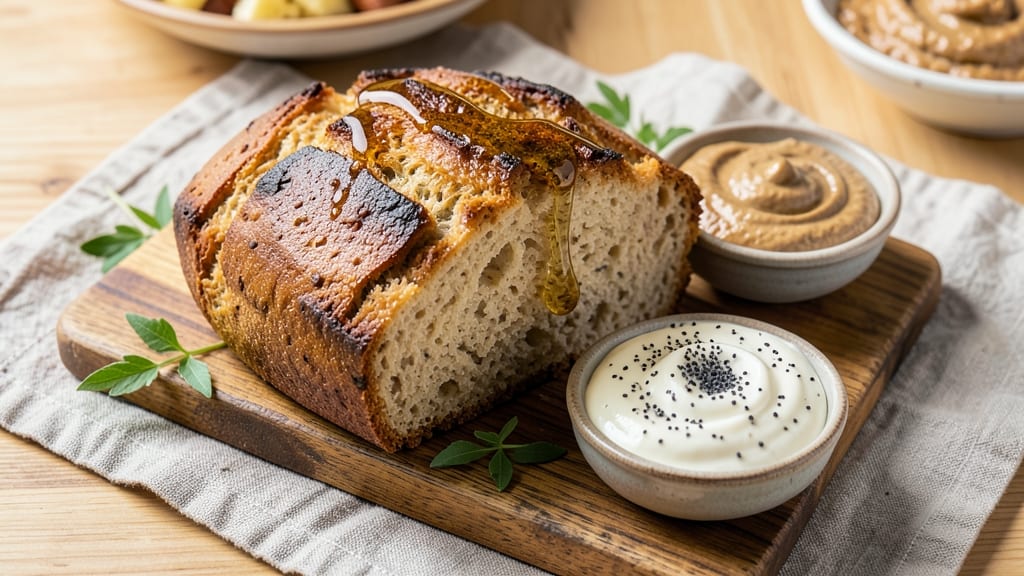
This Armenian tahini bread recipe brings the nutty, sesame-rich flavors of traditional Armenian cuisine to your kitchen table. 🌟 The secret lies in the tahini-infused dough that creates a delicate yet sturdy crust, perfect for stretching thin or baking into soft, foil-sealed loaves.
What makes this recipe special is the balance between tahini's earthy richness and the subtle tang of yogurt, creating a bread that's both hearty and versatile.
The dough comes together with simple ingredients—flour, tahini, yogurt, and a touch of olive oil—yet delivers restaurant-quality results. Unlike traditional lavash, this version uses a foil-sealing technique that keeps the bread soft and pliable, ideal for serving with dips like mutabal or fresh olive oil.
The process is straightforward, but the cultural depth adds an extra layer of satisfaction.
By the time you're done, you'll have a batch of golden-brown bread with a crispy crust and a tender, nutty interior. Each bite carries the essence of Armenian hospitality, making it perfect for sharing with family or enjoying as a side to grilled meats and salads.
The best part? This bread is naturally vegetarian and can easily be adapted for vegan diets by omitting the yogurt.
Whether you're serving it warm from the oven or letting it cool for a crispier texture, this tahini bread will elevate any meal. Let's get started on creating a dish that's as rewarding to make as it is to eat.
Ingredients for armenian tahini bread
Simple ingredients transform into golden Armenian tahini bread with nutty sesame richness.
| Ingredient | Amount | Notes |
|---|---|---|
| All-Purpose Flour 🌾 | 3 ½ cups | Sifted for light texture |
| Tahini 🥜 | ¾ cup | Sesame paste, unsweetened |
| Plain Yogurt 🥛 | ½ cup | Full-fat preferred for richness |
| Extra-Virgin Olive Oil 🫒 | ¼ cup | Light fruity variety |
| Granulated Sugar 🍚 | 1 tbsp | Balances tahini's richness |
| Active Dry Yeast 🍞 | 1 tsp | Instant yeast works too |
| Salt 🧂 | 1 tsp | Diamond Crystal preferred |
| Sesame Seeds 🌻 | ¼ cup | Toasted for extra flavor |
| Warm Water 💧 | ¾ cup | 110°F for yeast activation |
| Aluminum Foil 📄 | 1 sheet | Heavy-duty for sealing |
Tahini is the star—California Tahini or Soya Joy are my go-tos for that perfect balance of nutty and smooth. If you can't find tahini, peanut butter works in a pinch, but it'll taste different. The yogurt adds tang, so Greek-style yogurt works best—just make sure it's plain (no flavors). For the flour, King Arthur or Bob's Red Mill are reliable choices. The yeast is non-negotiable here—if it's past its expiration, toss it. Fresh is always better, but instant yeast is fine too.
No tahini? Sunflower seed butter is a great vegan swap. Short on sesame seeds? Poppy seeds or crushed nuts add texture, though they won't have the same flavor. The olive oil can be swapped for avocado oil if you prefer a milder taste. For a vegan version, simply omit the yogurt and use unsweetened almond milk or coconut yogurt instead. The sugar is optional, but it helps balance the tahini's earthiness—maple syrup works too if you're avoiding refined sugar.
This dough keeps for 24 hours in the fridge, covered tightly. For best results, let it sit at room temperature for 1 hour before shaping. The foil-sealed loaves reheat beautifully—just 5 minutes at 350°F to restore that soft, pillowy texture. Store leftovers wrapped in foil for 3-4 days or freeze for up to 3 months. Pro tip: freeze individual portions for easy reheating.
Why You'll Love This Recipe
- No Mixer Needed: I swear by this dough—just knead it by hand for two minutes. That tahini gives it a velvety richness without needing fancy equipment, and honestly? My wrist thanks me after a long day.
- Tahini Magic: The moment you bite into that crusty exterior with a soft, slightly sweet crumb? That’s the tahini and olive oil working together. It’s nutty, buttery, and just a whisper of caramelized sugar—like a hug in bread form.
- Breakfast to Snack: I keep a loaf in the fridge for days. Toast it for breakfast with jam, tear it into pieces for lunch with hummus, or pack it for a picnic. It’s the one bread that does it all without complaining.
- Pantry Staples Only: Between us, this recipe uses things you already own. Flour, yogurt, olive oil—no specialty ingredients, no last-minute grocery runs. And the leftovers? They stay fresh for a week, which means fewer panics when you forget to bake.
Step-by-step instructions for Armenian tahini bread
Here's how to make this nutty, sesame-crusted bread with a soft interior—it's easier than you think!
👨🍳 Step 1: Activate the Yeast and Mix the Wet Ingredients
In a small bowl, combine the 0.75 cup warm water (about 110°F) with the 1 tbsp granulated sugar and 1 tsp active dry yeast. Let it sit for 5-10 minutes until it becomes frothy and bubbly—this means your yeast is alive and ready to work. If it doesn't bubble, your yeast might be dead, and you'll need to start over.
In a separate large bowl, whisk together the 0.75 cup tahini, 0.5 cup plain yogurt, and 0.25 cup extra-virgin olive oil. I like to use a fork first to break up any lumps in the tahini, then switch to a whisk for a smooth, creamy mixture. The tahini gives this bread its signature nutty flavor, so don't skip this step—it's what makes it special!
🍳 Step 2: Combine Wet and Dry Ingredients
Add the yeast mixture to the tahini-yogurt-oil blend and stir until fully incorporated. The batter should be thick but pourable. In a separate bowl, sift the 3.5 cups all-purpose flour and 1 tsp salt together—sifting prevents lumps and ensures even distribution. Gradually add the dry ingredients to the wet mixture, stirring with a wooden spoon or silicone spatula until a shaggy dough forms.
Here's the thing—this dough is sticky, and that's normal! Don't panic if it looks like too much. The tahini and yogurt create a rich, moist environment that makes the dough behave differently than regular bread dough. Once combined, let the dough rest for 10 minutes while you prepare the sesame topping.
🍳 Step 3: Toast the Sesame Seeds and Prepare the Dough
While the dough rests, toast the 0.25 cup sesame seeds in a dry skillet over medium heat for 2-3 minutes, stirring constantly, until they turn a rich golden brown and smell deeply nutty. This toasting enhances their flavor and gives the bread its signature crunch. Let them cool slightly before using.
After the 10-minute rest, turn the dough out onto a lightly floured surface and knead it gently for 2-3 minutes—just enough to bring it together. This dough isn't like regular bread dough; it's more like a cross between a flatbread and a quick bread. Shape it into a rough rectangle about 12x8 inches and ½-inch thick. If it tears, just press it back together—it's forgiving!
🥘 Step 4: Assemble and Seal with Foil
Place the shaped dough on a parchment-lined baking sheet. Brush the top lightly with a little extra olive oil or water to help the sesame seeds stick. Sprinkle the toasted sesame seeds evenly over the top, pressing them gently into the dough. The goal is to cover the entire surface—this is what creates that beautiful, nutty crust.
Here's where the magic happens: cut a 12x12-inch square from the aluminum foil and place it over the dough. Fold the edges up and over the sides, sealing the dough completely inside. This foil trap creates steam during baking, which gives the bread its signature soft, pillowy interior. Poke a few small holes in the top of the foil with a fork to allow steam to escape—this prevents the bread from becoming too dense.
🔥 Step 5: Bake to Golden Perfection
Preheat your oven to 375°F while the foil is sealing the dough. Bake the tahini bread for 30-35 minutes until the top is deep golden brown and the internal temperature reaches 190°F. You'll know it's done when the bread sounds hollow when tapped on the bottom.
Remove the bread from the oven and let it cool on a wire rack for 10 minutes before carefully cutting through the foil. The bread should be soft inside with a crisp, nutty crust. Serve warm with meals or enjoy it at room temperature—it's just as delicious the next day! This bread freezes beautifully too, so you can make a batch ahead of time.
Pro Tips For Making Armenian Tahini Bread
- Whisk the Tahini Warm: The tahini thickens like glue when cold—trust me, I’ve pulled apart doughs stuck to spoons. Microwave it for 20 seconds first, then whisk it into the yogurt while still warm. This keeps the dough smooth and prevents lumps that turn your bread into a gummy mess.
- Use Full-Fat Yogurt Only: Thin yogurt means thin dough, and thin dough means flat, sad bread. Skip the low-fat version—it’s the fat that tenderizes and helps the tahini’s richness bind properly. If you’re desperate, add 1 tablespoon of melted butter to the mix, but don’t skip this step entirely.
- Don’t Overmix the Dough: After adding the flour, mix just until combined—maybe 10-12 strokes. Overworking it develops gluten, and tahini bread should be soft and slightly dense, not chewy like sourdough. Stop when the dough clumps together; it’ll hold its shape when baked.
- Bake at 350°F, Not Higher: I used to blast these at 375°F for “crispier crusts,” but they’d dry out before the centers cooked. Stick to 350°F for 30-35 minutes—this ensures the tahini flavor infuses evenly without turning the bread into a cracker. A toothpick should come out clean, not wet.
Essential equipment for armenian tahini bread
Foil-Sealing Kit
You’ll need heavy-duty aluminum foil (like Reynolds Wrap or Foil by Scott) to create that signature soft interior. Cut a 12x12-inch square—this size perfectly covers the dough while allowing steam to build. I recommend keeping a roll handy, as you’ll use it for sealing and reheating later. 📄
Rolling Pin Essentials
A wooden rolling pin (like OXO Good Grips) works best for this dough—it’s sticky but forgiving. Avoid glass or marble, which can tear the dough. If you’re short on space, a silicone mat (such as Kitchy) lets you roll directly on your counter without extra cleanup.
Mixing Bowls
Use two medium-sized bowls: one for the wet ingredients (tahini, yogurt, oil) and one for the dry (flour, salt). I prefer stainless steel bowls (like Ziploc’s) for durability, but glass works too. Just avoid plastic—it can absorb odors from tahini over time.
Baking Sheet
A half-sheet pan (18x13 inches) is ideal for this recipe, but a standard quarter-sheet pan (9x13 inches) works in a pinch. Line it with parchment paper (like Amazon Basics) to prevent sticking—no greasing needed! The parchment also makes cleanup a breeze.
Toasting Pan
Toast your sesame seeds in a small stainless steel skillet (like Calphalon) over medium heat. Avoid nonstick—it can’t handle the high heat needed for proper browning. A handheld strainer (such as OXO’s) helps sift seeds evenly over the dough.
Thermometer
An instant-read thermometer (like ThermoWorks Thermapen) ensures your bread reaches 190°F internally. This is key for that perfect soft-yet-crisp texture. If you don’t have one, tap the bottom—it should sound hollow when done. 🌡️
Nutrition facts
Frequently asked questions
Can I make this Armenian tahini bread vegan?
Yes! Simply replace the 0.5 cup plain yogurt with unsweetened almond milk or coconut yogurt for a fully plant-based version. The tahini and olive oil will still provide richness, so the texture remains soft and flavorful. Just ensure your yeast is fresh—it's the only non-vegan component.
Why does my tahini bread turn out dense instead of soft? This usually happens when the dough isn't sealed properly with foil, preventing steam from building during baking.
How do I store leftover Armenian tahini bread?
Wrap cooled bread tightly in aluminum foil to preserve its softness. It stays fresh for 3-4 days at room temperature or up to 3 months in the freezer. To reheat, wrap a slice in foil and warm at 350°F for 5 minutes—it'll taste almost as good as fresh!
Can I substitute tahini with another nut/seed butter?
You can try sunflower seed butter (vegan) or peanut butter (for a different flavor), but tahini's unique sesame taste is irreplaceable. Use the same amount (0.75 cup) and expect a slightly sweeter, nuttier profile. For closest results, stick with tahini—it's what makes this bread authentically Armenian.
What's the best way to serve this tahini bread?
Warm slices make perfect wraps for mutabal (chickpea dip) or olive oil drizzled with za'atar. It also pairs beautifully with grilled meats, fresh salads, or simply with labneh and honey. For extra flair, brush with garlic-infused olive oil before serving.