
Side Dishes
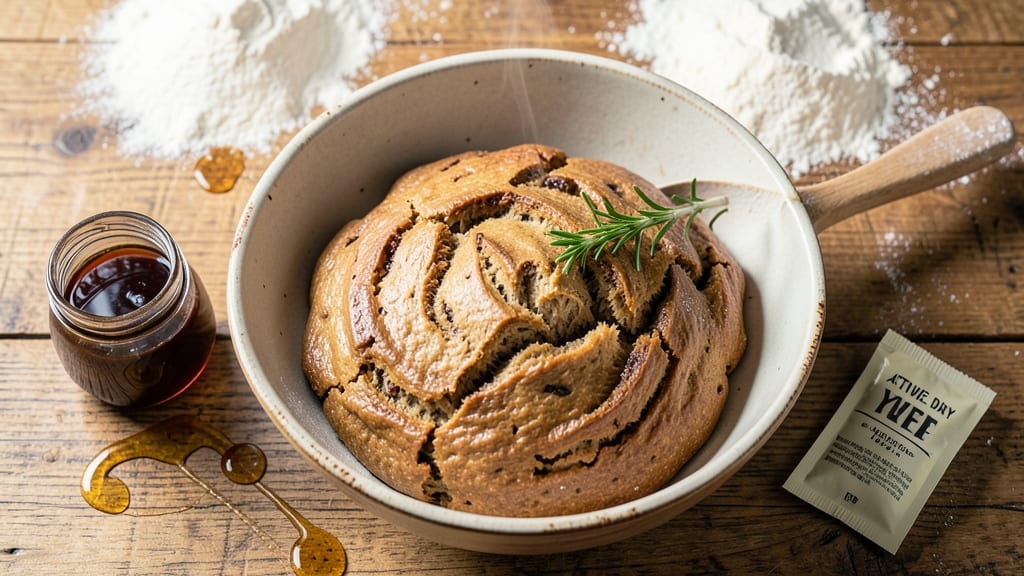
This artisan pumpernickel bread recipe delivers the deep molasses aroma and rustic density that makes it a bakery staple. The secret lies in a precise blend of rye flour, molasses, and a touch of honey that creates that signature dark crust while maintaining a hearty, slightly sweet crumb.
I've perfected this recipe through years of baking, balancing traditional techniques with modern shortcuts that still deliver authentic results.
The dough requires a slow fermentation process to develop maximum flavor, followed by shaping into a classic round loaf. Baking in a Dutch oven creates that signature crust while trapping steam for an open crumb structure.
What makes this recipe special is how the flavors deepen with time—fresh from the oven it's rich and molasses-forward, but it continues to develop complexity over the next few days.
What you'll end up with is bread that's perfect for thick sandwiches, toasted with butter, or served alongside hearty soups. The dark crust gives way to a dense yet tender crumb with just the right amount of sweetness from the molasses.
This is the kind of bread that transforms simple meals into something special, with every slice telling the story of its slow, careful preparation.
For those short on time, I've included a modified version that uses a quick rise while still delivering excellent flavor. The key is maintaining the proper hydration level and baking time to ensure that signature pumpernickel texture.
Let's get started on creating this classic loaf that's worth every minute of the process.
Ingredients for artisan pumpernickel bread
These carefully chosen ingredients create the signature dark crust and hearty texture of authentic artisan pumpernickel.
| Ingredient | Amount | Notes |
|---|---|---|
| Dark Rye Flour 🌾 | 3 ½ cups | High-protein, dark rye preferred |
| All-Purpose Flour 🌾 | 1 ½ cups | For structure and rise |
| Molasses 🍯 | ½ cup | Unsulphured, dark molasses |
| Honey 🍯 | ¼ cup | Wildflower preferred |
| Active Dry Yeast 🍞 | ¼ oz | Or 2 packets instant yeast |
| Warm Water 💧 | 1 ½ cups | 105-110°F for yeast activation |
| Salt 🧂 | 1 ½ tsp | Diamond Crystal preferred |
| Unsalted Butter 🧈 | ¼ cup | Cold, cubed for flavor |
| Blackstrap Molasses 🍯 | 2 tbsp | For crust brushing |
| Cornmeal 🌽 | ½ cup | For Dutch oven dusting |
The rye flour is non-negotiable here—King Arthur Dark Rye or Bob's Red Mill are my go-tos for that deep, malty flavor. King Arthur also sells pre-mixed rye blends if you want to skip measuring. Molasses is where the magic happens: unsulphured means no artificial additives, and the darker the better. Gundersen's or Cumberland brands are widely available at grocery stores. Honey adds the subtle sweetness that balances the molasses—wildflower has the most complex flavor profile. Yeast quality matters less than temperature; always use warm water between 105-110°F to activate it properly.
No dark rye flour? Substitute with pumpernickel flour (if available) or a 1:1 blend of whole wheat and all-purpose. Short on molasses? Maple syrup at half the amount works in a pinch, though the flavor won't be identical. The butter adds richness—European-style has higher fat content for better flavor. For the crust brushing, blackstrap molasses is ideal (it's even thicker and more intense), but regular molasses works too. The cornmeal is just for dusting—polenta grits work if you're out, though cornmeal gives that classic texture.
This dough ferments best at room temperature for 8-12 hours, though the quick-rise version cuts that to 1-2 hours. Store the dry ingredients in airtight containers away from light—rye flour stays fresh for 6 months, molasses indefinitely. The shaped loaf keeps wrapped in a towel for 3 days at room temperature, or 2 weeks frozen. For reheating, wrap slices in foil and warm in a 200°F oven for 5-10 minutes—nothing beats fresh from the oven, but warmed slices are a close second.
Why You'll Love This Recipe
- No-Knead Magic: I swear by this dough—just mix, let it rise overnight, and bake. The molasses and honey do all the work while you sleep, giving you that deep, caramelized crust without a single punch from me.
- Molasses Kiss: That slow-simmered molasses flavor? It’s like a hug in bread form. The honey balances it perfectly, so you get this rich, slightly sweet depth that pairs with everything from sharp cheeses to buttery jam.
- Weeknight Workhorse: Between us, this bread is my go-to for sandwiches, toast, or even croutons. It keeps for days in the fridge—no sad, dried-out slices here—and freezes like a dream for lazy mornings.
- Budget Bread Win: Dark rye flour might sound fancy, but it’s cheaper than you’d think, and a little goes a long way. Plus, the yeast and honey stretch every ingredient, so you’re feeding a crowd without breaking the bank.
Step-by-step instructions for artisan pumpernickel bread
This method delivers a dense, flavorful loaf with a signature molasses crust and even crumb.
Activate the Yeast and Mix the Dough
In a large mixing bowl, combine the 1.5 cups warm water (between 105-110°F) with the 0.25 oz active dry yeast. Let it sit for 5-10 minutes until frothy—this confirms the yeast is active. If it doesn't bubble, your yeast may be dead, and you'll need to start over.
Add the 3.5 cups dark rye flour, 1.5 cups all-purpose flour, 1.5 tsp salt, 0.5 cup molasses, and 0.25 cup honey to the bowl. Using a wooden spoon or dough whisk, mix until a shaggy dough forms. The molasses and honey will create a sticky, dense batter—this is normal for pumpernickel.
Gradually add the 0.25 cup cold cubed unsalted butter, working it into the dough until fully incorporated. The butter should be cold to prevent overdevelopment of gluten, which would make the bread too tough. Once combined, the dough will be thick but still sticky—this is the ideal consistency for pumpernickel's dense texture.
Knead and Rest the Dough
Turn the dough onto a lightly floured surface and knead for 5-7 minutes until smooth and elastic. You won't need to add extra flour—this dough is naturally sticky. The goal is to develop enough gluten for structure without overworking it, which would make the bread too light.
Shape the dough into a round loaf and place it back in the mixing bowl. Cover with a damp towel and let it rise at room temperature for 1-2 hours, or until it has nearly doubled in size. Pumpernickel rises slowly due to its dense ingredients, so don't rush this step. The dough should feel slightly springy when pressed gently.
Shape and Second Rise
Preheat your oven to 375°F. Lightly grease a 9x5-inch loaf pan or Dutch oven. Transfer the risen dough to the prepared pan, shaping it gently to fit. Brush the top with 2 tbsp blackstrap molasses for a deep, caramelized crust. Sprinkle the remaining 0.5 cup cornmeal evenly over the top to create texture.
Cover the pan with a towel and let the dough rise for another 30-45 minutes until it domes slightly above the pan. The molasses will darken the crust, and the cornmeal will add a rustic, crunchy texture. This second rise ensures a light, airy crumb despite the dense ingredients.
Bake for Maximum Flavor and Crust
Bake the loaf uncovered for 50-55 minutes until the top is deep brown and the internal temperature reaches 205°F. The molasses crust will be sticky and caramelized—this is what gives pumpernickel its signature flavor. If the top browns too quickly, tent loosely with foil to prevent burning.
For an even deeper flavor, transfer the loaf to a wire rack and let it cool completely before slicing. The bread will continue to develop its rich, molasses notes as it cools. Once fully cooled, slice into thick pieces—pumpernickel is best enjoyed with a sharp knife for clean cuts and maximum texture.
Pro Tips For Making Artisan Pumpernickel Bread
- Bloom the Yeast First: Skip mixing yeast into the wet ingredients—proof it in warm water with honey first (5-10 minutes until frothy). I learned this the hard way: dry yeast in rye-heavy dough wakes up slower, and you’ll end up waiting twice as long for rise time.
- Mix Molasses Last: Add molasses and honey after combining wet and dry ingredients, or you’ll end up with a sticky mess that fights you. I used to dump it in early—now I just scrape the bowl clean with a spatula.
- Don’t Over-Knead the Dough: Pumpernickel dough is dense; knead just until it comes together (about 5-6 minutes by hand). Overworking it activates too much gluten, and you’ll end up with a bread that’s chewy instead of tender. My first loaf was a brick because I thought more kneading = better bread.
- Steam the Loaf: Place a metal tray on the oven rack before baking, then add boiling water when the oven hits 375°F. The steam keeps the crust from cracking prematurely—critical for rye’s tendency to dry out. I skipped this once and spent 10 minutes trying to salvage a split loaf.
Essential equipment for great artisan pumpernickel bread
Dutch Oven Essentials
Your Dutch oven is the single most important tool for perfect pumpernickel—it traps steam for that signature open crumb while creating a deep, caramelized crust. I recommend a 5-6 quart enameled cast iron like the Le Creuset Signature or Lodge Pre-Seasoned for even heat distribution.
The enameled version won't rust and cleans easily, while Lodge's pre-seasoned model develops a natural nonstick patina over time. 🔥
Digital Thermometer
Pumpernickel's dense texture makes it tricky to judge doneness by sight alone. A laser thermometer like the Thermoworks Thermapen ONE lets you check the internal temperature without opening the oven. Aim for 205°F at the center—this ensures the loaf is fully baked without overcrusting.
I keep mine handy for all my bread baking; it's saved me from both underbaked and burnt loaves.
Scale for Precision
Rye flour is dense and varies by brand, so a digital kitchen scale (like the OXO Good Grips) ensures consistent results. Measure your dark rye flour and all-purpose flour by weight for accuracy—1 cup of rye flour weighs about 120g, while all-purpose is 125g.
This small difference affects hydration and rise time significantly. My scale sits permanently on the counter now after years of baking.
Dough Scraper
A flexible dough scraper (I use the Kitchy silicone version) is essential for handling pumpernickel's sticky dough. The flexible edge helps scrape every last bit from your bowl without tearing the dough.
The silicone won't dull your knives or scratch your Dutch oven. Trust me, you'll appreciate this when dealing with molasses-heavy dough that sticks to everything. 💪
Cornmeal Dusting
While cornmeal isn't strictly necessary, it creates that signature rustic texture on the crust. Keep fine-ground cornmeal (like Bob's Red Mill) in a small jar near your baking station.
The ½ cup called for in the recipe should be measured by weight for consistency—1 cup equals about 115g. This prevents clumping and ensures even distribution on your loaf's surface.
Pastry Brush
A high-quality pastry brush (I prefer the West Bend silicone brush) is perfect for applying the blackstrap molasses glaze. The bristles are stiff enough to hold up to the thick syrup but gentle enough not to tear the dough's surface.
Keep one dedicated to molasses-only to avoid flavor contamination from other ingredients. The brush should be clean and dry before each use to prevent mold growth.
Nutrition facts
Frequently asked questions
Why does artisan pumpernickel bread need such a long fermentation?
The extended 8-12 hour fermentation is key to developing pumpernickel's deep, complex flavors. This slow process allows the molasses and honey to meld with the rye flour, creating that signature malty-sweet taste. The yeast also breaks down the dense rye proteins, resulting in a tender crumb despite the dark crust. For a quicker version, you can reduce this to 1-2 hours but expect slightly less flavor development.
Can I make this bread without a Dutch oven?
Yes, but you'll need to compensate for the lost steam. Use a heavy oven-safe pot with a lid or even a baking stone. Brush the loaf with extra molasses and cover tightly with foil for the first 30 minutes of baking. The crust won't be quite as dark, but you'll still get great flavor. For best results, try a 9x5-inch loaf pan with a baking sheet underneath to catch any drips.
What's the difference between regular pumpernickel and artisan pumpernickel?
Artisan versions use 100% dark rye flour (or a high percentage) and include flavor enhancers like molasses, honey, and butter, while commercial pumpernickel often contains fillers like wheat flour or artificial coloring. The artisan method also emphasizes slow fermentation and proper hydration for that signature dense yet tender texture. The crust should be deep brown and caramelized, not just dark from additives.
How do I store leftover pumpernickel bread?
Wrap cooled slices in parchment paper and store in an airtight container at room temperature for up to 3 days. For longer storage, freeze slices wrapped individually—they'll keep for 2 months. To reheat, wrap slices in foil and warm in a 200°F oven for 5-10 minutes. The bread actually improves over time, developing even more complex flavors as it ages.
Can I substitute molasses with something else?
For a similar sweetness level, use maple syrup at half the amount (so ¼ cup instead of ½ cup molasses). However, molasses provides that unique smoky depth that's hard to replicate. If you're avoiding sugar entirely, try date syrup or agave nectar, but reduce to ⅓ the amount and expect a slightly different flavor profile. The crust won't be as dark without molasses.