
Side Dishes
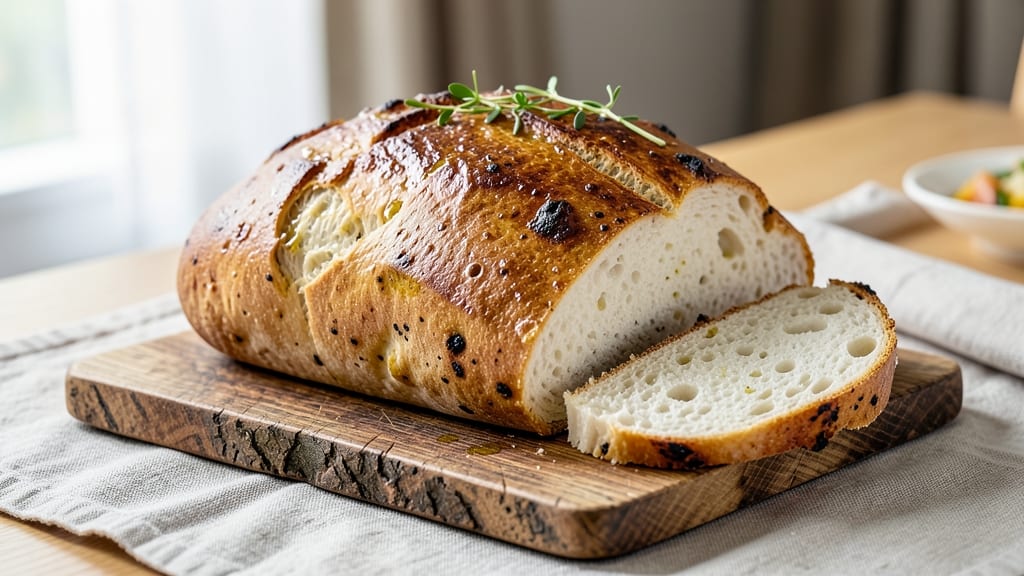
This authentic schiacciata bread recipe brings the rustic charm of Tuscany to your kitchen with its signature olive oil richness and crispy crust. 🌟 The secret lies in a simple dough of flour, water, yeast, and extra-virgin olive oil—no butter needed—shaped into a flat, irregular loaf that bakes to golden perfection.
Unlike commercial breads, schiacciata relies on traditional methods to create a crust that’s both sturdy and tender, with a subtle sweetness from the olive oil.
The magic happens over 24 hours, starting with a long fermentation that develops deep flavor and a light, airy crumb. I’ve perfected this technique to ensure your bread has a crispy exterior and a soft, slightly chewy interior—just like the bread you’d find in a Tuscan trattoria.
The dough is shaped freeform, then proofed until nearly doubled in size, which gives it that iconic rustic texture.
Once baked at 425°F, the bread releases an intoxicating aroma of warm olive oil and toasted flour. Serve it fresh with a drizzle of extra-virgin olive oil and a sprinkle of coarse salt, or use it to soak up sauces from pasta or stews.
This isn’t just bread—it’s a taste of Italy’s heartland, made simple yet authentic.
Ready to master this foolproof method? The process is straightforward, but the result is anything but ordinary. Let’s get started—your kitchen will smell like Tuscany before you know it.
Ingredients for authentic schiacciata bread
Olive oil, flour, and time create magic—this Tuscan bread needs just 11 ingredients for a loaf that tastes like Italy.
| Ingredient | Amount | Notes |
|---|---|---|
| All-Purpose Flour 🌾 | 4 cups | High-protein for structure (12-14%) |
| Active Dry Yeast 🍞 | ¼ oz | Freshly opened for vitality |
| Extra-Virgin Olive Oil 🫒 | ¾ cup | Fruity, Italian variety preferred |
| Granulated Sugar 🍚 | 1 tbsp | Feeds yeast for fermentation |
| Diamond Crystal Kosher Salt 🧂 | 1 ½ tsp | Coarse grain for texture |
| Warm Water 💧 | 1 ½ cups | 105-110°F for yeast activation |
| Coarse Sea Salt 🧂 | ¼ cup | For final crust sprinkle |
| Cornmeal 🌽 | ¼ cup | For baking sheet dusting |
| Semolina Flour 🌾 | ⅛ cup | Optional for extra crunch |
| Fresh Rosemary 🌿 | ⅛ cup | Chopped, Tuscan variety ideal |
| Fresh Thyme 🌿 | 0.06 cup | Leaves only, finely chopped |
The olive oil is non-negotiable—Italian extra-virgin with fruity notes gives that authentic schiacciata flavor. Penzeys or Whole Foods carry excellent Tuscan varieties, or grab a high-quality imported bottle at your local gourmet market. For flour, King Arthur or Caputo Tipo 00 work best, but any high-protein all-purpose (12-14%) will do. The yeast should be freshly opened—if it's been sitting in your pantry for months, toss it. Rosemary and thyme? Fresh is ideal, but dried works at half the amount if you're in a pinch. The coarse sea salt matters too—it should be flaky, not powdery, for that perfect crust.
No extra-virgin olive oil? Light olive oil works in a bind, but the flavor won't be as rich. Short on rosemary? Dried at half the amount or swap for fresh sage. The cornmeal is just for dusting—semolina or all-purpose flour works too if that's what you've got. The sugar can be honey or maple syrup if preferred, but granulated keeps it neutral. For the salt, Diamond Crystal kosher is best, but Morton iodized works fine. The water temperature is critical—too hot kills yeast, too cold and it won't activate. Use an instant-read thermometer if you're unsure.
This dough needs 24 hours of rest—don't rush it. Store the shaped dough in the fridge overnight, covered with a damp towel. The final loaf keeps well at room temperature for 2-3 days, wrapped in a clean kitchen towel. For longer storage, freeze the baked loaf for up to 3 months. To reheat, wrap in foil and warm at 300°F for 10 minutes. The crust gets crunchier as it sits, so slice just before serving. Leftovers? Toast them—schiacciata makes amazing croutons.
Why You'll Love This Recipe
- No-Knead Magic: The dough comes together in minutes—just mix, rest, and press. No stand mixer, no arm workout, just you and a bowl. Honestly, I’ve made this while scrolling through my phone; it’s that unfussy.
- Olive Oil Luxury: That first bite? Pure Mediterranean comfort. The extra-virgin olive oil gives it a rich, buttery depth without the butter—plus, it stays fresh for days. (Yes, even on a Tuesday night.)
- Everyday Hero: Tear it for sandwiches, toast it for breakfast, or serve it warm with dinner. It’s the bread that does it all, and the best part? It’s cheaper than store-bought but tastes like you slaved over it.
- Leftovers? No Problem: This bread freezes like a dream—just wrap slices in foil and reheat in a toaster. I’ve pulled it out for weeks, and it’s still as soft and flavorful as day one. Budget-friendly? Absolutely. Reliable? Even more so.
Step-by-step instructions for authentic schiacciata bread
Here's how to craft this iconic Tuscan bread with crispy crust and tender crumb.
👨🍳 Step 1: Activate the Yeast and Mix the Dough
In a large bowl, dissolve the 1 tbsp granulated sugar in the 1.5 cups warm water (test temperature with your finger—it should feel warm but not hot). Sprinkle the 0.25 oz active dry yeast over the water and let it sit for 5-10 minutes until it becomes frothy and bubbly. This tells you your yeast is alive and ready to work.
Add the 4 cups all-purpose flour and 1.5 tsp diamond crystal kosher salt to the bowl, then pour in the 0.75 cup extra-virgin olive oil. Using a wooden spoon or your hands, mix until a shaggy dough forms. The dough will be sticky—this is normal for schiacciata. Knead for 5 minutes by hand until the dough becomes smooth and elastic, pulling away from the sides of the bowl.
🥘 Step 2: Incorporate Herbs and First Rise
Transfer the dough to a lightly oiled surface and gently shape it into a rough rectangle. Using your fingertips, make shallow dimples across the surface. Sprinkle the 0.125 cup chopped fresh rosemary and 0.0625 cup chopped fresh thyme evenly over the dough, then press them lightly into the surface.
Place the dough in a lightly oiled bowl, cover with a damp towel, and let it rise in a warm place for 1-2 hours or until it has doubled in size. You'll know it's ready when the dough springs back slowly when poked and has a few bubbles on the surface. This first rise develops flavor and structure—don't rush it.
🔥 Step 3: Shape and Second Rise
Turn the dough out onto a lightly floured surface and gently shape it into a rough oval, about 1½ inches thick. The dough should be slightly sticky but manageable. Place the shaped dough on a parchment-lined baking sheet and cover loosely with plastic wrap. Let it rise for another 1-2 hours until it has puffed up noticeably and the edges look slightly rounded.
While the dough rises, preheat your oven to 425°F. Sprinkle 0.25 cup cornmeal evenly over the baking sheet, then dust the top of the dough with the 0.125 cup semolina flour and 0.25 cup coarse sea salt, pressing lightly so it adheres. This creates that signature crunchy crust and salty finish.
🔥 Step 4: Bake to Golden Perfection
Bake the schiacciata for 20-25 minutes until the crust is deep golden brown and sounds hollow when tapped on the bottom. The interior should register 190-200°F on an instant-read thermometer. Rotate the baking sheet halfway through for even browning—this is especially important for thick doughs like schiacciata.
Remove from the oven and let it cool on a wire rack for at least 15 minutes before slicing. The bread will continue to firm up as it cools, and the crust will develop even more crunch. Slice with a serrated knife for clean cuts through the tender crumb and crisp exterior.
Pro Tips For Making Authentic Schiacciata Bread
- Use Warm Olive Oil: Schiacciata’s flavor hinges on that olive oil—don’t skimp on heating it. Warm about ¼ cup of your extra-virgin olive oil in a small saucepan until it’s just shy of smoking (around 160°F), then let it cool slightly before mixing it into the dough. I learned this the hard way after making a batch that tasted flat; the oil needs to wake up its flavor.
- Knead Until Silky: This dough isn’t about brute force—it’s about patience. Work the flour, yeast, and oil until the dough is smooth, elastic, and leaves a clean windowpane when stretched thin (about 8–10 minutes by hand). Over-kneading dries it out; under-kneading makes it gummy. Trust the stretch test—it’s your best friend here.
- Salt the Dough Twice: Sprinkle half the kosher salt into the dry ingredients first, then add the rest to the flour before kneading. The second dose dissolves better when the dough is wet, ensuring even distribution. I used to lump it all in at once, and some batches turned out splotchy—this fixes that.
- Proof in a Bowl: Skip the greased proofing bowl—line it with a damp towel instead. The dough rises faster and stays supple without sticking. After the first rise, punch it down and let it rest 10 minutes before shaping; this relaxes the gluten and keeps the crumb tender. (Yes, even if you’re impatient like me.)
Common mistakes when making this dish
Over-Kneading the Dough
This dough is intentionally sticky and doesn't need vigorous kneading—overworking it develops gluten too much, resulting in a dense, chewy texture instead of the signature tender crumb. I recommend kneading just until the dough pulls away from the sides of the bowl (5 minutes max by hand).
The dough should remain slightly tacky, almost like wet sand. If it feels too firm or elastic, you've gone too far. 💫
Skipping the Cold Proof
Many recipes call for a cold proof in the fridge, but traditional schiacciata relies on room-temperature fermentation for that authentic flavor. However, if your kitchen is too warm (above 75°F), move the dough to the fridge for the final 12-16 hours of proofing.
This slows fermentation and prevents overproofing. Just bring it to room temp for 30 minutes before baking to avoid a dense loaf.
Using Low-Quality Olive Oil
The olive oil is the soul of schiacciata—don't skimp on quality! A cheap, bland olive oil will make your bread taste flat and lack the rich, fruity depth that defines this Tuscan classic. I recommend using 100% extra-virgin olive oil with a harvest date within the last year.
Brands like Colavita or Bertolli are great starting points, or seek out Italian varieties labeled "fruity" or "peppery" on the bottle.
Ignoring the Dough's Sticky Nature
This dough is meant to be sticky—resisting it leads to frustration and often results in a tougher loaf. Wet your hands slightly when handling, and use a dough scraper to help shape without adding extra flour.
The stickiness actually helps create that signature tender crumb. If you're nervous, dust your surface with just 1-2 tablespoons of flour total, not a full cup that will dry out the dough.
Baking at the Wrong Temperature
Schiacciata needs a hot oven (425°F) to develop that crispy crust quickly. Baking at 375°F or lower will result in a pale, gummy crust that lacks the proper texture. Preheat your oven for at least 30 minutes before baking, and use the middle rack for even heat circulation.
The high heat also helps create those beautiful caramelized pockets on the crust.
Overproofing the Dough
An overproofed dough collapses during baking, leaving you with a flat, dense loaf instead of the airy, rustic texture you want. To test readiness, gently press your finger into the dough—it should spring back slowly (not immediately) and leave a slight indentation.
If it springs back quickly or looks puffy with large bubbles, it's overproofed. For room-temperature proofing, keep an eye on the dough after 1 hour and adjust timing based on your kitchen's warmth.
Nutrition facts
Frequently asked questions
Can I make schiacciata without olive oil?
While you can substitute 1-2 tablespoons of melted butter for the olive oil, the flavor won't be authentic. Olive oil is essential for schiacciata's signature taste and texture—it creates that crispy crust while keeping the crumb tender. If you're avoiding oil for dietary reasons, try using avocado oil instead, though the flavor will differ slightly.
How do I know when the dough is fully proofed?
The dough is ready when it's nearly doubled in size and springs back slowly when gently poked. Press your finger about ½ inch into the dough—if it leaves a slight indentation but doesn't bounce back immediately, it's perfect. Overproofing happens when the dough springs back quickly or looks puffy with large bubbles. Keep an eye on it after 1 hour of proofing.
Can I add other herbs besides rosemary and thyme?
Traditional Tuscan schiacciata often includes fresh sage or oregano for extra depth. You can also add garlic powder (½ tsp) or red pepper flakes (¼ tsp) for a spicy kick. Just keep the total herbs to about ¼ cup chopped fresh to avoid overpowering the dough. Dried herbs should be used at half the amount of fresh.
Why does my schiacciata taste bland?
Bland flavor usually means one of three things: low-quality olive oil, insufficient proofing time, or too much flour during shaping. First, double-check your olive oil—it should be 100% extra-virgin with a fruity aroma. Second, ensure the dough proofed for the full 24 hours (or at least 4-6 hours total). Finally, resist adding extra flour when handling the sticky dough—it can dull the flavor.
How should I store leftover schiacciata?
Wrap the cooled loaf in a clean kitchen towel or beeswax wrap to keep it soft. At room temperature, it stays fresh for 2-3 days. For longer storage, freeze slices in an airtight container for up to 3 months. To revive, toast slices in a 350°F oven for 5-7 minutes or warm wrapped in foil for 10 minutes. The crust gets crunchier over time, so slice just before serving.