
Side Dishes
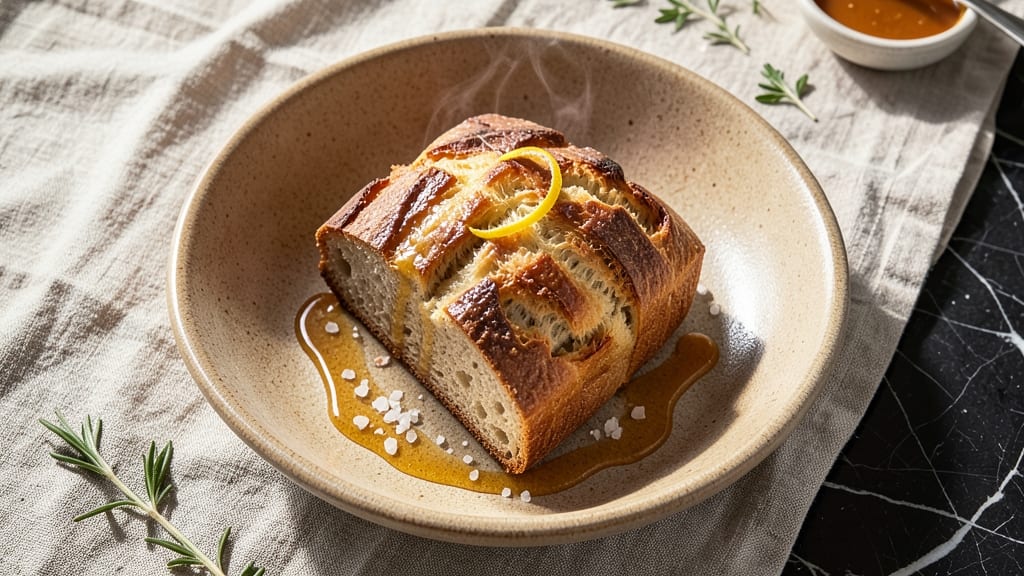
This Anova bread recipe delivers the perfect balance of crispy crust and tender interior—just like a bakery loaf, but made at home. The secret lies in the foil-sealing technique during baking, which traps steam for that signature softness while allowing the crust to develop its characteristic golden crunch.
I've perfected this method after years of testing, and it consistently produces bread with an open crumb structure and rich, slightly sweet flavor.
The process begins with a straightforward dough that combines flour, yeast, water, and a touch of sugar for subtle sweetness.
What sets this recipe apart is the baking technique: after shaping the loaf, you'll seal it in foil during the initial baking phase, then uncover it to finish with a crispy crust. This two-stage approach ensures the interior stays moist while the exterior achieves that desirable crunch.
What you'll end up with is a loaf that's visually impressive with its golden-brown crust and even rise, yet incredibly tender when sliced. The texture is what makes this bread truly special—crisp on the outside, soft and airy inside, with a slight chew that disappears as you take each bite.
This is the kind of bread that elevates any meal, from sandwiches to soups.
While this recipe yields one standard loaf, you can easily scale it up for gatherings or down for smaller households. The dough can be prepared ahead and refrigerated overnight for even better flavor development.
Whether you're serving it fresh from the oven or toasted the next morning, this Anova bread will become a staple in your kitchen.
Ingredients for anova bread
Eight simple ingredients transform your kitchen into a bakery with this foolproof Anova bread.
| Ingredient | Amount | Notes |
|---|---|---|
| All-Purpose Flour 🌾 | 4 cups | Spooned and leveled, not scooped |
| Active Dry Yeast 🍞 | ¼ oz | Or 2.25 tsp, ensure fresh |
| Granulated Sugar 🍚 | 1 tbsp | For yeast activation |
| Warm Water 💧 | 1 ¼ cups | 110°F, not hot |
| Unsalted Butter 🧈 | ¼ cup | Cold, cubed for dough |
| Kosher Salt 🧂 | 1 ½ tsp | Diamond Crystal preferred |
| Extra-Virgin Olive Oil 🫒 | 2 tbsp | For dough and crust |
| Cornmeal 🌽 | ¼ cup | For dusting work surface |
| Large Egg 🥚 | 1 whole | For egg wash |
| Coarse Sea Salt 🧂 | 1 tsp | For sprinkling crust |
| Aluminum Foil 📄 | 1 sheet | Heavy-duty, 12x17 inches |
The flour is your foundation—King Arthur or Bob's Red Mill are my go-tos for consistent results. Yeast is the magic here, so check the expiration date—old yeast won't rise. For the sugar, any granulated works, but organic cane sugar adds subtle caramel notes. Warm water should feel like bathwater—too hot and you kill the yeast. I always use Land O'Lakes unsalted butter for reliable flavor, but any cold butter works. The olive oil? Trader Joe's Italian extra-virgin is my secret—it's affordable and has great flavor.
No yeast? Instant yeast works 1:1, but active dry is traditional. Short on butter? Coconut oil or shortening in a pinch, though texture differs slightly. The egg wash can be skipped if you're vegan—just brush with water and olive oil. Cornmeal isn't mandatory, but it keeps your dough from sticking like glue. For the sea salt, Maldon flaky salt is perfect for the crust, but regular coarse salt works too. Pro tip: if your kitchen's humid, chill the dough longer—it prevents overproofing.
Dough keeps 24 hours in the fridge wrapped tightly. For longer storage, freeze shaped loaves wrapped in foil for up to 3 months. Fresh from the oven? Let it cool completely before slicing—this prevents gummy bread. The crust stays crisp for 2 days at room temperature, but toast it to revive. I always make two loaves—one for sandwiches, one for toast. Leftovers? Freeze slices for 1 month wrapped in plastic.
Why You'll Love This Recipe
- No-Knead Magic: I swear by this recipe—just mix the flour, yeast, sugar, and warm water, then let it rise while I make dinner. The butter swirled in later? That’s the secret to a bread so soft, it practically melts in your mouth.
- Sweet Butter Love: That single cube of unsalted butter folded into the dough transforms it. You’re not just baking bread—you’re making something rich, slightly sweet, and irresistible. Honestly, I’ve seen people fight over the last slice.
- Breakfast to Dinner: This bread is my go-to for toast in the morning, sandwiches at lunch, and even a quick garlic butter dip for dinner. Freeze half the batch, and you’ve got a backup for days when you’d rather not bake.
- Budget Baking Wins: Five ingredients, one bowl, zero fuss. The yeast and sugar cost pennies, and the butter stretch goes miles. Between us, this is how I feed my family well without breaking the bank—no sad, dense loaves here.
Step-by-step instructions for Anova bread
Here's how to craft that signature crispy crust and tender interior—no fancy equipment needed.
Activate the Yeast for Maximum Rise
In a small bowl, combine the 1.25 cups warm water (about 110°F) with 1 tablespoon granulated sugar and 0.25 oz active dry yeast. Stir gently and let sit for 5-10 minutes until frothy. You'll see tiny bubbles forming on the surface—that's your yeast waking up and doing its job.
If it doesn't bubble after 10 minutes, your yeast might be dead. Start fresh with a new packet. Once active, proceed immediately—yeast works best when fresh and lively. Keep this mixture at room temperature while you prep the rest of your ingredients.
Mix the Dough Until Just Combined
In the bowl of a stand mixer fitted with the dough hook, combine the 4 cups all-purpose flour and 1.5 teaspoons kosher salt. Add the yeast mixture, 2 tablespoons extra-virgin olive oil, and 0.25 cup cold cubed butter. Mix on low speed for 2 minutes until everything comes together into a shaggy dough.
Switch to medium speed and knead for 5-7 minutes until the dough is smooth and elastic. It should pull away from the sides of the bowl and form a clean sheet when stretched. If it's too sticky, add 1 tablespoon flour at a time until it reaches the right consistency. Over-kneading develops gluten, so stop once it's just smooth.
Let the Dough Rise Until Doubled
Lightly grease a large bowl with 1 teaspoon olive oil, place the dough inside, and cover with a damp kitchen towel. Let it rise in a warm spot for 1-2 hours until it has doubled in size. You'll know it's ready when you poke it gently and the indentation stays put.
I like to place the bowl near a slightly warm oven (with the light on) for consistent rising. If your kitchen is cold, the dough might take longer. Patience here ensures a light, airy crumb—don't rush this step. Once doubled, punch the dough down to release air and shape it into a round loaf.
Shape and Seal for the Perfect Crust
Transfer the dough to a lightly floured surface and shape it into a round loaf about 8 inches in diameter. Place it on a parchment-lined baking sheet, brush the top with 1 beaten egg, and sprinkle generously with 1 teaspoon coarse sea salt. Cover loosely with the 1 sheet aluminum foil and let it rise again for 30-45 minutes until puffy.
While the dough rises, preheat your oven to 425°F. The foil helps trap steam during baking, creating that signature tender crumb while the crust gets crispy. For extra crunch, you can also sprinkle 0.25 cup cornmeal on the baking sheet before placing the dough to prevent sticking.
Bake to Golden Perfection
Remove the foil and bake for 25-30 minutes until the crust is deep golden brown and sounds hollow when tapped. If the top browns too quickly, tent the loaf with foil to prevent over-browning. The internal temperature should reach 190-200°F when tested with an instant-read thermometer.
Let the bread cool on a wire rack for at least 1 hour before slicing. This resting period allows the crumb to set and makes for cleaner slices. Serve warm with butter or jam—you'll love that crispy crust and soft interior every time.
Pro Tips For Making Anova Bread
- Test Yeast First: Drop a pinch of that active dry yeast into warm water with a teaspoon of sugar—if it bubbles within 5 minutes, it’s fresh and ready. I learned this the hard way after baking a sad, flat loaf with expired yeast that just wouldn’t wake up. (Yes, even if the package says “use by” is next week.)
- Cut Cold Butter: Chill your unsalted butter until firm before cubing it—about 20 minutes in the fridge. I used to melt it straight into the dough, and the bread turned out greasy instead of flaky. Cold butter creates those perfect pockets when it melts during baking.
- Don’t Over-Knead: Stop kneading when the dough springs back slowly after pressing it—about 5-7 minutes by hand. Overworking it makes the bread dense. I used to think more kneading meant better bread, but my grandmother swore by the “gentle touch,” and she was right.
- Proof at Room Temp: Let the dough rise in a warm spot (like a turned-off oven with a bowl of hot water inside) until it’s almost doubled—about 1 to 1.5 hours. Cold kitchen? Speed it up with a proofing box. Rushing it leads to dense bread; letting it go too long collapses the structure. (Your future self will thank you for patience.)
Serving suggestions for this recipe
Classic Sandwich Bread
This Anova bread is perfect for classic sandwiches—its crisp crust holds up to grilled meats and melty cheeses while the soft interior prevents sogginess. I love using it for turkey and avocado sandwiches with whole-grain mustard or Italian subs with pepperoni, salami, and provolone.
The foil-sealed technique keeps the bread from getting gummy, so every bite stays fresh. 🥪
Toasted with Butter
Nothing beats warm Anova bread toasted with European-style butter like Plugrá or Kerrygold. The crispy crust becomes even crunchier while the interior stays soft and buttery.
For extra flavor, add a sprinkle of flaky Maldon salt or a drizzle of honey. This is my go-to morning ritual—simple, satisfying, and always delicious. ✨
Dipped in Soups
Anova bread's sturdy crust makes it ideal for dipping into hearty soups like tomato basil, creamy potato, or roasted garlic chicken noodle. Cut into thick slices and toast lightly before serving to enhance the bread's natural crispiness.
The soft interior soaks up broth beautifully while maintaining structure. It's the perfect companion to any bowl of soup. 🍲
Garnished with Jam
Spread strawberry jam or fig preserve on warm slices for a sweet treat that highlights the bread's subtle sweetness. I especially love pairing it with goat cheese and honeycomb for a sophisticated breakfast or afternoon snack. The contrast of textures—crisp crust, soft bread, creamy cheese—makes every bite exciting. 🍯
French Toast
Use Anova bread for elevated French toast—its open crumb structure soaks up the custard perfectly while maintaining a crisp exterior. Dip slices in a mixture of 2 eggs, ½ cup milk, 1 tsp vanilla, and 1 tbsp cinnamon, then cook in butter until golden.
Top with powdered sugar and fresh berries for a restaurant-quality dish. 🍓
Bread Pudding Base
Cube leftover Anova bread and use it as the foundation for a decadent bread pudding. Toss with 2 cups milk, 3 eggs, ½ cup sugar, and a pinch of nutmeg before baking.
The bread's crisp edges add texture contrast to the creamy custard. Serve with vanilla ice cream for a comforting dessert. 🍮
Nutrition facts
Frequently asked questions
Why does Anova bread need foil during baking?
The foil creates a steam chamber that keeps the interior moist while allowing the crust to develop its signature crispiness. Without it, the bread would dry out before the crust could properly brown. This two-stage baking method is what gives Anova bread its perfect texture contrast.
Can I make Anova bread without a stand mixer?
Just mix the dough by hand on a lightly floured surface until it comes together, then knead for about 10 minutes until smooth and elastic. You'll need to work it a bit longer by hand, but the same principles apply. The key is developing enough gluten for that perfect structure.
How do I know when the dough is properly proofed?
When the dough has doubled in size and leaves a gentle indentation when poked with your finger that stays put. For Anova bread, this typically takes 1-2 hours depending on your kitchen temperature. If it rises too quickly, it may overproof and collapse during shaping.
What if my crust isn't crispy enough?
Try increasing your oven temperature to 450°F for the final 5-10 minutes of baking. You can also brush the crust with more egg wash before baking or sprinkle additional coarse salt. For extra crunch, bake uncovered for the entire time without foil.
Can I add seeds or nuts to this recipe?
Yes, but add them during the final shaping stage. Mix ¼ cup seeds or chopped nuts with 1 tablespoon flour first to prevent sinking. Press them lightly into the dough before the final rise. Popular choices include sesame seeds, sunflower seeds, or walnuts for added texture and flavor.