
Side Dishes
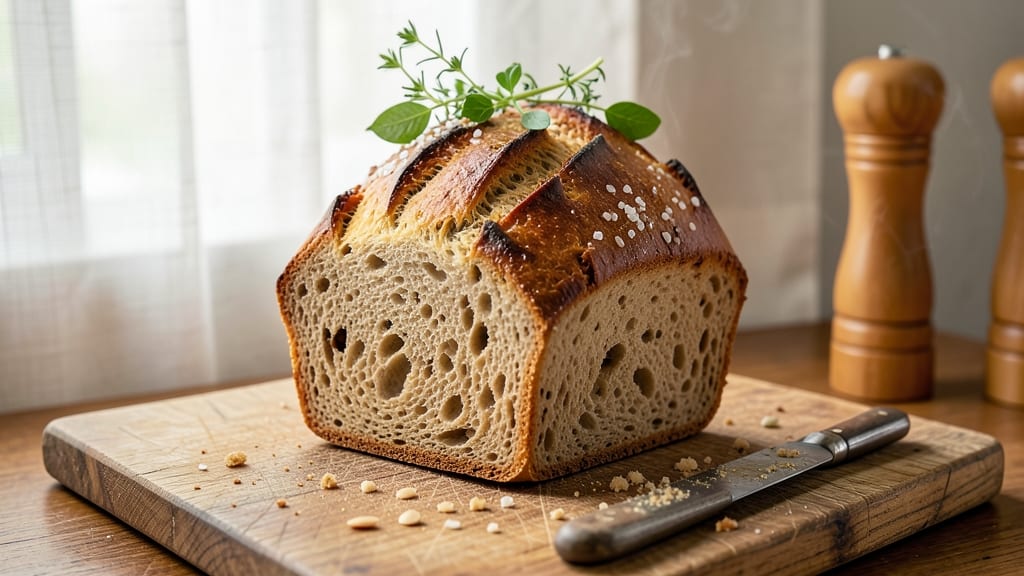
This almond flour artisan bread delivers the perfect balance of crusty crunch and nutty sweetness—all while being naturally gluten-free and packed with protein. 🌟 The secret lies in proper hydration and resting times, which transform fine almond flour into a bread with impressive texture and depth.
Unlike traditional loaves, this version stays moist without drying out, thanks to the fat content in almond flour.
What sets this recipe apart is the foolproof method for achieving an open crumb structure and golden crust, even without gluten.
The dough requires a longer fermentation (up to 24 hours) to develop flavor, but the result is worth the wait—a loaf with a satisfying snap and a tender, slightly sweet interior. Perfect for those avoiding gluten or simply craving a nutritious twist on classic bread.
By the time it emerges from the oven, you'll have a restaurant-worthy loaf with a crisp exterior and a soft, nutty center that pairs beautifully with soups, butter, or jam.
The almond flour adds a delicate sweetness and rich texture, making this bread ideal for toast, sandwiches, or simply enjoying on its own. Let's get started on this game-changing recipe.
Optional toppings like seeds or herbs can elevate the flavor further, while the bread's versatility makes it a staple for any kitchen. Whether you're new to almond flour baking or a seasoned pro, this method ensures success every time. Here's everything you need to create your perfect loaf.
Ingredients for almond flour artisan bread
The secret to this restaurant-worthy almond flour bread lies in these carefully chosen ingredients—each playing a role in that perfect crusty crunch and tender interior.
| Ingredient | Amount | Notes |
|---|---|---|
| Fine Almond Flour 🌰 | 3 cups | Blanched, not bitter almond flavor |
| Warm Water 💧 | 1 ¼ cups | 105°F for optimal hydration |
| Psyllium Husk Powder 🌿 | 2 tbsp | Key for gluten-free structure |
| Apple Cider Vinegar 🍎 | 1 tbsp | Activates psyllium husk |
| Salt 🧂 | 1 ½ tsp | Diamond Crystal preferred |
| Instant Yeast 🍞 | 1 ½ tsp | Vegan-certified for fermentation |
| Olive Oil 🫒 | ½ cup | Extra-virgin for richness |
| Sunflower Seeds 🌻 | ¼ cup | For topping and crunch |
| Sesame Seeds 🌾 | 1 tbsp | Optional for extra texture |
| Maple Syrup 🍯 | 1 tbsp | Enhances nutty sweetness |
| Vegan Butter 🧈 | 2 tbsp | Melted for brushing crust |
Almond flour is the star here, so choose blanched, finely ground—the kind labeled for baking, not bitter almond flour. Bob's Red Mill or Anthony's Goods are my go-tos, but any reputable brand works. The psyllium husk powder might be new to you—it's what gives this bread its structure without gluten. Frontier Co-op sells it in bulk if you want to stock up. For the yeast, Fleischmann's RapidRise is vegan-certified and works perfectly. Pro tip: if your almond flour is old, toast it briefly in a dry pan to revive its flavor—just don't burn it!
No psyllium husk? Ground flaxseed at double the amount works in a pinch, though texture won't be identical. Short on sunflower seeds? Pumpkin seeds or chopped walnuts add similar crunch. The maple syrup can be swapped for agave nectar if preferred, but maple has that perfect caramel note. For the yeast, if you're in a rush, instant yeast is your best friend—it activates faster. And if you're worried about the dough being too sticky, add 1 extra tablespoon of almond flour when mixing. Trust me on this—it makes all the difference!
This dough needs time—at least 24 hours in the fridge for maximum flavor development. Store any leftovers wrapped tightly in parchment and foil for up to 5 days. For longer storage, slice and freeze—it reheats beautifully in a toaster or oven. The seeds on top? Save some for garnishing slices later. And if you make a double batch? Freeze the second loaf—it's perfect for quick breakfasts all week.
Why You'll Love This Recipe
- No-Fuss Mixing: I swear by the 5-minute stir—just almond flour, warm water, and psyllium husk powder. The psyllium does all the heavy lifting; no kneading, no waiting for dough to rise. Honestly, my lazy Sundays just got a whole lot better.
- Nutty Crust Perfection: That first bite? Crispy, golden crust with a tender crumb inside—like a cross between a baguette and a cookie. The apple cider vinegar adds a subtle tang that keeps it from tasting too sweet, even though almond flour is naturally rich.
- Meal Prep MVP: Slices beautifully for toast, sandwiches, or even charcuterie boards. Between us, I’ve had it last five days in the fridge—still fresh, still sturdy. Perfect for when I forget to buy bread or need a grain-free option that won’t crumble.
- Budget-Friendly Luxury: Almond flour’s pricey, but one batch stretches for days. The psyllium husk powder (a fraction of the cost of yeast) makes it rise like magic, and I’ve even used it to bulk up other recipes. Fancy loaf, zero guilt.
Step-by-step instructions for almond flour artisan bread
Let's create a golden-crusted, nutty-sweet loaf that rivals traditional bread—just with almond flour magic.
👨🍳 Step 1: Activate the Psyllium Husk Mixture
In a medium bowl, whisk together the 1.25 cups warm water (about 105°F), 2 tbsp psyllium husk powder, 1 tbsp apple cider vinegar, and 1.5 tsp salt. Let it sit for 5 minutes—you'll see it thicken into a gel-like consistency. This is your gluten-free binder, so don't skip the wait!
I like to give it a quick stir after 3 minutes to ensure everything's fully hydrated. The mixture should resemble thick pudding when ready. If it looks too thin, add another ½ tsp psyllium husk powder and mix again.
👨🍳 Step 2: Mix the Wet and Dry Ingredients
In a large mixing bowl, combine the 3 cups fine almond flour, 1.5 tsp instant yeast, and 1 tbsp maple syrup. Make a well in the center and pour in the psyllium mixture and 0.5 cup olive oil. Mix with a wooden spoon until everything comes together into a shaggy dough.
This dough will be sticky—way stickier than wheat flour dough. Don't panic! The psyllium husk is doing its job. Use your hands to knead for 3-4 minutes until smooth and elastic. If it's too dry, add 1 tsp warm water; if too sticky, add 1 tbsp more almond flour.
🥘 Step 3: Shape and Rest the Dough
Lightly oil a bowl with 1 tbsp olive oil and transfer the dough. Cover with a damp towel and let it rise at room temperature for 1 hour. You won't see much volume change—this isn't traditional yeast bread—but the dough will firm up slightly and become more pliable.
Here's the thing—almond flour dough doesn't rise like wheat. Instead, it develops structure through hydration and psyllium. After resting, gently shape the dough into a 9x5-inch loaf pan (or a round boule shape if free-form). Press it down lightly—about ½ inch thick—for even baking.
🔥 Step 4: Bake for Crusty Perfection
Preheat your oven to 375°F. Brush the top of the dough with melted vegan butter (use all 2 tbsp) and sprinkle with 0.25 cup sunflower seeds and 1 tbsp sesame seeds. Bake for 35-40 minutes until the top is golden brown and the internal temperature reaches 205°F.
Don't open the oven during baking—steam is crucial for that artisan crust! If the top browns too quickly, tent loosely with foil. The bread is done when it sounds hollow when tapped on the bottom. Let it cool for 10 minutes before slicing—this prevents a gummy crumb.
⏰ Step 5: Rest and Serve for Best Texture
Transfer the bread to a wire rack and let it cool completely (at least 1 hour). This resting period is key—it allows the crumb to set and the flavors to meld. The exterior will be crispy, while the interior remains tender with a subtle sweetness from the almond flour and maple syrup.
Slice with a serrated knife for clean cuts. Serve warm with vegan butter or as part of a charcuterie board. Store leftovers wrapped in a clean towel to maintain freshness for up to 3 days—or freeze for longer storage.
Pro Tips For Making Almond Flour Artisan Bread
- Mix the Psyllium First: Mix the psyllium husk powder with the warm water and apple cider vinegar before adding anything else—this creates a gel-like binder that actually holds the dough together. I used to add it last, and the bread always ended up dense and crumbly.
- Sift That Almond Flour: Skip the sifting, and you’ll end up with a bread that’s uneven in texture—some parts will be too compact, others too dry. Use a fine-mesh sieve and tap it gently over a bowl to break up clumps and aerate the flour. It takes 30 seconds but makes a real difference in the crumb.
- Don’t Overmix the Dough: Once you add the psyllium mixture to the almond flour, stir just until combined—maybe 10-12 strokes max. Overmixing develops gluten (which almond flour lacks), and you’ll end up with a tough, chewy loaf instead of a light, airy one. This isn’t gluten-free bread; treat it like a delicate batter.
- Let It Rest—Seriously: After mixing, let the dough sit covered for at least 20 minutes. This isn’t proofing; it’s giving the psyllium time to fully hydrate and bind. I skipped this once and ended up with a bread that fell apart when sliced. Sounds weird, but it works: patience here means a bread that holds its shape.
Common mistakes when making this recipe
Skipping the Psyllium
Psyllium husk is the secret ingredient that mimics gluten's structure, so never skip it—even if you think your almond flour is fine enough. Without it, your bread will crumble like sand.
If you're avoiding psyllium for dietary reasons, try 1 tbsp ground flaxseed mixed with 3 tbsp water as a substitute, but expect a denser texture. I’ve tried this, and while it works, the crumb won’t be as light. 🌱
Overmixing the Dough
Almond flour dough is delicate—overmixing develops gluten-like toughness even without gluten, making the bread dense and chewy. Mix just until combined (3-4 minutes by hand), then stop. If the dough feels too stiff, add 1 tsp warm water; if too sticky, add 1 tbsp almond flour.
I’ve ruined a batch by overmixing, and trust me, you’ll taste the difference. 💫
Rushing the Resting Time
This dough needs time to hydrate and develop flavor—skipping the 1-hour rest or the 24-hour fridge ferment results in a dense, flavorless loaf. The psyllium needs time to fully activate, and the almond flour absorbs moisture gradually.
If you’re short on time, at least let it rest 30 minutes at room temp before shaping, but the longer it rests, the better the texture. 🕒
Ignoring the Water Temperature
The water must be warm (105°F), not hot or cold. Hot water kills the yeast, while cold water slows hydration. Use a thermometer to check—if you don’t have one, let tap water sit for 10 minutes after boiling to cool to the right temp.
I’ve seen batches fail because of this simple oversight. 🌡️
Overbaking for Crust
Almond flour bread browns quickly, but don’t bake it until dark golden—it’ll dry out. Aim for a medium golden-brown crust and check the internal temp at 205°F. Overbaking turns the crumb gummy.
If the top browns too fast, tent with foil early. I’ve had to pull bread out before it was fully baked just to save it. 🔥
Using Old Almond Flour
Almond flour oxidizes over time, turning bitter and losing moisture-absorbing properties. If your flour is older than 3 months, toast it in a dry pan for 2-3 minutes to revive it.
Fresh flour makes all the difference in flavor and texture. I keep mine in the freezer to extend its life. ⏳
Nutrition facts
Frequently asked questions about almond flour artisan bread
Why does my almond flour dough feel so sticky?
Almond flour absorbs moisture differently than wheat flour, and the psyllium husk creates a gel-like binder. The dough should be tacky but manageable—add 1 tbsp extra almond flour if needed, but avoid overmixing. The stickiness is normal and actually helps create that tender crumb!
Can I make this bread without psyllium husk?
While possible, the texture won't be as light. Try 1 tbsp ground flaxseed + 3 tbsp water as a substitute, but expect a denser loaf. The psyllium mimics gluten's structure—without it, your bread may crumble. For best results, stick with the recipe as written!
How do I get a crispier crust?
Preheat your oven to 400°F for the last 10 minutes of baking to boost browning. Brush the dough with melted vegan butter before baking, and sprinkle seeds generously. For extra crunch, bake until the crust is deep golden-brown (about 40-45 minutes).
Can I use this dough for sandwiches?
This bread holds up well for sandwiches, especially when slightly toasted. The almond flour adds a subtle sweetness that pairs beautifully with savory fillings. For extra stability, let the bread cool completely before slicing—this prevents a gummy texture when assembling sandwiches.
What if my bread turns out too dense?
Dense bread usually means the dough didn't rest long enough or was overmixed. Next time, ensure the 1-hour room temp rest and 24-hour fridge ferment aren't skipped. Also, check your almond flour—if it's old, toast it briefly to revive its texture. Fresh flour makes all the difference!