
Side Dishes
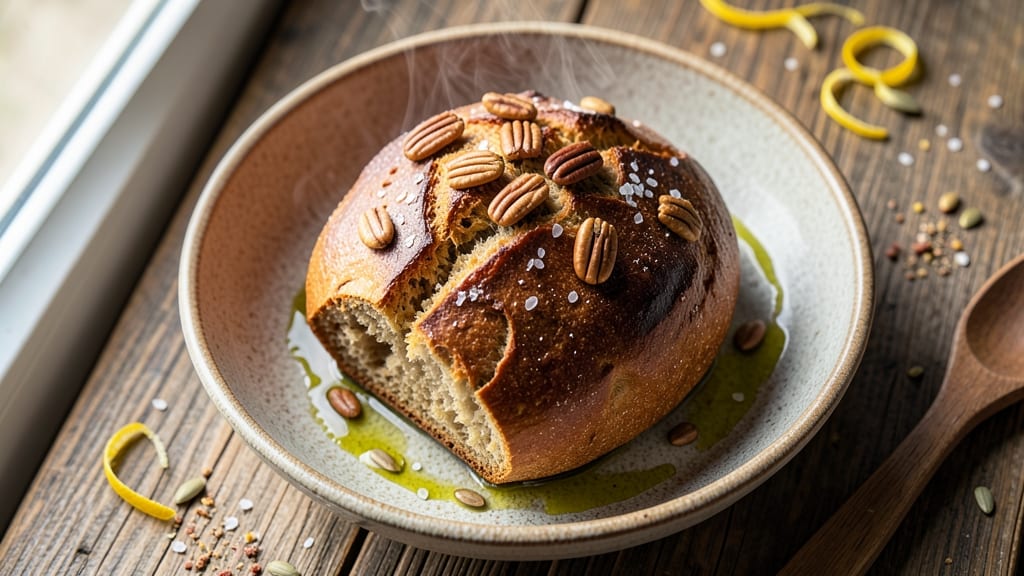
This acorn flour bread recipe delivers a gluten-free loaf with rich, nutty sweetness and a satisfying crunch that rivals traditional bread. The secret lies in acorn flour's unique texture—naturally gluten-free yet capable of creating a sturdy, flavorful crust when combined with the right binders.
I developed this recipe after years of experimenting with alternative flours, and it's become a staple in my kitchen for its versatility and hearty flavor profile.
The process is straightforward but requires patience—acorn flour absorbs moisture differently than wheat flour, so proper hydration and resting times are key. You'll mix wet and dry ingredients separately before combining, then shape the dough into a loaf and bake at a precise temperature to achieve that perfect golden crust.
The result? A loaf with a slightly dense yet satisfying crunch and a subtle sweetness that pairs beautifully with soups, plant-based butter, or even as a side to hearty stews.
What sets this bread apart is its ability to stay fresh for days while maintaining its texture, unlike many gluten-free loaves that dry out quickly. The acorn flour adds a unique earthy depth that complements both sweet and savory toppings—think toasted with almond butter or served alongside roasted vegetables.
This recipe is perfect for those avoiding gluten or simply looking to explore alternative flours without sacrificing flavor or texture.
Ready to bake? The instructions will guide you through each step, from mixing to baking, ensuring your loaf turns out perfectly every time. Whether you're a seasoned baker or new to gluten-free cooking, this recipe delivers a bread that's as nourishing as it is delicious.
Let's get started on creating your own batch of this exceptional loaf.
Ingredients for acorn flour bread
Acorn flour's earthy depth meets gluten-free binders for a loaf with restaurant-style crunch and nutty warmth.
| Ingredient | Amount | Notes |
|---|---|---|
| Acorn Flour 🌾 | 3 cups | Stone-ground for optimal texture |
| Brown Rice Flour 🌾 | 1 cup | Adds lightness and structure |
| Tapioca Starch 🌾 | ½ cup | Binds ingredients for elasticity |
| Ground Flaxseed 🌰 | 2 tbsp | Acts as egg substitute |
| Water 💧 | 1 ½ cups | Room temperature preferred |
| Cold-Pressed Olive Oil 🫒 | ¼ cup | Extra-virgin for richness |
| Apple Cider Vinegar 🍏 | 1 tbsp | Activates gluten-free binders |
| Maple Syrup 🍯 | ¼ cup | Natural sweetener |
| Sea Salt 🧂 | 1 ½ tsp | Diamond Crystal preferred |
| Dried Yeast 🍞 | ½ tsp | Active dry preferred |
| Ground Cinnamon 🌿 | ½ tsp | Enhances nutty sweetness |
| Sesame Seeds 🌻 | 2 tbsp | For topping, toasted |
Acorn flour is the heart of this recipe—Bob's Red Mill or King Arthur brands yield the best texture. Look for stone-ground varieties, which retain more flavor and create a denser crumb. The brown rice flour adds lightness, so Bob's Red Mill again is my go-to (it's finely milled and absorbs moisture well). Tapioca starch is non-negotiable—it's what gives this bread its signature chew. If you can't find acorn flour locally, Amazon or specialty gluten-free stores like Sprouts usually carry it. Pro tip: Toast your acorn flour for 5 minutes in a dry pan before mixing to deepen its nutty aroma—(trust me, it makes a difference).
No acorn flour? Substitute half with buckwheat flour—it's got a similar earthy bite, though the color will be darker. Running low on tapioca starch? Arrowroot powder at the same amount works in a pinch, though the texture will be slightly less elastic. The flaxseed 'egg' is crucial—ground fresh is best, but pre-ground works if you're in a hurry. For the yeast, active dry is ideal, but instant yeast at half the amount works too (just mix it directly with the dry ingredients). The sesame seeds can be swapped for sunflower seeds or pumpkin seeds if you prefer a different crunch—(just toast them first).
This dough is temperamental—it needs at least 2 hours of resting time at room temp before shaping. Wrap it tightly in plastic wrap and let it rise in a warm spot (like your oven with the light on). The loaf keeps well for 5-6 days in an airtight container, though it's best within the first 3 days. For longer storage, slice and freeze portions—(3 months max). To revive stale slices, warm them in a 350°F oven for 5-7 minutes with a damp paper towel. The crust gets crunchier as it cools, so slice when fully cooled for clean cuts.
Why You'll Love This Recipe
- Five-Ingredient Magic: The ingredient list reads like a grocery store shortcut, but the result? A bread so tender it disappears on toast. No yeast, no kneading—just mix, steam, and slice. That’s right, no fancy equipment or waiting around.
- Nutty Earthy Crunch: The acorn flour gives it that deep, toasty warmth you’d expect from a sourdough, but with a subtle sweetness that lingers. Honestly, the first bite makes you wonder why you’ve never tried this before—it’s like a hug for your taste buds.
- Steam-Powered Speed: This bread comes together in under 20 minutes, start to finish. I’m talking microwave-steamed loaf, no oven required. Perfect for when you’re craving something fresh but don’t want to wait—or clean up.
- Budget-Friendly Staple: Brown rice flour and tapioca starch stretch your dollar without sacrificing texture. Between us, this is the kind of bread that makes grocery bills feel lighter while keeping your kitchen stocked for days. Slice it, freeze it, toast it later—no waste.
Step-by-step instructions for acorn flour bread
Here's how to craft a gluten-free loaf with perfect texture and nutty depth.
Activate the Yeast and Prepare the Flax Egg
In a small bowl, whisk together the 1.5 cups water, 0.5 tsp dried yeast, and 1 tbsp apple cider vinegar. Let this mixture sit for 5-10 minutes until it becomes frothy—this confirms your yeast is active. If it doesn't bubble, your yeast may be old, and you'll need to start over.
While waiting, prepare the flax egg by combining the 2 tbsp ground flaxseed with 6 tbsp additional water (not included in the recipe total). Stir vigorously and let it sit for 5 minutes until it thickens into a gel-like consistency. This acts as our egg substitute, binding the gluten-free flours together. The mixture should hold its shape when you lift the spoon—if it's too runny, add another teaspoon of flaxseed.
Mix the Wet and Dry Ingredients
In a large mixing bowl, combine the 3 cups acorn flour, 1 cup brown rice flour, 0.5 cup tapioca starch, 1.5 tsp sea salt, and 0.5 tsp ground cinnamon. Whisk these dry ingredients together until evenly distributed—this ensures consistent flavor and texture throughout the loaf.
Create a well in the center and add the yeast mixture, flax egg, 0.25 cup cold-pressed olive oil, and 0.25 cup maple syrup. Using a sturdy wooden spoon or dough whisk, gently fold everything together until just combined. Avoid overmixing—gluten-free dough develops differently than wheat-based dough, and too much mixing can create a dense, rubbery texture. The batter should be thick but pourable, similar to pancake batter.
First Rise and Prepare the Loaf Pan
Transfer the batter to a lightly greased 9x5-inch loaf pan (use the 0.25 cup olive oil you reserved for this purpose). Smooth the top with a spatula, then cover the pan tightly with plastic wrap. Place the pan in a warm spot—your oven with the light on works perfectly—to rise for 1 to 1.5 hours. The dough should puff up noticeably and expand to about 75% over its original volume. If it doesn't rise well, your yeast may not have been active enough, or the environment wasn't warm enough.
While the dough rises, preheat your oven to 350°F. Line a baking sheet with parchment paper and set it nearby—you'll use this to create steam during baking, which helps develop that beautiful crust. The warm, humid environment is crucial for gluten-free bread to rise properly without collapsing.
Bake with Steam for Perfect Crust
Once the dough has risen, carefully transfer the loaf pan to the preheated oven. Immediately place the prepared baking sheet on the lower rack below the pan—this creates steam as the water evaporates, which prevents the crust from drying out too quickly. Bake for 45 to 50 minutes, until the top is deep golden brown and sounds hollow when tapped on the bottom.
Here's the thing—gluten-free bread can dry out easily, so don't open the oven door until the 40-minute mark. If the top browns too quickly, tent the loaf with aluminum foil to prevent over-browning while allowing it to cook through. The internal temperature should reach 190-200°F when measured with an instant-read thermometer. If it's underdone, bake for another 5-10 minutes until fully cooked.
Cool, Top, and Slice for Maximum Freshness
Remove the loaf from the oven and let it cool in the pan for 10 minutes. Then transfer it to a wire rack to cool completely for at least 1 hour—this prevents the crumb from becoming gummy. The longer you wait, the easier it will be to slice without crumbling.
While the bread cools, toast the 2 tbsp sesame seeds in a dry skillet over medium heat for 2-3 minutes, stirring constantly, until they turn a rich golden brown and release their nutty aroma. Sprinkle these evenly over the top of the cooled loaf just before serving. The contrast between the toasted seeds and the soft, nutty crumb creates the perfect texture experience. For best results, slice with a serrated knife and serve within 2 days for maximum freshness.
Pro Tips For Making Acorn Flour Bread
- STIR VIGOROUSLY AFTER ADDING WATER: Acorn flour clumps like a stubborn toddler refusing to share—don’t just pour water and walk away. Whisk it in fast with a fork or chopsticks until you see no dry spots. I learned this the hard way when my first batch turned out dense as a brick.
- SIFT THE FLAXSEED FIRST: Ground flaxseed loves to clump, and those little lumps will ruin your texture. Sift it through a fine-mesh sieve directly into your mixing bowl before adding liquids—this guarantees even distribution. (Yes, it’s extra work, but your bread’s crumb will thank you.)
- DON’T SKIP THE 20-MINUTE REST: This isn’t regular bread—it needs time to hydrate properly. After mixing, let the batter sit covered for 20 minutes. I used to rush it, and the result? A sad, gummy loaf. (Your future self will thank you.)
- BAKE AT 350°F—NO HIGHER: Acorn flour burns faster than you’d think. Crank your oven to 350°F and use an oven thermometer to confirm—375°F will turn your crust into charcoal. If your loaf’s edges brown too fast, tent it loosely with foil. (And yes, even if you’re impatient like me.)
Wine and beer pairings for this acorn flour bread
Earthy Red Wine
Acorn flour bread’s rich, nutty depth pairs beautifully with Pinot Noir from Oregon or Syrah from the Rhône Valley. The wine’s dark fruit and earthy undertones mirror the bread’s toasted acorn flavor, while its moderate tannins won’t overpower the delicate crumb.
I love a 2020 Domaine Serene Pinot Noir—its bright acidity cuts through the bread’s sweetness, creating a perfect balance. Serve slightly chilled (55-60°F) to enhance its aromatic qualities. 🍷
Hoppy Craft Beer
For beer lovers, a West Coast IPA with citrusy hops works surprisingly well. The bitterness from hops (like in a Stone Ruination IPA) contrasts the bread’s sweetness, while the citrus notes brighten the earthy acorn flavor.
If you prefer something lighter, a Belgian Witbier (like Allagash White) adds a subtle spice that complements the cinnamon in the dough. Serve the beer at 45-50°F to preserve its crispness. 🍺
Sweet White Wine
If you’re serving this bread with sweet toppings (like almond butter or jam), a Moscato d’Asti or Riesling adds a delightful contrast. The wine’s natural sweetness and slight effervescence cleanse the palate between bites, while its floral notes enhance the bread’s nutty aroma.
A German Kabinett Riesling from the Mosel region is my go-to—its crisp acidity and stone fruit flavors make every bite feel fresh. 🍷
Non-Alcoholic Pairings
Don’t drink alcohol? No problem! A sparkling apple cider (like Martinelli’s Sparkling) mirrors the bread’s subtle sweetness while adding a festive touch. For something richer, try a chilled hibiscus iced tea—its tartness balances the bread’s earthiness.
If you prefer coffee, a light roast with cinnamon enhances the bread’s warm spices and nutty profile. 🍎
Regional Adaptations
In the Pacific Northwest, where acorns are plentiful, locals often pair this bread with local craft ciders or Pinot Gris. In California, where wine culture thrives, a Zinfandel with its jammy fruit notes is a classic match.
For a Southern twist, try pairing with sweet tea—the sugar enhances the bread’s natural sweetness while the tea’s acidity keeps things balanced. 🌟
Nutrition facts
Frequently asked questions
Can I make this acorn flour bread without yeast?
Yes! For a quick version, replace the yeast with 1 tsp baking soda and 1 tbsp apple cider vinegar (already in the recipe). Mix them into the wet ingredients and bake immediately at 375°F for 35-40 minutes—no rising time needed. The texture will be denser but still delicious.
How do I store leftover acorn flour bread?
Wrap the cooled loaf tightly in plastic wrap or store it in an airtight container at room temperature for 3-4 days. For longer storage, slice and freeze portions for up to 3 months. To revive stale slices, warm them in a 350°F oven for 5-7 minutes with a damp paper towel. The crust stays crunchy when properly stored!
Why did my acorn flour bread turn out dense?
Gluten-free bread often needs extra moisture and resting time. Try these fixes:
- Add 1 extra tbsp of water to your mix,
- Let the dough rest 2+ hours before baking, or
- Use 1 extra tbsp of tapioca starch for better elasticity. Overmixing can also cause density—fold just until combined.
Can I substitute acorn flour with other nut flours?
Yes, but expect different flavors. Try 1:1 buckwheat flour for an earthier taste or half almond flour + half sorghum flour for a lighter texture. Remember: acorn flour's unique sweetness comes from its natural sugars—substitutes may be less sweet. Toast your alternative flour first to enhance flavor!
What's the best way to slice this bread?
Let the bread cool completely first—it's easier to slice when firm. Use a serrated knife and cut in 1/2-inch slices. For cleaner cuts, dip the knife in hot water between slices. The crust is delicate when warm, so wait at least 1 hour before slicing.