
Side Dishes
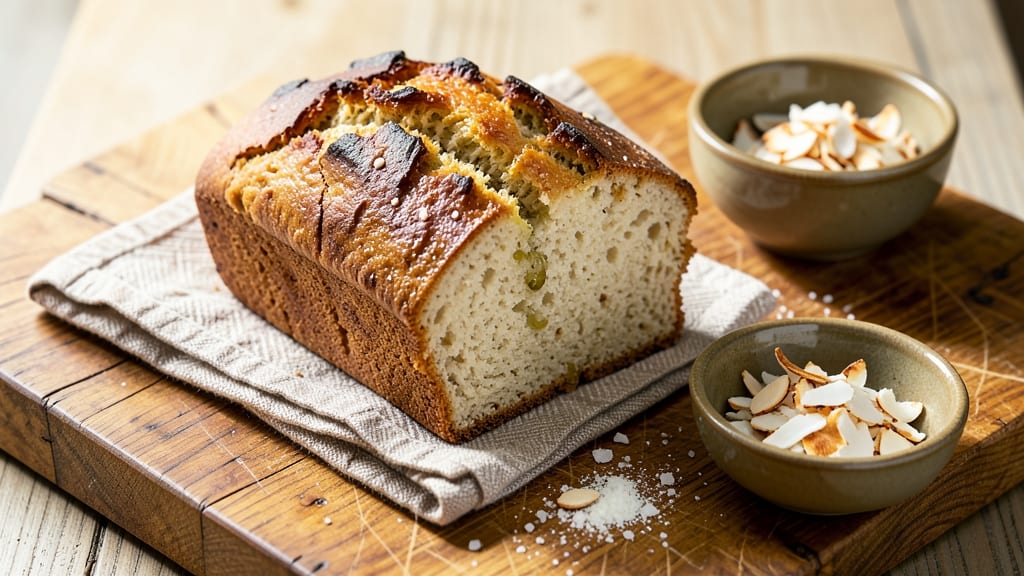
This almond flour and coconut flour bread recipe delivers light, fluffy loaves that defy gluten-free expectations. ✨ The secret lies in balancing these nutrient-dense flours with precise hydration and a touch of psyllium husk for structure—no heavy, dense texture here.
I've perfected this recipe after years of testing, ensuring every slice stays moist and tender for days.
The combination of almond flour's rich nuttiness and coconut flour's subtle sweetness creates a flavor profile that's both satisfying and versatile. This bread works beautifully as toast, sandwich bread, or even French toast—without the need for gluten or grains.
The texture is surprisingly airy, with a delicate crumb that holds up to butter and jam just like traditional bread.
What makes this recipe truly special is its adaptability. Whether you're baking for dietary restrictions or simply exploring grain-free options, this bread delivers restaurant-quality results at home. The process is straightforward but requires attention to detail during mixing and baking to achieve that perfect rise and golden crust.
Perfect for those following gluten-free, grain-free, or paleo diets, this recipe proves you don't have to sacrifice texture or taste. Let's create something extraordinary together—one loaf at a time.
Ingredients for almond flour and coconut flour bread
Precision-measured flours and binders create a gluten-free loaf with restaurant-worthy texture.
| Ingredient | Amount | Notes |
|---|---|---|
| Almond Flour 🌰 | 2 ½ cups | Finely ground, unsweetened |
| Coconut Flour 🥥 | ½ cup | Sifted for even texture |
| Psyllium Husk Powder 🌿 | 2 tbsp | Unflavored, essential for structure |
| Granulated Sweetener 🍯 | ¼ cup | Maple sugar or coconut sugar |
| Baking Powder 🍞 | 1 tsp | Aluminum-free preferred |
| Salt 🧂 | ½ tsp | Fine sea salt |
| Ground Flaxseed 🌾 | 2 tbsp | Acts as egg substitute |
| Warm Water 💧 | ¾ cup | 100°F for proper activation |
| Unsweetened Applesauce 🍎 | ¼ cup | For moisture and binding |
| Vanilla Extract 🌸 | 1 tsp | Pure, high-quality extract |
| Extra-Virgin Olive Oil 🫒 | ¼ cup | For richness and moisture |
| Vegan Butter 🧈 | ⅛ cup | Melted, for softness |
The almond flour must be finely ground—pre-ground from brands like Bob's Red Mill or Anthony's Goods ensures consistent texture. Coconut flour absorbs moisture aggressively, so measure it first before adding liquids. Psyllium husk powder is non-negotiable for structure; Designs for Health or Now Foods offer high-quality unflavored versions. For the sweetener, maple sugar adds caramel notes while coconut sugar provides a more neutral profile—both work beautifully. Store all flours in airtight containers to prevent oxidation, which degrades their binding properties over time.
No psyllium husk? Chia seeds ground into a powder (1 tbsp chia + 1 tbsp water = 2 tbsp psyllium substitute) work in a pinch, though texture may differ slightly. Substituting coconut flour with more almond flour (up to 0.25 cup) requires reducing the water by 0.125 cup to maintain proper hydration. For the egg replacement, mashed banana (0.25 cup) can replace the flaxseed, though it adds natural sweetness. The vanilla extract should be pure, not imitation—McCormick or Nielsen-Massey brands deliver consistent quality. If you lack olive oil, avocado oil maintains a neutral flavor profile while providing similar moisture benefits.
Mix the dry ingredients first to avoid clumping, then gradually incorporate liquids to prevent over-mixing. Portion the dough into greased loaf pans immediately after combining—delaying this step can lead to premature drying. For storage, wrap cooled loaves in beeswax wrap or aluminum foil to maintain moisture for up to 5 days at room temperature. Freeze any extras in slices for 3 months; simply toast from frozen. The bread's texture improves slightly after 24 hours, as the flours fully hydrate and the psyllium sets properly.
Why You'll Love This Recipe
- No-Fuss Mixing: I swear by this recipe because it’s just three bowls—no stand mixer, no kneading, no stress. Toss the almond flour, coconut flour, and psyllium husk powder with water, let it sit for 5 minutes, then stir in the sweetener and baking powder. That’s it. Honestly, my lazy Sundays thank me every time.
- Nutty-Sweet Crunch: The combo of toasted almond flour and coconut flour gives this bread a textural magic—crisp edges, tender middle, and that subtle caramelized sweetness from the granulated sweetener. It’s not just bread; it’s a snack. I’ll be real, I’ve eaten slices straight from the pan while it’s still warm.
- Meal Prep MVP: This bread holds up like a champ—freeze half the batch, toast as needed, or pack it for lunches. The psyllium husk keeps it sturdy for days, so it’s my go-to for sandwiches, French toast (yes, it’s that good), or even croutons. No soggy bread here.
- Budget-Friendly Staple: Almond and coconut flour might seem pricey, but this recipe stretches far—one batch feeds my family for a week. The psyllium husk powder is the secret hero; it mimics gluten’s structure without the cost. Plus, I buy almond flour in bulk and reuse it for muffins, pancakes, you name it. Smart, simple, and satisfying.
Step-by-step instructions for almond flour and coconut flour bread
Here's the method for baking gluten-free bread with perfect texture and structure.
👨🍳 Step 1: Activate the Psyllium Husk Powder
In a medium bowl, combine the 2 tbsp psyllium husk powder with the 0.75 cup warm water (about 100°F). Let it sit for 5 minutes—you'll see it transform into a thick, gel-like consistency. This step is critical for the bread's structure, as psyllium creates a gluten-free network that holds everything together.
After 5 minutes, the mixture should resemble a thick pudding. If it's still too runny, add 1 tsp more psyllium husk powder. If it's too thick, add 1 tsp more warm water. The texture should be smooth and cohesive, not grainy or clumpy. Stir well to ensure even distribution.
👨🍳 Step 2: Mix Dry Ingredients Thoroughly
In a large mixing bowl, whisk together the 2.5 cups almond flour, 0.5 cup coconut flour, 0.25 cup granulated sweetener, 1 tsp baking powder, and 0.5 tsp salt. Sift the coconut flour first to prevent clumping—this ensures an even texture in your final loaf. Use a whisk for 30 seconds to break up any lumps and distribute the ingredients evenly.
Add the 2 tbsp ground flaxseed and mix again. The flaxseed acts as an egg substitute, providing binding properties and adding a subtle nutty flavor. Here's the thing—don't overmix. Stop when the dry ingredients are uniformly combined but still slightly granular. Overmixing develops gluten-like properties in the flour, which can make the bread dense instead of light.
🥘 Step 3: Combine Wet Ingredients and Form the Dough
In a separate bowl, mix the 0.25 cup unsweetened applesauce, 1 tsp vanilla extract, 0.25 cup extra-virgin olive oil, and the 0.125 cup melted vegan butter. The applesauce adds moisture and tenderness, while the olive oil and butter contribute richness. Stir until fully combined—you should see a smooth, slightly thick mixture with no streaks of oil.
Gradually add the wet mixture to the dry ingredients while stirring with a spatula. Then, incorporate the psyllium gel you prepared earlier. Mix until just combined—you'll notice the dough becomes thick and sticky. At this point, it might look like too much, but trust me, this is exactly what you want. The dough should hold its shape when pressed but still be slightly tacky to the touch.
🔥 Step 4: Shape and Bake for Perfect Rise
Preheat your oven to 350°F and line a loaf pan with parchment paper. Transfer the dough to the prepared pan and spread it evenly, pressing down gently to remove any air bubbles. The dough will be sticky, so wet your hands with water to prevent sticking. Use a spatula to smooth the top—it should be level and about 1 inch thick.
Bake for 45-50 minutes until the top is golden brown and a toothpick inserted in the center comes out clean. Here's where patience pays off—don't open the oven door during the first 30 minutes of baking. The sudden temperature drop can cause the bread to sink. If the top browns too quickly, loosely tent the pan with aluminum foil.
⏰ Step 5: Cool and Slice for Maximum Freshness
Remove the bread from the oven and let it cool in the pan for 10 minutes. Then, transfer it to a wire rack to cool completely for another 20 minutes. This cooling period is essential—rushing it can make the bread gummy. The internal temperature should drop to about 100°F before slicing for the best texture.
Use a sharp serrated knife to slice the bread into ½-inch thick pieces. The bread should have a tender crumb with a slightly crisp exterior. If it's still warm when sliced, the crumb will be softer than ideal. Store any leftovers in an airtight container at room temperature for up to 3 days, or freeze for longer storage. This bread pairs beautifully with soups, butter, or as a base for avocado toast.
Pro Tips For Making Almond Flour And Coconut Flour Bread
- Mix the psyllium first: Mix the psyllium husk powder with warm water (not hot) and let it sit for 2-3 minutes until it turns gel-like. I used to skip this step and ended up with a dense, gummy loaf—this is the thing that actually makes the bread rise properly.
- Use a scale for flours: Almond flour and coconut flour are not interchangeable by volume. Weigh them separately—coconut flour is way more absorbent, and almond flour can vary in density. I learned this the hard way when my first batch turned out like a brick.
- Don’t overmix the batter: Stir just until combined—about 10-12 strokes with a spatula. Overmixing activates the gluten in almond flour, making the bread tough. Think "gentle but thorough," not "beat it into submission."
- Bake at 325°F, not higher: This isn’t your regular bread—almond and coconut flours burn fast. A 325°F oven prevents a charred crust while letting the center cook through. I was skeptical until I tried it; now I never go above that.
Best sauces and condiments for this almond flour and coconut flour bread
Sweet Spreads
This bread's subtle sweetness makes it perfect for homemade jam or fruit compotes. I love pairing it with strawberry-rhubarb jam—the tartness balances the bread's nuttiness beautifully.
For a tropical twist, try mango-habanero compote (simmer 1 cup diced mango, 1 tbsp lime juice, 1 tsp habanero paste, and 1 tbsp maple syrup for 10 minutes). 🥭
Rich Nut Butters
Creamy nut butters elevate every slice. Almond butter (like Justin's Classic) enhances the bread's natural flavor, while cashew butter adds a smoother texture. For a gourmet touch, mix 2 tbsp almond butter with 1 tsp cinnamon and a pinch of sea salt.
Spread generously on warm toast for maximum flavor impact.
Herbed Olive Oil
Infused olive oils add Mediterranean flair. I blend ¼ cup extra-virgin olive oil with 1 tbsp fresh rosemary, 1 tsp garlic powder, and ½ tsp red pepper flakes>, then let it steep for 30 minutes.
Drizzle over slices for a savory contrast. For a citrus twist, add 1 tsp lemon zest to the oil instead.
Avocado Mash
For a creamy, plant-based option, mash ½ ripe avocado with 1 tsp lime juice, ¼ tsp salt, and 1 tbsp chopped cilantro. The healthy fats complement the bread's crumb perfectly. Serve immediately to prevent browning—spritz with water and cover with plastic wrap if prepping ahead.
Spicy Mustard
Dijon mustard adds tangy depth. Mix 1 tbsp whole-grain mustard with 1 tsp apple cider vinegar and a pinch of smoked paprika. The heat and acidity cut through the bread's richness.
For a sweeter version, stir in ½ tsp honey>. This pairing works wonderfully for sandwiches or as a simple open-faced toast.
Cream Cheese Variations
Vegan cream cheese (like Kite Hill or Forager) creates elegant spreads. For a classic, mix 2 oz softened cream cheese with 1 tsp lemon juice and 1 tbsp chopped chives.
For a sweet option, blend in 1 tbsp jam>. The creaminess contrasts beautifully with the bread's nutty texture, making it ideal for breakfast or brunch.
Nutrition facts
Frequently asked questions
Why does this bread need psyllium husk powder?
Psyllium husk powder acts as a gluten substitute, creating the elastic structure that holds the bread together. Without it, your loaf would crumble or collapse—it's what gives this gluten-free bread its satisfying chew and ability to hold up to toast or sandwiches. Think of it as the secret ingredient for achieving that perfect rise and texture.
Can I make this bread without coconut flour?
Yes, but you'll need to adjust the recipe. Replace the 0.5 cup coconut flour with an extra 0.5 cup almond flour and reduce the water by 0.125 cup since coconut flour absorbs much more moisture. The texture will be slightly denser, but still delicious. For a lighter result, consider adding 1 tbsp xanthan gum to help with binding.
How do I prevent the bread from drying out?
Store your bread in an airtight container with a slice of apple or a damp paper towel to maintain moisture. For longer storage, wrap individual slices in parchment paper before freezing. The bread's texture actually improves slightly after 24 hours as the flours fully hydrate—this is normal! To revive stale slices, warm them in a toaster or oven for 5-10 minutes.
What's the best way to test if it's fully baked?
Use the toothpick test: insert a thin skewer into the center of the loaf. If it comes out clean or with just a few moist crumbs (not wet batter), your bread is done. The internal temperature should reach 190°F. Avoid overbaking—this bread has a delicate texture that can become dry if left too long in the oven. The edges should be golden brown while the center remains tender.
Can I add seeds or nuts to this recipe?
Fold in ¼ cup chopped walnuts, 2 tbsp sunflower seeds, or 1 tbsp flaxseeds during the final mixing stage. For extra crunch, sprinkle them on top before baking. Just be mindful of portion sizes—too many additions can make the bread dense. Toast your nuts/seeds first to enhance their flavor and prevent sogginess in the finished loaf.