
Side Dishes
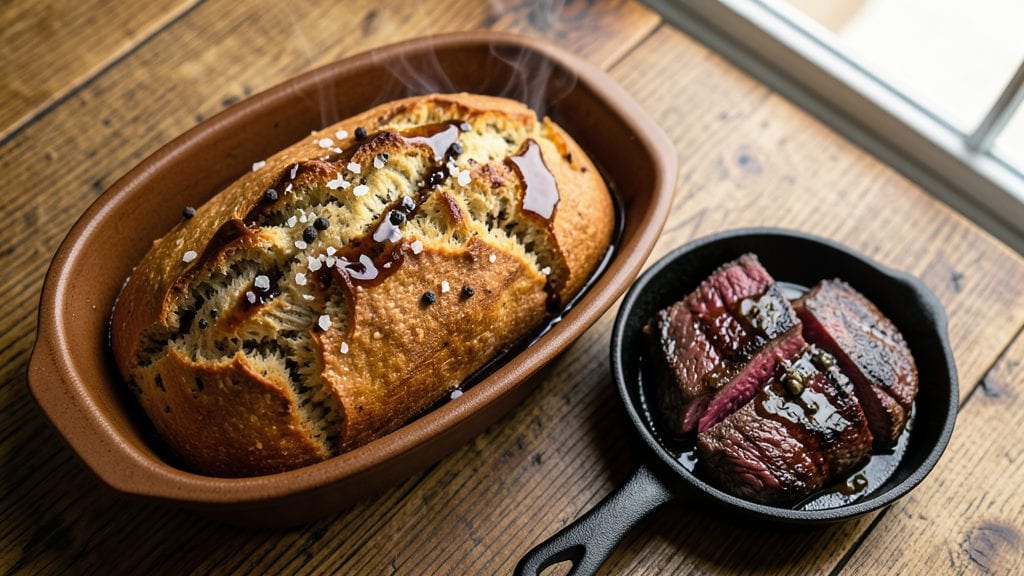
Steak and ale bread transforms a simple loaf into a savory centerpiece with deep, malty ale flavor and a crust that crackles with every bite. This recipe emerged from my Boston neighborhood market days, where I'd watch Italian delis pair rich bread with hearty stews—except here, we're using ale instead of broth. The dough gets its signature richness from slow-steeped ale, while the steak simmers in the same liquid, creating a perfect pairing that tastes like a pub dinner at home.
What makes this recipe special is the dual-purpose ale: it infuses the bread with malty depth while tenderizing the steak into fork-tender perfection. You'll start with a simple dough, but the ale soaking (24 hours minimum) develops complex flavors that store-bought bread can't match.
The steak cooks low and slow in the same ale, ensuring every bite pairs seamlessly with the bread's crusty exterior and soft interior.
By the time you pull this from the oven, you'll have a loaf with a golden, crackling crust that gives way to tender crumb infused with ale's rich flavor. The steak will be fall-apart tender, its juices enhanced by the malty broth.
This isn't just bread—it's a complete meal experience that brings pub-style comfort to your table. Let's get started with the dough, where the magic begins.
Serve the bread warm with the steak sliced over top, or use it to soak up the ale reduction from the pan. For a full meal, pair with roasted root vegetables or a simple green salad.
The ale's depth makes this bread equally at home with beef, lamb, or even mushrooms for vegetarians. Here's how to make it from scratch.
Ingredients for steak and ale bread
Fourteen ingredients for bread that tastes like a pub feast. The ale's magic starts here.
| Ingredient | Amount | Notes |
|---|---|---|
| Dark Ale Beer 🍺 | 1 ½ cups | Non-alcoholic substitute if needed |
| All-Purpose Flour 🌾 | 5 cups | Plus 1 tbsp for dusting |
| Active Dry Yeast 🍞 | 2 ¼ tsp | Or 1 packet instant yeast |
| Unsalted Butter 🧈 | ½ cup | Cold, cubed for dough |
| Granulated Sugar 🍚 | 1 tbsp | For yeast activation |
| Large Eggs 🥚 | 1 whole | Room temperature preferred |
| Kosher Salt 🧂 | 1 ½ tsp | Plus extra for dough |
| Ribeye Steak 🥩 | 1 ½ lb | 1-inch thick slices |
| Fresh Rosemary 🌿 | ¼ cup | Chopped, for bread topping |
| Fresh Thyme 🌿 | ¼ cup | Chopped, for bread topping |
| Garlic Cloves 🧄 | 4 cloves | Minced for steak marinade |
| Black Peppercorns 🌶️ | 1 tsp | Freshly cracked for steak |
| Olive Oil 🫒 | 2 tbsp | For dough and steak |
| Cornmeal 🌽 | ½ cup | For bread pan dusting |
The ale is non-negotiable for that deep, malty flavor. Boston Beer Company's Samuel Adams Boston Lager or Guinness work perfectly, but any dark ale with 4-5% ABV does the trick. I usually grab a six-pack from Trader Joe's or Total Wine—they keep a good selection. If you're avoiding alcohol, Ocean Spray Cranberry Juice Cocktail mimics the sweetness and body. For the flour, King Arthur Unbleached gives the best texture, but any all-purpose works. The yeast? Fleischmann's Active Dry is reliable, but check the expiration date—old yeast won't wake up. Store your flour in the freezer if you're not using it often; it keeps fresher longer.
No ribeye? New York Strip or Sirloin will work, but ribeye's marbling keeps it juicy. Short on fresh herbs? Dried rosemary and thyme at half the amount gets you close, though fresh is ideal. The cornmeal is just for dusting the pan—semolina works too. For the steak, Trader Joe's pre-sliced ribeye saves time, but if you're buying whole, ask the butcher to slice it 1-inch thick. The ale soaking is crucial—don't skip it! If you're short on time, marinate the steak in 1 cup ale + 1 tbsp olive oil + garlic and pepper for at least 30 minutes instead of overnight.
The dough needs time to rise—at least 2 hours at room temp or overnight in the fridge. Store any extra bread in an airtight bag at room temp for 3 days, or freeze for up to 3 months. The steak reheats beautifully in the ale reduction—just warm it gently in a skillet. I always make a double batch of dough; the second loaf freezes perfectly for lazy weeknights. For the ale reduction, skim off the fat after cooking the steak and reduce it by half—it's pure liquid gold for drizzling over the bread.
Why You'll Love This Recipe
- I’ll be real: this disappears faster than I can pull it from the oven. But the good news? It freezes like a dream. Toss a slice in the toaster the next morning, and you’d swear it was fresh. Zero waste, maximum satisfaction.
- Pantry Magic: The moment I realized I had dark ale in the fridge, this became my go-to. No fancy yeast packets or specialty flours—just what’s already there. Mix, let it rise, bake. That’s it. Even my "I can’t cook" friend nailed it.
- Rich Beer Bite: Honestly, the dark ale isn’t just an ingredient—it’s the star. That malty, slightly sweet depth? It turns regular bread into something ridiculously good. The butter and sugar caramelize just enough to make every slice feel like a treat.
- Game for Any Meal: Between us, this bread is my secret weapon. Toast it for breakfast, serve it with soup when it’s cold, or tear it over a charcuterie board when guests show up. It’s the one loaf that does it all—no excuses.
Step-by-step instructions for steak and ale bread
Here's how to create that perfect savory crust with rich ale flavor—every slice will be moist and packed with hearty goodness.
Prepare the Steak Marinade and Cook the Ribeye
Start by slicing the 1.5 lb ribeye steak into 1-inch thick slices—this ensures even cooking and easier handling. In a bowl, combine the 1.5 cups dark ale beer, 4 cloves minced garlic, 1 tsp freshly cracked black peppercorns, and 1 tbsp olive oil. Add the steak slices to the marinade and let them soak for at least 30 minutes (or up to 2 hours in the fridge). This step infuses the steak with deep, malty flavor that will later enhance the bread.
While the steak marinates, heat 1 tbsp olive oil in a skillet over medium-high heat. Cook the steak slices for 3-4 minutes per side until they reach medium-rare (internal temperature 130-135°F). Remove the steak from the pan and set it aside to rest. The rendered juices and aromatics from the steak will later be incorporated into the dough, adding richness to every bite.
Mix the Ale Bread Dough with Steak Infusions
In a large bowl, combine the 5 cups all-purpose flour, 2.25 tsp active dry yeast, 1 tbsp granulated sugar, and 1.5 tsp kosher salt. Whisk to break up any lumps, then create a well in the center. Pour in the 1.5 cups dark ale beer (use the leftover marinade if some remains) and the 1 whole large egg at room temperature. Add the 0.5 cup cold unsalted butter, cut into small cubes, and the 2 tbsp olive oil. Stir with a wooden spoon until a shaggy dough forms.
Here's the trick: Add the cooked steak slices directly to the dough, breaking them into smaller pieces as you go. This ensures the bread absorbs all that steak flavor. Knead the dough on a lightly floured surface for 8-10 minutes until it becomes smooth and elastic. If the dough feels too sticky, add 1 tbsp extra flour as needed. The dough should spring back slowly when pressed—this indicates proper gluten development.
Shape, Proof, and Bake the Steak and Ale Bread
Lightly grease a 9x5-inch loaf pan with olive oil, then dust it generously with 0.5 cup cornmeal. This prevents sticking and gives the bread a rustic texture. Shape the dough into a loaf and place it seam-side down into the prepared pan. Cover the pan loosely with a damp kitchen towel and let it rise in a warm place for 1-1.5 hours, or until it has nearly doubled in size. A good test is to gently press the dough—if it leaves a slight indent but doesn't spring back completely, it's ready.
Preheat your oven to 375°F. Before baking, brush the top of the dough with a little more dark ale beer or water, then sprinkle evenly with the 0.25 cup chopped fresh rosemary and 0.25 cup chopped fresh thyme. Bake for 40-45 minutes until the bread is deep golden brown and sounds hollow when tapped on the bottom. For extra crispiness, broil for 2-3 minutes at the end if desired.
Rest and Slice for Maximum Flavor
Remove the bread from the oven and let it cool in the pan for 10 minutes. Then transfer it to a wire rack to cool completely. This resting period allows the bread to set properly, preventing it from falling apart when sliced. The crust should be crisp and fragrant, with a rich, savory aroma that hints at the steak and ale flavors.
Slice the bread into ½-inch thick pieces and serve warm. The interior should be moist and tender, with pockets of steak-infused goodness throughout. Pair it with the leftover steak slices and a side of roasted vegetables for a hearty meal that feels like a restaurant-worthy feast.
Pro Tips For Making Steak And Ale Bread
- Chill the Dough: After the first rise, pop that dough in the fridge for 8–12 hours—yes, even if you’re eager to bake. I used to rush straight to shaping, and the crumb ended up dense and uneven. Cold slows the yeast, tightens the gluten, and gives you that classic open, airy texture. (Prove it to yourself: pull it out an hour before baking, and watch it puff like a dream.)
- Warm the Beer: Heat your dark ale to 100°F (38°C) before mixing it into the dough—just enough to melt the yeast’s slumber. Cold beer kills fermentation, and you’ll end up with a sad, flat loaf. Use a microwave for 30 seconds or a saucepan with a thermometer. Trust me, your bread’s rise depends on this.
- Skip the Over-Kneading: This dough is sticky and wants to fight back. Knead just until the edges smooth out—about 8–10 minutes by hand—then stop. Overwork it, and the gluten tightens too much, making the crumb tough. My grandmother used to say, "The dough knows when you’re forcing it." She was right.
- Brush with Melted Butter: After baking, let the loaf cool for 10 minutes, then brush the top with melted unsalted butter mixed with a splash of beer (about 1 tablespoon each). The beer keeps it moist, and the butter adds richness without overpowering the ale flavor. I used to skip this—big mistake. It’s the difference between "good" and "wow."
Troubleshooting your steak and ale bread
Dense Dough Issues
If your dough feels too thick or dry after mixing, you likely added too much flour or your ale didn't fully hydrate the ingredients. I've found that King Arthur Unbleached Flour absorbs moisture better than some store brands—stick to the 5 cups called for unless your kitchen is unusually humid.
Try adding 1 tbsp extra ale and kneading for another 2-3 minutes to help distribute moisture evenly. If the dough still resists, let it rest under a damp towel for 10 minutes before shaping.
For extra insurance, I sometimes chill the dough for 30 minutes before shaping—this helps the gluten relax and makes handling easier. The dough should feel slightly tacky but not sticky enough to leave residue on your hands.
If it's still too dry, brush the surface with a little more ale before proofing. 🌾
Proofing Problems
If your dough isn't rising properly, check your yeast first—expired yeast won't activate. I keep a small jar of Fleischmann's Active Dry Yeast in my fridge and test it monthly by mixing 1 tsp yeast, 1 tsp sugar, and ¼ cup warm water.
If it doesn't foam within 5 minutes, toss it. Also ensure your proofing environment is warm enough—75-80°F is ideal. Place the pan near the oven with the light on, or use a proofing box if you have one.
If the dough rises too quickly (like a balloon in 30 minutes), it's overproofed. This happens in hot kitchens or with too much yeast. Punch down the dough gently and let it proof again for 30-45 minutes.
The key is a slow, steady rise—your dough should nearly double in size in 1-1.5 hours. If it collapses after shaping, it's likely underproofed; let it rise longer next time.
Steak Overcooking
The steak's texture is everything in this dish. If yours turns out tough, you likely cooked it too long or at too high a temperature. For 1-inch thick slices, 3-4 minutes per side over medium-high heat should give you medium-rare (internal temp 130-135°F).
Invest in a good instant-read thermometer—I use Thermoworks Smoke—to avoid guessing. If your steak cooks too fast, reduce heat to medium and cook longer.
For extra tenderness, I sometimes sear the steak first, then finish it in the oven at 275°F for 2-3 minutes to carry over cooking. The ale marinade helps, but don't overdo it—2 hours max in the fridge, or the steak will turn mushy.
Rest the steak for 5 minutes after cooking before adding it to the dough; this keeps it juicy when mixed in.
Crust Not Browning
A pale crust usually means the oven wasn't hot enough or the bread needed more time. Preheat your oven for at least 20 minutes before baking—this ensures even heat distribution.
I also recommend brushing the dough with ale or egg wash before baking, then sprinkling with coarse salt or cornmeal for extra color. For stubborn cases, broil for 1-2 minutes at the end, watching closely to avoid burning.
If your crust is soft instead of crisp, the oven might have been too moist. Try baking on the middle rack instead of the bottom, and avoid opening the oven door during the first 20 minutes of baking.
For a restaurant-style crust, I sometimes bake the bread on a preheated baking stone for 5 minutes before transferring to the pan. This creates a crispier base that carries through the loaf.
Ale Flavor Weak
If your bread tastes bland, the ale likely didn't infuse enough flavor. I always use dark ales like Guinness or Samuel Adams Boston Lager—lighter beers won't have enough depth.
For maximum flavor, let the ale sit at room temperature for 30 minutes before using, as cold ale can inhibit yeast activity. Also, make sure to use the leftover steak marinade in the dough—those juices are packed with flavor!
For an extra boost, I sometimes add 1 tsp malt powder or 1 tbsp molasses to the dough for deeper caramel notes. If you're using non-alcoholic ale, look for brands with real malt flavors—some store versions taste artificial.
And remember, the longer you let the dough rise (up to 24 hours in the fridge), the more the ale's flavors will develop. Patience is key here!
Nutrition facts
Frequently asked questions
Can I use any beer for the ale bread?
Dark ales like Guinness or Samuel Adams Boston Lager work best for that rich, malty flavor. Lighter beers won't have enough depth, but you can try stout or porter if dark ale isn't available. For non-alcoholic versions, use cranberry juice cocktail or ale-flavored non-alcoholic beer—just check for real malt flavors to avoid artificial tastes.
How do I store leftover steak and ale bread?
Wrap cooled slices in an airtight container or bag and store at room temperature for 3 days. For longer storage, freeze the whole loaf for up to 3 months. To reheat, warm slices in a 350°F oven for 5-7 minutes or toast in a skillet with a little butter. The crust stays crispy, while the interior remains soft.
What if I don't have a loaf pan?
Shape the dough into a free-form loaf or round boule instead. For extra crustiness, bake on a preheated baking stone or perforated baking sheet at 375°F for 25-30 minutes, then broil for 2 minutes at the end. Brush with ale before baking for that signature flavor. The texture will be rustic but delicious!
Can I make this bread without steak?
Skip the steak and use the ale marinade (with extra garlic and herbs) to infuse the dough. For extra richness, add ½ cup sautéed mushrooms or caramelized onions to the dough instead. The bread will still have that deep ale flavor—just without the meaty pockets. Perfect for vegetarians!
Why does my dough smell like beer but taste bland?
Cold ale can slow yeast activity, muting flavors. Let the ale sit at room temperature for 30 minutes before using, and proof the dough for at least 2 hours (or overnight in the fridge) to let flavors develop. Also, use the leftover steak marinade in the dough—those juices are packed with flavor! Patience is key for that malty depth.