
Side Dishes
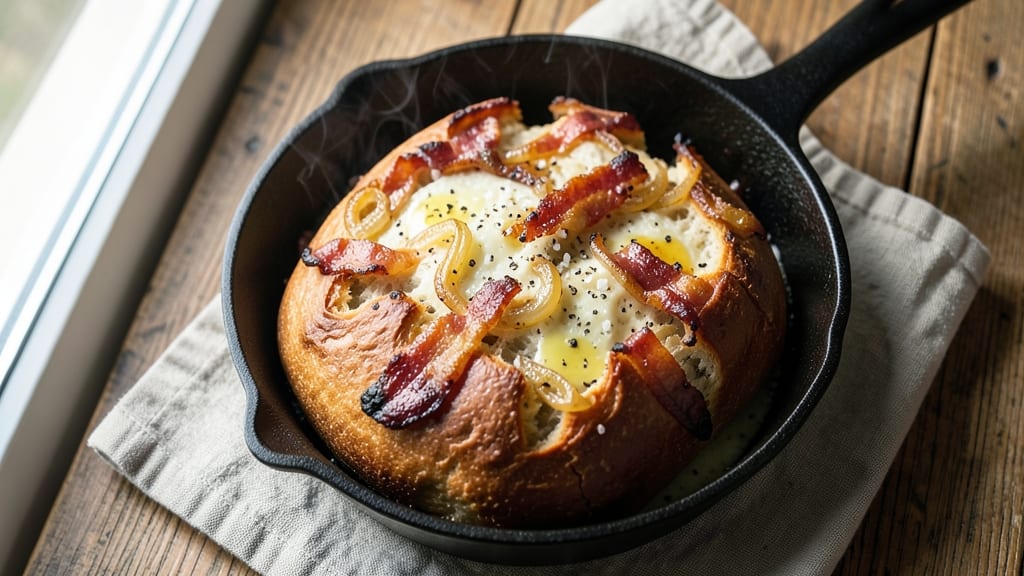
This bacon and onion bread recipe delivers the ultimate combination of a crispy crust and savory swirls that make every bite irresistible. The secret lies in perfectly caramelized onions and crispy bacon folded into a simple, foolproof dough that bakes up golden and aromatic.
I developed this version after years of testing—it’s the one that finally convinced even the pickiest eaters to go back for seconds.
The beauty of this recipe is its versatility and ease. You’ll start with a basic bread dough that comes together in just 10 minutes, then fold in layers of sweet, caramelized onions and smoky bacon.
The dough rises while you prep, so there’s no waiting around—just hands-off baking for about 25 minutes. The result? A loaf with a crackling crust and pockets of flavor that make it the perfect side for breakfast, brunch, or even as a hearty appetizer.
What sets this apart is the balance of textures: the crispy crust contrasts perfectly with the tender, buttery dough inside, while the bacon and onions add layers of savory depth. It’s the kind of bread that disappears quickly, leaving only crumbs behind.
Whether you’re serving it warm with butter or saving slices for sandwiches, this recipe is a game-changer for any kitchen.
Ready to try it? The instructions are straightforward, and the ingredients are simple—just a few pantry staples and a little patience. Let’s get started on a loaf that’ll have everyone asking for the recipe.
Ingredients for bacon and onion bread
Simple pantry staples and two star ingredients transform into irresistible bacon and onion bread.
| Ingredient | Amount | Notes |
|---|---|---|
| All-Purpose Flour 🌾 | 4 cups | Sifted for even texture |
| Active Dry Yeast 🍞 | 2 ¼ tsp | One packet for convenience |
| Granulated Sugar 🍚 | 1 tbsp | For yeast activation |
| Unsalted Butter 🧈 | ½ cup | Softened to room temperature |
| Large Eggs 🥚 | 1 whole | Room temperature preferred |
| Warm Milk 🥛 | 1 cup | Whole milk for richness |
| Salt 🧂 | 1 tsp | Kosher or sea salt |
| Thick-Cut Bacon 🥓 | 6 oz | Cooked until crispy |
| Yellow Onions 🧅 | 1 ½ lb | Thinly sliced, caramelized |
| Granulated Sugar 🍚 | 1 tbsp | For caramelizing onions |
| Olive Oil 🫒 | 1 tbsp | For greasing loaf pan |
| Cornmeal 🌽 | 1 tbsp | For dusting loaf pan |
The bacon and onions are what turn this bread from good to unforgettable. For the bacon, thick-cut is ideal—it crisps up beautifully and holds its shape when folded into the dough. Costco or local butchers often have the best prices, but any grocery store bacon works. The onions? Yellow or sweet onions caramelize best, and you’ll want about 1.5 pounds to get that sweet, jammy texture. Look for onions with firm, dry skins—they store longer and caramelize more evenly. Pro tip: slice them thinly and cook low and slow for that perfect balance of sweetness and tenderness.
No thick-cut bacon? Regular bacon works in a pinch, but it’ll be slightly softer. Running short on time? Pre-cooked bacon from the deli section saves steps, though it won’t crisp as dramatically. For the onions, red onions add a touch of color and a mild bite, but they won’t caramelize as deeply. Skip the sugar if you’re watching carbs, but trust me, that 1 tablespoon makes all the difference. The dough calls for all-purpose flour, but bread flour gives a slightly chewier texture if you’ve got it. And if you’re feeling fancy, swap the granulated sugar for turbinado sugar in the caramelized onions—it adds a subtle crunch.
This dough rises best at room temperature, so plan ahead if your kitchen runs cold. Once shaped, let it proof in a lightly oiled bowl for about 1 hour until puffy. For the caramelized onions, they’re worth the wait—45 minutes to an hour of gentle cooking transforms them from sharp to sweet. Store any leftover dough in the fridge for up to 24 hours, wrapped tightly in plastic. The baked loaf keeps well at room temperature for 2 days, but it’s best enjoyed fresh. Freeze slices wrapped in parchment for up to 3 months—perfect for quick toast later.
Why You'll Love This Recipe
- No-Knead Magic: I swear, mixing the dough takes less time than waiting for the yeast to wake up—just toss in the flour, sugar, and butter, let it rise while you make dinner, and boom. Zero fuss, all flavor.
- Crispy-Savory Crunch: That first bite? Crunchy bacon meets caramelized onions wrapped in pillowy bread—it’s like a hug for your taste buds. The butter and egg tie it all together so the crust doesn’t fall apart (yes, even when my kids tear into it).
- Breakfast or Snack Fix: Honestly, this bread works everywhere. Toss it in a lunchbox, serve it with scrambled eggs, or just eat it straight out of the oven. My husband grabs slices for his work bag, and I’ve even used it as a pizza crust (don’t tell the neighbors).
- Budget-Friendly Leftovers: A single batch stretches for days—freeze the extras, toast them later, or turn them into croutons. Between us, the bacon bits make even stale bread taste like a treat, and that’s my kind of money-saver.
Step-by-step instructions for bacon and onion bread
Transform simple dough into golden, crispy loaves with savory bacon and caramelized onions inside.
Prepare the Dough for Maximum Flavor
In a large bowl, combine the 4 cups all-purpose flour and 2.25 tsp active dry yeast. Make a well in the center and add 1 tbsp granulated sugar, 0.5 cup softened unsalted butter, 1 whole large egg, 1 cup warm milk, and 1 tsp salt. This order matters—the sugar activates the yeast while the butter and egg create a tender crumb.
Mix with a wooden spoon until a shaggy dough forms, then turn it out onto a lightly floured surface. Knead for 8-10 minutes until smooth and elastic. You'll know it's ready when the dough springs back slowly when poked. If it sticks, add flour 1 tablespoon at a time—but don't overdo it, or the bread will be dense. Shape into a ball, place in a greased bowl, cover with a damp towel, and let rise in a warm place for 1-1.5 hours or until doubled in size.
Cook the Bacon and Caramelize the Onions
While the dough rises, cook the 6 oz thick-cut bacon in a skillet over medium heat until crispy. Drain on paper towels, reserving 2 tablespoons of bacon fat in the skillet. This fat will add incredible flavor to the onions. Reduce heat to medium-low and add 1.5 lb thinly sliced yellow onions. Sprinkle with 1 tbsp granulated sugar and cook for 20-25 minutes, stirring occasionally, until deep golden brown and caramelized. The onions should be tender with a rich, sweet aroma—this is your savory filling.
Let the bacon and onions cool slightly before handling. The filling should be warm but not hot when you incorporate it into the dough. If the onions release too much liquid, drain them briefly to prevent a soggy loaf.
Shape the Dough with Bacon and Onion Swirls
Punch down the risen dough to release air, then roll it out on a floured surface into a 12x16-inch rectangle about ¼-inch thick. Spread the cooled bacon and caramelized onions evenly over ¾ of the dough, leaving a 2-inch border around the edges. This border ensures the bread holds its shape during baking.
Starting from the long side, tightly roll the dough into a log, sealing the edge to trap the filling. Place the log seam-side down in a 9x5-inch loaf pan that's been lightly greased with 1 tbsp olive oil and dusted with 1 tbsp cornmeal. The cornmeal prevents sticking and adds a subtle crunch to the crust. Cover the pan with a towel and let the dough rise for another 30-45 minutes until puffy.
Bake for a Crispy Crust and Savory Interior
Preheat your oven to 375°F. Brush the risen loaf with an egg wash (beat 1 egg with 1 tablespoon water) for a golden finish. Bake for 35-40 minutes until the top is deep golden brown and the internal temperature reaches 190°F. Tap the bottom of the loaf—it should sound hollow.
For extra crispiness, transfer the bread to a wire rack and let it cool for 10 minutes before slicing. The crust should be firm enough to hold its shape, while the interior should be soft with pockets of melted bacon fat and caramelized onions. Slice while still warm for the best texture—each bite should deliver a perfect balance of crispy crust, tender crumb, and savory filling.
Pro Tips For Making Bacon And Onion Bread
- Dissolve Yeast in Warm Water First: I learned this the hard way—tossing yeast directly into cold flour and hoping for the best leads to underproofed dough. Mix the yeast with warm water (110°F) and a pinch of sugar first, then wait 5-10 minutes until it foams before adding flour. This guarantees your dough will rise properly, especially with the weight of bacon and onions pulling it down.
- Cook Bacon Until Crisp, Then Drain Well: Stop when the bacon is fully crisp, not just "cooked through." Drain it on paper towels for at least 2 minutes to remove all grease—this prevents a greasy, dense loaf. (Yes, even if you’re tempted to skip it for speed, the texture suffers.)
- Use Room-Temperature Butter: Cold butter creates pockets of fat that won’t incorporate smoothly, leading to a tough crumb. Let your unsalted butter sit out for 30-60 minutes until it’s soft enough to press with a finger but not melted. This ensures even distribution in the dough, especially when mixing in onions.
- Press Dough Gently, Then Rest: After shaping, resist the urge to handle it too much—overworking the dough activates gluten and makes the bread dense. Press it lightly into the pan, cover with a damp towel, and let it rest 15 minutes before baking. This gives the gluten time to relax, resulting in a lighter, airier texture.
Storing and reheating this bacon and onion bread
Room Temperature Storage
Your freshly baked bacon and onion bread stays fresh at room temperature for up to 2 days when stored in an airtight container or wrapped tightly in plastic wrap. I like to place it on a wire rack inside a bread box to maintain that perfect crust texture.
The key is to keep it away from direct sunlight or heat sources—this prevents the crust from becoming soggy. 🥖
Fridge Preservation
For longer storage, refrigerate slices in a ziplock bag or airtight container for up to 5 days. The cold slows down staling, but I recommend reheating before serving. To prevent freezer burn, wrap individual slices in parchment paper before placing them in a freezer bag.
This method preserves the texture and flavor for 3 months—perfect for quick breakfast sandwiches. ❄️
Reheating for Maximum Crispiness
For the best results, reheat slices in a 350°F oven for 5-7 minutes on a baking sheet lined with parchment paper. This restores the crust's crispiness without drying out the interior.
If you're short on time, use the toaster oven on high for 2-3 minutes. Avoid the microwave—it turns the crust rubbery and leaves the filling soggy. 🔥
Freezing for Later Use
Freeze the entire loaf by wrapping it tightly in plastic wrap followed by a layer of foil to prevent freezer burn. Thaw overnight in the fridge before slicing and reheating. For individual portions, freeze slices on a baking sheet first to prevent sticking, then transfer to a bag.
This method keeps the bread tasting fresh for up to 3 months. 🥶
Reviving Day-Old Bread
If your bread has lost its crispness, revive it by brushing with melted butter and baking at 350°F for 5 minutes. For extra flavor, sprinkle with a pinch of smoked paprika or garlic powder before reheating.
This trick works wonders for breakfast sandwiches or toast—just don't skip the butter! 💛
Nutrition facts
Frequently asked questions about bacon and onion bread
Can I make this bread without yeast?
Yes! For a quick version, replace the yeast with 1 tsp baking powder and 1 tsp baking soda. Mix the dry ingredients first, then add wet ingredients. The dough won't rise as dramatically, but you'll get a tender loaf with the same rich flavor. Bake immediately at 375°F for 25-30 minutes since there's no rising time.
How do I prevent the filling from leaking out during baking?
Leave a 2-inch border of plain dough around the edges when rolling—this creates a seal. Also, ensure your caramelized onions aren't too watery by draining excess liquid before adding them to the dough. For extra security, place the shaped loaf on a baking sheet before putting it in the pan.
What's the best way to slice this bread?
Wait until the loaf has cooled for 10 minutes after baking to let the filling set. Use a sharp serrated knife and cut at a slight angle for cleaner slices. For sandwiches, slice ½-inch thick to hold fillings well. Warm slices before serving for maximum crispiness.
Can I add cheese to this recipe?
Try folding in ½ cup shredded cheddar or ½ cup crumbled feta with the bacon and onions. For melted cheese pockets, sprinkle cheese on top before baking. Sharp cheddar pairs perfectly with the smoky bacon, while feta adds a tangy contrast.
Why did my bread turn out dense instead of light?
Dense bread usually means over-kneading or insufficient rising time. Knead just until smooth (8-10 minutes), and let the dough rise until doubled in size. Also check your yeast—it should be fresh and activated in warm milk before mixing. If your kitchen is cold, place the bowl near a warm oven with the light on to help it rise.