
Desserts
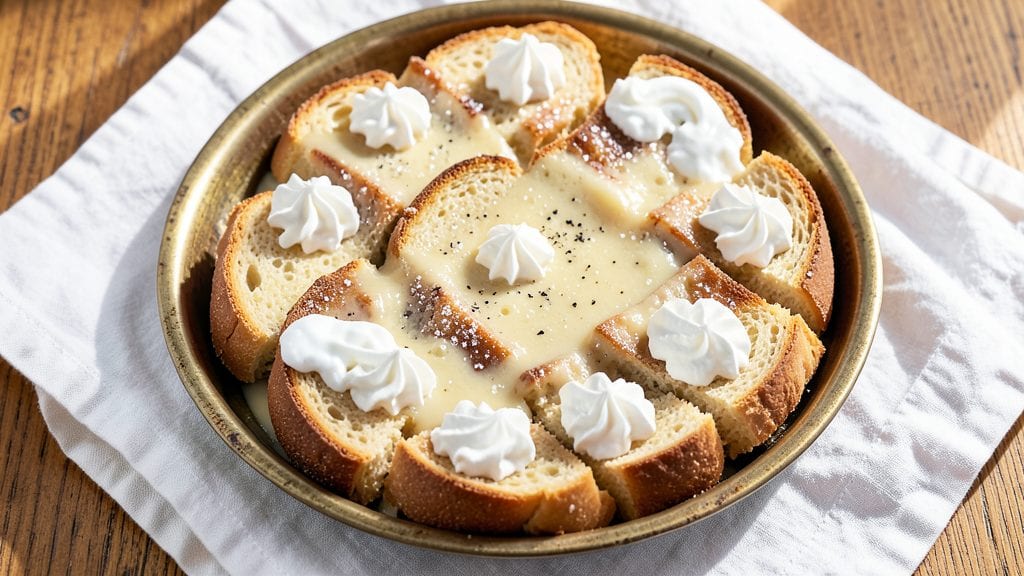
Martha Stewart’s bread pudding recipe delivers that golden, custardy perfection with layers of vanilla-infused richness and a buttery crunch that’s impossible to resist. I’ve perfected this version after years of testing—where the bread soaks up just the right amount of custard, creating tender yet sturdy slices that hold their shape.
The secret lies in using day-old brioche or challah, toasted lightly to enhance that caramelized edge without drying out the center.
This recipe balances simplicity with precision, requiring just 10 ingredients and 45 minutes of hands-on time (plus baking). The custard mixture is smooth and velvety, with a touch of bourbon or vanilla extract for depth—no lumps, no guesswork.
Martha’s method ensures the bread absorbs the custard evenly, resulting in a dessert that’s creamy yet structured, with a crisp top that begs for a second helping.
What sets this apart is the buttery crunch—a thin layer of toasted breadcrumbs on top that adds texture without overpowering the vanilla custard. The aroma alone will fill your kitchen with warmth, and each bite delivers that perfect contrast of soft custard and crunchy edges.
Serve warm with a drizzle of caramel or a scoop of vanilla ice cream for the ultimate comfort dessert.
Perfect for holiday gatherings, family dinners, or a cozy weekend treat, this bread pudding scales beautifully and reheats wonderfully. The technique is foolproof once you master the custard consistency, and the results? Restaurant-quality every time. Let’s get baking.
Ingredients for martha stewart bread pudding
Ten ingredients, eight servings of golden custard perfection with a buttery crunch you'll crave.
| Ingredient | Amount | Notes |
|---|---|---|
| Day-Old Brioche Loaf 🍞 | 1 whole | Stale but not moldy, sliced into 1-inch pieces |
| Large Eggs 🥚 | 6 whole | Room temperature for smooth custard |
| Heavy Whipping Cream 🥛 | 2 cups | Full-fat for velvety texture |
| Whole Milk 🥛 | 1 cup | Warmed slightly for better absorption |
| Granulated Sugar 🍚 | 1 ½ cups | Light brown sugar for caramel notes |
| Pure Vanilla Extract 🌿 | 2 tbsp | Bourbon vanilla for depth (optional) |
| Unsalted Butter 🧈 | ½ cup | Cold, cubed for toasting breadcrumbs |
| Panko Breadcrumbs 🍞 | ½ cup | Japanese-style for extra crunch |
| Diamond Crystal Kosher Salt 🧂 | 1 tsp | Fine grain for delicate seasoning |
| Ground Cinnamon 🌿 | 1 tsp | Freshly ground preferred |
The bread is non-negotiable—day-old brioche or challah from a high-end bakery like Breads Bakery or Whole Foods gives that perfect balance of moisture and structure. If you can't find brioche, challah or even sourdough works, but avoid overly dense breads. Toast the slices lightly in the oven (350°F for 5 minutes) to kickstart that caramelized edge. The custard's magic happens with room-temperature eggs—crack them into a bowl first, let them sit for 30 minutes. Trust me, it makes all the difference in that silky texture. For the vanilla, I always grab McCormick Pure Vanilla Extract—it's worth the splurge for that authentic aroma.
No brioche? French bread or even brioche buns (cut into cubes) work in a pinch, but they'll need an extra 5 minutes in the oven to crisp up. Swapping the heavy cream for half-and-half cuts richness but keeps it creamy—just add a splash of vanilla to compensate. Running out of panko? Toast regular breadcrumbs in the butter first—they'll still give that crunch, though not quite as dramatic. The sugar? Light brown sugar adds subtle caramel notes, but white works fine if that's what you've got. And if you're feeling fancy, a splash of bourbon or rum in the custard elevates it to next-level comfort food. Just don't skip the cinnamon—it's the secret that ties everything together.
This keeps beautifully—3 days in the fridge, 2 months frozen (wrap tightly in foil). Reheat individual slices in a 350°F oven for 10 minutes or microwave for 20 seconds with a damp paper towel over them. The best part? It reheats even better than the first time—those custard layers get even more luscious. For a crowd, bake in a 9x13-inch dish and serve straight from the oven with a scoop of vanilla ice cream. Leftovers? Portion into single servings and freeze—perfect for last-minute dessert guests.
Why You'll Love This Recipe
- No-Bake Magic: I swear by this trick—just tear that brioche into chunks, no need for fancy cubes. The custard soaks in while you’re still stirring the eggs and cream, and honestly? The oven does all the work after that.
- Caramelized Brioche Bliss: That brioche? It’s the star. Toasted edges meet a custard so rich from the heavy cream and whole milk, it’s like dessert and breakfast had a baby. The sugar doesn’t just sweeten—it turns the crust golden and irresistible.
- Weeknight Crowd-Pleaser: Between us, this feeds six with leftovers for three. My in-laws rave about it, my kids beg for seconds, and it’s the one dessert that everyone actually finishes. (Yes, even the picky eaters.)
- Zero-Waste Goldmine: Here’s what sold me—turning stale brioche into something luxurious. The eggs and cream stretch every bite, and reheating slices? Pure comfort. I’ve made it for holidays, potlucks, and lazy Sundays—always a hit.
Step-by-step instructions for Martha Stewart's bread pudding
This luxurious bread pudding transforms stale brioche into velvety layers with a buttery crunch.
Prepare the Brioche Base
Cut the 1 whole day-old brioche loaf into 1-inch thick slices, ensuring each piece maintains structural integrity. Arrange them in a 9x13-inch baking dish in a single layer, slightly overlapping if needed. The brioche should fit snugly without overcrowding—this ensures even baking and maximum custard absorption.
In a small saucepan, gently warm the 1 cup whole milk over medium-low heat until it reaches 160°F, just below a simmer. This temperature prevents curdling when mixed with eggs later. While the milk warms, melt the 0.5 cup unsalted butter in a separate microwave-safe bowl in 20-second intervals, stirring between each, until completely liquid. The butter should be fully incorporated but not browned—this prevents bitterness in the final pudding.
Create the Vanilla Custard Mixture
In a large mixing bowl, whisk together the 6 whole large eggs until the yolks and whites are fully combined with no streaks remaining. Gradually whisk in the 1.5 cups granulated sugar until the mixture lightens in color and becomes slightly thickened. This step is critical for creating a stable custard that won't curdle during baking.
Slowly pour in the warmed whole milk while whisking continuously to temper the eggs. The mixture should reach 100°F—if it's too hot, the eggs will scramble. Stir in the 2 tablespoons pure vanilla extract and 1 teaspoon ground cinnamon, ensuring the vanilla is fully incorporated. The custard should now be smooth, pale yellow, and slightly thickened—this consistency guarantees a rich, creamy texture after baking.
Assemble and Toast the Bread Pudding
Pour the custard mixture evenly over the arranged brioche slices in the baking dish, allowing it to seep into the bread for 5 minutes. The brioche should absorb the custard like a sponge, becoming slightly translucent at the edges. This resting period ensures even distribution before baking.
Preheat your oven to 350°F. In a small skillet, toast the 0.5 cup panko breadcrumbs over medium heat for 2-3 minutes, stirring constantly, until they turn a golden brown and release a nutty aroma. Immediately sprinkle the toasted breadcrumbs evenly over the custard-topped brioche. The panko adds a delightful crunch contrast to the creamy interior—this is the secret to Martha Stewart's signature texture.
Bake to Golden Perfection
Bake the bread pudding in the preheated oven for 40-45 minutes, until the top is deep golden brown and the edges are set but still slightly jiggly in the center. A toothpick inserted should come out clean, but a few moist crumbs are acceptable—the pudding continues cooking slightly after removal.
During the last 10 minutes of baking, sprinkle the 1 teaspoon diamond crystal kosher salt evenly over the top. This enhances the vanilla flavor and balances the sweetness. The salt should dissolve into the custard, creating a harmonious flavor profile. Remove from the oven and let rest for 15 minutes before serving—this allows the custard to set properly and prevents a runny texture.
Serve Warm with Optional Enhancements
Slice the bread pudding into 8 equal portions using a sharp serrated knife. The slices should hold their shape with minimal crumbling, thanks to the custard's proper setting. Serve immediately while warm, as the texture softens slightly as it cools.
For an elevated presentation, drizzle each serving with a light vanilla bean syrup (simmer 0.25 cup granulated sugar with 2 tablespoons water and 1 teaspoon vanilla extract for 3 minutes) or dust with an additional sprinkle of ground cinnamon. The contrast of warm, creamy pudding with the buttery crunch of panko makes every bite irresistible—this is why this recipe stands out among classic bread puddings.
Pro Tips For Making Martha Stewart Bread Pudding
- CUT BRIOCHE SMALL: Use a serrated knife and cut the day-old brioche into 1-inch cubes—not slices. Larger chunks soak up custard slower, so they stay tender instead of turning gummy. (Yes, it’s more work, but your pudding will thank you.)
- WHISK EGGS COLD: Chill the eggs and milk mixture in the fridge for 10 minutes before adding them to the bread. Warm custard makes brioche soggy immediately; cold custard gives you time to assemble without a soggy mess. Trust me, this is the thing that matters most.
- BAKE UNTIL SET: Don’t pull it out when the top looks golden—wait until the center jiggles just like gelatin when you shake the pan. Underbaked pudding stays wet; overbaked turns dry. A toothpick test is fine, but your hand knows better.
- BUTTER THE DISH: Grease your baking dish with cold butter, not oil. Brioche sticks like glue to anything else, and butter gives that golden crust you see in photos. Skip this, and you’ll be scraping pudding off the pan later. (Not fun.)
Troubleshooting perfect results
Custard Too Thin?
If your custard looks too runny after mixing, whisk in 1 extra tablespoon of cornstarch or 1 tablespoon of flour while heating the milk. The key is to temper the eggs properly—never let the milk exceed 160°F or the eggs will scramble.
I’ve found that whisking vigorously for 5 minutes after adding sugar helps thicken the custard naturally. For extra insurance, chill the custard mixture for 15 minutes before pouring over bread—this gives it time to thicken slightly. 💡
Bread Not Absorbing?
If your brioche slices aren’t soaking up enough custard, try toasting them first at 350°F for 5 minutes to dry out the edges slightly. For extra absorption, lightly brush the bread with melted butter before adding the custard.
I also recommend using challah or sourdough if brioche isn’t available—they have a more open crumb structure. If the custard pools on top, gently press the bread down with a spatula to encourage even distribution. 🍞
Top Too Pale?
A pale top usually means the breadcrumbs didn’t toast enough or the oven wasn’t hot enough. Next time, toast the panko breadcrumbs until they’re a deep golden brown—almost toasted nut color.
For extra browning, broil the pudding for 1-2 minutes at the end of baking (watch closely to avoid burning). I also recommend using a dark baking dish—it absorbs more heat and promotes browning. 🌟
Runny After Baking?
Underbaking is the most common cause. The pudding should be set but slightly jiggly in the center when done. If it’s still runny, return it to the oven for 5-10 more minutes at 325°F.
For extra stability, chill the baked pudding for 2 hours before serving—this firms up the custard. Another trick? Sprinkle 1 tablespoon of cornstarch over the top before baking to create a sturdier crust. 🥄
Bread Too Dry?
If your bread pudding turns out dry, your brioche was likely too stale or baked at too high a temperature. For future batches, use day-old but not completely hardened brioche. If you’re short on time, soak the bread in warm custard for 10 minutes before baking to restore moisture.
I also recommend adding 2 tablespoons of heavy cream to the custard mixture—it adds richness and helps keep the bread tender. 💧
Uneven Texture?
Uneven texture often stems from uneven custard distribution. Pour the custard in stages, letting it absorb between each layer. For extra insurance, use a 9x13-inch baking dish (not round) to ensure even heat distribution.
If the edges cook faster, tent the dish with foil during the first 20 minutes of baking. I’ve also found that using room-temperature eggs helps create a smoother, more consistent custard throughout. ✨
Nutrition facts
Frequently asked questions
Can I use regular bread instead of brioche or challah?
While brioche or challah is ideal, you can use day-old French bread or sourdough for a rustic version. Toast the bread first at 350°F for 5 minutes to dry it out slightly—this helps with custard absorption. For extra richness, brush the slices with melted butter before adding the custard mixture. The texture will be slightly denser but still delicious!
How do I make this bread pudding extra creamy?
For a velvety texture, whisk the 6 eggs and sugar together until pale and thick (about 5 minutes). Use full-fat dairy (heavy cream and whole milk) and temper the eggs properly by slowly adding warm milk (160°F). Chilling the custard for 15 minutes before baking also helps it set up silkier. A splash of bourbon or vanilla extract adds depth without altering the creaminess.
Can I make this ahead of time?
Assemble the bread pudding in the baking dish, cover tightly with plastic wrap, and refrigerate for up to 24 hours before baking. For make-ahead freezing, bake the pudding fully, cool completely, then wrap tightly in foil and freeze for 2 months. Reheat individual slices in a 350°F oven for 10 minutes or microwave with a damp paper towel for 20 seconds. The texture actually improves after reheating!
Why did my bread pudding turn out gummy?
Gummy texture usually means the custard was undercooked or the pudding was baked too long at high heat. Check your oven temperature with an oven thermometer—350°F is critical. The center should be set but slightly jiggly when done. If it’s still runny, bake 5-10 more minutes at 325°F. For future batches, chill the custard for 15 minutes before baking to prevent over-absorption by the bread.
What’s the best way to serve leftover bread pudding?
Warm slices are always best! Reheat in a 350°F oven for 10 minutes or microwave for 20 seconds with a damp paper towel. For a restaurant-style presentation, drizzle with vanilla bean syrup (simmer 0.25 cup sugar + 2 tbsp water + 1 tsp vanilla for 3 minutes) or top with whipped cream and toasted nuts. Serve with a scoop of vanilla ice cream for extra indulgence!