
Side Dishes
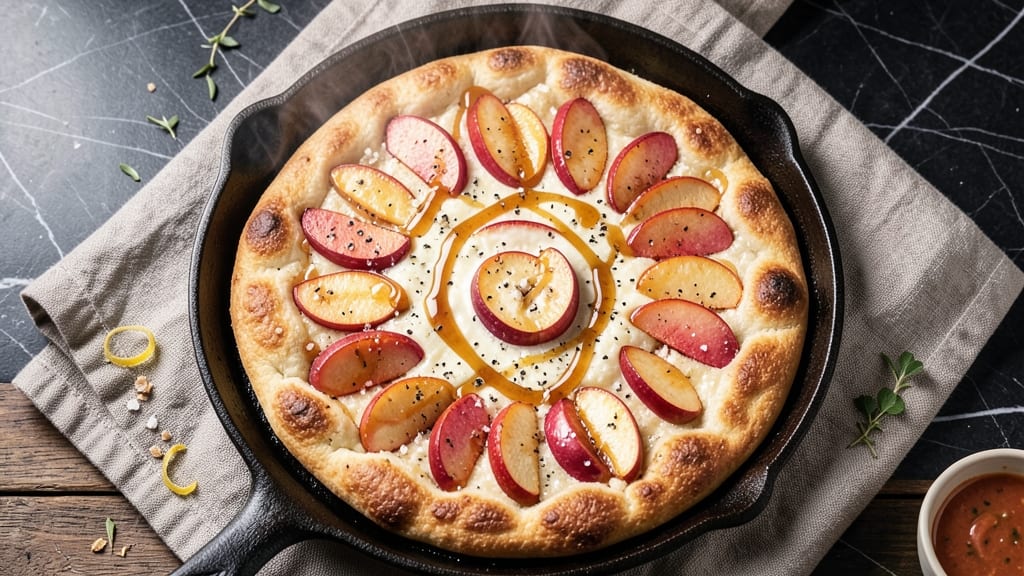
This apple flatbread recipe delivers crispy, buttery layers that shatter with every bite—like a cross between a flaky pastry and a warm apple turnover. The secret lies in a simple yeast dough layered with spiced apples and brown butter, baked until golden and fragrant.
I developed this version after testing countless adaptations of traditional Middle Eastern and Indian flatbreads, where fruit is often folded into dough for breakfast or dessert.
The dough itself is straightforward—just flour, yeast, water, and a touch of sugar—but the magic happens in the filling. Thinly sliced apples tossed with cinnamon, cardamom, and brown butter create a fragrant, caramelized center that stays tender while the crust turns crisp.
Unlike heavy pastries, this flatbread stays light yet substantial, making it perfect for brunch or a cozy afternoon snack.
What sets this apart is the balance of textures: the outer layers remain delicate yet sturdy enough to hold the filling, while the apples soften just enough to release their natural sweetness.
A drizzle of honey or sprinkle of cinnamon sugar after baking adds that final touch of warmth. The recipe scales easily—make one for a personal treat or double it for a crowd.
Whether you're adapting a traditional recipe or creating something new, this apple flatbread proves that simple ingredients can yield extraordinary results. The method is foolproof, and the outcome is always impressive—no advanced techniques required. Let’s get started on creating layers that will have everyone asking for seconds.
Ingredients for apple flatbread
Simple ingredients transform into delicate, buttery layers with a fragrant apple center.
| Ingredient | Amount | Notes |
|---|---|---|
| All-Purpose Flour 🌾 | 3 ½ cups | Sifted for light texture |
| Active Dry Yeast 🍞 | ¼ tsp | Or 1 packet instant yeast |
| Granulated Sugar 🍚 | ½ tsp | For yeast activation |
| Unsalted Butter 🧈 | ½ cup | Cold, cubed for dough |
| Whole Milk 🥛 | ½ cup | Room temperature preferred |
| Large Egg 🥚 | 1 whole | Room temperature |
| Salt 🧂 | ½ tsp | Diamond Crystal preferred |
| Apples (Honeycrisp or Granny Smith) 🍎 | 2 medium | Peeled, thinly sliced |
| Brown Butter 🧈 | ¼ cup | Caramelized, cooled slightly |
| Ground Cinnamon 🌿 | 1 ½ tsp | Freshly ground preferred |
| Ground Cardamom 🌿 | ½ tsp | Or substitute nutmeg |
| Honey 🍯 | 1 tbsp | For drizzling after baking |
| Cinnamon Sugar 🍚 | 2 tbsp | Mix equal parts sugar and cinnamon |
The flour is the foundation—King Arthur or Gold Medal brands yield the best texture for flaky layers. Yeast quality matters too; Saf-Instant or Red Star work reliably. For the apples, Honeycrisp balances sweetness and crunch, while Granny Smith adds tartness. Peeling ensures a clean bite, though you can leave the skin on for rustic texture. The butter should be cold when mixed into the dough—Plugrá or Land O'Lakes unsalted work best for consistent results. Store flour in an airtight container to prevent absorption of fridge odors.
No Honeycrisp apples? Fuji or Pink Lady hold up well to thin slicing, though they’re slightly softer. Substitute cardamom with nutmeg or allspice at half the amount—both add warmth without overpowering. For the brown butter, don’t rush the caramelization; it should smell nutty and deep. If you’re short on time, melted butter with a pinch of brown sugar mimics the flavor. The cinnamon sugar can be pre-mixed and stored in a jar for up to 3 months. For a gluten-free version, swap flour for a 1:1 blend like Bob’s Red Mill GF All-Purpose.
Dough keeps 2 days wrapped in plastic in the fridge or 3 months frozen for convenience. Store apple filling separately if prepping ahead—combine just before rolling. Baked flatbreads reheat beautifully; wrap in foil and warm in a 300°F oven for 10 minutes. The honey drizzle should be added immediately after baking to prevent crystallization. Leftovers freeze well for 1 month—thaw at room temperature before reheating.
Why You'll Love This Recipe
- No-Knead Magic: I swear by this dough—just mix, let it rise, and roll. No standing over a counter, no overworking the gluten. The yeast does all the work while I sip coffee.
- Sweet Butter Bliss: That melted butter brushed on top? Pure gold. It caramelizes just enough to give every bite a rich, buttery crunch—like a cross between a biscuit and a cinnamon roll.
- Breakfast or Snack: Honestly, I make these for breakfast with jam, pack them for lunch with peanut butter, or serve them warm at dinner with honey. They’re the ultimate flexible side.
- Pantry Staple Power: Flour, yeast, butter—ingredients I already have. No specialty items, no last-minute grocery runs. And the leftovers? Toast them the next morning for a crispy, buttery treat.
Step-by-step instructions for apple flatbread
Here's the method for creating flaky, buttery layers with tender apple filling that melts in your mouth.
Prepare the Dough for Optimal Texture
In a large mixing bowl, combine the 3.5 cups all-purpose flour and 0.25 tsp active dry yeast. Whisk briefly to distribute the yeast evenly through the flour. This creates a larger surface area for the yeast to activate later. Add the 0.5 tsp granulated sugar and mix again, ensuring the sugar coats the yeast particles.
Create a well in the center and add the 0.5 cup cold cubed unsalted butter, 0.5 cup whole milk, 1 whole large egg, and 0.5 tsp salt. The cold butter is crucial—it prevents the dough from becoming too soft and helps create those signature flaky layers. Use a wooden spoon or your hands to gradually incorporate the wet ingredients into the dry, mixing just until a shaggy dough forms. Avoid overmixing at this stage, as it develops gluten prematurely.
Knead and Rest for Maximum Flakiness
Turn the dough onto a lightly floured surface and knead for 8-10 minutes until smooth and elastic. You'll know it's ready when it springs back slowly when pressed. The dough should be slightly tacky but not sticky—add more flour only if absolutely necessary. Divide the dough into four equal portions, each weighing approximately 8 ounces, and shape them into smooth balls.
Place the dough balls on a lightly greased plate, cover with a clean kitchen towel, and let them rest at room temperature for 1 hour. This resting period allows the gluten to relax and the dough to hydrate evenly. The result will be a more tender, easier-to-roll flatbread with better layering potential. I like to set a timer so I don't forget this critical step—patience here makes all the difference in the final texture.
Prepare the Apple Filling
While the dough rests, peel and thinly slice the 2 medium apples (Honeycrisp or Granny Smith) into ⅛-inch thick rounds. The thinner the slices, the more evenly they'll cook and the better they'll integrate into the flatbread. Place the apple slices on a paper towel-lined plate and sprinkle lightly with 0.5 tsp ground cinnamon and 0.5 tsp ground cardamom. Toss gently to coat, then set aside.
In a small saucepan, melt the 0.25 cup brown butter over low heat, stirring constantly until it reaches a nutty aroma and turns golden brown. Remove from heat and let it cool slightly—it should be warm but not hot to the touch when you add it to the apples. Pour the brown butter over the apple slices and toss gently to combine. The apples will begin to soften slightly, absorbing the rich, caramelized flavor of the butter. This step is where the magic happens—don't skip it.
Roll and Assemble the Flatbreads
Preheat your oven to 375°F and line a baking sheet with parchment paper. On a lightly floured surface, roll one dough ball into a ⅛-inch thick circle, about 8 inches in diameter. The thinner you roll it, the crispier the flatbread will become. Place ¼ of the apple filling in the center of the rolled dough, leaving a 1-inch border around the edges. The filling should be concentrated in the middle to prevent it from oozing out during baking.
Gently fold the edges of the dough over the filling, pleating them slightly as you go to create a rustic, layered appearance. Brush the outer edges with a little whole milk to help them crisp up in the oven. Sprinkle ½ tbsp of the cinnamon sugar evenly over the top of each flatbread. Repeat with the remaining dough and filling. The cinnamon sugar will caramelize beautifully during baking, adding a sweet, aromatic crust.
Bake to Golden Perfection
Bake the flatbreads for 20-25 minutes until the edges are deep golden brown and the filling is bubbling at the edges. The centers should still feel slightly soft to the touch—they'll firm up as they cool. Rotate the baking sheet halfway through for even browning. In the last 2 minutes of baking, drizzle each flatbread with ¼ tbsp honey and return to the oven until the honey glistens slightly. This adds a beautiful sheen and a touch of extra sweetness.
Remove from the oven and let the flatbreads cool for 5 minutes before serving. The residual heat will finish cooking the apples slightly, ensuring they're tender and juicy. Slice into wedges and serve warm, with additional honey or a dollop of whipped cream if desired. Each bite should deliver a perfect balance of crispy, buttery layers with a warm, spiced apple center—this is the hallmark of a well-made apple flatbread.
Pro Tips For Making Apple Flatbread
- Warm the Milk First: Cold milk kills yeast faster than you’d think. Heat the whole milk just until it’s lukewarm—about 110°F (43°C)—before mixing it with yeast and sugar. I learned this the hard way when my dough took three hours to rise instead of 45 minutes. Trust me, a quick thermometer check saves time.
- Cut Butter Into Flour: The dough’s texture hinges on how you handle the butter. Use a pastry cutter or your fingers to work cold, cubed butter into the flour until it resembles coarse crumbs—no bigger than peas. This ensures flaky layers without greasy spots. (Yes, even if you’re impatient like me.)
- Skip Overproofing: Apple flatbread dough rises fast—too fast. Stop shaping it when it’s just over doubled, not when it’s puffy and wobbly. Overproofed dough collapses when baked, and you’ll end up with a sad, dense pancake instead of a crisp flatbread. Poke it gently; if it springs back slowly, it’s ready.
- Use a Heavy Pan: This isn’t your average pancake. A cast-iron or stainless steel skillet conducts heat evenly, giving you that golden, caramelized crust on the bottom. Nonstick pans work, but they’ll give you a softer, less dramatic result—like comparing a handshake to a firm grip. (Your flatbread deserves the latter.)
Troubleshooting this dish
Dough Too Sticky
If your dough feels too sticky to handle, resist the urge to add extra flour—this can make the flatbread dense. Instead, wet your hands slightly with water and gently shape the dough.
The dough should be soft but not wet; if it sticks to the surface, dust with just enough flour to coat your fingers. Remember, a slightly tacky dough is normal and helps create tender layers. 💫
Filling Oozing Out
When the apple filling escapes during baking, it’s usually because the dough edges weren’t sealed properly. Press the edges firmly against each other as you pleat them, leaving no gaps.
For extra security, brush the folded edges with a thin layer of whole milk before baking—this helps them crisp up and stay contained. If the filling still leaks, reduce the amount slightly next time.
Flatbread Not Crispy
A flatbread that turns out soft instead of crispy often means the dough wasn’t rolled thin enough or the oven temperature wasn’t high enough. Aim for a ⅛-inch thickness when rolling, and ensure your oven is fully preheated to 375°F.
For extra crispiness, bake on the middle rack where heat is most even, and avoid overcrowding the pan.
Apples Staying Hard
If your apple filling remains firm after baking, the apples were likely sliced too thickly or didn’t cook long enough. Thinly slice the apples to ⅛-inch rounds and toss them in the brown butter while the dough rests—this jumpstarts the cooking process.
Bake for the full 20-25 minutes and check for doneness by ensuring the edges are golden and the filling is bubbling.
Yeast Not Activating
If your dough doesn’t rise, the yeast may have expired or the environment was too cold. Test your yeast by mixing 0.25 tsp with 2 tbsp warm water and 0.5 tsp sugar—it should foam within 5-10 minutes.
Keep your dough in a warm spot (like a turned-off oven with the light on) to encourage rising. If the yeast fails, try Saf-Instant yeast, which activates faster.
Uneven Browning
Uneven browning happens when the oven isn’t calibrated or the flatbreads are stacked too closely. Rotate the baking sheet halfway through baking for even heat distribution. If your oven runs hot, reduce the temperature to 350°F and bake for 25-30 minutes.
For a golden finish, broil for 1-2 minutes at the end, watching closely to avoid burning.
Nutrition facts
Frequently asked questions
Can I make this flatbread without yeast?
Yes! For a quick version, replace the yeast with 1 tbsp baking powder and 0.5 tsp baking soda. Skip the resting time and bake immediately at 375°F for 18-20 minutes. The texture will be lighter but less flaky. For extra crispiness, brush the dough with milk before baking.
What's the best way to store leftovers?
Cool completely, then store in an airtight container at room temperature for 2 days. For longer storage, freeze for up to 1 month. Reheat wrapped in foil at 300°F for 10 minutes to restore crispiness. The filling stays best when reheated gently.
Can I use dried apples instead of fresh?
Soak ½ cup dried apples in warm water for 15 minutes to rehydrate, then drain well. Chop finely and combine with 1 tbsp extra brown butter to compensate for moisture loss. The flavor will be more concentrated and chewy. For a modern twist, add ¼ cup chopped walnuts to the filling.
Why does my flatbread tear when rolling?
Over-kneading or under-rested dough causes tearing. Knead just until smooth (8-10 minutes) and let the dough rest 1 hour before rolling. If it tears, patch with extra dough scraps or use a fork to press edges together. For extra strength, chill the dough 30 minutes before rolling.
What other fruits work in this recipe?
Any firm, thinly sliced fruit works! Try pears (add ¼ tsp ginger), plums (reduce sugar by 0.25 tsp), or berries (mix with 1 tbsp jam for binding). For savory versions, use caramelized onions or sautéed mushrooms with thyme. The key is balancing moisture with proper rolling thickness.