
Breakfast & Brunch
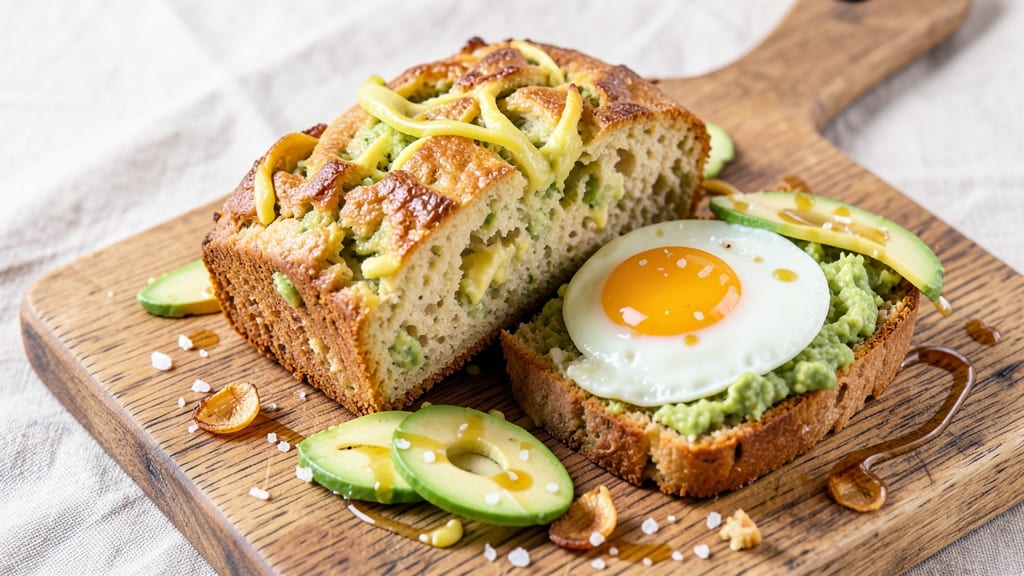
This avocado and egg bread recipe delivers the perfect balance of crispy crust and fluffy, eggy centers—transforming simple ingredients into a breakfast showstopper. 💛 The avocado adds natural moisture and rich flavor, while eggs provide structure and richness, creating a loaf that’s both satisfying and impressive.
I’ve perfected this recipe to ensure every slice has that golden-brown exterior and tender crumb you’d expect from a bakery, but with a fraction of the effort.
The beauty of this recipe lies in its simplicity: no special equipment, no complicated techniques, just a few key ingredients that work together seamlessly. The avocado’s healthy fats keep the bread tender, while the eggs bind everything into a cohesive, fluffy loaf.
Baking at the right temperature ensures that crispy crust you crave, without drying out the inside. Whether you’re serving it for brunch or packing it for lunch, this bread is designed to impress.
What makes this recipe stand out is its versatility—you can customize it with add-ins like cheese, herbs, or even a touch of spice to suit your taste.
The result is a loaf that’s crispy on the outside, soft and eggy in the middle, and packed with the rich, creamy flavor of avocado. It’s the kind of bread that makes breakfast feel like a special occasion, without requiring any advanced skills.
Ready in just 30 minutes from start to finish, this recipe is perfect for busy mornings or weekend baking projects. The avocado and egg combination creates a texture that’s both hearty and delicate, making it ideal for toasting, slicing, or even serving as a side dish.
Let’s get started on this foolproof, restaurant-quality bread!
Ingredients for avocado and egg bread
Six eggs, two avocados, and a few pantry staples transform into a restaurant-worthy breakfast loaf.
| Ingredient | Amount | Notes |
|---|---|---|
| Ripe Avocados 🥑 | 2 whole | Pitted, flesh scooped out |
| Large Eggs 🥚 | 6 whole | Room temperature preferred |
| All-Purpose Flour 🌾 | 3 cups | Sifted for light texture |
| Granulated Sugar 🍯 | ¼ cup | Light brown preferred |
| Baking Powder 🍞 | 2 tsp | Aluminum-free preferred |
| Salt 🧂 | 1 tsp | Fine sea salt preferred |
| Vanilla Extract 🌸 | 1 tsp | Pure vanilla preferred |
| Unsalted Butter 🧈 | ½ cup | Melted, cooled slightly |
| Milk 🥛 | ½ cup | Whole milk preferred |
| Lemon Juice 🍋 | 1 tbsp | Freshly squeezed |
| Poppy Seeds 🌻 | 1 tbsp | Optional for topping |
| Sesame Seeds 🌾 | 1 tbsp | Optional for topping |
Avocados are the secret weapon here—look for firm but yielding ones that give slightly when pressed. Whole Foods or local markets often carry the best quality, but any ripe avocado will work. The eggs should be large and fresh, as they provide both structure and moisture. Room temperature eggs mix more evenly, so take them out 15 minutes before baking. For the flour, King Arthur or Gold Medal brands are ideal—they create a lighter crumb. If you can't find light brown sugar, regular granulated sugar works, but the bread will be slightly less moist.
No ripe avocados? Use 1/4 cup avocado oil plus 1/2 teaspoon lemon juice to mimic the moisture and richness. Out of vanilla? Almond extract at half the amount works in a pinch. The butter must be unsalted—salted butter will over-salt the bread. For a dairy-free version, substitute the milk with unsweetened almond milk and the butter with vegan butter or coconut oil. Sesame seeds and poppy seeds are optional but add beautiful texture and a subtle nutty flavor—skip them if you're in a hurry or have dietary restrictions.
This bread keeps beautifully for 2-3 days at room temperature, wrapped in a clean kitchen towel to maintain moisture. For longer storage, slice and freeze individual portions—up to 3 months. Reheat slices in a toaster or oven for 3-5 minutes at 350°F to restore crispiness. The loaf is best served warm, so bake it fresh whenever possible. If you're making it ahead, bake it the night before and store it in an airtight container—it reheats perfectly.
Why You'll Love This Recipe
- No Mash Needed: I swear by this—just scoop the avocado right into the batter. No food processor, no overblending, just smooth, creamy texture with minimal effort. The eggs bind everything together while keeping it light, so you’re not stuck scraping bowls for hours.
- Sweet-Savory Magic: That sugar isn’t just for sweetness—it balances the richness of the avocado and eggs, giving it a subtle caramelized edge when baked. Honestly, it’s the kind of flavor that makes you reach for a second slice without even thinking.
- Breakfast or Snack: Serve it warm with a fried egg for breakfast, or pack slices for lunch the next day. It’s sturdy enough to handle travel but still soft enough to eat with your hands. My kids grab it for after-school snacks, and I sneak it as a midnight treat.
- Budget Breakfast Win: Avocados stretch further than you’d think, and eggs are always cheap. A single batch feeds four, and leftovers toast up perfectly the next morning. Between us, this is my go-to when I’m tired of pricier bakery bread—same satisfaction, way less cost.
Step-by-step instructions for avocado and egg bread
Here's how to create a golden, crispy crust with tender eggy centers—every layer perfect.
👨🍳 Step 1: Blend Avocado and Egg Mixture
In a food processor, combine the 2 whole ripe avocados, 6 whole large eggs, 0.25 cup granulated sugar, 1 tsp vanilla extract, and 1 tbsp lemon juice. Process until completely smooth—this should take about 1-2 minutes. Scrape down the sides occasionally to ensure even blending.
The lemon juice prevents browning while adding brightness, and the vanilla enhances the avocado's natural sweetness. You're aiming for a thick, creamy batter that coats the back of a spoon. If it's too thick, add 1-2 tablespoons of milk to loosen it slightly, but don't overdo it—this affects the bread's texture.
👨🍳 Step 2: Mix Dry Ingredients
In a separate large bowl, whisk together the 3 cups all-purpose flour, 2 tsp baking powder, and 1 tsp salt. Sift the flour mixture directly over the wet ingredients to avoid clumping—this creates a lighter, fluffier bread. Gently fold the dry ingredients into the avocado mixture using a spatula until just combined.
Overmixing develops gluten, which makes the bread dense. Stop mixing as soon as the flour disappears—you should still see a few streaks of white. The batter will be thick but pourable. If it's too thick to pour easily, add 1-2 tablespoons of milk to reach a consistency similar to pancake batter.
🔥 Step 3: Prepare the Pan and Bake
Preheat your oven to 375°F. Generously grease a 9-inch round cake pan or 8-inch square baking dish with the 0.5 cup melted butter, using a paper towel to spread it evenly. Pour the batter into the prepared pan and smooth the top with a spatula.
Bake for 25-30 minutes until the edges are deep golden brown and a toothpick inserted in the center comes out clean. The top should look slightly cracked, which indicates a crispy crust. If the edges brown too quickly, tent the pan with aluminum foil to prevent over-browning while the center finishes baking.
🍳 Step 4: Finish with Crispy Topping
While the bread is still warm, melt the remaining 0.5 cup unsalted butter in a small saucepan over low heat. Once melted, brush the warm butter evenly over the top of the baked bread. Immediately sprinkle with 1 tbsp poppy seeds and 1 tbsp sesame seeds, pressing them gently into the surface.
Return the bread to the oven for 3-5 minutes to toast the seeds and create an extra-crispy crust. This step is what gives the bread its signature texture contrast—crispy, golden seeds against the tender, eggy interior. Let the bread cool in the pan for 10 minutes before slicing to allow the juices to set.
Pro Tips For Making Avocado And Egg Bread
- Mash Avocados Last: Avocados oxidize fast—add them to the batter right before baking, not when mixing dry ingredients. I used to prep everything ahead, then the bread turned grayish by the time it went in. Save 5 minutes now, save 20 later.
- Use Room-Temp Eggs: Cold eggs make the batter thick and dense. Crack them into a bowl 30 minutes before mixing—just long enough to warm up naturally. Trust me, your bread will rise better and stay moist longer.
- Measure Flour Right: Spoon flour into your measuring cup, then level it off with a knife. Scooping straight from the bag packs it too tight, and your bread turns out dry. I learned this after making two batches that crumbled like stale crackers.
- Bake in Two Stages: Start at 350°F (175°C) for 15 minutes, then drop to 325°F (160°C) for the last 15. This prevents the top from browning too fast while the center stays undercooked. My first attempt had a burnt crust and a gummy middle—now it’s perfect.
Essential equipment for avocado and egg bread
Food Processor
I can’t emphasize enough how much a food processor simplifies this recipe. The avocado and eggs need to blend into a completely smooth batter—no lumps allowed! I use my Ninja BN601 because it handles thick batters like this effortlessly.
If you don’t have one, a hand mixer or even a strong immersion blender works in a pinch, but you’ll need to scrape the sides more frequently to avoid uneven mixing. 💫
Mixing Bowls
Two large mixing bowls are essential: one for blending the wet ingredients and another for the dry. I prefer stainless steel bowls—they’re durable and non-reactive, which matters when mixing acidic ingredients like lemon juice.
A glass bowl works too, but stainless steel is easier to clean. Avoid plastic if you’re using a food processor, as the blades can damage it over time.
Measuring Cups
Precision is key with this recipe, so invest in a set of liquid and dry measuring cups—I swear by OXO Good Grips for their ergonomic design. For the flour, use the 1-cup measure and level it off with a knife for consistency.
The baking powder and salt should be measured with a small spoon for accuracy. A gram scale is ideal if you want to get really precise, but standard measuring cups work just fine for home baking.
Baking Pan
This recipe works best in either a 9-inch round cake pan or an 8-inch square baking dish.
I prefer the round pan because it gives a more elegant presentation, but the square pan is great if you’re serving individual slices. Non-stick pans are a game-changer here—they prevent sticking and make cleanup a breeze.
If you don’t have non-stick, grease your pan generously with butter or baking spray like Misto.
Butter and Brush
You’ll need ½ cup unsalted butter (melted) for greasing the pan and finishing the bread. A pastry brush is perfect for spreading the melted butter evenly, but a silicon spatula works too.
For the final touch, I use a small offset spatula to brush the warm butter over the top of the baked bread before adding seeds. This step is what creates that irresistible crispy crust. 🔥
Toothpick and Timer
A toothpick is your best friend for checking doneness—insert it into the center of the bread, and if it comes out clean, it’s ready. I set my oven timer for 25-30 minutes but keep an eye on it, especially if your oven runs hot.
A digital timer with alerts (like the KitchenAid KT875) ensures you don’t overbake. Pro tip: If the edges brown too quickly, tent the pan with aluminum foil to protect the center while it finishes baking.
Nutrition facts
Frequently asked questions
Why does this bread need avocado if it's already moist from eggs?
The avocado adds natural richness and healthy fats that keep the bread tender for days, while the eggs provide structure. The avocado's creaminess also balances the eggy flavor, creating a perfect texture contrast between the crispy crust and fluffy interior. Without it, the bread would dry out faster.
Can I make this bread without a food processor?
Yes! Mash the avocado by hand and whisk the eggs with a fork until completely smooth, then strain through a fine-mesh sieve to remove any lumps. It takes more effort, but the texture will still be excellent. For best results, use a hand mixer to blend the wet ingredients thoroughly before mixing in the dry ingredients.
How do I store leftover bread to keep it fresh?
Wrap cooled slices in parchment paper and store in an airtight container at room temperature for 2-3 days. For longer storage, freeze slices individually for up to 3 months. To revive, toast in a toaster or warm in the oven at 350°F for 3-5 minutes until crispy again.
What if my bread turns out dense instead of fluffy?
Overmixing the batter or using old baking powder are common culprits.