
Side Dishes
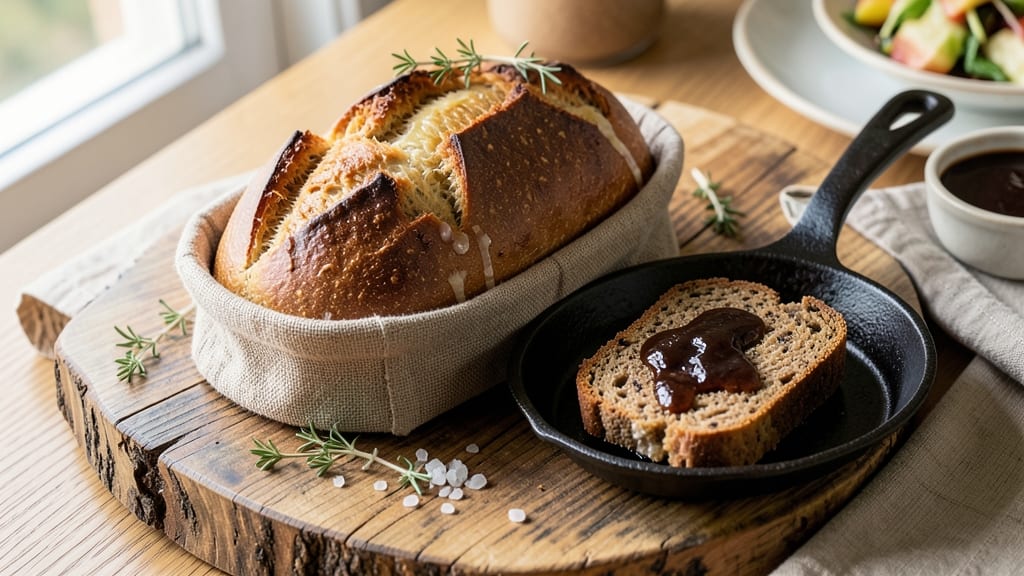
This authentic Jewish rye bread recipe brings the rich traditions of Eastern European baking to your kitchen with its signature dense crust and deep molasses sweetness. 🌟 The secret lies in a long fermentation process that develops complex flavors and a chewy texture unlike store-bought versions.
This bread isn't just a side—it's a centerpiece, often served at Shabbat meals or Jewish holidays, where its hearty nature makes it a beloved staple.
What sets this recipe apart is the careful balance of ingredients: dark rye flour for earthy depth, honey or molasses for natural sweetness, and caraway seeds for that signature aromatic touch. The dough requires patience—allowing it to ferment overnight at room temperature before a second rise in the fridge.
This slow process builds flavor and creates the signature dense, slightly crispy crust that crumbles perfectly with butter or jam.
The result is a loaf with a rich, molasses-infused sweetness that's balanced by the subtle bite of rye, all held together by a sturdy, chewy crumb. The aroma alone—warm, caramelized, and faintly spiced—will transport you to a traditional Jewish kitchen.
Whether you're baking for a festive occasion or simply craving something hearty, this bread delivers restaurant-quality results with a touch of cultural heritage.
Perfect for sandwiches, toast, or served alongside smoked fish and pickles, this recipe yields a loaf that stays fresh for days. The long fermentation makes it ideal for meal prep, while the scoring technique ensures a beautiful, crispy crust.
Let's get started on creating a piece of tradition in your home.
Ingredients for authentic jewish rye bread
Authentic Jewish rye bread relies on these twelve carefully chosen ingredients for its signature dense crust and molasses sweetness.
| Ingredient | Amount | Notes |
|---|---|---|
| Dark Rye Flour 🌾 | 4 cups | High-quality, whole-grain preferred |
| All-Purpose Flour 🌾 | 1 cup | For structural balance |
| Active Dry Yeast 🍞 | ¼ oz | Or 2.5g for precision |
| Warm Water 💧 | 1 ¼ cups | 105-110°F for activation |
| Unsalted Butter 🧈 | ½ cup | Cold, cubed for texture |
| Dark Molasses 🍯 | ½ cup | Unsulphured for authenticity |
| Honey 🍯 | ¼ cup | Wildflower preferred |
| Caraway Seeds 🌿 | 1 ½ tbsp | Lightly toasted for aroma |
| Diamond Crystal Kosher Salt 🧂 | 1 ½ tsp | Adjust to taste |
| Cornmeal 🌽 | ¼ cup | For dusting baking sheet |
| Sesame Seeds 🌱 | 1 tbsp | Optional for topping |
| Coarse Sea Salt 🧂 | 1 tsp | For crust scoring |
The rye flour is non-negotiable—King Arthur or Bob's Red Mill are the gold standards for that deep, earthy flavor. If you can't find dark rye, pumpernickel flour works in a pinch, though it lacks the same robust character. Caraway seeds should be toasted lightly in a dry pan before adding to the dough to amplify their aroma. The molasses must be unsulphured; sulphured varieties can impart an off-flavor. For yeast, Saf-Instant is my go-to as it doesn't require proofing in water first, saving time. Keep your butter cold when mixing to prevent over-developing the gluten too early.
No dark molasses? Barley malt syrup at half the amount offers a similar depth, though the flavor profile shifts slightly. Running short on caraway seeds? Fennel seeds at one-third the quantity provide a comparable anise-like note. The honey can be swapped for maple syrup, though it may darken the crust slightly. For a gluten-free adaptation, substitute half the flour with buckwheat flour, though texture will differ. The kosher salt is crucial—Diamond Crystal measures differently than Morton's, so if using another brand, taste and adjust. For storage, keep unused flour in the freezer to prevent rancidity, and store molasses in a cool, dark place to maintain its rich flavor.
This dough requires patience—ferment overnight at room temperature before the final rise in the fridge. The loaf will keep at room temperature for 3 days wrapped in a clean kitchen towel, or 1 week in the fridge. For longer storage, slice and freeze portions between parchment paper. Reheat slices in a 350°F oven for 5-7 minutes to restore freshness. The crust develops best when baked in a preheated Dutch oven for that signature dense, slightly crispy texture. Portion the dough into individual loaves for easy handling, and always score the top before baking to control expansion.
Why You'll Love This Recipe
- No-Knead Magic: I swear by this—just mix, let it rise overnight, and bake. That dark rye flour does all the heavy lifting while you sleep, giving you a crusty, hearty loaf with zero effort.
- Taste Like Grandma’s: The combo of dark rye and butter creates that deep, slightly tangy flavor I can’t get enough of. It’s the kind of bread that makes you slow down and actually savor every bite—no sad, dry slices here.
- Weeknight Workhorse: This bread is my go-to for sandwiches, toast, or even French toast. Honestly, I’ve used it for everything from breakfast to dinner, and it never lets me down—especially when I’m too tired to bake from scratch.
- Budget-Friendly Staple: A single batch feeds my family for days, and the ingredients won’t break the bank. That rye flour gives it that restaurant-quality richness, but the cost? Way more affordable than buying it pre-made.
Step-by-step instructions for authentic Jewish rye bread
Mastering this recipe delivers a dense, molasses-kissed loaf with a signature Jewish rye crust.
👨🍳 Step 1: Activate the Yeast with Molasses and Honey
In a small bowl, whisk together 1.25 cups warm water (between 105-110°F—too hot kills yeast), 0.5 cup dark molasses, and 0.25 cup honey. Sprinkle the 0.25 oz active dry yeast over the mixture and let sit for 5-10 minutes until frothy. This step ensures proper fermentation for that signature rye flavor.
I always test the water temperature with a thermometer—yeast is finicky. If it doesn't bubble after 10 minutes, your yeast may be dead. The molasses and honey here not only sweeten but also feed the yeast for robust fermentation. Stir gently to avoid over-mixing, which can weaken gluten development later.
👨🍳 Step 2: Mix the Dough with Cold Butter and Flours
In a large bowl, combine 4 cups dark rye flour, 1 cup all-purpose flour, 1.5 tbsp caraway seeds, and 1.5 tsp diamond crystal kosher salt. Make a well in the center and pour in the yeast mixture. Add 0.5 cup cold cubed butter and mix with a wooden spoon until just combined.
The cold butter creates pockets of fat that will later contribute to the bread's tender crumb. I use a dough scraper to fold the rye flour into the wet ingredients—it's dense, so you'll need to work it vigorously. The dough will be sticky but shouldn't require extra flour. If it does, you've overmixed the yeast mixture earlier.
🥘 Step 3: Knead Until Elastic and Windowpane-Tight
Turn the dough onto a lightly floured surface and knead for 8-10 minutes until smooth and elastic. Test by stretching a small piece—it should resist tearing and form a thin membrane (windowpane test). This step develops gluten for structure, which is especially important with dense rye.
I knead by hand for better control—machines can overwork the delicate rye flour. The dough should be tacky but not wet. If it sticks excessively, wet your hands slightly and continue kneading. The caraway seeds will distribute unevenly, and that's fine—they'll add aroma pockets throughout.
⏰ Step 4: First Rise and Cold Proof for Depth of Flavor
Place the dough in a lightly greased bowl, cover with a damp towel, and let rise in a warm place for 1.5-2 hours until doubled in size. After the initial rise, transfer the dough to the refrigerator and cold proof for 12-16 hours. This slow fermentation develops complex flavors and improves texture.
Cold proofing is non-negotiable for authentic rye. The dough will deflate slightly in the fridge, but that's normal. The long rest allows enzymes to break down starches, creating that signature dense yet tender crumb. I set a timer so I don't forget—some people leave it too long, which can weaken structure.
🔥 Step 5: Shape, Score, and Bake for Crispy Crust
Preheat oven to 375°F. Shape the dough into a round loaf on a parchment-lined baking sheet dusted with 0.25 cup cornmeal. Sprinkle with 1 tbsp sesame seeds and score the top with a sharp knife in a decorative pattern. Bake for 45-50 minutes until deep golden brown.
The cornmeal prevents sticking and adds subtle texture. Scoring releases steam and prevents cracking. The bread is done when it sounds hollow when tapped on the bottom. For extra crust, I broil for 1-2 minutes at the end. Let it cool for 10 minutes before slicing—this ensures clean cuts through the dense interior.
Pro Tips For Making Authentic Jewish Rye Bread
- Bloom the Yeast Properly: Mix your yeast with warm water (110°F) and a pinch of sugar first—watch for bubbles in 5-10 minutes. If it doesn’t foam, your dough will be flat and dense. I learned this the hard way after baking a brick-shaped loaf once.
- Soften the Butter First: Use softened, not melted, unsalted butter—just press it into the dough until it’s pliable but still holds shape. Melted butter makes the dough too sticky, and you’ll regret handling it later. Trust me, your hands will thank you.
- Don’t Over-Knead the Dough: Rye dough is dense; knead just until the ingredients come together—about 5-7 minutes by hand. Overworking it develops gluten, and you’ll end up with a tough, chewy loaf instead of the tender crumb you want.
- Steam the Oven: Place a metal tray on the oven rack before preheating, then add boiling water to it when you bake. This creates steam for the first 10 minutes, giving you that classic rye crust without drying out the crumb. It’s the thing that matters most for that bakery-style finish.
Make-ahead tips for leftovers
Prep Ahead Timeline
Start your dough the night before for maximum flavor development. Mix and knead the dough in the evening, then let it rise at room temperature for 1.5-2 hours before refrigerating overnight.
This 12-16 hour cold proof is what creates that signature dense, molasses-rich flavor. I always set a reminder because forgetting the cold proof is the easiest mistake to make. 🌙
Storage Solutions
Wrap cooled loaves tightly in a clean kitchen towel and store at room temperature for up to 3 days. For longer storage, slice the bread and freeze portions between parchment paper.
The slices will keep for 3 months in an airtight freezer bag. When reheating, I recommend a 350°F oven for 5-7 minutes to restore that fresh-baked texture. 💫
Freezing Dough
You can freeze the shaped but unrisen dough for up to 2 weeks. Thaw it in the fridge overnight, then let it rise at room temperature before baking.
This is perfect for busy weekends when you want fresh bread without the night-before prep. Just be sure to score the dough before baking to control expansion. ❄️
Make-Ahead Jam Topping
Pair your rye bread with a quick make-ahead jam topping. Mix 1 cup apricot jam with 1 tbsp lemon juice and ½ tsp ground cinnamon. Spread on toasted slices and warm in the oven for 2 minutes.
This sweet contrast enhances the bread's molasses depth. I make a big batch and store it in the fridge for 2 weeks. 🍯
Fridge-to-Table Strategy
For a restaurant-quality presentation, bake your loaf in the morning and store it in the fridge until serving. The cold rise actually enhances the crust's crispness. When ready to serve, brush slices with melted butter and sprinkle with flaky sea salt.
This works perfectly for Shabbat gatherings where everything is prepared ahead. 🌟
Portion Control
Divide the dough into individual loaves before the final rise to simplify baking. Use a 16-ounce portion for each loaf, which yields a perfect sandwich-sized slice. Label them with dates so you know which one to bake first. This method ensures consistent results every time. 📅
Nutrition facts
Frequently asked questions
Why does authentic Jewish rye bread need such a long fermentation?
The extended fermentation (especially the 12-16 hour cold proof) is key to developing the bread's signature deep flavor and dense texture. This slow process allows enzymes to break down starches, creating a complex sweetness from the molasses and honey while building robust gluten structure. Skipping this step results in a lighter, less flavorful loaf.
Can I substitute molasses with something else?
Yes, but expect slight flavor changes. Barley malt syrup works best at half the amount, while maple syrup can replace it 1:1 but may darken the crust. For a savory version, omit the molasses and honey entirely—just increase the water slightly to maintain dough consistency. The caraway seeds will still shine through!
How do I know when the dough is properly kneaded?
Test with the "windowpane" method: stretch a small piece of dough between your fingers—it should thin to ⅛-inch thickness without tearing. The dough should be tacky but not sticky (if it sticks excessively, wet your hands slightly). Rye dough is dense, so 8-10 minutes of kneading by hand is ideal—machines can overwork it.
What's the best way to reheat stale rye bread?
For maximum crispiness, wrap slices in foil and warm in a 350°F oven for 5-7 minutes. For a toasted version, spread with butter and toast in a 400°F oven for 3-4 minutes until golden. Avoid microwaving—it makes the bread gummy. A quick broil for 1 minute also works for extra crunch!
Can I make this bread without a Dutch oven?
Use a heavy baking sheet or stone for similar results. For extra crust, place the loaf on a preheated baking stone in the oven for 10 minutes before transferring to the sheet. If using a regular pan, brush the dough with water before baking to create steam for that signature dense crust. The cornmeal dusting still helps prevent sticking.