
Side Dishes
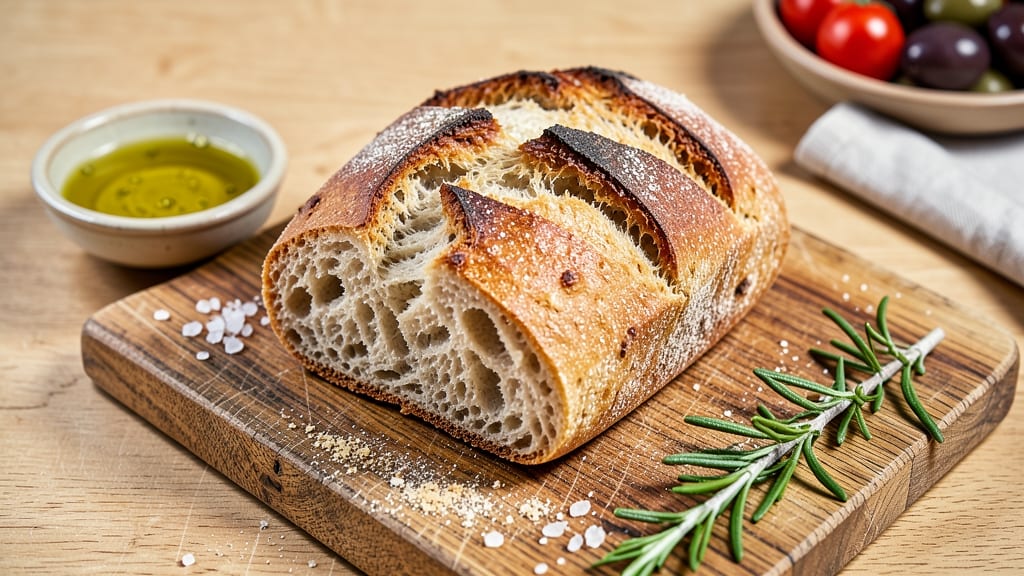
This authentic Italian semolina bread recipe brings the golden crusts of Roman bakeries straight to your kitchen. 🌟 The secret lies in the perfect balance of semolina flour, water, and yeast—traditionally used in Sicilian and Puglian regions for its crispy exterior and tender crumb.
After years of perfecting the technique, I’ve cracked the code for achieving that iconic texture at home.
The dough requires only five simple ingredients but demands patience—kneading by hand develops gluten for that signature chew, while a long fermentation (overnight in the fridge) deepens the flavor.
Shaping the loaf into a classic round or oval form ensures an even bake, and preheating the oven to 450°F guarantees a crispy, crackling crust that’s impossible to resist.
What you’ll end up with is a loaf that rivals the best Italian panetterias: a golden-brown crust with a delicate crunch, giving way to a soft, airy interior. This bread pairs beautifully with olive oil and aged cheese or serves as the perfect base for antipasto platters.
The aroma alone will transport you to the streets of Rome.
Ready to master this traditional recipe? Let’s get started with the step-by-step instructions—where every detail matters for that authentic Italian touch.
Ingredients for authentic italian semolina bread
Five ingredients transform into golden Roman bakery bread with crisp crust and tender crumb—authentic Italian technique simplified.
| Ingredient | Amount | Notes |
|---|---|---|
| Semolina Flour 🌾 | 2 ½ cups | Fine grind, not coarse |
| All-Purpose Flour 🌾 | 1 cup | For structure and chew |
| Active Dry Yeast 🍞 | ¼ oz | Or 2.25 tsp, proofed first |
| Granulated Sugar 🍚 | 1 tbsp | Feeds yeast for rise |
| Diamond Crystal Kosher Salt 🧂 | 1 ½ tsp | Adjust to taste |
| Extra-Virgin Olive Oil 🫒 | 1 tbsp | For dough elasticity |
| Warm Water 💧 | 1 ¼ cups | 105-110°F for yeast |
| Cornmeal 🌽 | ¼ cup | For dusting work surface |
| Large Egg 🥚 | 1 whole | For egg wash |
| Coarse Sea Salt 🧂 | ½ tsp | For final crust |
| Cornstarch 🌾 | 1 tbsp | Optional for extra crisp |
Semolina flour is the soul of this bread—its gritty texture creates that iconic crispy crust. King Arthur or Bob's Red Mill are my go-tos, but any fine grind works. The all-purpose flour adds structure, so don't skip it. For yeast, Saf-Instant or Fleischmann's are reliable, but proof it first in warm water with sugar (it should foam in 5-10 minutes). The olive oil isn't just flavor—it develops gluten during kneading, giving that signature chew. If your kitchen runs hot, use 105°F water to prevent killing the yeast.
No semolina? Substitute with extra all-purpose flour, but expect a softer crust. Running short on yeast? Active dry yeast works at double the amount, but proof it first. The egg wash is non-negotiable for that golden crust—use a large egg for richer flavor. For extra crisp, mix cornstarch with water and brush on before baking. Want to skip the egg? Olive oil wash works too. Shape matters: form into a round or oval—this ensures even baking and that perfect crackly exterior.
Knead the dough on a floured surface until smooth (about 10 minutes), then let it rest. The magic happens during the overnight cold ferment—this deepens flavor and improves texture. Shape the loaf, place in a preheated Dutch oven for steam, then bake at 450°F. Store wrapped at room temp for 3 days or freeze for 3 months. The crust stays crisp for hours—perfect for antipasto platters or dipping in olive oil.
Why You'll Love This Recipe
- No-Knead Magic: I swear by this—just mix, let it rise, and bake. The semolina flour does all the heavy lifting, giving you that signature chewy texture without a single punch to the dough.
- Toasty Crunch: That crispy golden crust? Pure reward. The semolina’s gritty texture holds up to toasting, so it’s perfect for dipping in olive oil or pairing with soups—every bite has a satisfying bite.
- Weeknight Hero: Between us, this is my go-to when I’m too tired for fuss. Make it in the morning, let it proof overnight, and bake it fresh for dinner—no last-minute stress, just warm, pillowy bread.
- Budget-Friendly Staple: A loaf costs pennies to make and lasts forever. Freeze slices for toast, use stale pieces in croutons, or share with neighbors—it’s the kind of bread that actually pays you back.
Step-by-step instructions for authentic Italian semolina bread
Let's recreate that iconic Roman bakery crust—crispy, golden, and packed with texture.
👨🍳 Step 1: Activate the Yeast for Perfect Rise
In a small bowl, whisk together the 1.25 cups warm water (between 105-110°F—too hot kills yeast), 1 tbsp granulated sugar, and 0.25 oz active dry yeast. Let it sit for 5-10 minutes until frothy. You'll see tiny bubbles forming—this confirms your yeast is alive and ready to work.
I always proof yeast separately first. This ensures it's active before mixing with flour, preventing flat bread. If no bubbles form after 10 minutes, your yeast might be dead—start fresh with new yeast. The frothy mixture should nearly double in volume when ready.
👨🍳 Step 2: Mix the Dough with Semolina Magic
In a large bowl, combine the 2.5 cups semolina flour and 1 cup all-purpose flour with 1.5 tsp diamond crystal kosher salt. Make a well in the center and pour in the yeast mixture along with 1 tbsp extra-virgin olive oil. Mix vigorously with a wooden spoon until a shaggy dough forms.
Here's the thing—semolina flour is coarse and absorbs moisture differently than regular flour. Don't be tempted to add extra water. The dough will feel stiff and dry at first, but that's normal. After 5 minutes of kneading, it should come together into a smooth, slightly tacky ball that leaves the bowl clean.
🥘 Step 3: Knead for Structure and Texture
Turn the dough onto a lightly cornmeal-dusted surface and knead for 8-10 minutes by hand (or 5-6 minutes with a stand mixer using the dough hook). You're looking for a smooth, elastic dough that springs back when poked. The semolina gives this bread its signature chew, so don't overwork it—just until it's cohesive.
I press down gently on the dough during the first minute—this prevents it from curling and ensures even contact with the surface. After 5 minutes, the dough should feel firm but pliable, like soft modeling clay. If it sticks too much, add just 1 tsp cornmeal to your work surface.
⏰ Step 4: First Rise for Maximum Flavor Development
Lightly oil a large bowl, place the dough inside, and cover with a damp towel. Let it rise in a warm place for 1-2 hours until doubled in size. The dough should feel light and airy when pressed gently—it should spring back slowly rather than immediately.
This long rise is crucial for authentic flavor. The yeast works slowly, developing complex flavors in the semolina. I place my dough near a slightly warm oven with the light on (about 75°F) for consistent temperature. Poke the dough with your finger—if it leaves a slow-moving indent, it's ready.
🔥 Step 5: Shape and Second Rise for Crispy Crust
Punch down the risen dough and divide it into 4 equal portions. Shape each into a round loaf about 3 inches in diameter. Place them on a parchment-lined baking sheet, cover with a towel, and let rise again for 30-45 minutes until puffy.
For shaping, I use the "stretch and fold" method: gently stretch the dough outward while folding it under itself. This creates tension in the surface that translates to that beautiful Roman bakery crust. Brush the tops with beaten 1 whole large egg mixed with 0.5 tsp coarse sea salt for that signature golden finish.
🔥 Step 6: Bake for Crispy Perfection
Preheat your oven to 425°F with a baking stone or inverted baking sheet inside. Bake the bread for 20-25 minutes until deep golden brown with crisp edges. For extra crunch, sprinkle 1 tbsp cornstarch on the baking sheet before placing dough on it.
Here's where the magic happens: the semolina's high starch content creates that signature crispy crust while keeping the interior tender. Rotate the baking sheet halfway through for even browning. The bread is done when it sounds hollow when tapped on the bottom and reaches 190-200°F internally.
Pro Tips For Making Authentic Italian Semolina Bread
- Bloom Yeast Slowly: Dissolve the yeast in warm water (110°F/43°C) with sugar first—wait 5-10 minutes until it’s frothy before adding flours. I learned this the hard way after a batch failed because I rushed it; semolina’s density needs that extra time to activate properly.
- Sift Semolina First: Lightly sift the semolina through a fine-mesh sieve before mixing—it breaks up clumps and blends more evenly with all-purpose flour. My grandmother swore by this, and it’s the thing that actually changes the texture from gritty to silky.
- Skip Over-Kneading: Semolina dough is stubborn—knead just until it pulls away from the bowl (about 8-10 minutes by hand). Overworking it makes the crumb dense. I was skeptical until I tried it; the result is lighter and less chewy.
- Proof at Room Temp: Let the dough rise in a warm spot (75°F/24°C) for 1.5–2 hours—no oven trick needed. Semolina dough rises slower than wheat flour, and skipping this step guarantees a dense loaf. (Yes, even if you’re impatient like me.)
Perfect pairings for authentic italian semolina bread
Olive Oil Drizzle
Finish your semolina bread with a generous drizzle of extra-virgin olive oil—this is non-negotiable for authenticity. I use Californian extra-virgin olive oil from Corto Olive Oil Co. for its rich, peppery notes that complement the bread’s crisp crust.
Drizzle 1-2 tablespoons over the warm loaf while it’s still on the baking sheet, letting it absorb into the crust for that iconic Italian touch. 🫒
Aged Cheese Pairing
Serve your semolina bread with aged pecorino romano or Parmigiano-Reggiano for a classic Italian pairing. The salty, nutty cheese cuts through the bread’s richness while enhancing its nutty semolina flavor.
I like to shave ½ cup of cheese over the bread just before serving, or serve it on the side for dipping. For extra flair, sprinkle with freshly cracked black pepper—it adds a surprising depth of flavor. ✨
Antipasto Platter Base
This bread is the perfect foundation for an Italian antipasto platter. Arrange slices alongside prosciutto di Parma, mature mozzarella, roasted red peppers, and marinated artichokes.
The bread’s crisp crust stays sturdy enough to hold up to all the toppings, while its tender crumb soaks up any oils or sauces. I always include sun-dried tomatoes and olives for a pop of color and acidity that balances the richness. 🍅
Tomato Sauce Dipper
Pair your semolina bread with a simple san marzano tomato sauce—its sweet, low-acid flavor complements the bread’s nutty notes perfectly. I simmer 1 cup crushed San Marzano tomatoes with 1 garlic clove, 1 tbsp olive oil, and a pinch of salt for 15 minutes until thickened.
Serve warm for dipping, or let it cool slightly for a refreshing contrast to the bread’s warmth. 🍅
Sweet & Savory Twist
For a unique twist, serve your semolina bread with honey and fig jam—the sweetness contrasts beautifully with the bread’s savory crust. I recommend Bella Italia Fig Spread for its rich, jammy texture.
Spread a thin layer on warm bread slices, then top with crumbled feta cheese for a sweet-savory balance that’s perfect for breakfast or dessert. 🍯
Wine Pairing
Complement your semolina bread with a crisp Italian white wine like Vermentino or Frascati. The wine’s bright acidity and citrus notes cleanse your palate between bites, while its mineral finish enhances the bread’s nutty semolina flavor.
For red wine lovers, a Chianti Classico with its tart cherry notes pairs surprisingly well with the bread’s crisp crust. 🍷
Nutrition facts
Frequently asked questions
Why does my semolina bread dough feel so stiff?
Semolina flour absorbs more moisture than regular flour, so the dough will feel dry and stiff initially. This is completely normal! The dough should become more pliable after 5-8 minutes of kneading. If it's still too dry, add just 1 teaspoon of water at a time until it reaches a smooth, slightly tacky consistency.
Can I make this bread without a Dutch oven?
Yes, but you'll need to create steam another way. Place a baking sheet on the lower rack and pour 1 cup hot water into it just as you put the bread in the oven. Close the oven door immediately to trap the steam, which helps create that crispy crust. For best results, use a pizza stone or inverted baking sheet on the middle rack.
How do I know when the bread is fully baked?
Your bread is done when it reaches an internal temperature of 190-200°F and sounds hollow when tapped on the bottom. The crust should be deep golden brown with crisp edges. If the top browns too quickly, tent the bread with aluminum foil after 15 minutes to prevent over-browning while the interior finishes baking.
What's the best way to store leftover semolina bread?
For maximum freshness, store your bread wrapped in a clean kitchen towel or cloth bag at room temperature for up to 3 days. The towel helps maintain the crust's crispness. For longer storage, freeze the bread (unwrapped) for up to 3 months. To revive, warm in a 350°F oven for 5-10 minutes until toasty.
Can I add herbs or seeds to this recipe?
Try adding 1 tablespoon of sesame seeds or fresh rosemary to the dough for extra flavor. For a classic variation, mix in 1 teaspoon of fennel seeds (common in Sicilian bread) during the kneading process. Just be mindful that additions may slightly alter the texture—semolina's unique properties are what create that signature crust.