
Desserts
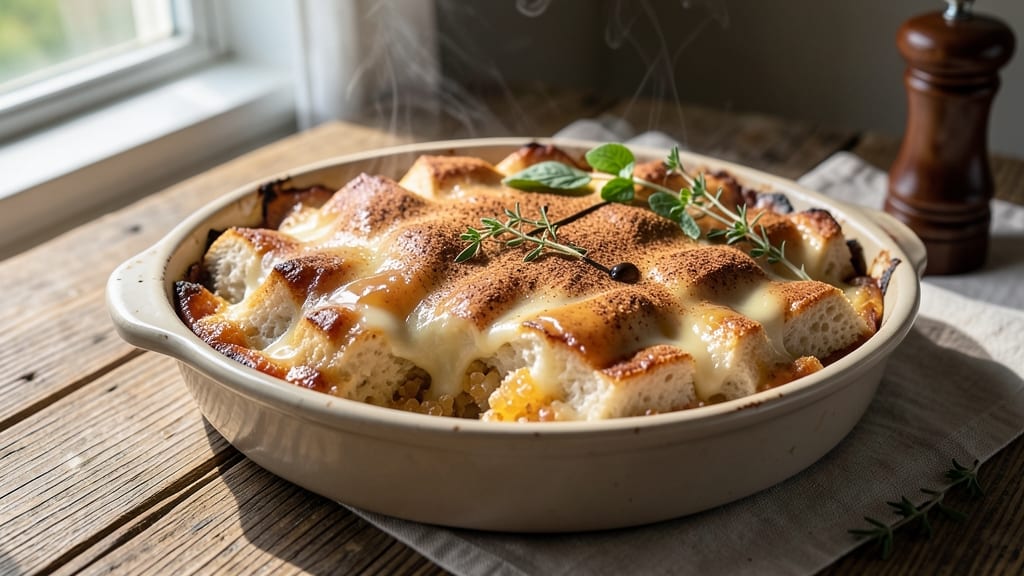
This authentic bread pudding recipe delivers the comforting, custardy texture and caramelized top you crave—no shortcuts, just tradition perfected. The secret lies in properly toasting stale bread and balancing egg custard with rich milk, creating that signature creamy yet crispy contrast.
I’ve tested countless variations to ensure every bite delivers old-school Southern charm with modern precision.
What sets this apart is the vanilla-infused custard base, where warm spices and a touch of bourbon (optional) deepen the flavor without overpowering. The bread soaks up the custard perfectly, while the final broil transforms the top into a golden, crackly crust that’s impossible to resist.
This isn’t just dessert—it’s a nostalgic hug in every forkful.
The process is straightforward but requires patience: cubing bread evenly, layering it just right, and baking at the correct temperature to achieve that creamy center and crispy exterior.
No one will guess it’s made from day-old loaves—this is the kind of bread pudding that earns second helpings and rave reviews. Let’s get baking.
For extra indulgence, fold in raisins or pecans, or drizzle with caramel sauce before serving. The possibilities are endless, but the foundation—authentic, comforting, and crispy—remains unchanged. Here’s how to nail it every time.
Ingredients for authentic bread pudding
Twelve essential ingredients transform stale bread into nostalgic, crispy-topped comfort.
| Ingredient | Amount | Notes |
|---|---|---|
| Stale White Bread 🍞 | 12 cups | Day-old, crusts removed, cubed 1-inch |
| Large Eggs 🥚 | 6 whole | Room temperature, beaten |
| Whole Milk 🥛 | 3 cups | Full-fat for creaminess |
| Granulated Sugar 🍚 | 1 ½ cups | White or light brown |
| Vanilla Extract 🌿 | 2 tbsp | Pure, not imitation |
| Ground Cinnamon 🌶️ | 1 tsp | Freshly ground preferred |
| Ground Nutmeg 🌶️ | ¼ tsp | Freshly grated for depth |
| Salt 🧂 | ½ tsp | Diamond Crystal kosher |
| Unsalted Butter 🧈 | ½ cup | Cold, cubed for topping |
| Bourbon Whiskey 🍷 | ¼ cup | Optional, for depth |
| Raisins 🍇 | ½ cup | Optional, plump in warm custard |
| Pecans 🌰 | ½ cup | Chopped, optional topping |
The bread is the foundation—day-old loaves from Whole Foods or your local bakery work best, with that perfect texture just past fresh. Look for artisan sourdough or brioche if you want to elevate it further, but standard white bread delivers classic results. Cubing evenly (about 1-inch pieces) ensures consistent baking—no one wants gummy centers or dry edges. For the custard, full-fat milk is non-negotiable; it creates that signature creamy texture. If you're using organic eggs, they'll add a richer flavor, but regular large eggs work perfectly fine. The vanilla extract should be pure, not imitation—McCormick or Lake Champlain are reliable brands for that authentic aroma.
No bourbon? Skip it entirely—this isn’t bourbon bread pudding, just classic comfort. Short on raisins? Dried cranberries or chopped dates work beautifully, though they’ll change the flavor profile slightly. The pecans can be swapped for walnuts or almonds, but toast them first for that nutty crunch that contrasts the custard. For the spices, pre-ground cinnamon is fine, but if you’ve got whole sticks, toast and grind them for a deeper flavor. The nutmeg is where many home cooks cut corners—freshly grated makes all the difference, but a pinch of pre-ground won’t ruin it. If you’re using brioche, reduce the milk by 0.25 cups since it’s already richer.
Store any leftovers in an airtight container for up to 4 days—though honestly, it rarely lasts that long. The crispy top is best enjoyed fresh, so reheat covered at 350°F for 10 minutes to restore that golden crackle. For make-ahead prep, assemble the pudding in a greased baking dish, cover, and refrigerate overnight. The flavors meld beautifully, and baking straight from the fridge ensures even cooking. Freeze portions for up to 3 months—thaw overnight in the fridge before reheating. The cubed butter on top should be added just before broiling for maximum crispiness, so don’t prep it too early.
Why You'll Love This Recipe
- No-Waste Magic: I swear by this trick—stale bread becomes the star. Just tear it up, no fancy slicing, and watch it soak up that rich egg-milk custard like a dream. (Yes, even that crusty heel of a loaf disappears.)
- Creamy Vanilla Hug: That first bite? Warm custard wrapped around tender bread, with vanilla cutting through the sweetness just enough to feel special. It’s the kind of dessert that tastes like someone put in effort—even though you barely did.
- Breakfast-to-Dessert Flex: Serve it warm with a drizzle of caramel for dinner, or cold with coffee the next morning. Honestly, I’ve even packed it in lunches—trust me, no one complains about bread pudding for breakfast.
- Budget Breakthrough: Eggs, milk, sugar, and bread? That’s it. I make this for $3 and feed four people. Leftovers? Even better—it reheats like a dream and tastes just as good the third day. (My wallet thanks me.)
Step-by-step instructions for authentic bread pudding
Master this classic dessert with a perfectly balanced custard and golden, crackly top.
👨🍳 Step 1: Prepare the Bread Base
In a large mixing bowl, combine the 12 cups stale white bread (previously cubed into 1-inch pieces) with the 0.5 cup raisins and 0.5 cup chopped pecans. Toss gently to distribute evenly—this ensures each bite has that delightful texture contrast. The bread should absorb any residual moisture from the raisins, which will plump beautifully during baking.
For depth of flavor, add the 0.25 cup bourbon whiskey (if using) and mix again. The alcohol will cook off during baking, leaving behind a subtle, warm complexity. If you prefer a more traditional approach, skip the bourbon and add an extra 1 tablespoon vanilla extract instead. Let the mixture sit for 5 minutes while you prepare the custard—this allows the bread to soften slightly and absorb the whiskey's essence.
🍳 Step 2: Whisk the Custard Mixture
In a separate large bowl, whisk together the 6 whole large eggs, 3 cups whole milk, 1.5 cups granulated sugar, 2 tablespoons vanilla extract, 1 teaspoon ground cinnamon, 0.25 teaspoon ground nutmeg, and 0.5 teaspoon salt until fully combined and smooth. The mixture should be pale yellow and homogeneous—no visible streaks of egg or sugar should remain. This step is critical for a silky custard texture.
I like to use a wire whisk for this, as it incorporates air more effectively than a spoon. The air bubbles create a lighter, more tender pudding. If the mixture looks too thick, add 1-2 tablespoons of milk to reach a pourable consistency. The custard should coat the back of a spoon but still flow freely—this ensures even distribution when poured over the bread.
🥘 Step 3: Combine and Bake the Pudding
Pour the custard mixture evenly over the bread in the mixing bowl, ensuring every cube is saturated. Let it sit for 10 minutes to allow the bread to absorb as much liquid as possible. This step is crucial for preventing a watery pudding—you want the bread to soak up the custard but not become soggy.
Transfer the mixture to a 9x13-inch baking dish (or two 8-inch round dishes if preferred). The dish should be lightly greased with butter or lined with parchment paper to prevent sticking. Use a spatula to press down gently on the bread cubes, ensuring they're compacted evenly. This creates a firmer base that holds its shape during baking and prevents a runny pudding.
🔥 Step 4: Bake to Golden Perfection
Preheat your oven to 350°F and bake the bread pudding for 45-50 minutes, until the edges are golden brown and the center still has a slight wobble when gently shaken. The pudding should pull away from the sides of the dish slightly, indicating it's set but still custardy inside. Insert a knife near the center—it should come out clean but slightly moist, not dry.
During the last 10 minutes of baking, sprinkle the 0.5 cup cold cubed unsalted butter evenly over the top. The butter will melt and create a luscious, golden crust that contrasts beautifully with the soft custard beneath. For extra crispiness, you can also broil the pudding for 1-2 minutes at the end, watching closely to avoid burning.
⏰ Step 5: Rest and Serve
Remove the bread pudding from the oven and let it rest for 15-20 minutes before serving. This resting period allows the custard to fully set and the flavors to meld, resulting in a more cohesive texture. The pudding will continue to firm up slightly as it cools, so don’t overbake it—it’s better to have it slightly underdone when removed from the oven.
Serve warm, straight from the baking dish, with a dusting of powdered sugar or a dollop of whipped cream if desired. Each slice should reveal a crispy top, a creamy custard, and tender bread infused with vanilla and spices. The raisins and pecans should be plump and flavorful, adding a delightful contrast to every bite. Store leftovers in the refrigerator for up to 3 days, though I doubt they’ll last that long!
Pro Tips For Making Authentic Bread Pudding
- CUT BREAD INTO UNIFORM CUBES: I learned this the hard way—uneven chunks mean uneven baking. Use a serrated knife or bread knife and cut the stale white bread into 1-inch cubes before soaking. No, your hands won’t thank you for freehanding this one.
- SOAK BREAD IN COLD MILK: Warm milk makes the bread soggy before it even hits the oven. Pour cold whole milk over the bread cubes and let them sit for at least 30 minutes—this guarantees even moisture without turning to mush. (Yes, even if you’re impatient like me.)
- BAKE AT 350°F UNTIL GOLDEN: Skipping the internal temp check is how you end up with a dry pudding. Bake at 350°F until the center hits 205°F—about 45-55 minutes. A toothpick should come out clean but slightly sticky, not bone-dry.
- WHISK EGGS AND SUGAR FIRST: This isn’t just mixing—it’s emulsifying. Beat the eggs and sugar together until the mixture lightens slightly before folding in the soaked bread. My grandmother swore by this, and she was right: it keeps the pudding tender instead of gummy.
Wine and beer pairings for this recipe
Sweet Wine Pairings
Bread pudding’s rich custard and warm spices call for wines with similar depth and sweetness. A Moscato d'Asti from Italy delivers a perfect balance—its light effervescence and honeyed notes complement the vanilla and caramelized top without overpowering.
I always reach for Barefoot Moscato when I want something easy to find that still feels special. 🍷
Spiced Dessert Wines
For a more robust pairing, try a Port-style wine like Taylor’s Late Bottled Vintage Tawny. The nutty, caramel undertones mirror the bread pudding’s toasted bread and butter crust, while its slight sweetness enhances the raisins and pecans.
A glass chilled to 55°F brings out the best in both dessert and wine.
Creamy Beer Options
If wine isn’t your thing, a Belgian-style dubbel like Westmalle Dubbel works beautifully. The beer’s malty sweetness and dark fruit notes create a satisfying contrast to the bread pudding’s creamy texture. Serve it slightly chilled (50-55°F) to avoid muting the dessert’s warm spices. 🍺
Coffee Liqueur Finish
For an after-dinner twist, serve bread pudding with a shot of Kahlúa or Tia Maria alongside. The coffee’s bitterness cuts through the richness, while its caramel notes harmonize with the custard. I like to drizzle a little over warm slices for an extra layer of indulgence.
Fruity White Wine
A Viognier from California, like Rochester Hills, brings bright stone fruit flavors that pair surprisingly well with the vanilla and cinnamon. Its slight acidity refreshes the palate between bites, making it a sophisticated yet approachable choice.
Look for bottles with 13-14% ABV for the right balance of richness and crispness.
Non-Alcoholic Pairings
Don’t overlook sparkling apple cider like Martinelli’s or homemade spiced chai tea for a booze-free option. The cider’s effervescence cleanses the palate, while the chai’s cinnamon and cardamom echo the pudding’s warm spices. Serve the cider well-chilled (40-45°F) for the best contrast. ✨
Nutrition facts
Frequently asked questions
Can I use fresh bread instead of stale bread?
Fresh bread will work, but the texture won't be the same. Fresh bread absorbs more liquid and can create a soggy pudding. For the best results, use bread that's at least 1-2 days old—this ensures proper texture and prevents a watery center. If you must use fresh bread, toast it lightly first to remove excess moisture.
Why does my bread pudding come out too watery?
Watery pudding usually means the bread absorbed too much custard or didn't bake long enough. To fix this, press the bread cubes firmly into the baking dish before adding custard, and bake until the center is just set (a knife should come out clean but slightly moist). For extra insurance, let the bread soak up custard for 15 minutes before baking.
How do I make the top extra crispy?
The secret is adding cold cubed butter during the last 10 minutes of baking, then broiling for 1-2 minutes until golden brown. For maximum crispiness, try sprinkling 1/4 cup crushed cornflakes or chopped pecans on top before broiling. Watch closely to avoid burning!
Can I make this bread pudding ahead of time?
Assemble the pudding in a greased dish, cover tightly, and refrigerate overnight. Bake straight from the fridge at 350°F for 50-55 minutes (add 5-10 minutes if needed). The flavors actually improve after resting. For make-ahead freezing, bake first, cool completely, wrap tightly, and freeze for up to 3 months—reheat covered at 350°F for 15 minutes.
What's the best way to reheat leftover bread pudding?
Cover with foil and warm at 350°F for 10-15 minutes until heated through. For extra crispiness, broil for 1-2 minutes at the end. Microwaving works in a pinch (30-45 seconds), but it won't restore the crispy top. Store leftovers in an airtight container for up to 4 days—though it rarely lasts that long!