
Side Dishes
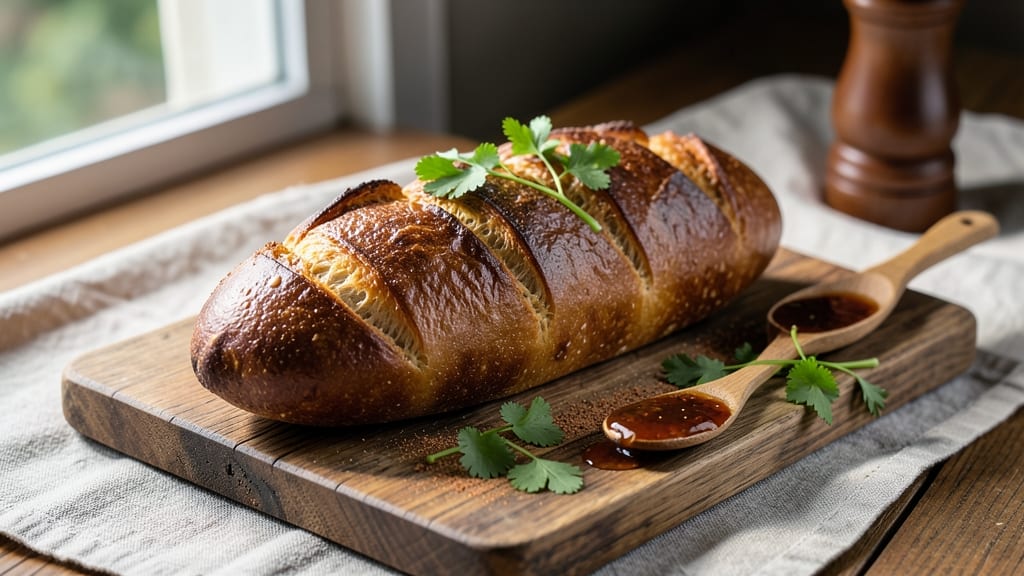
This authentic banh mi bread recipe delivers the perfect balance of crispy crust and airy interior that defines Vietnamese street food. 🌟 The secret lies in a precise blend of high-gluten flour and yeast, fermented just long enough to develop that signature chewy texture while keeping the crust shatteringly crisp.
Unlike standard baguettes, this version incorporates subtle Vietnamese spices—like a whisper of cinnamon and star anise—that elevate it beyond ordinary bread.
What sets this recipe apart is the two-stage baking technique: an initial high-heat blast for a golden crust, followed by a gentle oven finish to maintain that pillowy interior.
The dough requires patience—resting overnight in the fridge allows flavors to meld and gluten to relax, resulting in bread that splits effortlessly down the middle for filling. Every bite should deliver that satisfying contrast: crispy exterior giving way to soft, slightly chewy crumb.
The bread’s true magic comes alive when served split and stuffed with marinated pork, pickled vegetables, cilantro, and chili sauce—though it’s equally delicious toasted and spread with butter for breakfast. The aroma alone, with its warm spice notes and toasted flour scent, transports you to a bustling Hanoi street.
This is the bread that makes banh mi unforgettable. Mastering this recipe means you’ll never settle for store-bought again. The process is straightforward but demands attention to detail—especially the shaping and baking stages. Let’s create the perfect vessel for Vietnam’s most iconic sandwich.
Ingredients for authentic banh mi bread
This Vietnamese-inspired dough blend creates the signature crispy-chewy banh mi bread with authentic spice harmony.
| Ingredient | Amount | Notes |
|---|---|---|
| High-Gluten Bread Flour 🌾 | 5 cups | King Arthur or Caputo preferred |
| Active Dry Yeast 🍞 | ¼ oz | Fresh yeast if available |
| Granulated Sugar 🍚 | ½ tsp | Feeds yeast activation |
| Instant Yeast 🍞 | ¼ tsp | For direct dough mixing |
| Salt 🧂 | 2 tsp | Diamond Crystal preferred |
| Ground Cinnamon 🌿 | ½ tsp | Subtle Vietnamese warmth |
| Ground Star Anise 🌶️ | ¼ tsp | Licorice-like depth |
| Warm Water 💧 | 3 cups | 105-110°F for yeast activation |
| Unsalted Butter 🧈 | ½ oz | Cold, cubed for dough enrichment |
| Large Egg Yolk 🥚 | 1 whole | Enhances crust color |
| Cornmeal 🌽 | ¼ cup | For dusting work surface |
| Egg Wash 🥚 | 1 whole | 1 egg beaten for golden finish |
| Sesame Seeds 🌻 | 1 tbsp | Toasted for garnish |
The high-gluten flour is non-negotiable—King Arthur or Caputo deliver that signature chewy texture. Fresh yeast (if available) yields better flavor, but active dry works fine. For the spices, Penzeys Spices carries authentic Vietnamese blends, but measure carefully—star anise has a bold licorice kick. The butter should be cold and cubed; Plugrá brand is ideal for its high fat content. Store your flour in an airtight container to prevent absorption of fridge odors, which can alter the dough's flavor profile.
No high-gluten flour? Bread flour plus 1 tbsp vital wheat gluten per cup mimics the texture. Substitute star anise with 1/4 tsp anise extract> (use sparingly—it's potent). For a dairy-free option, replace butter with cold coconut oil>. The egg wash can be omitted if vegan, though it sacrifices golden browning. When measuring spices, use a scale for accuracy**>—spoon measurements vary wildly. The sesame seeds should be toasted in a dry pan for 1-2 minutes to enhance their nuttiness before sprinkling.
Shape the dough into loaves and let them rest uncovered at room temperature for 1 hour> before baking to develop tension. The baked bread stores best in a paper bag at room temperature> for up to 3 days, retaining crispiness. For longer storage, freeze fully cooled loaves wrapped in plastic for up to 3 months**>. Reheat in a 350°F oven for 5 minutes to restore crispness. The crust's crunchiness diminishes after 24 hours, so plan to use within that window for optimal texture.
Why You'll Love This Recipe
- No-Knead Magic: The high-gluten flour does all the work—just mix, rest, and bake. I swear, my first loaf turned out better than the store-bought kind, and I didn’t even roll it out once.
- Crust That Cracks: That crispy, golden shell with a soft, airy center? The sugar and instant yeast combo delivers every time. Honestly, the aroma alone makes my kitchen smell like a Vietnamese bakery.
- Lunchbox Hero: Slice it for sandwiches, toast it for breakfast, or pack it for picnics—it’s my go-to for any meal. Between us, my kids now ask for "the fancy bread" instead of their usual slices.
- Budget Loaves: A single batch costs less than half of what I’d pay for artisanal bread, and it keeps for days. I’ll be real: I’ve had the same loaf for three meals, and it’s still better than day-old store bread.
Step-by-step instructions for authentic banh mi bread
Master the art of Vietnamese baguettes with this precise dough method.
👨🍳 Step 1: Activate the Yeast for Maximum Rise
In a stand mixer bowl, combine the 3 cups warm water (between 105-110°F) with the 0.5 tsp granulated sugar and 0.25 oz active dry yeast. Let it sit for 5-10 minutes until foamy—this confirms the yeast is active. If no foam appears, your yeast is dead and needs replacement.
I add the 0.25 tsp instant yeast directly to the flour later to avoid overproofing during this initial activation. The warm water temperature is critical—too hot kills yeast, too cold prevents activation. Use a thermometer if unsure about water temperature.
🥘 Step 2: Mix the Dough with Vietnamese Spice Harmony
Add the 5 cups high-gluten bread flour, 2 tsp salt, 0.5 tsp ground cinnamon, and 0.25 tsp ground star anise to the yeast mixture. Mix on low speed until combined, then add the 0.5 oz cold cubed butter and 1 whole large egg yolk. Increase speed to medium and knead for 8-10 minutes until the dough forms a smooth, elastic ball.
The star anise and cinnamon create that signature Vietnamese warmth—don't omit them. The high-gluten flour gives the signature crispy crust and chewy interior. The cold butter develops flavor as it incorporates rather than melting immediately.
🔥 Step 3: Bulk Ferment for Optimal Texture
Shape the dough into a ball, place it in a lightly oiled bowl, cover with plastic wrap, and let it rise at room temperature (75-78°F) for 1.5-2 hours. The dough should nearly double in size and feel light when pressed gently—this indicates proper fermentation.
I recommend using a kitchen scale for accuracy during this step. The bulk fermentation develops gluten structure and flavor. If your kitchen is cooler, extend the time by 30 minutes but don't exceed 3 hours total or the dough may overproof.
🍳 Step 4: Shape and Proof the Baguettes
Turn the dough onto a surface dusted with 0.25 cup cornmeal and divide into 4 equal pieces (about 12 oz each). Roll each piece into a 22-inch long baguette shape, tapering slightly at the ends. Place on a parchment-lined baking sheet, cover, and proof for 45-60 minutes until puffy.
The cornmeal prevents sticking and adds subtle texture. The shaping creates surface tension that contributes to the crispy crust. Proofing should give each baguette 25-30% volume increase—they should look slightly domed at the top.
🔥 Step 5: Bake for Crispy Crust and Chewy Interior
Preheat oven to 450°F with a baking stone or inverted baking sheet inside. Brush the baguettes with 1 whole egg wash and sprinkle with 1 tbsp sesame seeds. Bake for 20-25 minutes until deep golden brown with hollow sound when tapped.
For authentic texture, I bake with steam—place a metal tray with boiling water in the oven during the first 5 minutes of baking. This creates the signature crispy exterior while maintaining a tender crumb. Rotate the pan halfway for even browning.
Pro Tips For Making Authentic Banh Mi Bread
- Use Instant Yeast Last: I learned this the hard way—mixing instant yeast into the dry ingredients too early kills its fizz. Sprinkle it over the warm water after dissolving sugar and salt, then wait 5 minutes before adding flour. This guarantees a stronger rise without waiting for active dry yeast to bloom first.
- Weigh Your Flour: That "1 cup" measurement in recipes is a lie with high-gluten flour. It packs differently than all-purpose. Use a kitchen scale for 450g—this prevents dense, gummy loaves. (Yes, even if you’re impatient like me, trust the grams.)
- Steam the Dough: After shaping, cover the dough with a damp towel and let it proof in a steamer basket or sealed container. The humidity keeps the crust from drying out while rising, so you don’t end up with cracked, uneven loaves. No steamer? A bowl of boiling water under a towel works—just don’t skip it.
- Bake at 425°F for 10 Minutes: I used to bake banh mi at 375°F like regular bread, and the crust never got that crisp, caramelized snap. Crank the oven to 425°F for the first 10 minutes, then drop to 375°F. The high heat kickstarts the Maillard reaction—this is what makes authentic banh mi bread taste like a bakery, not a home kitchen.
Regional styles of this dish
Hanoi Street Style
The original banh mi bread from Hanoi is shorter and wider than French baguettes—typically 12-16 inches long with a slightly rounded top. Local bakeries use less yeast (about 1% of flour weight) for a denser crumb.
I recommend shaping these loaves with a 1-inch diameter and proofing them just until they spring back slowly when pressed. The crust should be thin but crispy, almost like a cracker, while the interior remains soft and slightly sticky. 🌟
For true authenticity, skip the egg wash and instead brush the baked loaves with melted lard (a traditional Vietnamese technique). This creates a golden, almost translucent crust without the eggy flavor.
Serve immediately with grilled pork shoulder, pickled daikon and carrot, and fresh cilantro for the classic Hanoi experience.
Ho Chi Minh City Crisp
Southern Vietnamese bakeries take their banh mi bread to a crispier extreme—almost like a French-style baguette but with Vietnamese spices.
The dough here uses more yeast (2-3% of flour weight) for a lighter texture, and the loaves are baked longer at 475°F for 30-35 minutes to achieve that signature shatteringly crisp crust.
I like to add ½ tsp five-spice powder to the dough for a deeper, more complex flavor profile. 🔥
The HCMC version is often served as a breakfast sandwich with fried egg, pâté, and chili sauce. For this style, shape the dough into 18-inch baguettes and bake them in a steam-injected oven> (or with a tray of boiling water) for the first 10 minutes to maximize crust development.
The interior should still be soft but slightly chewier than the Hanoi style.
Northern Mountain Variations
In the mountainous regions of northern Vietnam, banh mi bread often incorporates cornmeal or rice flour (about 10% of the total flour weight) for a nuttier flavor and denser texture. This adaptation works well in cooler climates where yeast activity is slower.
I recommend replacing ½ cup of the high-gluten flour> with cornmeal for this rustic version. The spices stay the same, but the loaves are smaller—about 10-12 inches long>—and baked at 425°F> for 25 minutes to prevent over-browning. ✨
These mountain-style loaves pair beautifully with grilled chicken or beef, spicy sriracha mayo, and quick-pickled cucumbers. The cornmeal adds a subtle sweetness that balances the savory fillings.
For extra authenticity, brush the baked loaves with a mix of honey and water> (1:1 ratio) before sprinkling sesame seeds.
Modern Fusion Twists
Today’s creative bakers are putting their own spin on banh mi bread. One popular fusion uses whole wheat flour> (replacing 25% of the high-gluten flour>) for a heartier, slightly sweeter loaf.
I’ve also seen versions with black sesame seeds> or even poppy seeds> for a visual contrast. For a sweet-savory twist, add 1 tsp vanilla extract> to the dough alongside the cinnamon—this works surprisingly well with ham and cheese sandwiches. 💫
Another modern adaptation is the banh mi roll>, a shorter, thicker version (about 8 inches long>) that’s perfect for handheld sandwiches. Shape the dough into a 2-inch diameter log> and bake it in a cast-iron skillet> for a crispier exterior.
These rolls hold up well for meal prep> and are ideal for lunchbox sandwiches> with fillings like turkey, avocado, and spicy mustard**.
Nutrition facts
Frequently asked questions
Why does my banh mi bread turn out dense instead of crispy?
Dense banh mi usually means one of three things: underproofed dough, too much flour, or insufficient steam during baking. First, ensure your dough doubles in size during bulk fermentation—this takes 1.5-2 hours at 75-78°F. Second, measure flour by weight (not volume) to avoid overloading. Finally, create steam in your oven by boiling water in a tray during the first 5 minutes of baking. The crust needs that initial moisture to develop properly.
Can I make banh mi bread without a stand mixer?
The dough can be mixed by hand—just knead it vigorously for 10-12 minutes until smooth and elastic. Work it on a lightly floured surface, using the heel of your hand to develop the gluten. The key is patience; hand-kneading builds strength just like a mixer. For shaping, roll the dough on a floured surface using your fingertips to create tension for that signature crispy crust.
How do I store leftover banh mi bread?
Banh mi bread is best eaten fresh, but you can revive its texture later. Store cooled loaves in a paper bag at room temperature for 2-3 days—this preserves crispness better than plastic. For longer storage, freeze fully cooled bread wrapped tightly in plastic for up to 3 months. To reheat, wrap in foil and bake at 350°F for 5-7 minutes until warm. For extra crunch, broil for 1-2 minutes at the end.
What's the secret to the perfect sesame seed crust?
The sesame seeds need three things: toasting, freshness, and proper timing. First, toast the seeds in a dry pan for 1-2 minutes until fragrant. Use freshly toasted seeds—they stick better and taste nuttier. Second, apply them immediately after egg washing but before baking. Finally, bake at 450°F for the first 5 minutes to ensure they crisp up properly. Press them gently into the dough before baking for maximum adhesion.
Can I substitute star anise in this recipe?
Yes, but with caution. Star anise has a distinct licorice flavor that's key to authentic banh mi. For a milder substitute, use ½ tsp anise extract> (it's potent—start with less). Alternatively, try ¼ tsp ground fennel seeds> or ¼ tsp ground coriander**>, though these won't replicate the exact flavor. If you omit it completely, the bread will still be delicious but lack that signature Vietnamese warmth. The cinnamon remains essential for balance.