
Side Dishes
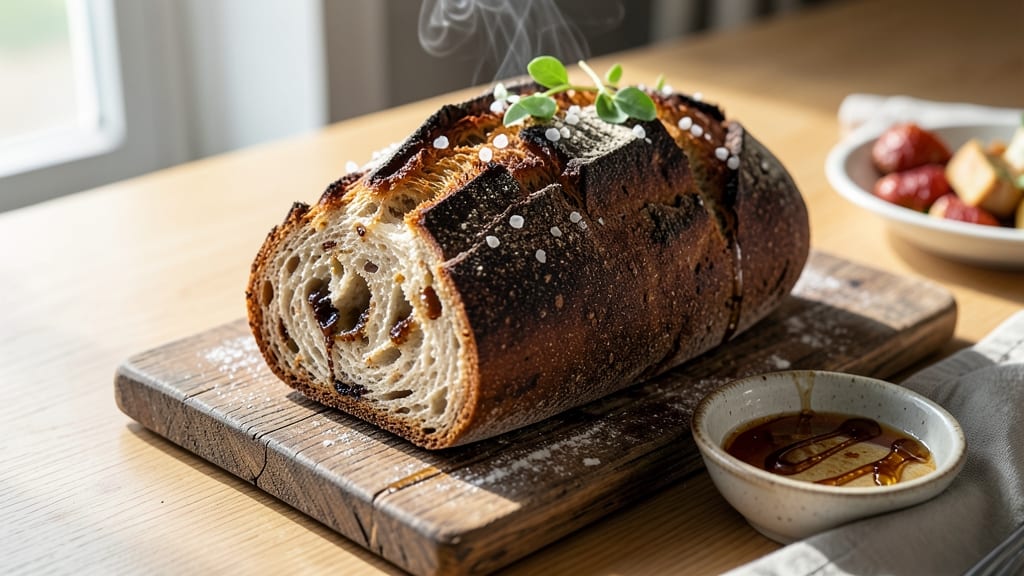
This Austrian rye bread recipe delivers the authentic crusty exterior and dense, spiced crumb that defines traditional Austrian bakery loaves. 🌟 The secret lies in precise fermentation times and a blend of dark rye flour with molasses for that signature depth of flavor—no shortcuts, just time-honored technique that transforms simple ingredients into something extraordinary.
What sets this recipe apart is the two-stage fermentation process, where the dough develops complex, tangy notes that store-bought bread simply can't match. Whether you're using a sourdough starter or commercial yeast, the method ensures that signature crusty crust and moist interior that crumbles just right.
The addition of caraway seeds and dark molasses creates that unmistakable Austrian spice profile that makes every slice unforgettable.
The result is a hearty loaf with a deep amber crust that crackles when broken, revealing a dense yet tender crumb infused with warm spices.
This bread pairs perfectly with hearty stews, cold cuts, or simply slathered with butter—it's the kind of loaf that makes your kitchen smell like a Viennese bakery. The shaping technique ensures an even crumb and that classic rustic yet refined appearance that makes it look as good as it tastes.
Perfect for feeding a crowd or meal prepping for the week, this recipe delivers restaurant-quality results at home. The long fermentation not only enhances flavor but also makes the bread more digestible, while the precise baking technique ensures a golden-brown crust that stays crisp even after cooling.
Let's get started on creating your own Austrian masterpiece.
Ingredients for austrian rye bread
Authentic Austrian rye bread relies on precise fermentation and dark molasses for signature depth.
| Ingredient | Amount | Notes |
|---|---|---|
| Dark Rye Flour 🌾 | 4 cups | Stone-ground preferred for texture |
| All-Purpose Flour 🌾 | 1 cup | For structure and lift |
| Active Dry Yeast 🍞 | ¼ oz | Or 2.25g for precision |
| Dark Molasses 🍯 | ½ cup | Unsulphured for authentic flavor |
| Granulated Sugar 🍚 | ¼ cup | Feeds yeast during fermentation |
| Warm Water 💧 | 2 ½ cups | 105-110°F for ideal yeast activation |
| Caraway Seeds 🌿 | 1 ½ tbsp | Whole seeds for authentic bite |
| Salt 🧂 | 1 ½ tsp | Diamond Crystal preferred |
| Sourdough Starter 🍞 | 1 cup | Active starter or 1 tsp yeast |
| Olive Oil 🫒 | ¼ cup | Extra-virgin for richness |
| Cornmeal 🌽 | ¼ cup | For dusting baking sheet |
| Ice Water ❄️ | ½ cup | For final dough handling |
The dark rye flour is non-negotiable—King Arthur or Bob's Red Mill stone-ground varieties deliver the best texture. Look for 100% rye flour with a deep amber hue, not the lighter commercial blends. Caraway seeds should be whole and lightly toasted before mixing to enhance their aromatic profile. For the molasses, Grosjean's unsulphured is the gold standard, though any high-quality dark molasses works. The sourdough starter can be homemade or store-bought, but ensure it's active with visible bubbles. If using commercial yeast, Saf-Instant dissolves directly in the water without activation time.
No dark rye flour? Substitute with 2 cups whole wheat flour + 1 cup pumpernickel flour for depth, though texture will differ. Short on caraway seeds? Fennel seeds or anise at half the amount provide a similar aromatic note. The molasses can be swapped for date syrup or honey (though honey isn't traditional), but reduce to 0.375 cup to avoid excessive sweetness. For the yeast, active dry yeast requires proofing in warm water for 5 minutes, while instant yeast can go straight into the dry ingredients. The olive oil adds richness—avoid vegetable oil as it lacks the fruity depth needed for this bread's character.
The dough benefits from two-stage fermentation: an initial 2-hour rise at room temperature followed by 12-16 hours in the fridge for optimal flavor development. Store the sourdough starter in a jar with a damp cloth and refrigerate between uses for up to 2 weeks. Caraway seeds keep for 6-12 months in a cool, dark place, while rye flour stays fresh for 3-6 months after opening. The baked loaf maintains freshness for 3-4 days at room temperature, wrapped in a beeswax wrap to preserve moisture. For longer storage, slice and freeze individual portions for up to 3 months—reheat in a 350°F oven for 5-7 minutes to restore crispness.
Why You'll Love This Recipe
- No-Knead Magic: I swear by this dough—just mix, let it rise overnight, then bake. The rye flour does all the heavy lifting while you sleep, and that molasses-sweet crust? Minimal effort, maximum reward.
- Deep, Earthy Crunch: That dark rye flour and molasses combo gives it a rich, almost caramelized bite with every slice. Honestly, the first time I tried it toasted with butter, I nearly burned the kitchen—it’s that good.
- Weeknight Workhorse: Slice it for sandwiches, toast it for breakfast, or pack it for lunches. Between us, this bread lasts forever in the freezer, and the all-purpose flour keeps it sturdy enough for even picky eaters.
- Budget Bakery Win: Rye flour might seem fancy, but a little goes a long way here—plus, molasses stretches further than you’d think. I make two loaves for the price of one store-bought loaf, and they taste like a bakery’s secret.
Step-by-step instructions for Austrian rye bread
Mastering this rustic loaf requires patience and precision—here's how to achieve that signature dense crumb and aromatic crust.
👨🍳 Step 1: Activate the Yeast and Sourdough Starter
In a large mixing bowl, combine the 2.5 cups warm water (between 105-110°F) with the 0.25 oz active dry yeast and 1 cup sourdough starter. Let this mixture sit for 10-15 minutes until it becomes frothy and bubbles form on the surface. This activation ensures your yeast is alive and ready to work.
While waiting, lightly toast the 1.5 tbsp caraway seeds in a dry skillet over medium heat for 1-2 minutes until fragrant. This enhances their flavor and prevents them from sinking to the bottom of your dough. Let them cool completely before adding to the dough.
👨🍳 Step 2: Mix the Dough with Wet and Dry Ingredients
Add the 4 cups dark rye flour, 1 cup all-purpose flour, 0.5 cup dark molasses, 0.25 cup granulated sugar, 1.5 tsp salt, and the toasted caraway seeds to the yeast mixture. Stir with a wooden spoon until a shaggy dough forms—this should take about 2 minutes of vigorous stirring.
Next, drizzle in the 0.25 cup olive oil and mix until incorporated. The dough will be sticky at this stage, but that's normal. Use a dough scraper to help combine everything evenly. The molasses and dark rye flour will give the dough a rich, deep color and intense flavor right from the start.
🥘 Step 3: Knead and Develop the Gluten
Transfer the dough to a lightly floured surface and knead for 8-10 minutes until smooth and elastic. I like to use a mix of wet hands and flour on the surface to prevent sticking. The dough should be tacky but not wet—if it feels too sticky, add 1 tablespoon all-purpose flour at a time until it's manageable.
During kneading, you'll notice the dough becoming more cohesive and slightly firmer. It should pass the windowpane test: stretch a small piece of dough thin enough that you can see light through it without tearing. This indicates proper gluten development, which is crucial for that classic rye bread texture.
⏰ Step 4: First Rise and Cold Fermentation
Place the dough in a lightly oiled bowl, cover with a damp towel, and let it rise in a warm place for 1.5-2 hours until it has doubled in size. The dough should be puffy and jiggly when gently pressed. If your kitchen isn't warm enough, place the bowl near a slightly open oven with the light on to create a warm environment.
After the initial rise, transfer the dough to the refrigerator and let it cold ferment for 12-16 hours. This slow fermentation develops deep flavor and improves the texture. The cold temperature also makes handling the dough easier later. I often do this overnight, which works perfectly for a morning bake.
🔥 Step 5: Shape, Proof, and Bake to Perfection
Remove the dough from the refrigerator and let it sit at room temperature for 30 minutes to relax. On a lightly floured surface, shape the dough into a round loaf by pulling the edges toward the center and sealing the seam. Place it seam-side up on a baking sheet dusted with 0.25 cup cornmeal.
Cover the dough with a towel and let it proof for another 1-1.5 hours until it has risen significantly but hasn't quite doubled in size. Preheat your oven to 375°F with a baking stone or inverted baking sheet inside. Create steam by placing a tray of boiling water on the lower rack.
Bake the loaf for 45-50 minutes until the crust is deep brown and the internal temperature reaches 190-200°F. The bread should sound hollow when tapped on the bottom. For extra crustiness, brush the top with 0.5 cup ice water just before baking—this creates that beautiful crackly crust.
🍞 Step 6: Cool and Enjoy
Remove the bread from the oven and let it cool on a wire rack for at least 1 hour before slicing. This resting period allows the crumb to set properly and prevents a gummy texture. The interior should be dense with a slightly coarse crumb, and the crust should be dark and crisp.
Slice the bread and serve warm with your favorite butter or jam. The flavor will continue to develop over the next day as the crumb softens slightly and the spices mellow. Store any leftovers in an airtight container at room temperature for up to 3 days or freeze for longer storage.
Pro Tips For Making Austrian Rye Bread
- Bloom the Yeast First: Skip mixing dry yeast with flour—it’s a waste of time and often kills it. Instead, dissolve the yeast in warm water (105–110°F) with a pinch of sugar first, then let it foam for 5–10 minutes. If it doesn’t bubble, your bread will be dense and flavorless.
- Mix Molasses Last: Dark molasses is sticky and aggressive—adding it early turns your dough into a gloppy mess. Wait until all the dry ingredients are combined, then fold it in with the water. This keeps the dough manageable and prevents overworking.
- Don’t Over-Knead the Dough: Rye dough is dense and tough by nature—kneading it like wheat dough will make it rubbery. Just mix until the ingredients come together, then let it rest. Overworking it ruins the texture, and this bread doesn’t need the workout.
- Steam the First 15 Minutes: Austrian rye bread needs a crackly crust, but rye flour absorbs moisture like a sponge. Place a metal bowl of boiling water in the oven with your loaf, then close the door. The steam keeps the top from drying out too fast—critical for that perfect crust.
Make-ahead tips for this dish
Prep Ahead Timeline
Plan your Austrian rye bread for a morning bake by preparing the dough the night before. After the initial 1.5-2 hour room-temperature rise, transfer the dough to the fridge for 12-16 hours of cold fermentation.
This overnight approach develops maximum flavor while making shaping easier the next day. I always set a reminder to take it out of the fridge 30 minutes before shaping to let it relax slightly. 🌙
Dough Storage Tips
Unshaped dough can be stored in an airtight container at room temperature for up to 12 hours before cold fermentation.
For longer prep, shape the dough into a loaf after the initial rise, wrap tightly in plastic wrap, then refrigerate for up to 24 hours before final proofing and baking. The cold slows fermentation without sacrificing flavor development.
I've successfully prepped dough 3 days ahead by freezing shaped loaves (wrapped in plastic + foil) for up to 1 month.
Baking Schedule
Preheat your oven 30 minutes before baking to ensure it reaches 375°F with proper steam generation. Place a tray of boiling water on the lower rack 10 minutes before loading the bread for maximum crust development.
For busy mornings, prepare all baking equipment (stone, tray, water) the night before so you can bake immediately after dough proofing. The bread's internal temperature should reach 190-200°F within 45-50 minutes of baking. ✨
Freezing Fresh Loaves
Slice the cooled loaf and freeze individual portions in quart-sized freezer bags for up to 3 months. For whole loaves, wrap tightly in plastic wrap followed by foil to prevent freezer burn. Thaw at room temperature for 2 hours before reheating.
To restore crispness, wrap slices in foil and heat at 350°F for 5-7 minutes. The texture remains dense and flavorful even after freezing. I keep a stash of frozen slices for quick sandwiches during the week. ❄️
Make-Ahead Serving
Prepare two loaves ahead of time - one for immediate serving and one for freezing. The second day's bread actually tastes better as the crumb softens slightly and flavors meld further. Package individual slices in parchment-lined bags for easy grab-and-go meals.
For events, bake 24 hours ahead, wrap in a beeswax wrap, and store at room temperature - the crust stays crisp while the crumb maintains its moisture. This is my go-to strategy for holiday gatherings. 🎄
Fermentation Shortcuts
Short on time? Use instant yeast (2.25g) instead of sourdough starter and reduce cold fermentation to 6-8 hours.
For an even faster option, shape the dough after the initial 2-hour rise, bake immediately at 375°F for 50 minutes, then finish with 10 minutes at 400°F for extra crust color. While flavor won't be as developed, this method still delivers a serviceable loaf in under 4 hours.
I use this when hosting unexpected guests! ⏰
Nutrition facts
Frequently asked questions
Can I make this Austrian rye bread without a sourdough starter?
The recipe absolutely works with commercial yeast! Simply replace the 1 cup sourdough starter with an extra 2.25g (1 packet) instant yeast dissolved in the warm water. The cold fermentation time remains the same (12-16 hours) for optimal flavor development, though the tang will be slightly milder than with sourdough. For best results, use Saf-Instant yeast which dissolves directly without activation time.
Why does my Austrian rye bread turn out too dense or heavy?
Over-kneading or insufficient gluten development often causes this issue. The dough should be tacky but manageable—add just enough 1 cup all-purpose flour during kneading to prevent sticking. Also ensure proper fermentation: the initial rise should take 1.5-2 hours at room temperature, followed by 12-16 hours cold. If your kitchen is cold, warm the oven to 100°F with the light on for the first rise.
How can I get a darker crust on my loaf?
For that signature deep amber crust, try these pro tips: Brush the baked loaf with ice water immediately after baking, then return to the oven for 5-10 minutes at 400°F. Alternatively, bake at 350°F for 50 minutes then finish with 10 minutes at 425°F. The molasses in the dough also contributes to crust color—ensure you're using unsulphured dark molasses for authentic depth.
Can I substitute whole wheat flour for the dark rye flour?
While possible, the texture and flavor will differ significantly. For a closer substitute, mix 2 cups whole wheat flour + 1 cup pumpernickel flour to mimic the rye's density and depth. The bread will be slightly lighter but still hearty. If using this blend, reduce the molasses to 0.375 cup to prevent excessive sweetness, as whole wheat absorbs flavors differently.
How do I know when the dough is properly proofed?
The dough should rise until it's about 50-75% larger than its original size and feels springy when gently pressed. For the final proof, it should have visibly expanded with a slight dome shape. A simple test: poke the dough with your finger—if it springs back slowly (not immediately), it's ready. Overproofing is more common than underproofing, so err on the side of slightly underproofed dough for best results.