
Side Dishes
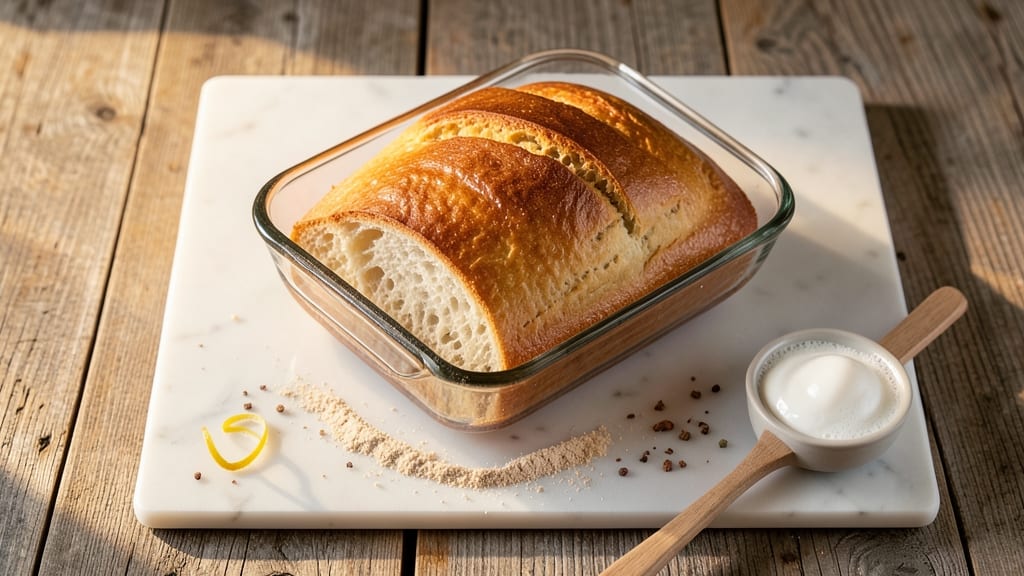
This Atkins bread recipe delivers a low-carb loaf with the texture of traditional bread—no wheat flour in sight. The secret lies in almond flour and flaxseed, which create a tender crumb while keeping carbs in check.
I developed this version after struggling to find a keto-friendly bread that didn’t crumble or taste like cardboard.
What sets this recipe apart is the foil-sealed rise, a technique that mimics traditional dough fermentation without gluten. The result? A loaf with a satisfying chew and golden crust, perfect for toast or sandwiches. It’s also beginner-friendly—just mix, seal, and bake.
By the end, you’ll have a restaurant-quality loaf that fits a low-carb lifestyle. The flavor is mild enough for everyday use but rich enough to satisfy cravings. Plus, it freezes beautifully for quick meals.
Whether you’re keto, Atkins, or just watching carbs, this bread proves you don’t need gluten to enjoy real bread. Let’s get baking!
Ingredients for atkins bread
Almond flour and flaxseed create a tender, low-carb loaf that mimics traditional bread's satisfying chew.
| Ingredient | Amount | Notes |
|---|---|---|
| Almond Flour 🌰 | 2 cups | Blanched, finely ground preferred |
| Ground Flaxseed 🌾 | ½ cup | Freshly ground for best texture |
| Large Eggs 🥚 | 4 whole | Room temperature for even mixing |
| Egg Whites 🥚 | ½ cup | Freshly separated for light texture |
| Cream Cheese 🧀 | 4 oz | Full-fat for moisture and richness |
| Baking Powder 🧂 | 1 tbsp | Aluminum-free for best rise |
| Salt 🧂 | ½ tsp | Diamond Crystal preferred |
| Garlic Powder 🧄 | 1 tsp | Freshly ground for flavor |
| Onion Powder 🧅 | 1 tsp | For subtle depth of flavor |
| Xanthan Gum 🌿 | ¼ tsp | Essential for gluten-free structure |
| Warm Water 💧 | ½ cup | 100°F for proper activation |
| Olive Oil 🫒 | 2 tbsp | Extra-virgin for richness |
| Heavy Cream 🥛 | ¼ cup | For tender crumb |
Almond flour is the backbone here—Bob's Red Mill or Anthony's Goods are my go-tos for consistent texture. The ground flaxseed needs to be fresh; if you buy whole seeds, grind them yourself right before mixing. Egg whites are critical for that light, airy texture—separate them carefully and whip them briefly before adding. Cream cheese adds moisture and richness, but don't substitute with lighter versions. For the olive oil, Californian extra-virgin has the best flavor profile without overpowering the bread's mild taste.
No almond flour? Coconut flour works at half the amount, but you'll need to add an extra egg to compensate for dryness. Short on egg whites? Aquafaba (chickpea brine) at 3 tbsp equals 1 egg white. The xanthan gum is non-negotiable—it's what gives this bread its structure. If you can't find it, psyllium husk powder at 0.5 tsp is a decent substitute. For the warm water, microwave it for 20 seconds to hit that perfect 100°F mark. And if you're worried about the garlic and onion powders being too strong, start with half the amount and adjust to taste.
Mix everything except the warm water first—it activates the baking powder. Once combined, fold in the water last to prevent overmixing. The dough will be thick and sticky, but that's normal. For the foil-sealed rise, use heavy-duty foil and seal tightly to trap steam. The bread keeps well in an airtight container for 3 days at room temperature or 1 week in the fridge. For longer storage, freeze slices wrapped in parchment—they toast beautifully after freezing.
Why You'll Love This Recipe
- No Mixer Needed: Mixing this dough is seriously hands-off—I just fold the almond flour and flaxseed into the whipped egg whites until it clumps like wet sand. The cream cheese adds that rich pull-apart texture without requiring a stand mixer or even much elbow grease.
- Taste Like Real Bread: Honestly, the secret’s in the eggs and cream cheese—they give it that buttery, slightly tangy crumb you’d expect from sourdough, but with a subtle nutty depth from the almond flour. Toast it, and that crispy edge? Chef’s kiss.
- Keto-Friendly Every Day: Between us, this is my go-to for breakfast toast, sandwiches, or even French toast (yes, really). The flaxseed keeps it sturdy enough for grilled cheese, and it won’t turn to mush in your lunchbox like store-bought low-carb bread.
- Makes a Loaf for Days: One batch feeds my family for weeks—I slice it, freeze half, and pull out portions as needed. The almond flour stays fresh longer than regular bread, and reheating? Just a quick zap in the toaster. Zero waste, all flavor.
Step-by-step instructions for Atkins bread recipe
Here's the exact method I use to create a tender, flavorful low-carb loaf with perfect rise and texture.
Prepare the Wet Ingredients for Optimal Texture
In a medium bowl, whisk together the 4 whole large eggs and 0.5 cup egg whites until completely combined. Add the 4 oz cream cheese and whisk until smooth and fully incorporated. The mixture should be uniform with no visible lumps—this ensures even distribution throughout the batter.
Next, add the 2 tbsp extra-virgin olive oil and 0.25 cup heavy cream to the egg mixture. Whisk gently until fully combined. The olive oil adds richness while the heavy cream contributes to that tender crumb we're after. Set this mixture aside while you prepare the dry ingredients.
Combine Dry Ingredients with Precision
In a separate large bowl, sift together the 2 cups almond flour, 0.5 cup ground flaxseed, 1 tbsp aluminum-free baking powder, 0.5 tsp salt, 1 tsp garlic powder, 1 tsp onion powder, and 0.25 tsp xanthan gum. The xanthan gum is crucial here—it mimics gluten's structure in gluten-free baking, giving us that proper rise and chewy texture.
Use a whisk to break up any clumps in the dry ingredients, especially around the xanthan gum. This step prevents dense spots in your final loaf. I like to press the mixture through a fine-mesh sieve to ensure everything is evenly distributed before combining with the wet ingredients.
Mix Wet and Dry Ingredients to Perfect Consistency
Gradually pour the wet ingredients into the dry ingredients bowl while mixing on low speed with a hand mixer or stand mixer fitted with the paddle attachment. Mix just until combined—about 1-2 minutes. Overmixing develops gluten-like proteins that we don't want in this low-carb bread.
Add the 0.5 cup warm water (about 100°F) to the mixture and mix for another 30 seconds until just incorporated. The warm water activates the baking powder and helps create that light, airy texture. The batter should be thick but pourable—similar to pancake batter consistency.
Shape and Seal for Ideal Rise
Transfer the batter to a greased 8x4-inch loaf pan. Use a spatula to smooth the top, making sure to tap the pan gently on the counter a few times to eliminate any air bubbles. This step prevents large holes in your final loaf.
Here's the key technique: cover the pan tightly with aluminum foil and seal the edges completely. This creates a steam chamber that helps the bread rise properly without drying out. Place the sealed pan in the refrigerator and let it chill for 1 hour. The cold environment helps the gluten-like proteins relax, resulting in a more tender crumb.
Bake to Golden Perfection
Preheat your oven to 350°F. Remove the chilled loaf from the refrigerator and carefully remove the foil. Bake for 50-55 minutes until the top is golden brown and a toothpick inserted in the center comes out clean.
I like to tent the loaf with foil after 30 minutes to prevent over-browning while ensuring it cooks through evenly. The internal temperature should reach 200°F for that perfect doneness. Let the bread cool in the pan for 10 minutes before transferring to a wire rack to cool completely.
Pro Tips For Making Atkins Bread
- Whip Egg Whites First: I learned this the hard way—mixing the cream cheese and eggs first makes the batter gummy. Beat the egg whites to stiff peaks before folding them in; that’s what gives this bread its lightness. (Yes, even if you’re impatient like me.)
- Sift the Flaxseed: Ground flaxseed clumps like glue if you don’t handle it right. Sift it directly into your measuring cup, then tap the cup sharply against the counter to settle it—this guarantees the right volume. No sifting? Use a fine-mesh sieve or just whisk it vigorously in the dry ingredients.
- Don’t Overmix the Batter: This dough is delicate. Once you fold in the whipped egg whites, give it three gentle turns with a spatula—no more. Overmixing = dense, rubbery bread. Stop when streaks disappear; the texture will still be slightly uneven, and that’s perfect.
- Bake at 325°F, Not Higher: I was skeptical until I tried it: 350°F makes the outside burn before the center sets. Stick to 325°F and bake for the full 50–60 minutes—even if the top looks golden earlier. The internal temp should hit 190°F (use an instant-read thermometer). Patience here means no gummy center.
Essential equipment for atkins bread
Must-Have Mixing Tools
Start with a stand mixer fitted with a paddle attachment—this ensures even mixing without overdeveloping gluten-like proteins. I use my KitchenAid Artisan Series for consistent results.
For hand mixing, a Ball silicone whisk works well for combining wet ingredients, while a rubber spatula helps scrape every bit of batter from the bowl. These tools prevent dry spots in your loaf. 🥣
Precision Measuring Essentials
Accurate measurements are critical for low-carb baking. Invest in a digital kitchen scale for dry ingredients like almond flour and flaxseed—OXO Good Grips is my top pick. For liquids, use a clear glass measuring cup with markings for 1/4 cup increments.
The xanthan gum and baking powder require precise measurements—use a small scoop or measuring spoon to avoid clumping.
Foil-Sealing Setup
The foil-sealed rise is what makes this bread special. Use heavy-duty Reynolds Wrap to create an airtight seal—regular foil won't hold the steam effectively. I cut a piece large enough to fold over the edges of the 8x4-inch loaf pan completely.
A small kitchen torch can help seal tricky spots if needed. This technique mimics traditional dough fermentation without gluten. ❄️
Baking Gear for Perfect Results
For even heat distribution, bake in a dark-colored metal loaf pan—I recommend Wilton's non-stick version. Place the pan on the middle rack of your oven to ensure consistent baking.
A thermometer is essential for checking the internal temperature at 200°F—I use an instant-read ThermoWorks thermapen. For cooling, a wire cooling rack prevents soggy bottoms.
Optional Extras for Flavor
Want to elevate your bread? A garlic press lets you add fresh garlic to the batter for extra depth. For a cheesy twist, sprinkle shredded cheddar on top before baking.
Store leftovers in an airtight container or ziplock bag to maintain freshness. If freezing, use parchment paper between slices to prevent sticking. 🧀
Nutrition facts
Frequently asked questions
Can I make this bread without almond flour?
Yes, but you'll need to adjust the recipe. Coconut flour works best at half the amount (1 cup instead of 2 cups), but you'll need to add an extra egg to compensate for dryness. For a more neutral flavor, try sunflower seed flour or oat flour, though texture may differ slightly. Always measure carefully—low-carb baking is sensitive to ratios!
Why does my Atkins bread turn out dense?
Dense bread usually means overmixing or incorrect measurements. Mix just until combined (1-2 minutes max) to avoid developing gluten-like proteins. Also, ensure your xanthan gum is fresh and properly measured—it's the secret to that light, airy texture. If your batter seems too thick, add 1 tbsp more warm water gradually.
How many carbs are in each slice?
Each slice (assuming you cut the loaf into 8 slices) contains about 1-2 net carbs, depending on your exact measurements. The almond flour and flaxseed keep carbs low while the cream cheese adds richness. Always check your specific ingredients' labels, as brands vary slightly in their carb content.
Can I make this bread in a different pan shape?
This recipe works well in 9x5-inch or 9x3-inch pans. For a round loaf, use a 9-inch cake pan and adjust baking time to 45-50 minutes. The key is to maintain a 1.5-inch depth for even baking. If using a different shape, reduce baking time by 5-10 minutes—smaller pans bake faster.
How do I store this bread to keep it fresh?
Store in an airtight container at room temperature for 3 days or refrigerate for 1 week. For longer storage, freeze slices wrapped in parchment paper—they toast beautifully after freezing! To revive, warm in a 350°F oven for 5-10 minutes until crispy again.