
Side Dishes
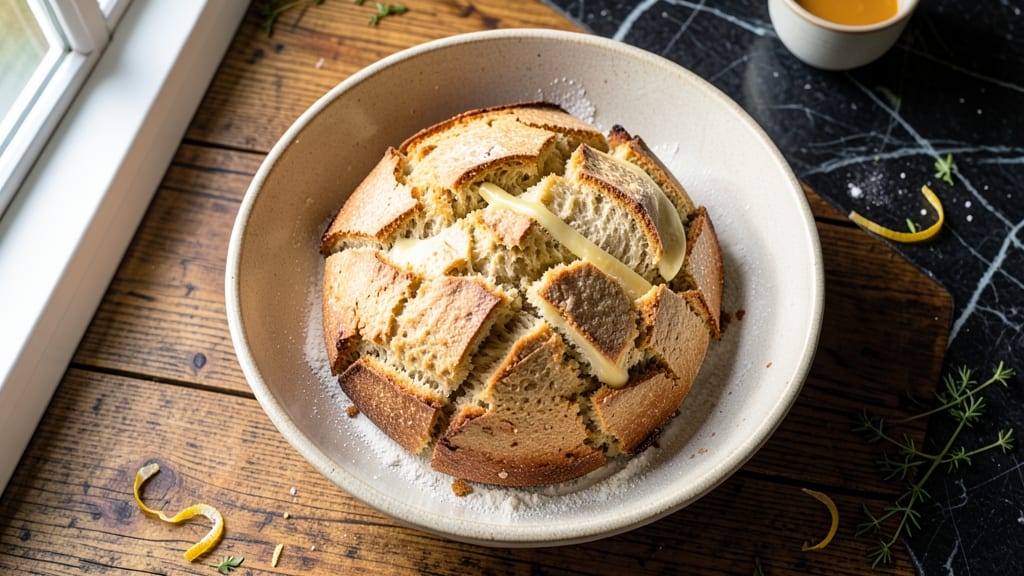
This Atk Irish soda bread recipe brings the heart of Ireland to your kitchen with its signature rustic crunch and buttermilk-activated rise. The traditional method requires no yeast, no kneading—just a simple dough that transforms into a dense, slightly sweet loaf with a golden crust.
I’ve perfected the technique to ensure a tender crumb and that iconic cross-slash pattern, while keeping the process straightforward for home bakers.
The secret lies in the buttermilk, which creates a subtle tang and activates the baking soda for a light, airy texture without yeast. A few key steps—like mixing just until combined and avoiding overdevelopment—ensure the bread stays tender rather than tough.
The cross-slash on top isn’t just decorative; it steams the bread evenly, giving it that classic rustic look and crispy crust.
What you’ll end up with is a loaf that’s dense yet crumbly, with a flavor that’s slightly sweet and tangy from the buttermilk. It’s perfect for serving alongside soups, stews, or even as a simple breakfast with butter.
The best part? This recipe delivers authentic Irish soda bread with minimal effort, making it a staple for any kitchen.
For added flavor, consider mixing in raisins, seeds, or even a pinch of salted caramel. The variations are endless, but the foundation remains the same: a no-fuss, culturally rich bread that’s as comforting as it is delicious. Let’s get started!
Ingredients for atk irish soda bread
Nine simple ingredients transform into Ireland's iconic rustic loaf with minimal effort.
| Ingredient | Amount | Notes |
|---|---|---|
| All-Purpose Flour 🌾 | 4 cups | Spooned and leveled for accuracy |
| Buttermilk 🥛 | 1 ½ cups | Room temperature preferred |
| Baking Soda 🧂 | 1 tbsp | Pure, fine-grained preferred |
| Salt 🧂 | 1 tsp | Fine sea salt preferred |
| Granulated Sugar 🍚 | ½ cup | Light brown sugar for depth |
| Unsalted Butter 🧈 | ½ cup | Cold, cubed for even distribution |
| Whole Milk 🥛 | ¼ cup | For extra tenderness |
| Raisins 🍇 | ½ cup | Optional, plump and rinsed |
The flour is the foundation—King Arthur or Bob's Red Mill are my go-tos for that perfect crumb. Sift it first to avoid lumps, which can make the bread dense. Buttermilk is non-negotiable; it's what creates that signature tang and activates the baking soda for lift. If you're fresh out, sour milk or plain yogurt with a splash of lemon juice works in a pinch. The baking soda must be fresh—if it's been sitting in your pantry for months, it loses its punch. For the butter, European-style is ideal—it has more fat content, which translates to a richer flavor. Keep everything cold until mixing to prevent the butter from melting prematurely.
No buttermilk? Mix 1.5 tablespoons lemon juice or vinegar with 1.5 cups milk—let it sit for 5 minutes to curdle. Want to skip the raisins? Sunflower seeds or chopped walnuts add texture without sweetness. The sugar can be swapped for honey (reduce other liquids by 2 tbsp), but it won't caramelize like granulated. For a deeper flavor, add a pinch of cinnamon or cardamom. The salt is crucial—it balances the sweetness and enhances the buttermilk's tang. If you're using a different flour, like whole wheat, reduce the amount by 1/4 cup and add 1/4 cup extra milk to maintain moisture.
This dough keeps for up to 2 days in the fridge, covered tightly. For best results, shape and bake immediately, but you can prep the dough ahead and refrigerate it overnight. The bread is best served the day it's baked—it reheats beautifully in a 200°F oven for 10 minutes, wrapped in foil. Store leftovers in an airtight container at room temperature for 3 days or freeze for 3 months. The crust stays crispy for about 2 days, so slice it fresh when serving. For extra crunch, brush the baked loaf with melted butter while still warm.
Why You'll Love This Recipe
- No-Fuss Mixing: I swear by this recipe because you just fold the buttermilk into the dry ingredients—no kneading, no fuss. That baking soda’s the secret; it puffs up like magic while you’re still wiping flour off your hands.
- Tangy-Sweet Magic: The buttermilk’s tang cuts through the sugar just enough to make every bite feel special. It’s not overly sweet, not bland—just right, with that classic Irish soda bread texture you can’t get wrong.
- Weekday Hero: Toss a slice in the toaster for breakfast, tear it for sandwiches, or serve it warm with butter. It’s my go-to when I’m too tired to think, yet still feels like a treat.
- Lasts All Week: Between us, this loaf stays fresh for days—perfect for lazy mornings or impromptu guests. And if you freeze a slice? It’s like fresh-baked the next day. Budget win, flavor win.
Step-by-step instructions for perfect Irish soda bread
Here's how to craft a traditional Irish soda bread with a tender crumb and crisp exterior.
Mix Dry Ingredients for Optimal Texture
In a large mixing bowl, combine the 4 cups all-purpose flour, 1 tablespoon baking soda, 1 teaspoon salt, and 0.5 cup granulated sugar. Use a whisk to break up any flour lumps and ensure even distribution of the baking soda—this activates the rise. I like to press the baking soda into the flour with my fingers to guarantee it dissolves properly during mixing.
Next, cut the 0.5 cup unsalted butter into small cubes and add them to the dry mixture. Use your fingers or a pastry cutter to work the butter into the flour until you achieve a coarse crumb texture. The butter should be evenly distributed but still visible as small pea-sized pieces—this creates pockets of flavor and tenderness in the finished bread.
Combine Wet Ingredients for Perfect Rise
In a separate bowl, whisk together the 1.5 cups buttermilk, 0.25 cup whole milk, and the 0.5 cup raisins (if using). The buttermilk should be at room temperature—this prevents the dough from becoming too dense. Pour the buttermilk mixture into the dry ingredients and stir with a wooden spoon until just combined. You're looking for a shaggy dough that comes together but still has some dry spots.
I know it seems under-mixed, but this is intentional. Overworking the dough develops gluten and makes the bread tough. Add the raisins last and fold them in gently so they distribute evenly. The dough should be soft but not sticky—if it's too wet, add 1-2 tablespoons more flour until it holds together when pressed.
Knead and Shape for Rustic Character
Turn the dough onto a lightly floured surface and knead gently for 2-3 minutes until just smooth. This is where the magic happens—just enough kneading develops structure without overworking the dough. Shape the dough into a round loaf about 1 inch thick, keeping the sides slightly uneven for that classic Irish soda bread look.
Place the dough on a parchment-lined baking sheet and make a deep cross on top with a sharp knife. This isn't just decoration—it helps the bread expand evenly and creates that signature rustic pattern. Let the dough rest for 10 minutes while you preheat your oven to 375°F. This short rest helps the gluten relax slightly, resulting in a tender crumb.
Bake Until Golden and Hollow-Sounding
Bake the bread for 40-45 minutes until the top is deep golden brown and sounds hollow when tapped on the bottom. The crust should be crisp but not burnt—this is where attention matters most. I like to rotate the pan halfway through baking for even color development.
When done, transfer the bread to a wire rack and let it cool for 15 minutes before slicing. This resting period allows the steam to escape, preventing a gummy interior. The bread should have a crisp exterior with a tender, slightly dense crumb—this is the hallmark of perfect Irish soda bread. Serve warm with butter or jam for the ultimate experience.
Pro Tips For Making Atk Irish Soda Bread
- STIR JUST UNTIL COMBINED: I learned this the hard way—overmixing soda bread turns it dense and tough. Once you add the buttermilk, stir the dough barely until it comes together, maybe 10-12 strokes. The gluten needs to stay relaxed, not developed.
- MEASURE BUTTERMILK ACCURATELY: Store-bought buttermilk varies wildly in acidity and fat content. For consistent results, mix 1 tablespoon vinegar or lemon juice into 1 cup warm milk, let sit 5 minutes, then measure. No guesswork, no gummy bread.
- TEST DONENESS BY SOUND: That "thump" you hear when tapping the loaf? It’s your best friend. If it sounds hollow, it’s done. Relying on color alone leads to overbrowning—especially in dark pans. Pull it when the bottom’s golden but still slightly soft.
- SKIP THE SHAPE IF NECESSARY: No fancy basket? No problem. Roll the dough into a ball, slice a shallow cross, and bake it flat. It won’t look like a rustic loaf, but it’ll taste the same. (Yes, even if you’re impatient like me.)
Best sauces and condiments for this atk irish soda bread
Butter Bath Magic
Nothing elevates Irish soda bread like a warm butter bath. After baking, brush the crust with ¼ cup melted unsalted butter while still hot. The butter soaks into the crust, creating a golden sheen and rich flavor.
For extra decadence, mix in 1 teaspoon honey or ½ teaspoon maple syrup with the melted butter. This works especially well with the raisin variation—the sweetness complements the fruit beautifully. 🧈
Cream Cheese Spread
For a creamy twist, blend 4 oz softened cream cheese with 2 tablespoons sour cream and 1 teaspoon lemon zest. Spread this mixture on warm slices of soda bread. The tanginess cuts through the bread’s richness, making it perfect for breakfast or tea time.
I like to add a pinch of salt and black pepper for extra depth. This pairing is especially popular in County Cork, where it’s often served with smoked salmon.
Honey and Sea Salt
A simple yet sophisticated topping is warm honey drizzled with flaky sea salt. Use 2 tablespoons honey (I prefer Buckwheat honey for its robust flavor) and sprinkle with ½ teaspoon Maldon sea salt.
The salt enhances the bread’s natural sweetness while adding a satisfying crunch. This combination is a staple in traditional Irish pubs and pairs wonderfully with Irish cheddar or Gouda cheese.
Spiced Whipped Cream
For a dessert-like experience, whip ½ cup heavy cream with 1 tablespoon powdered sugar and ½ teaspoon vanilla extract. Add a pinch of cinnamon or cardamom for warmth. Spread this over slices of warm soda bread and top with chopped nuts or dried fruit.
This is a fantastic way to repurpose leftover bread—especially during St. Patrick’s Day celebrations when sweet treats are in demand. 🍯
Irish Whiskey Caramel
For a bold flavor, make a quick whiskey caramel by simmering ½ cup granulated sugar with 2 tablespoons butter and 1 tablespoon Irish whiskey (like Jameson) until golden. Drizzle this over slices of warm bread.
The whiskey adds a smoky depth that pairs beautifully with the bread’s buttermilk tang. This is a showstopper for holiday gatherings and impresses even the most discerning guests.
Herbed Olive Oil
Infuse ¼ cup extra-virgin olive oil with 1 tablespoon chopped fresh rosemary, 1 teaspoon dried thyme, and a pinch of red pepper flakes. Heat the oil gently, then strain and drizzle over warm bread.
The herbs add an earthy note that complements the bread’s rustic charm. This is a favorite in Galway, where fresh herbs are abundant. Serve with grilled lamb or roasted vegetables for a hearty meal. 🌿
Nutrition facts
Frequently asked questions
Why does traditional Irish soda bread not require yeast?
This bread relies on baking soda for leavening, which reacts with the buttermilk's acidity to create lift. The chemical reaction happens instantly when mixed, so no yeast or long fermentation is needed. This makes the dough quick to prepare and perfect for traditional Irish households where time was precious.
Can I substitute buttermilk if I don't have any?
Yes! Mix 1.5 tablespoons lemon juice or white vinegar with 1.5 cups milk and let sit for 5 minutes until slightly thickened. This creates the same acidity needed to activate the baking soda. For best results, use whole milk as it adds richness to the crumb.
What's the purpose of the cross on top of the bread?
The cross isn't just decorative—it helps the bread expand evenly and creates steam channels for that signature crispy crust. Traditionally, it also symbolizes protection and blessing in Irish culture. Use a sharp knife or razor blade for clean, deep cuts before baking.
Why did my soda bread turn out dense instead of tender?
Overmixing develops too much gluten, making the bread tough. Mix just until combined—about 10-12 strokes—and avoid kneading more than 2-3 minutes. Also ensure your baking soda is fresh (old soda loses potency) and all ingredients are at room temperature.
How long can I keep homemade soda bread?
Store in an airtight container at room temperature for 3 days or freeze for 3 months. For best texture, reheat slices in a 200°F oven for 10 minutes wrapped in foil. The crust stays crisp for about 2 days, but the interior remains tender when freshly baked.