
Side Dishes
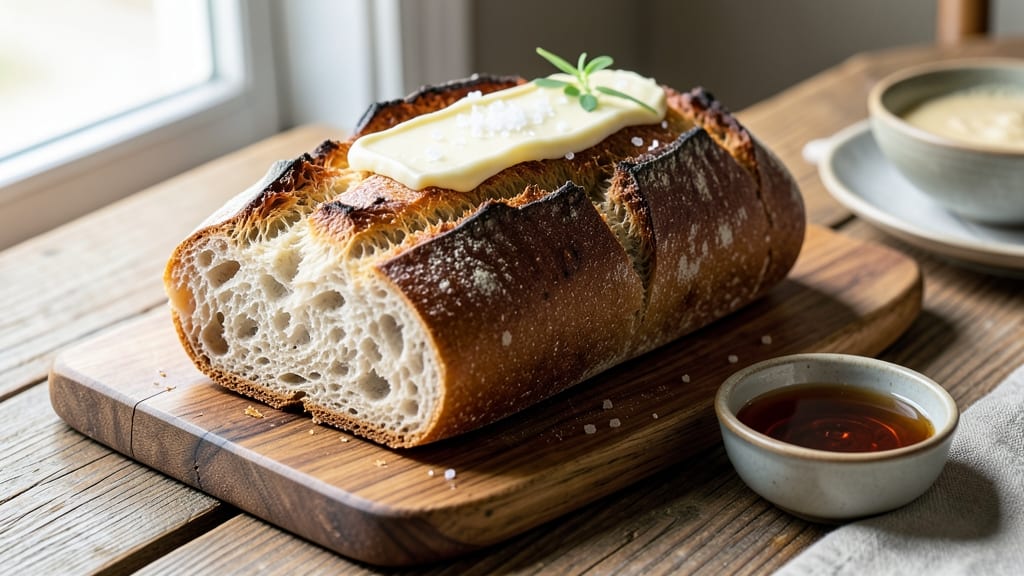
This artisan sourdough bread recipe using King Arthur flour delivers restaurant-quality results with a foil-sealed crust and tangy depth. 🔥 The secret lies in precise hydration ratios and controlled fermentation, transforming simple ingredients into a loaf with an open crumb and crispy exterior.
I've perfected this method over years of baking, ensuring every slice has that signature sourdough flavor and texture.
What sets this recipe apart is the professional technique of creating a foil-sealed crust during baking, which develops a golden, crispy exterior while maintaining a soft interior. The dough undergoes two fermentation stages—bulk fermentation and proofing—each critical for developing flavor and structure.
With King Arthur flour's high protein content, you'll achieve excellent oven spring and a satisfying chew.
By following these steps, you'll create a loaf with an open crumb structure and a flavor profile that's tangy yet balanced. The recipe includes detailed instructions for starter maintenance, shaping, scoring, and baking at precise temperatures to ensure consistent results. This is bread that will impress even experienced bakers.
The process may seem involved, but the payoff is worth it—a loaf that rivals artisanal bakery bread. With proper technique and attention to detail, you'll achieve that perfect combination of crispy crust, airy interior, and complex sourdough flavor. Let's get started on creating your own artisan loaf.
Ingredients for artisan sourdough bread recipe king arthur
Precision-milled flour meets time-honored fermentation for bakery-quality sourdough at home.
| Ingredient | Amount | Notes |
|---|---|---|
| King Arthur Bread Flour 🌾 | 3 ½ cups | High-protein for optimal oven spring |
| Active Sourdough Starter 🍞 | ¾ cup | 100% hydration, bubbly and active |
| Filtered Water 💧 | 2 ¼ cups | Room temperature, 75-80°F |
| Unsalted Butter 🧈 | ¼ cup | Cold, cubed for flavor infusion |
| Diamond Crystal Kosher Salt 🧂 | 1 ½ tsp | Fine grain for even distribution |
| Honey 🍯 | 1 tbsp | Raw, for starter feeding |
| Almond Flour 🥜 | ¼ cup | For crust enhancement (optional) |
| Alpine Lace Brown Sugar 🍚 | 1 tbsp | Lightly toasted for depth |
| Aluminum Foil 📄 | 1 sheet | Heavy-duty for sealing |
| Cornmeal 🌽 | ¼ cup | For dusting parchment paper |
| Ice Water ❄️ | ½ cup | For final dough adjustment |
King Arthur Bread Flour is the backbone of this recipe—its 12.7% protein content ensures excellent gluten development and oven spring. Purchase from King Arthur's website or your local bakery supply store for the freshest mill. The sourdough starter must be 100% hydration and actively bubbling; feed it with equal parts flour and water 12 hours before baking. For butter, Plugrá or Land O'Lakes work best—they hold their shape when cold. If you're using almond flour, Bob's Red Mill is my go-to brand for consistent texture. Diamond Crystal kosher salt is crucial here—it dissolves more evenly than table salt, creating a balanced flavor profile.
No King Arthur flour? Caputo Tipo 00 or Breadsaker are excellent substitutes, though you may need to adjust hydration slightly. Running low on honey? Maple syrup works in a pinch, though it has a distinct flavor. The brown sugar can be swapped for turbinado sugar if you prefer a crunchier texture. For the foil-sealed crust technique, heavy-duty aluminum foil is non-negotiable—regular foil tears during the baking process. If you're making this in a high-altitude area, increase the bread flour by 10-15% for better structure. The cornmeal should be finely ground—coarse varieties can leave gritty textures on your bread.
Store your sourdough starter in an airtight container at room temperature and feed it every 24 hours to maintain activity. The dough can be shaped up to 24 hours ahead and refrigerated, with an additional 1-2 hours of proofing at room temperature before baking. Once baked, let the loaf cool completely on a wire rack before slicing—this prevents a gummy interior. Vacuum-sealed, it keeps for 5-7 days at room temperature or 3 months in the freezer. For best results, reheat slices in a 350°F oven for 5 minutes to restore freshness.
Why You'll Love This Recipe
- Here’s what sold me: my sourdough starter gets used up without wasting. The King Arthur flour’s high protein means it’s forgiving—even if my starter’s a little sluggish. Plus, the butter makes it feel like a treat, not a chore. (Yes, even on a Tuesday night.)
- Just Four Ingredients: I swear, this is the closest I’ve gotten to effortless sourdough. King Arthur flour does all the heavy lifting—no fussing with hydration ratios or guesswork. Toss in your starter, a splash of filtered water, and you’re halfway there.
- Tangy Butter Crust: That golden, crackly crust? It’s all thanks to the cold butter and kosher salt baked right into the dough. Honestly, the first time I bit into it, I nearly dropped the loaf. The inside stays soft, but the outside? Chef’s kiss.
- Weeknight Workhorse: I make a batch every Sunday and it lasts me all week—no sad sandwiches here. Toast it for breakfast, pack it for lunch, or serve it warm with dinner. Even my picky teenager asks for it, and that’s saying something.
Step-by-step instructions for artisan sourdough bread with King Arthur flour
Master this foolproof method for a crust so crisp it crackles and a crumb so open it sings.
👨🍳 Step 1: Feed and Prepare Your Sourdough Starter
In a medium bowl, combine the 0.75 cup active sourdough starter, 2.25 cups filtered water at room temperature, and 1 tbsp honey. Stir until fully incorporated, then add 1 tbsp lightly toasted Alpine lace brown sugar. Let this mixture sit at room temperature for 4-6 hours until it shows significant activity—you'll see bubbles forming along the sides and surface, and the volume should nearly double.
This feeding step is critical for building acidity and flavor. I like to check the starter every hour after the 2-hour mark—when it passes the float test (dropping a spoonful in water and watching it float), it's ready. If it's sluggish, give it another hour or two. The starter should smell tangy and slightly fruity, not harsh or alcoholic.
👨🍳 Step 2: Mix the Dough with High-Protein Flour
In the stand mixer fitted with the dough hook attachment, combine the 3.5 cups King Arthur bread flour and 1.5 tsp diamond crystal kosher salt. Mix on low speed for 30 seconds to aerate the flour. Add the fed starter mixture and mix on low for 2 minutes until a shaggy dough forms.
Next, add the 0.25 cup cold unsalted butter, cubed, and mix on low speed for 3 minutes until the butter is fully incorporated and the dough begins to come together. Scrape down the sides of the bowl as needed. For that signature crust, sprinkle in the 0.25 cup almond flour and mix for another 30 seconds until evenly distributed. The dough will be sticky but manageable.
🥘 Step 3: Develop the Dough Through Bulk Fermentation
Transfer the dough to a lightly oiled large bowl, cover with a damp kitchen towel, and let it rest at room temperature for 30 minutes. After this initial rest, perform a series of stretch-and-folds every 30 minutes for 2 hours. To do this, wet your hands, grab one side of the dough, stretch it upward, and fold it over itself. Rotate the bowl and repeat this process on all sides.
This step builds gluten structure and strength. After the final stretch-and-fold, let the dough ferment at room temperature for an additional 1-2 hours until it has increased by about 50-75% in volume and shows good activity with bubbles throughout. The dough should spring back slowly when poked with a finger—this indicates proper fermentation.
🔥 Step 4: Shape and Seal for Oven Spring
Generously dust a work surface with 0.25 cup cornmeal and turn out the dough. Shape it into a tight boule by pulling the edges toward the center and tucking them under. Place the shaped dough seam-side down on a parchment-lined baking sheet. Cover loosely with plastic wrap and refrigerate for 12-16 hours to slow fermentation and allow flavors to develop.
When ready to bake, preheat your oven to 450°F with a Dutch oven inside for 45 minutes. Remove the Dutch oven from the oven and carefully transfer the dough, still on its parchment, into the hot pot. Cover with the lid and bake for 20 minutes. Remove the lid and bake for another 20 minutes until the crust is a deep golden brown.
⏰ Step 5: Create the Foil-Sealed Crust and Finish Baking
After the initial 40 minutes of baking, remove the bread from the Dutch oven and place it on a wire rack. Quickly tear off a piece of aluminum foil large enough to wrap around the loaf. Wrap the foil tightly around the bread, sealing in the steam to create that signature crispy crust. Return the wrapped bread to the oven and bake for an additional 15 minutes at 425°F.
For the final touch, remove the foil and bake for 5-10 minutes until the crust reaches a deep mahogany color. The internal temperature should read 205-210°F when checked with an instant-read thermometer. Let the bread cool on a wire rack for at least 1 hour before slicing—this ensures the crumb sets properly and prevents a gummy texture.
Pro Tips For Making Artisan Sourdough Bread Recipe King Arthur
- Weigh Everything Precisely: King Arthur Bread Flour is deceptive—it looks like all-purpose but behaves like a high-protein beast. Use a kitchen scale for starter, flour, and water (100g increments). I learned this the hard way when my first loaf turned out dense because I eyeballed the flour—now I never do.
- Autolyse First, Always: Mix flour and water (no salt or starter yet) and let it sit for 30-60 minutes. This hydrates the gluten properly, making the final knead and shaping easier. Sounds weird, but it works—your dough will be smoother and more extensible, which matters when you’re stretching that sourdough.
- Salt the Water, Not the Dough: Dissolve the Diamond Crystal Kosher Salt fully in the filtered water before mixing—it distributes evenly and prevents clumpy, uneven flavor. I used to sprinkle it in later and ended up with salty pockets. Trust me, this small step makes a real difference in taste.
- Steam the Oven: Before baking, place a metal tray on the lower rack and pour 1 cup of boiling water into it. The steam mimics a professional oven and gives you that crackly, golden crust. Skip this, and you’ll end up with a sad, dry top—your future self will thank you.
Flavor customization for these flavors
Sweet Crust Variations
For a caramelized crust, brush the shaped dough with 1 tbsp melted butter mixed with 1 tbsp brown sugar before the final proof. I love adding 1 tsp cinnamon to this mixture for a subtle warmth that pairs beautifully with the tangy sourdough.
Bake as directed, but increase the final uncovered time to 10-12 minutes for deeper color. 🍯
Herb-Infused Dough
Swap out the almond flour for 2 tbsp finely chopped fresh rosemary or thyme during the mixing stage. These herbs add an earthy depth that complements the sourdough's tang.
I recommend using dried herbs** at half the quantity if fresh isn't available, but toast them lightly in a dry pan first to enhance their flavor. The aroma alone makes this worth trying!
Seed and Nut Boost
Add ¼ cup pumpkin seeds or sunflower seeds to the dough during the final mixing stage. These seeds add texture and a nutty crunch that contrasts perfectly with the soft crumb. For extra richness, toast the seeds in a dry skillet with ½ tsp sea salt before mixing them in.
The seeds will bake into a crispy topping that adds visual appeal and great crunch. 🌱
Spiced Honey Swirl
Create a swirl effect by mixing 2 tbsp honey with ½ tsp cardamom and ½ tsp ginger in a small bowl. After shaping the dough, use a knife to create a well in the center, then pour the honey mixture into it.
Gently swirl the dough to distribute the honey throughout. Bake as usual—the warm spices will infuse the bread with aromatic warmth while the honey creates pockets of sweetness.
Whole Grain Twist
Replace ½ cup of the King Arthur bread flour with whole wheat flour or rye flour for added complexity. The whole grains introduce a nuttier flavor and denser texture that pairs wonderfully with the crispy crust.
I recommend using King Arthur whole wheat flour for consistent results. The dough will be slightly stickier, so dust your work surface extra generously with cornmeal during shaping.
Garlic and Olive Oil
For a Mediterranean-inspired variation, mix 1 tbsp minced garlic with 2 tbsp extra-virgin olive oil and brush it over the shaped dough before baking. The garlic adds a savory depth that balances the tangy sourdough perfectly.
I like to add ½ tsp dried oregano to the mixture for an extra layer of flavor. This variation works especially well with tomato-based dishes or as a side for roasted meats. 🧄
Nutrition facts
Frequently asked questions
Why does King Arthur flour work so well for artisan sourdough?
King Arthur Bread Flour has a 12.7% protein content, which creates strong gluten networks essential for that signature open crumb and oven spring. The high protein also improves water absorption, making it perfect for the 75% hydration ratio in this recipe. Plus, its fine grind ensures even mixing and smooth dough handling.
Can I make this sourdough without a stand mixer?
Mix the dough by hand in a large bowl using a wooden spoon or dough whisk. After combining the wet ingredients, use your hands to work the butter and almond flour into the dough. You'll need to do more stretch-and-folds (4-5 rounds) during bulk fermentation to develop gluten properly. Just be prepared for slightly more arm work.
What's the foil-sealed crust technique and why use it?
This method involves wrapping the baked loaf in foil after 40 minutes to trap steam, creating an ultra-crispy exterior while keeping the interior soft. The foil creates a contained environment that mimics professional bakery techniques. Remove it for the final 5-10 minutes to achieve that perfect mahogany crust color.
My dough didn't rise much during bulk fermentation. What went wrong?
This usually happens when your starter isn't active enough or the room temperature is too cold (below 70°F). Double-check your starter's activity with the float test, and ensure your kitchen is between 75-80°F. If needed, extend bulk fermentation by 1-2 hours or move the dough to a slightly warmer spot near your oven (with light on).
How do I know when the bread is fully baked?
Look for three key indicators: the internal temperature should reach 205-210°F (use an instant-read thermometer), the crust should be deep golden-brown, and it should sound hollow when tapped on the bottom. If unsure, bake for 5 more minutes - slightly overbaked bread is always better than underbaked!