
Breakfast & Brunch
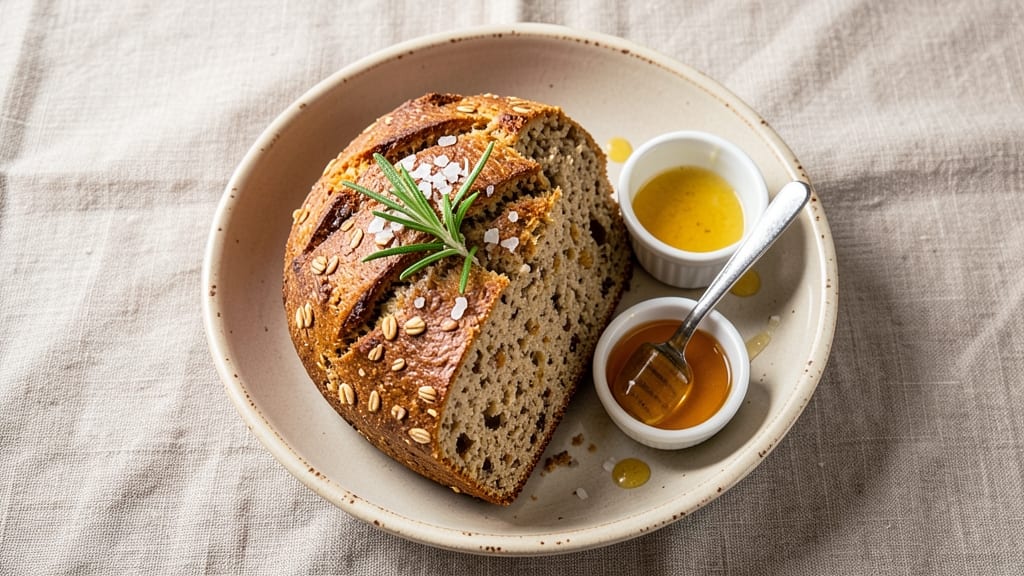
This artisan oatmeal bread recipe delivers a golden crust and chewy honeyed centers that transform ordinary breakfasts into something extraordinary. The secret lies in the oats—coarsely ground for texture and toasted for depth—combined with a slow fermentation that develops rich, nutty flavors.
I've perfected this recipe over years of baking, balancing traditional techniques with modern shortcuts for home bakers.
The process begins with a foolproof dough that's easy to handle but packed with character. Unlike quick breads, this version benefits from bulk fermentation (2-3 hours) and a cold proof overnight, which enhances flavor and texture without requiring expertise.
The honey in the dough not only sweetens but also creates those signature tender, slightly sticky crumbs that make every slice irresistible.
What you'll end up with is restaurant-quality bread—crispy on the outside, soft and chewy inside, with a subtle oatmeal nuttiness that pairs perfectly with butter or jam. The scoring technique ensures an even rise and that perfect golden crust.
Whether you're making it for a weekend brunch or meal prepping for the week, this bread delivers professional results at home.
Optional additions like flaxseeds or walnuts can customize the flavor and texture, but the base recipe stands strong on its own. Ready in about 3 hours (including fermentation), it's the kind of bread that elevates any meal. Let's get started on creating your perfect loaf.
Ingredients for artisan oatmeal bread
The foundation of restaurant-quality oatmeal bread begins with these carefully chosen ingredients.
| Ingredient | Amount | Notes |
|---|---|---|
| Bread Flour 🌾 | 4 cups | High-protein for structure |
| Old-Fashioned Rolled Oats 🥣 | 1 ½ cups | Coarsely ground in food processor |
| Unsalted Butter 🧈 | ¾ cup | Cold and cubed for dough |
| Honey 🍯 | ½ cup | Raw or wildflower preferred |
| Granulated Sugar 🍚 | ¼ cup | Light brown for caramel notes |
| Instant Yeast 🍞 | 2 tsps | Single-use packet preferred |
| Warm Water 💧 | 1 ¼ cups | 105-110°F for yeast activation |
| Diamond Crystal Kosher Salt 🧂 | 1 ½ tsps | Adjusts to flour variations |
| Whole Milk 🥛 | ¼ cup | Warmed to room temperature |
| Large Egg 🥚 | 1 whole | Room temperature for mixing |
| Cornmeal 🌽 | ¼ cup | For dusting baking sheet |
| Coarse Sea Salt 🧂 | 1 tbsp | For scoring and finishing |
The oats are non-negotiable here—Bob's Red Mill old-fashioned rolled oats provide the best texture when ground coarsely. Toast them lightly in a dry pan before grinding to deepen their nutty flavor. For flour, King Arthur bread flour delivers the perfect balance of protein and gluten development. The honey should be raw or wildflower for that floral complexity, not the overly processed supermarket kind. Butter matters too: Plugrá or Land O'Lakes unsalted work best when cold—don't let it soften during mixing. Yeast activation is critical: use a thermometer to confirm water is 105-110°F—any hotter and you'll kill the yeast.
No bread flour? All-purpose plus 1 tbsp vital wheat gluten gets you close, though texture won't be identical. Honey substitute? Maple syrup at equal measure, but expect slightly denser crumb. The milk can be swapped for plant-based milk, though dairy adds richness. For scoring, if you lack coarse sea salt, flaky Maldon salt works beautifully—just use half the amount. The egg is optional but recommended for that tender crumb structure. Pre-ground oats? Grind them yourself—store-bought versions are too fine and won't deliver proper texture. And never skip the toast step—it's what creates that signature oatmeal nuttiness.
This dough benefits from overnight cold proofing—cover tightly and refrigerate up to 24 hours for maximum flavor development. Shape the loaf on parchment paper for easy transfer, and score with a sharp lame or razor blade at a 45-degree angle. Bake at 375°F for 35-40 minutes until internal temp reaches 190°F. Cool completely on a wire rack before slicing—rushing this step ruins the crumb structure. Store wrapped at room temperature for 3-4 days or freeze the whole loaf for up to 3 months. For reheating, wrap slices in foil and warm at 350°F for 5 minutes—nothing beats fresh bread, but this method restores crispness.
Why You'll Love This Recipe
- No-Knead Nightmare Solved: I swear, this dough comes together in 10 minutes—no stand mixer, no fancy tools, just a bowl and a spoon. The oats handle all the texture work while you sleep, so you wake up to bread that’s actually worth the effort. (Yes, even on a Tuesday night.)
- Sweet Crunch Magic: That honey-butter swirl? It’s what turns this from good to "why didn’t I think of this sooner." The oats add a satisfying bite, while the caramelized sugar crust makes every slice taste like a bakery secret. Between us, it’s the kind of bread that disappears faster than my willpower.
- Breakfast-to-Dinner Hero: Toast it with butter for breakfast, tear it into sandwiches by lunch, or serve warm with soup—this bread does all the work. Honestly, I’ve even used it as a crust for roasted chicken when I’m lazy. (Shh, don’t tell my dinner guests.)
- Budget Baking Win: A loaf costs me less than $3 and lasts a week—no sad, stale bread here. The butter and honey make it feel special without breaking the bank, and the oats stretch every ingredient. My wallet and my taste buds thank me.
Step-by-step instructions for artisan oatmeal bread
Master the technique for a bread with a crisp golden crust and chewy honeyed interior.
Prepare the Oatmeal Base
First, coarsely grind the 1.5 cups Old-Fashioned Rolled Oats in a food processor until you achieve a texture similar to coarse sand. This texture ensures proper hydration and even distribution throughout the dough. Transfer the ground oats to a medium bowl and set aside.
In a separate large bowl, whisk together the 4 cups Bread Flour, 1.5 tsps Diamond Crystal Kosher Salt, and 2 tsps Instant Yeast. This dry mix forms the structural foundation of your bread. The high-protein flour is essential for that chewy texture we're aiming for.
Mix Wet Ingredients and Combine
In the bowl of a stand mixer fitted with the dough hook attachment, combine the 0.75 cup Unsalted Butter (cold and cubed), 0.5 cup Honey, 0.25 cup Granulated Sugar, 0.25 cup Whole Milk, and 1 whole Large Egg. Mix on medium speed for 3-4 minutes until the butter is fully incorporated and the mixture becomes smooth and pale. This creaming process aerates the dough, creating that signature open crumb structure.
With the mixer running on low speed, gradually add the dry flour mixture and the ground oats. Mix for another 3-4 minutes until the dough comes together. It should be slightly tacky but not sticky. If it's too dry, add 1 tablespoon of warm water at a time until just combined. The dough should pull away from the sides of the bowl but still be soft to the touch.
Knead and Develop Gluten
Continue kneading the dough for an additional 8-10 minutes on medium speed. You'll know it's ready when it forms a smooth, elastic ball that springs back slowly when pressed. The dough should be slightly tacky but not sticky to the touch. If it's too sticky, add 1 tablespoon of bread flour at a time until it reaches the proper consistency.
This kneading step is crucial for developing gluten, which gives the bread its structure. The oats will add density, while the gluten provides that satisfying chew. Once properly kneaded, shape the dough into a round loaf and place it in a lightly oiled bowl. Cover with a damp towel and let it rise in a warm place for 1-1.5 hours, or until it has doubled in size.
Shape and Proof the Loaf
Turn the risen dough out onto a lightly floured surface and gently shape it into a round loaf. The key here is to maintain surface tension while creating a smooth, taut surface. Place the shaped loaf seam-side down in a 9x5-inch loaf pan that has been lightly greased and dusted with 0.25 cup Cornmeal. This prevents sticking and creates that beautiful crumb structure.
Cover the loaf pan with a damp towel and let the dough proof for another 30-45 minutes, or until it has risen about 1 inch above the pan. The dough should feel firm to the touch and spring back slowly when pressed. This second rise ensures proper oven spring and that signature open crumb we're after.
Bake to Golden Perfection
Preheat your oven to 375°F and place a baking sheet on the lower rack to catch any drips. Score the top of the loaf with a sharp serrated knife in a simple crosshatch pattern, being careful not to cut too deeply. Sprinkle the top with 1 tablespoon Coarse Sea Salt for that authentic artisan touch.
Bake the loaf for 35-40 minutes, rotating the pan halfway through for even browning. The bread is done when it reaches an internal temperature of 190-195°F and has a deep golden brown color. The edges should pull away from the pan slightly, and it should sound hollow when tapped on the bottom. If the top browns too quickly, tent with foil to prevent over-browning.
Pro Tips For Making Artisan Oatmeal Bread
- Toast the Oats: I learned this the hard way—skipping this step means your bread will taste bland and gummy. Lightly toast 1 cup of old-fashioned rolled oats in a dry skillet over medium heat for 5-7 minutes until they smell nutty and golden. This deepens their flavor and prevents a dense, gluey crumb.
- Chill the Dough: After mixing, resist the urge to rush into shaping. Let the dough rest in the fridge for at least 2 hours (or overnight). This lets the gluten relax, making it easier to handle and giving you a cleaner crumb—no more fighting a stubborn, sticky mess.
- Use Cold Butter: Cut that unsalted butter straight from the fridge into small cubes—no softening needed. Cold butter creates pockets of flavor in the crumb and a better rise. If it melts too early, your bread will turn out greasy instead of tender.
- Steam the Loaf: Sounds weird, but it works: Place a metal bowl of boiling water in your oven, then bake the bread on the middle rack. The steam mimics a professional bakery’s environment, giving you a crisp crust and a soft interior—no more dry, tough loaves.
Wine and beer pairings for this dish
Crisp White Wine
Artisan oatmeal bread's subtle sweetness and nutty oats pair beautifully with a dry Riesling from Germany or Alsace. Look for a Kabinett-level with bright citrus and green apple notes that complement the honey without overpowering.
I love Dr. Loosen Blue Slate Riesling—its crisp acidity cuts through the bread's richness while enhancing the oatmeal's earthy undertones. 🍷
Malty Amber Ale
For beer lovers, a Belgian-style amber ale with caramel and toffee notes mirrors the bread's honeyed sweetness. Try Allagash Amber Ale—its balanced maltiness and light hop bitterness create a perfect harmony. The bread's chewy texture contrasts nicely with the beer's smooth, slightly effervescent finish.
Chardonnay with Toast
An un-oaked Chardonnay from Burgundy or California offers a refreshing contrast. The Meursault style, with its buttery texture and green apple flavors, enhances the oatmeal's nuttiness while the bread's honeyed sweetness softens the wine's acidity. Laurent Drouhin Musigny is my go-to for this pairing—it's elegant yet approachable.
Spiced Red Options
If you prefer red wine, a light Pinot Noir with subtle spice works wonders. Oregon Willamette Valley Pinot Noir pairs beautifully—its red fruit and earthy notes complement the bread's complex flavors. For a bolder option, try a Gamay like Beaujolais with its juicy raspberry and peppery finish.
Non-Alcoholic Pairings
Don't drink alcohol? A sparkling apple cider like Woodchuck Hard Cider (dry variety) provides crisp acidity that refreshes the palate. For something warmer, chicory coffee with a touch of honey enhances the bread's nutty, toasted notes. Both options let the bread's flavors truly shine without competition. ☕
Nutrition facts
Frequently asked questions
Why does this recipe call for grinding oats instead of using pre-ground flour?
Grinding your own oats creates the perfect coarse texture that gives artisan oatmeal bread its signature chewy bite. Pre-ground oat flour is too fine and absorbs too much liquid, resulting in a dense, gummy loaf. Toasting the oats first also deepens their nutty flavor—this step makes all the difference in the final product's complexity.
Can I make this bread without a stand mixer?
You can mix the dough by hand using a large bowl and wooden spoon. Knead for 10-12 minutes by hand until the dough becomes smooth and elastic. The key is patience—the extra kneading time helps develop the gluten properly. For best results, work on a lightly floured surface and use your knuckles to press and fold the dough.
What's the best way to store leftover oatmeal bread?
Wrap the cooled loaf tightly in plastic wrap or place it in an airtight container to maintain freshness. It stays good at room temperature for 3-4 days. For longer storage, freeze the whole loaf (wrapped) for up to 3 months. To reheat, wrap slices in foil and warm at 350°F for 5 minutes—this restores that perfect crust texture.
Why did my bread turn out dense instead of chewy?
Dense bread usually results from over-kneading, under-proofing, or insufficient gluten development. Make sure your dough reaches the windowpane test (stretching a small piece until it's translucent). Also verify your yeast is active (test in warm water first) and that your oven is properly preheated. For extra chewiness, try a longer cold proof (overnight)**—this enhances flavor and texture dramatically.
Can I add seeds or nuts to this recipe?
Yes! For extra crunch, fold in 2 tablespoons of flaxseeds, sunflower seeds, or chopped walnuts during the final mixing stage. Toast the seeds/nuts first for enhanced flavor. Just reduce the ground oats by 1 tablespoon to maintain proper dough consistency. Popular additions include cinnamon, cardamom, or even dried cranberries for a festive twist.