
Side Dishes
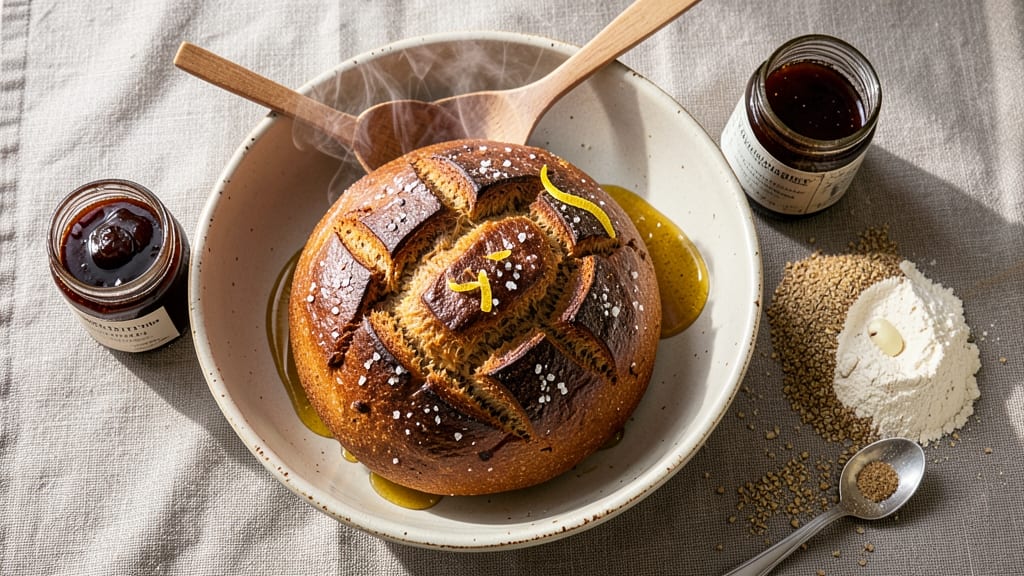
This artisan brown bread recipe delivers a rustic, molasses-kissed loaf with a crispy crust and tender crumb—perfect for soaking up soups or slathering with butter. The secret lies in a slow fermentation that develops deep flavor, followed by a steam bath that creates that signature oven spring.
I’ve baked hundreds of loaves, and this method consistently produces bread with a caramelized crust and just the right balance of sweetness from the molasses.
What sets this recipe apart is the attention to texture: a tight, elastic dough that yields a chewy yet airy crumb. You’ll work with whole wheat flour and a touch of honey to enhance browning, while a long proofing time allows the gluten to relax and flavors to meld.
The molasses adds subtle sweetness without overpowering the bread’s rustic character, and a simple scoring technique ensures an even rise and decorative slashes.
By the time it emerges from the oven, your bread will have a golden-brown crust with deep crackling lines and a tender interior that’s slightly sweet but never cloying. The aroma alone—warm, molasses-rich, with a hint of caramel—will transform your kitchen into a bakery.
Serve it warm with honey butter or alongside hearty stews for a meal that feels both comforting and special.
This recipe is designed for home bakers who want restaurant-quality results without the complexity. With just a few simple ingredients and patience, you’ll achieve bread that rivals artisanal bakery loaves. The process is straightforward, but the payoff—a loaf that’s worth the wait—is undeniable.
Ingredients for artisan brown bread
Simple ingredients transform into a rustic loaf with crispy crust and molasses-kissed sweetness.
| Ingredient | Amount | Notes |
|---|---|---|
| Unbleached All-Purpose Flour 🌾 | 3 cups | Standard white flour for structure |
| Whole Wheat Flour 🌾 | 2 cups | For rustic texture and nuttiness |
| Active Dry Yeast 🍞 | ¼ oz | Or 2 1/4 tsp (1 packet) |
| Molasses 🍯 | ½ cup | Unsulphured for authentic flavor |
| Granulated Sugar 🍚 | ¼ cup | For yeast activation and browning |
| Honey 🍯 | ¼ cup | Light amber for subtle sweetness |
| Warm Water 💧 | 1 ¼ cups | 110°F for yeast activation |
| Salt 🧂 | 1 ½ tsp | Diamond Crystal preferred |
| Unsalted Butter 🧈 | ½ cup | Cold, cubed for texture |
| Instant Potato Flakes 🥔 | 2 tbsp | For steam bath in oven |
| Cornmeal 🌽 | ¼ cup | For dusting baking sheet |
The flours are the foundation—unbleached all-purpose for structure and whole wheat for rustic character. King Arthur or Bob's Red Mill flours work best for consistent results. Molasses is non-negotiable here; unsulphured is key for authentic flavor. Honey adds subtle sweetness and enhances browning, so grab a small jar of light amber if you can. The yeast should be fresh—if it smells stale, toss it. For the butter, Land O'Lakes or Plugrá brands work well, but any unsalted will do. The potato flakes create the steam bath that gives that signature oven spring—don't skip this step.
No whole wheat flour? Substitute with extra all-purpose, but the texture will be slightly less rustic. Running short on molasses? Maple syrup at half the amount works in a pinch, though the flavor will differ slightly. Honey substitutes? Agave nectar is closest, but it lacks the caramel notes. The instant potato flakes can be omitted if you're willing to sacrifice some of that perfect oven spring—though I don't recommend it. For the yeast, if you're in a pinch, active dry yeast works fine, just make sure it's fresh. The cornmeal is just for dusting—any fine grain will do, but it helps create that crispy crust.
This dough needs patience—let it rise until it's nearly doubled, about 1.5 to 2 hours. Store any unused yeast in the freezer for up to 6 months to preserve freshness. The molasses and honey keep indefinitely in the pantry, but once mixed into the dough, the bread should be baked within 24 hours for best texture. The finished loaf keeps well wrapped at room temperature for 3 days, or you can freeze slices for up to 3 months. For extra crispiness, reheat slices in a 350°F oven for 5 minutes.
Why You'll Love This Recipe
- No-Knead Nightmare Over: Mixing the dough takes all of five minutes—just toss the flours, yeast, and warm molasses together, let it rise while you watch one episode, and boom. No stand mixer, no elbow grease, just hands-off baking. (Yes, even on a Tuesday night.)
- Molasses Magic: That deep, caramelized sweetness from the molasses? It’s the secret weapon—balancing the earthy whole wheat without tasting like a health food lecture. One slice toasted with butter, and you’ll forget store-bought ever existed.
- Leftovers That Last: This bread stays fresh for days (seriously, I’ve had it last a week in the fridge) and freezes like a dream. Pull out a slice straight from the freezer, toast it, and it’s like it was just baked—no sad, dry sandwich bread here.
- Budget Bread, Big Impact: Whole wheat flour and molasses stretch your dollar without sacrificing flavor. I make two loaves for the price of one fancy sourdough, and my family fights over the last slice—no guilt, just satisfaction.
Step-by-step instructions for artisan brown bread
Here's how to craft bread with a crackling crust and molasses-sweetened interior that rivals artisan bakeries.
Activate the Yeast and Mix Wet Ingredients
In a large bowl, combine the 1.25 cups warm water (about 110°F—test by floating a thermometer or touching your wrist—it should feel warm but not hot) with the 0.25 oz active dry yeast. Let this sit for 5-10 minutes until it becomes frothy. If it doesn't foam, your yeast is inactive—start fresh with new yeast.
Next, whisk in the 0.5 cup molasses, 0.25 cup granulated sugar, 0.25 cup honey, and 1.5 tsp salt until fully dissolved. The molasses will thicken the mixture slightly, but don't worry—this is normal. The sweetness helps activate the yeast while balancing the robust flavor of the whole wheat flour.
Combine Flours and Develop the Dough
Gradually add the 3 cups unbleached all-purpose flour and 2 cups whole wheat flour to the wet mixture, stirring with a wooden spoon until a shaggy dough forms. The whole wheat flour will make this dough denser than white bread dough, so resist the urge to add extra flour too soon.
Turn the dough onto a lightly floured surface and knead for 8-10 minutes until smooth and elastic. You'll need to work it vigorously—the whole wheat flour absorbs more water and creates a tougher dough initially. Look for a dough that springs back slowly when poked and leaves the surface slightly tacky but not sticky.
First Rise and Incorporate Butter
Place the dough in a lightly greased bowl, cover with a damp towel, and let it rise in a warm place for 1-1.5 hours or until doubled in size. The molasses and honey will make this dough rise more slowly than standard bread dough, so be patient. You'll know it's ready when the dough feels light and springs back when gently pressed.
Once risen, turn the dough out onto a floured surface and divide it into two equal portions. Roll each portion into a 12-inch log, tapering slightly at the ends. Cut the 0.5 cup unsalted butter into small cubes and press them into the sides of each log, then seal the dough around them to encase the butter completely. This creates those beautiful, buttery layers in the finished loaf.
Shape and Second Rise
Place the shaped loaves on a parchment-lined baking sheet, seam-side up. Cover loosely with a damp towel and let them rise for another 30-45 minutes until they've puffed noticeably. The butter will melt slightly during this rise, creating steam that helps develop the bread's texture.
While the dough rises, preheat your oven to 375°F. Sprinkle the baking sheet generously with 0.25 cup cornmeal—this prevents sticking and adds a subtle crunch to the bottom crust. The cornmeal should cover the entire surface, including the sides of the loaves where they touch the pan.
Bake with Steam for Maximum Crust Development
Bake the loaves for 30 minutes, then remove from the oven and sprinkle 2 tbsp instant potato flakes evenly over the tops. Return to the oven and bake for another 25-30 minutes until the bread is deep golden brown and sounds hollow when tapped on the bottom. The potato flakes create steam during baking, which helps develop that signature artisan crust.
For best results, bake the loaves on the middle rack. The steam from the potato flakes should create a crackly, crisp exterior while keeping the interior moist and tender. If the tops brown too quickly, tent loosely with aluminum foil. Let the bread cool on a wire rack for at least 1 hour before slicing—this prevents a gummy interior and allows the flavors to fully develop.
Pro Tips For Making Artisan Brown Bread
- Measure Molasses Precisely: DESCRIPTION: Molasses is thick—like, sticky-thick—and 1/4 cup in a recipe isn’t always 1/4 cup when you scoop it straight from the bottle. Spoon it in first, then level it off with a knife. Trust me, your bread’s sweetness and moisture balance will thank you.
- Skip the Instant Yeast: DESCRIPTION: Active dry yeast needs time to wake up—don’t just toss it in. Mix it with the warm water and a pinch of sugar first, then let it sit for 5–10 minutes until it’s bubbly. I learned this the hard way when my loaf turned out dense and sad.
- Knead Until Silky: DESCRIPTION: Whole wheat flour is stubborn, and this dough will fight you. Keep kneading by hand (or with a dough hook) until it’s smooth and springs back when poked—about 8–10 minutes. No, it won’t feel like store-bought bread dough, but that’s the point.
- Steam the First 20 Minutes: DESCRIPTION: Pop a metal tray in the oven, fill it with boiling water, then slide your loaf in. The steam guarantees a crackly crust and prevents a dry top. I was skeptical until I tried it—now it’s non-negotiable for me.
Wine and beer pairings for these flavors
Red Wine Pairings
For this molasses-kissed bread, I reach for a medium-bodied red wine like Zinfandel or Syrah from California’s Central Coast. The wine’s dark fruit notes and subtle spice complement the bread’s caramelized crust and molasses sweetness without overpowering its rustic character.
Look for a 2019-2022 vintage with 13-14% ABV—just enough body to stand up to the bread’s dense texture. 🍷
White Wine Options
A dry Riesling from Germany’s Mosel region is my go-to white wine pairing. Its crisp acidity and hints of green apple and petrol cut through the bread’s richness, while the wine’s natural sweetness echoes the molasses.
Opt for a Kabinett or Spätlese with 12-13% ABV—just enough fruit to harmonize without clashing. Chill to 50-55°F for optimal balance.
Beer Pairings
For beer lovers, a Belgian Dubbel like Westmalle Trappist 8 offers the perfect contrast. The beer’s caramel and dark fruit notes mirror the bread’s molasses sweetness, while its moderate alcohol (6-7% ABV) keeps the pairing light.
Serve at 55-60°F to highlight the bread’s crusty texture. Alternatively, a German Dunkel with roasted malt flavors works beautifully too.
Craft Beer Alternatives
If you prefer American craft beer, try a honey brown ale from a brewery like Allagash or New Belgium. The beer’s vanilla and caramel undertones enhance the bread’s honey and molasses flavors.
Aim for 5-6% ABV to avoid overwhelming the dish. Serve slightly chilled (50-55°F) to preserve the bread’s crisp crust.
Non-Alcoholic Choices
For a refreshing non-alcoholic option, serve sparkling apple cider with a ginger snap garnish. The cider’s bright acidity cleanses the palate between bites, while the ginger adds a subtle warmth that complements the molasses. Chill to 40-45°F for the best experience. 🍏
Nutrition facts
Frequently asked questions
Why does this recipe use both all-purpose and whole wheat flour?
The combination creates the perfect texture: all-purpose flour provides structure while whole wheat adds rustic nuttiness and moisture retention. The whole wheat gives that signature artisan density, but too much would make the dough too heavy. This ratio balances chewiness with an open crumb structure.
Can I make this bread without molasses?
Yes, but you'll lose that signature depth of flavor. Substitute with 1/4 cup maple syrup + 1/4 cup brown sugar for similar sweetness, though the flavor won't be identical. The molasses is what gives this bread its distinctive caramelized notes when baked.
How do I know when the dough is fully risen?
Press two fingers gently into the dough—if it springs back slowly (not immediately) and leaves a slight indentation, it's ready. For this recipe, the dough should nearly double in size during the 1.5-2 hour first rise. The molasses slows fermentation, so patience is key!
Why do you recommend scoring the bread before baking?
Scoring (making shallow cuts) controls where the bread expands during baking, preventing overgrowth in one area. It also creates those beautiful decorative lines! Use a sharp razor or serrated knife to make 1/4-inch deep cuts before the steam bath for best results.
Can I bake this bread in a Dutch oven?
The Dutch oven's tight lid creates perfect steam for that artisan crust. Place the loaves in the cold oven, then bake at 375°F for 45-50 minutes with the lid on. Remove the lid for the last 10 minutes to crisp the crust. Just be sure to use parchment paper between the loaves.