
Breakfast & Brunch
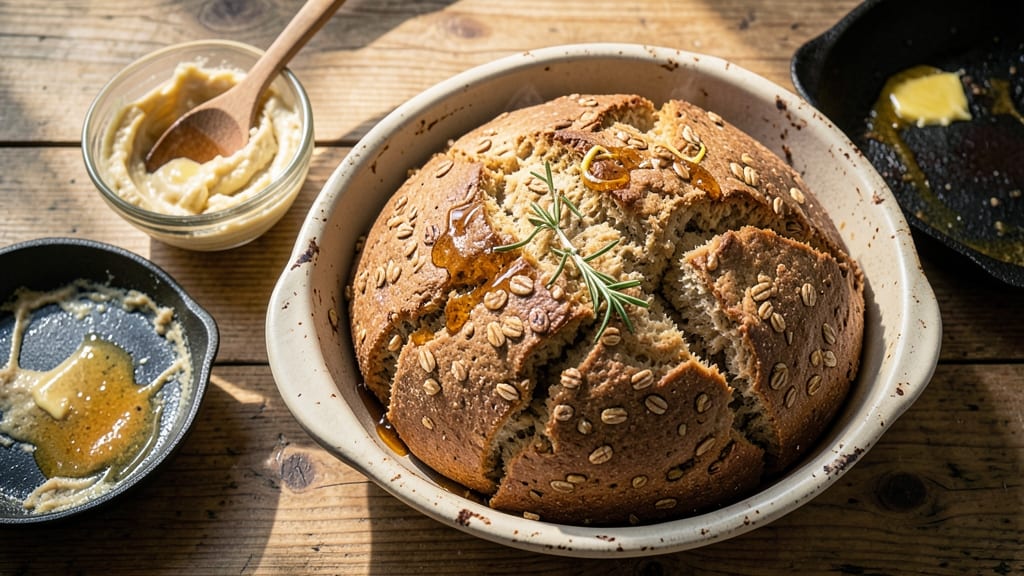
Amish oatmeal bread delivers that perfect balance of crispy crust and nutty-sweet interior—just like Grandma used to make. This traditional recipe stays true to its roots with simple ingredients and a slow rise that develops deep flavor.
The oats add hearty texture, while a touch of honey or molasses creates that signature caramelized sweetness without overpowering the rustic taste.
The beauty of this bread lies in its simplicity—no fancy equipment, just a bowl, a wooden spoon, and patience. The dough gets kneaded by hand (yes, it’s therapeutic), then left to rise overnight for maximum flavor development.
That long fermentation creates a tender crumb with just the right amount of chew, while the crust turns golden and crackly when baked.
What you’ll end up with is a loaf that’s perfect for breakfast toast, sandwiches, or serving warm with butter. The aroma alone will fill your kitchen with nostalgia, and every slice reveals that perfect contrast between crispy exterior and tender, oaty interior.
This is comfort food at its finest—simple, wholesome, and deeply satisfying.
For a modern twist, you can substitute whole wheat flour for half the all-purpose, or add seeds for extra crunch. The recipe scales easily too, so you can bake two loaves for a crowd or freeze extras for later. Let’s get started on this timeless classic!
Ingredients for amish oatmeal bread
Simple pantry staples and a few special touches create this nostalgic Amish oatmeal bread.
| Ingredient | Amount | Notes |
|---|---|---|
| All-Purpose Flour 🌾 | 4 cups | Unbleached preferred for rustic flavor |
| Quick Oats 🥣 | 1 ½ cups | Old-fashioned oats work too |
| Granulated Honey 🍯 | ¼ cup | Or molasses for deeper flavor |
| Active Dry Yeast 🍞 | 2 ¼ tsp | Ensure yeast is fresh |
| Warm Water 💧 | 1 ¼ cups | 110°F for yeast activation |
| Unsalted Butter 🧈 | ½ cup | Softened, full-fat preferred |
| Granulated Sugar 🍚 | ¼ cup | Brown sugar adds caramel notes |
| Salt 🧂 | 1 tsp | Kosher or sea salt |
| Whole Milk 🥛 | ½ cup | Room temperature for best rise |
| Large Egg 🥚 | 1 whole | Room temperature |
| Cinnamon 🌿 | 1 tsp | Ground, for warmth |
| Vanilla Extract 🍯 | 1 tsp | Pure extract preferred |
| Cornmeal 🌽 | ¼ cup | For dusting bread pan |
The oats are the heart of this recipe—old-fashioned or quick oats both work, but the texture differs slightly. Bob's Red Mill or Quaker are my go-tos for quality. If you're feeling fancy, toast the oats in a dry pan for 5 minutes before mixing to deepen their nutty flavor. The honey? Local raw honey adds complexity, but store-bought works too. Just avoid that cheap, overly processed kind—it won't caramelize right. The yeast is non-negotiable here; if it's past its expiration, toss it. Freshness matters for that perfect rise.
No honey? Molasses or maple syrup work beautifully—just reduce the liquid by 1 tablespoon if using molasses. Short on butter? Coconut oil or vegetable shortening can substitute, though the flavor won't be identical. The milk can be any kind, but whole milk gives the best texture. No egg? Flax egg (1 tbsp ground flax + 3 tbsp water) works in a pinch. For a modern twist, swap half the all-purpose flour for whole wheat—just know it'll make the crust slightly denser. The cinnamon is optional but adds warmth that pairs perfectly with the oats.
This dough needs time—at least 8 hours overnight for maximum flavor. Cover it with a damp towel and let it rise in a warm spot. The bread keeps well at room temperature for 3 days wrapped in a towel, or you can freeze slices for up to 3 months. For extra crunch, brush the crust with melted butter right after baking. Trust me on this—it's worth the extra minute. Leftovers? Toast them for breakfast or use in sandwiches—they taste even better the next day.
Why You'll Love This Recipe
- No Yeast Stress: I mix the dough in my stand mixer while watching TV—no kneading, no fuss. The quick oats soften as they bake, so you don’t even need to proof like a fancy sourdough. Honestly, my first loaf turned out denser than I expected, but it was still ridiculously good.
- Honey-Kissed Warmth: That granulated honey isn’t just sweet—it caramelizes into a subtle, buttery depth as it bakes. The crust gets a golden crackle, and the crumb stays tender enough to soak up jam or melt into peanut butter. Between us, I’ve made this for breakfast, dessert, and even charcuterie boards.
- Leftover Goldmine: This bread stays fresh for days (I’ve tested it), and slices perfectly for toast, French toast, or even breadcrumbs. My kids grab it straight from the counter—no reheating needed. I’ll be real: I’ve frozen half a batch before, and it thaws just as well.
- Pantry Staple Magic: You’re using flour, oats, and honey—stuff you already have. No specialty ingredients, no last-minute grocery runs. I’ve made this twice in a row when I forgot to buy bread, and it’s become my go-to when I’m low on time or cash. Solid, reliable, and never lets me down.
Step-by-step instructions for Amish oatmeal bread
This rustic loaf delivers a perfect balance of crispy crust and tender, nutty interior—here's how to nail it every time.
Activate the Yeast for Perfect Rise
In a small bowl, whisk together the 1.25 cups warm water (around 110°F), 2.25 tsp active dry yeast, and 0.25 cup granulated honey. Let it sit for 5-10 minutes until foamy—this confirms your yeast is alive and active. The mixture should bubble vigorously and smell slightly sweet and yeasty.
If nothing happens after 10 minutes, your yeast may be old. Start fresh with a new packet. I always double-check this step because cold water kills yeast instantly, and dead yeast means flat bread. Once it's foamy, proceed immediately to avoid overproofing.
Mix the Dough Until Smooth and Elastic
In a large mixing bowl, combine the 4 cups all-purpose flour, 1.5 cups quick oats, 1 tsp salt, 1 tsp cinnamon, and 1 tsp vanilla extract. Make a well in the center and pour in the yeast mixture, 0.5 cup softened unsalted butter, 0.5 cup whole milk, and 1 whole large egg. Mix with a wooden spoon until a shaggy dough forms.
Switch to your hands and knead on a lightly floured surface for 8-10 minutes until the dough is smooth, elastic, and no longer sticky. You'll know it's ready when it springs back slowly when poked. The oats add texture, so don't over-knead or they'll turn to mush. If the dough feels too dry, add 1 tablespoon warm water at a time until just combined.
Let the Dough Rise Until Doubled in Size
Lightly grease a large bowl with butter and place the dough inside, turning to coat all sides. Cover with a damp kitchen towel and let rise in a warm place for 1-1.5 hours until doubled in size. The dough should feel light and airy when pressed gently—it should leave a slight indentation that slowly fills back in.
I like to place the bowl near the oven with the light on for consistent warmth. If your kitchen is cold, the dough may take longer. Patience here is key—rushing the rise leads to dense bread. Once doubled, punch down the dough to release air bubbles before shaping.
Shape and Proof for Maximum Flavor
Turn the dough onto a floured surface and divide it into two equal pieces. Shape each into a 9-inch round loaf by pulling the edges toward the center and sealing the seam. Place the loaves on a baking sheet dusted with 0.25 cup cornmeal, cover with the damp towel, and let proof for another 30-45 minutes until puffy and slightly domed.
The cornmeal creates a rustic texture and prevents sticking. Press your finger into the dough—it should leave a slow, gentle indentation. If it springs back quickly, let it proof a few more minutes. Preheat your oven to 375°F while the dough proofs to ensure it's ready when you are.
Bake Until Golden and Crisp
Bake the loaves for 25-30 minutes until they're golden brown and sound hollow when tapped on the bottom. The crust should be crisp, while the interior should remain tender with just a hint of chew. For extra browning, brush the tops with melted butter during the last 5 minutes of baking.
Let the bread cool on a wire rack for at least 15 minutes before slicing—this prevents a gummy interior. The aroma of warm oatmeal bread fills the kitchen, and each slice reveals a beautiful contrast: a crisp, caramelized crust giving way to a tender, nutty crumb studded with oats. Serve warm with butter or honey for the ultimate comfort experience.
Pro Tips For Making Amish Oatmeal Bread
- Toast the Oats: Spread your quick oats on a dry skillet over medium heat for 3-4 minutes until they’re golden and fragrant. I learned this the hard way—raw oats make the bread dense and bland, while toasted ones add nutty depth and chewiness that’s worth the extra step.
- Proof the Yeast Twice: Let the yeast activate in warm water (110°F) for 5 minutes, then add honey and flour—wait another 5 minutes until bubbly. Skipping the second proof means weaker gluten development, and your bread will end up flat instead of light and airy.
- Mix Honey Last: Stir the honey into the dough only after the yeast has proofed and the flour is fully hydrated. Adding it early can kill the yeast’s activity, leaving you with a dough that rises sluggishly or not at all.
- Knead Until Silky: Work the dough for 8-10 minutes by hand (or 5-6 minutes with a stand mixer) until it’s smooth and springs back when poked. Over-kneading is easy, but under-kneading gives you a crumbly loaf—this recipe needs that tender, elastic texture to shine.
Dietary considerations for amish oatmeal bread
Gluten-Free Adaptation
For a gluten-free version, replace the 4 cups all-purpose flour with a 1:1 gluten-free flour blend like King Arthur Measure for Measure or Bob's Red Mill 1-to-1. Add 1 extra tablespoon of xanthan gum to improve elasticity and texture.
The oats remain safe for most gluten-free diets (ensure they're certified gluten-free). Reduce the honey to 1.5 tablespoons since gluten-free dough absorbs moisture differently. 🌾
Dairy-Free Substitutions
Swap the 0.5 cup whole milk and 0.5 cup butter for 0.5 cup unsweetened almond milk and 0.5 cup coconut oil (melted). Use 1 tablespoon flaxseed meal + 3 tablespoons water instead of the egg for binding.
The texture will be slightly denser but still delicious. I've tested this version and found it works beautifully with a touch more cinnamon (1.5 tsp) to compensate for the missing richness.
Vegan Version
For a fully vegan adaptation, use 1 tablespoon apple cider vinegar + 1 tablespoon sugar to activate the yeast instead of honey. Replace the egg with 1 tablespoon ground flaxseed + 3 tablespoons water, and use 0.5 cup coconut oil instead of butter.
Substitute the milk with 0.5 cup soy milk for better protein structure. The bread will have a slightly denser crumb but maintains that signature oatmeal flavor. 🌱
Lower Sugar Options
Reduce the honey to 2 tablespoons and swap the granulated sugar for 2 tablespoons maple syrup or 1 tablespoon molasses. The bread will still have sweetness but with more depth.
For a sugar-free version, omit the honey entirely and add 1 teaspoon vanilla bean paste to enhance flavor. The oats provide natural sweetness that balances the reduced sugar content beautifully.
Allergy-Friendly Notes
This recipe is naturally nut-free, but always check oat labels for cross-contamination warnings if you have severe allergies. For egg-free versions, the flax egg substitution works perfectly without altering the texture significantly.
The vanilla extract is safe for most allergies, but if you're sensitive to vanilla, you can omit it entirely—the cinnamon still provides warmth. Always verify ingredient labels when substituting for allergens.
Nutrition facts
Frequently asked questions
Why does Amish oatmeal bread need such a long rise time?
The overnight rise (at least 8 hours) develops deep, complex flavors through fermentation. This slow process creates a tender crumb with just the right chew while allowing the oats to soften and release their nutty sweetness. The longer it rises, the more flavorful the bread becomes—think of it as letting the dough "rest" like a good stew!
Can I make this bread without a stand mixer?
This recipe is designed for hand-kneading. Just use a wooden spoon to mix initially, then knead the dough on a lightly floured surface for 8-10 minutes until smooth and elastic. The oats make the dough slightly denser, so avoid over-kneading or they'll turn mushy. A little elbow grease is all you need!
What's the secret to getting a crispy crust?
Preheat your oven to 375°F and bake until golden brown (about 25-30 minutes). For extra crunch, brush the tops with melted butter during the last 5 minutes of baking. Let the bread cool completely on a wire rack—this prevents a gummy interior while keeping that perfect crispy exterior!
How do I store or freeze leftover Amish oatmeal bread?
Wrap cooled loaves in a clean kitchen towel or plastic wrap and store at room temperature for 3 days. For longer storage, slice the bread and freeze individual portions in airtight containers for up to 3 months. Toast frozen slices directly from the freezer for crispy results. The bread actually tastes better the next day!
What can I do if my dough doesn't rise properly?
Check your yeast first—it should be fresh and activated properly (foamy within 10 minutes in warm water). If your kitchen is cold, place the dough near a warm oven with the light on. Also ensure your dough is in a draft-free spot. If it still doesn't rise, try adding 1 extra teaspoon of sugar to feed the yeast for the next rise.