
Side Dishes
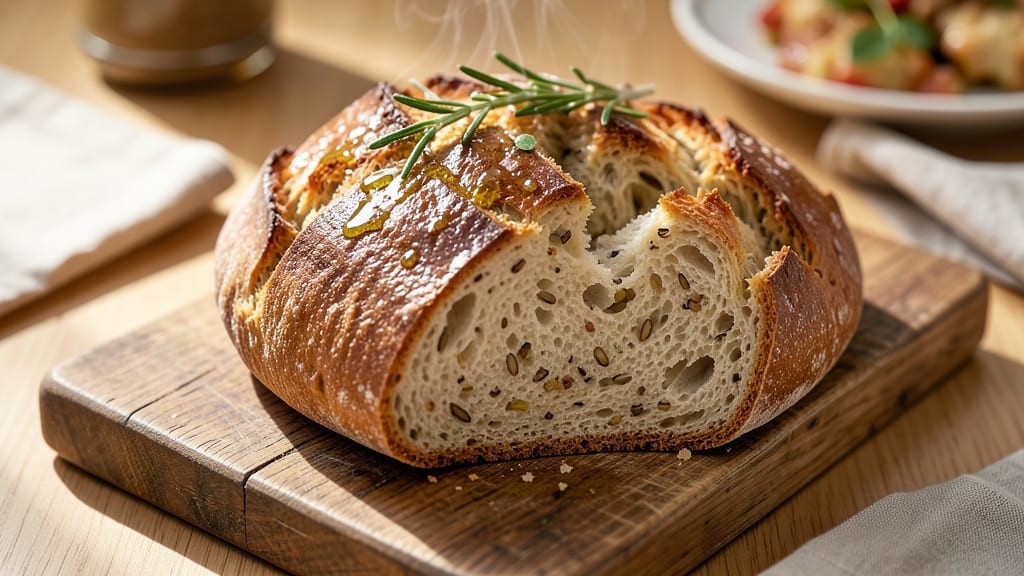
This Arabic barley bread recipe brings the warmth of Middle Eastern kitchens to your table with its signature crusty crunch and fragrant spices. 🌟 The secret lies in cracked barley flour, which creates a hearty texture while absorbing rich flavors—perfect for soaking up stews or pairing with hummus.
I’ve perfected this version to deliver authentic results without requiring professional baking skills. The dough starts with a blend of barley flour and all-purpose flour, balanced with yeast, warm water, and a pinch of salt for structure.
A touch of olive oil keeps the crumb tender, while warm spices like cumin and coriander infuse the bread with earthy depth. The magic happens during baking, when the crust develops a golden, crispy exterior while staying soft inside.
What you’ll end up with is a loaf that’s both rustic and refined—ideal for serving alongside grilled meats, spiced lentils, or fresh salads. The aroma alone will transport you to bustling souks, where this bread is a staple.
Ready in under an hour, it’s a side dish that elevates any meal. For extra flair, brush the baked loaf with melted butter and sprinkle with sesame seeds. Here’s how to make it!
Ingredients for arabic barley bread
Nine simple ingredients transform into a fragrant, crusty loaf that tastes like a Middle Eastern souk.
| Ingredient | Amount | Notes |
|---|---|---|
| Cracked Barley Flour 🌾 | 2 cups | For hearty texture and authentic flavor |
| All-Purpose Flour 🌾 | 1 ½ cups | For structure and lightness |
| Active Dry Yeast 🍞 | 1 tbsp | Ensure it's fresh (test in warm water) |
| Warm Water 💧 | 1 ¼ cups | 110°F for optimal yeast activation |
| Extra-Virgin Olive Oil 🫒 | 2 tbsp | For tender crumb and rich flavor |
| Salt 🧂 | 1 ½ tsp | Kosher or sea salt preferred |
| Ground Cumin 🌿 | 1 tsp | Earthy warmth essential for authenticity |
| Ground Coriander 🍃 | 1 tsp | Citrusy depth to complement barley |
| Sesame Seeds 🌰 | 2 tbsp | For topping and nutty crunch |
| Unsalted Butter 🧈 | 2 tbsp | Melted for brushing finished loaf |
The cracked barley flour is the star—Bob's Red Mill or Anthony's Goods are my go-tos, but any quality brand works. If you can't find cracked barley flour, regular barley flour is a decent swap, though texture will differ slightly. The yeast needs to be fresh, so check the date on your package—if it's more than a few months old, test it in warm water first. For the spices, Penzeys or bulk bins at natural food stores give you the freshest, most aromatic cumin and coriander. Store them in airtight containers away from light to preserve their punch.
No cracked barley flour? Whole wheat flour at half the amount keeps things rustic, but you'll lose that signature heartiness. Swapping the sesame seeds? Poppy seeds or crushed pistachios add a different but still delicious crunch. The olive oil matters here—use something fruity and peppery, not the mild supermarket stuff. For extra flavor, toast the cumin and coriander in a dry pan for 30 seconds before mixing into the dough. And if you're feeling fancy, add a pinch of cinnamon for warmth.
The dough keeps well in the fridge for 24 hours wrapped in plastic, or you can freeze it for up to 3 months for a quick loaf later. Once baked, the bread stays fresh for 3-4 days at room temperature wrapped in a towel. For reheating, wrap the cooled loaf in foil and warm at 350°F for 5-10 minutes until crispy again. I always make a double batch—one for the table, one for freezing.
Why You'll Love This Recipe
- No-Knead Magic: I swear by this—just mix the cracked barley flour with warm water and olive oil, let the yeast do its thing, then bake. No rolling, no fuss, no stress. The dough practically proofs itself while I sip tea.
- Earthy Crunch: That cracked barley adds a nutty, toasty bite that regular bread can’t touch. The olive oil keeps it tender inside, and the crust? Golden and crackly enough to break off with your fingers.
- Weeknight Workhorse: I use it for breakfast (toasted with jam), lunch (stuffed with falafel), or dinner (as a side for stews). Freezes like a dream, too—just reheat slices in the oven for fresh-baked flavor anytime.
- Budget Bread: A little barley flour goes a long way, and you’re not sacrificing taste. Stretch it into multiple meals, share it with neighbors, or save half for tomorrow. My wallet and my stomach both thank me.
Step-by-step instructions for Arabic barley bread
Here's how to craft this aromatic, hearty bread with perfect crust and tender crumb.
👨🍳 Step 1: Activate the Yeast with Warm Water and Oil
In a large mixing bowl, combine the 1.25 cups warm water (about 110°F) with the 2 tbsp extra-virgin olive oil. Sprinkle the 1 tbsp active dry yeast over the surface and let it sit for 5-10 minutes until it becomes frothy. You'll see small bubbles forming and the mixture expanding—this tells you the yeast is alive and ready to work.
I always test my yeast first in warm water to confirm it's active. If nothing happens after 10 minutes, your yeast might be old. The oil helps create a rich environment for the yeast while adding subtle flavor to the dough. Don't skip this step—proper yeast activation is the foundation of good bread.
👨🍳 Step 2: Mix the Dough with Flour and Spices
Add the 2 cups cracked barley flour and 1.5 cups all-purpose flour to the yeast mixture. Stir in the 1.5 tsp salt, 1 tsp ground cumin, and 1 tsp ground coriander until just combined. The spices will infuse the dough with their warm, earthy aromas—this is where the bread gets its authentic Arabic character.
Using a wooden spoon or dough whisk, mix until you have a shaggy dough that comes together when pressed. You might need to use your hands at this point. The barley flour will make the dough slightly grittier than regular bread dough, but that's what gives it that wonderful texture. Don't worry if it looks dry—it will come together as you knead.
🥘 Step 3: Knead Until Smooth and Elastic
Turn the dough onto a lightly floured surface and knead for 8-10 minutes until smooth and elastic. I like to use the "windowpane test" to check doneness—stretch a small piece of dough thin enough that you can see light through it. If it tears but doesn't rip easily, it's ready.
The barley flour requires a bit more kneading than all-purpose flour, so be patient. Work in short bursts if needed—this dough can be sticky. As you knead, the gluten develops, creating that beautiful chewy texture we want. If the dough feels too sticky, add just enough flour to make it manageable, but don't overdo it or the bread will be dense.
⏰ Step 4: Let the Dough Rise Until Doubled
Place the dough in a lightly oiled bowl, cover with a damp towel, and let it rise in a warm place for 1-2 hours or until doubled in size. You'll know it's ready when you poke it gently and the indentation stays rather than springs back. The warm spices will make your kitchen smell amazing during this time—like a cozy Arabic bakery.
I like to place my bowl near a slightly warm oven with the light on, or on top of my stove with the pilot light on. The consistent warmth helps the dough rise evenly. Don't rush this step—proper rising time is crucial for that light, airy crumb. If your kitchen is cold, the dough might take closer to 2 hours to rise.
🔥 Step 5: Shape, Proof, and Bake to Golden Perfection
Punch down the risen dough and shape it into a round loaf or divide it into individual rolls. Place them on a parchment-lined baking sheet, cover again, and let them proof for another 30-45 minutes until puffy. Preheat your oven to 375°F while the dough proofs—this ensures it goes straight into a hot oven.
Brush the tops with melted 2 tbsp unsalted butter and sprinkle with 2 tbsp sesame seeds just before baking. Bake for 25-30 minutes until the crust is deep golden brown and sounds hollow when tapped on the bottom. That sesame topping adds the perfect crunchy contrast to the soft interior. Let the bread cool for 10 minutes before slicing—this helps it set properly.
Pro Tips For Making Arabic Barley Bread
- Bloom the Yeast First: Skip mixing yeast directly into the flour—first dissolve it in warm water (about 110°F) with a pinch of sugar for 5-10 minutes until frothy. This guarantees it’s active before it hits the barley flour, which can be heavy and slow to activate. I learned this the hard way when my dough took hours to rise—now it’s ready in under an hour.
- Sift the Barley Flour: Cracked barley flour is dense and packed with bran—sift it with the all-purpose flour to avoid lumps and ensure even hydration. Use a fine-mesh sieve and tap it gently over the mixing bowl; this also aerates the dough slightly for a lighter texture. (Yes, even if you’re impatient like me.)
- Knead Until Silky: This dough needs 8-10 minutes of vigorous kneading by hand (or 5-6 minutes with a stand mixer) until it’s smooth and springs back when poked. The barley flour makes it gummy at first, but don’t rush—overworking it later won’t fix it. My grandmother swore by this, and she was right: the texture changes completely.
- Oil the Bowl Twice: Coat the mixing bowl with olive oil before adding the dough, then give it another light coat after the first rise. The barley flour absorbs moisture aggressively, and this prevents the dough from sticking to the sides or drying out during proofing. (Your future self will thank you—trust me.)
Essential equipment for great arabic barley bread
Must-Have Tools
Start with a large mixing bowl (I use Nordic Ware 5-quart) to handle the sticky barley dough comfortably. A wooden spoon or dough whisk helps mix the spices evenly without overworking the gluten.
For kneading, a lightly floured surface (I prefer a marble pastry mat) prevents sticking—barley flour makes dough extra clingy. 🌾
Precision Equipment
A digital kitchen scale (like OXO Good Grips) ensures accurate measurements—barley flour is denser than all-purpose, so weighing guarantees the right texture. For yeast activation, a thermometer (I use Thermoworks Thermapen) confirms 110°F water—too hot kills yeast, too cold slows it down.
A proofing basket (or bowl) with a damp towel creates the ideal humid environment for rising. ⏰
Baking Essentials
Preheat your oven to 375°F using a cast iron Dutch oven (like Lodge) for deeper crust development—it traps steam during baking. A parchment-lined baking sheet prevents sticking when shaping rolls. For brushing butter and seeds, a pastry brush (I prefer Silpat) ensures even coverage.
A measuring spoon set (like OXO Stainless Steel) keeps spices precise—too much cumin can overpower. 🔥
Optional Upgrades
For professional results, a stand mixer with dough hook (like KitchenAid) handles the extra kneading time barley flour requires. A proofing box (or instant-read thermometer to monitor 78-82°F humidity) speeds up rising in cold kitchens.
For storage, vacuum-sealed bags preserve freshness beyond 3 days. These tools aren’t mandatory, but they make the process smoother. 💡
Budget-Friendly Swaps
Skip the Dutch oven? Use a heavy baking sheet with a steam pan (fill with water below) for similar steam effects. No scale? Use cups but spoon flour levelly—tap to settle. Replace the pastry brush with a clean silicone spatula for butter brushing.
A microwave-safe bowl with warm water creates a makeshift proofing box. Every kitchen can make great bread with creativity! 💪
Nutrition facts
Frequently asked questions
Can I substitute cracked barley flour with regular barley flour?
The texture will be slightly different, but yes! Use regular barley flour at the same 2 cups measurement. The bread will be less hearty but still delicious. For a closer match, blend 1 cup cracked barley flour with 1 cup whole wheat flour—this keeps the rustic character while improving elasticity.
Why does my dough feel too sticky to knead?
Barley flour absorbs more moisture than all-purpose flour, so the dough naturally sticks. Work in 30-second bursts with a lightly floured surface and wet hands to prevent sticking. If needed, add 1-2 tbsp extra flour gradually, but avoid overdoing it—too much flour makes the bread dense. A dough scraper helps too!
How do I know when the bread is fully baked?
The crust should be deep golden brown, and the bread should sound hollow when tapped on the bottom. For extra certainty, use a thermometer—the internal temperature should reach 190°F. If the top browns too quickly, tent with foil after 15 minutes to prevent burning.
Can I make this bread without a Dutch oven?
Place the shaped loaf on a parchment-lined baking sheet and bake as directed. For a crispier crust, try this trick: Pour 1 cup hot water into a small pan and place it on the lower oven rack while baking. The steam mimics a Dutch oven’s effect. A heavy baking stone also works well.
What’s the best way to store leftover barley bread?
Wrap the cooled loaf in a clean kitchen towel and store at room temperature for 3-4 days. For longer storage, freeze slices wrapped in plastic for up to 3 months. To reheat, wrap in foil and warm at 350°F for 5-10 minutes until crispy again. Never refrigerate—it dries out the crumb!