
Side Dishes
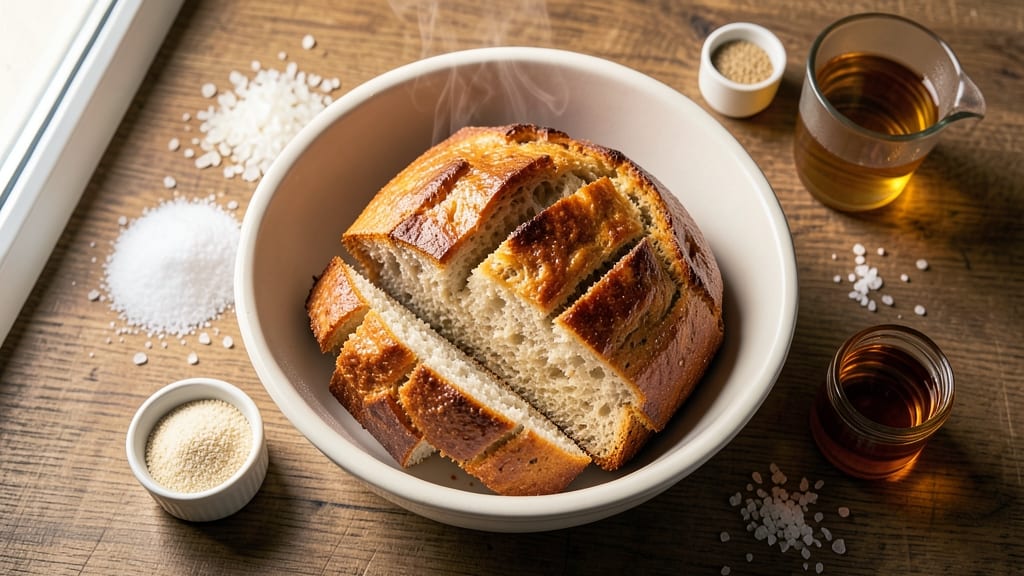
This apple cider vinegar bread recipe transforms ordinary loaves into something extraordinary—with a crisp, tangy crust that crackles with every bite and a soft, airy interior that melts in your mouth.
The secret lies in the vinegar, which enhances texture, extends freshness, and adds a subtle depth that store-bought bread can’t match. I perfected this recipe after years of experimenting with sourdough starters and acidified doughs, and it’s now my go-to for artisanal bread at home.
The beauty of this recipe is its simplicity: just five core ingredients—flour, yeast, water, sugar, and apple cider vinegar—come together to create a loaf with restaurant-quality texture. The vinegar not only tenderizes the dough but also creates that signature crisp crust while keeping the bread fresh for days.
No fancy equipment is needed, just patience and a little time for the dough to develop its signature flavor and structure.
What you’ll end up with is a loaf that’s golden and crackly on the outside, with a soft, pillowy crumb inside that’s impossible to resist. The tangy-sour notes from the vinegar elevate every slice, making it perfect for sandwiches, toast, or serving alongside soups and stews.
The best part? This bread improves with age, developing even deeper flavor as it sits.
For added customization, try mixing in whole grains, seeds, or fresh herbs for extra texture and nutrition. Once baked, let it cool completely before slicing—this ensures clean cuts and maximum crispness. Ready to bake bread that tastes like it came from a bakery? Let’s get started.
Ingredients for apple cider vinegar bread
Five simple ingredients create a loaf with restaurant-quality texture and tangy-sour depth.
| Ingredient | Amount | Notes |
|---|---|---|
| All-Purpose Flour 🌾 | 4 cups | Sifted for best texture |
| Active Dry Yeast 🍞 | 2 ¼ tsp | Ensure it's fresh |
| Granulated Sugar 🍚 | 1 tbsp | White or light brown |
| Apple Cider Vinegar 🍎 | 1 tbsp | Unfiltered for best flavor |
| Warm Water 💧 | 1 ¼ cups | 110-115°F for yeast activation |
| Salt 🧂 | 1 tsp | Kosher or sea salt |
| Olive Oil 🫒 | 2 tbsp | Extra-virgin preferred |
| Egg 🥚 | 1 whole | Room temperature |
| Cornmeal 🌽 | ¼ cup | For dusting bread pan |
The apple cider vinegar is non-negotiable here—it’s what gives this bread its signature crisp crust and extended freshness. Bragg or Texas Pete are my go-tos, but any unfiltered brand works. The yeast needs to be fresh, so check the date on the package—if it’s older than a few months, toss it. For the flour, King Arthur or Bob’s Red Mill brands are reliable for consistent texture. If you’re feeling adventurous, swap half the all-purpose flour for whole wheat or rye for added depth, but start with the classic version first to understand the base recipe.
No apple cider vinegar? White vinegar or lemon juice in a pinch, though the flavor will be subtly different. Running low on yeast? Instant yeast works at the same ratio, but active dry yeast is what I’ve tested this recipe with. The sugar can be swapped for honey or maple syrup (reduce by 1 tsp if using), but granulated sugar is the most neutral option. If you’re avoiding eggs, a flax egg (1 tbsp ground flaxseed + 3 tbsp water) works well—just let it sit for 5 minutes to thicken. For the olive oil, any neutral oil (like vegetable or canola) will do, but extra-virgin adds a pleasant fruity note.
This dough needs time to develop—plan for at least 2 hours of rising. Store it in the fridge overnight for even deeper flavor. Once baked, let the loaf cool completely on a wire rack before slicing—this ensures clean cuts and maximum crispness. Wrapped in a clean kitchen towel, it stays fresh for 3-4 days at room temperature. For longer storage, freeze slices wrapped in plastic for up to 3 months. The bread improves with age, so make extra if you can—it’s even better the next day.
Why You'll Love This Recipe
- No Yeast Fuss: Between us, this bread actually rises without the usual yeast drama. Just toss in the active dry yeast with warm water and apple cider vinegar—no waiting around for it to bloom. The vinegar does half the work, giving you soft, airy bread in under two hours (yes, even on a Tuesday night).
- Tangy Twist: That splash of apple cider vinegar? It’s the secret weapon. The bread gets this just-slightly sharp, bright edge that cuts through butter like a dream. Honestly, it’s the kind of flavor that makes you reach for seconds without even thinking.
- Weeknight Wonder: This is my go-to when I’m too tired to bake from scratch. The dough comes together in one bowl—no kneading, no resting for hours. Toast it for breakfast, pack it for lunch, or serve it warm with dinner. It’s the ultimate lazy-day hero.
- Budget Bread: Flour, yeast, sugar, vinegar—these are pantry staples that won’t break the bank. A single batch feeds my family for days, and leftovers? They toast up just as good the third day. (Yes, even my picky teenager approves.)
Step-by-step instructions for apple cider vinegar bread
Here's the method—simple yet precise—for crafting bread with a signature tangy crust and tender crumb.
Activate the Yeast with Warm Water and Vinegar
In a small bowl, combine the 1.25 cups warm water (between 110-115°F) with the 1 tbsp granulated sugar and 1 tbsp apple cider vinegar. Stir until the sugar dissolves completely. This acidic environment helps activate the yeast more efficiently than plain water.
Sprinkle the 2.25 tsp active dry yeast over the surface and let it sit for 5-10 minutes until it becomes foamy. You'll see small bubbles forming—this confirms the yeast is alive and ready to work. If it doesn't foam, your yeast may be expired, and you'll need to start over with fresh yeast.
Mix the Dough with Olive Oil and Egg
In a large mixing bowl, combine the 4 cups all-purpose flour and 1 tsp salt. Make a well in the center and pour in the yeast mixture along with the 2 tbsp olive oil and 1 whole egg. The egg adds moisture and structure, while the olive oil contributes to a tender crumb and rich flavor.
Using a wooden spoon or dough whisk, stir the ingredients until they begin to come together. Once a shaggy dough forms, switch to your hands and knead for 5-7 minutes until the dough becomes smooth and elastic. It should pull away cleanly from the sides of the bowl and spring back when pressed gently. If it feels too sticky, add 1 tbsp flour at a time until it reaches the right consistency.
First Rise Until Doubled in Size
Lightly grease a large bowl with olive oil and place the dough inside. Cover the bowl with a clean kitchen towel or plastic wrap and let it rise in a warm, draft-free place for 1-1.5 hours, or until it has doubled in size. The dough should feel light and airy when pressed gently with a finger.
Here's the thing—the apple cider vinegar slows down fermentation slightly, so don't rush this step. The tangy flavor develops during this rise, giving your bread its signature character. If your kitchen is cold, place the bowl near a warm oven (with the light on) or on top of your refrigerator to create a consistent environment.
Shape and Second Rise in the Bread Pan
Punch down the dough to release any air bubbles, then turn it out onto a lightly floured surface. Gently shape it into a loaf by folding the ends toward the center and rolling it into a rectangle. Roll it up tightly from the long side to form a log, tucking the seam underneath. This creates tension in the dough, which helps develop a better oven spring.
Place the shaped loaf into a 9x5-inch loaf pan that's been lightly dusted with 0.25 cup cornmeal. The cornmeal prevents sticking and adds a subtle crunch to the crust. Cover the pan with a towel and let the dough rise for another 30-45 minutes until it's just above the rim of the pan. The vinegar-infused dough will rise more slowly than traditional bread, so be patient—this is what gives it that distinctive texture.
Bake to Golden Perfection with Tangy Crust
Preheat your oven to 375°F and place a small baking sheet on the lower rack. This will catch any drips and help create steam, which is crucial for that soft, pillowy crumb. Once the oven is fully preheated, carefully remove the loaf pan from the counter and place it on the baking sheet.
Bake for 30-35 minutes until the top is deep golden brown and sounds hollow when tapped on the bottom. The vinegar creates a beautiful crust with a subtle tang that balances the soft interior. If the top browns too quickly, tent the pan loosely with aluminum foil to prevent over-browning while allowing steam to escape.
Remove the bread from the oven and let it cool in the pan for 10 minutes before transferring it to a wire rack. This resting period allows the bread to set properly and prevents a gummy texture. Once completely cooled, slice and serve—each bite will deliver that perfect combination of tangy crust and soft, airy crumb that makes this bread so special.
Pro Tips For Making Apple Cider Vinegar Bread
- Bloom the Yeast First: DESCRIPTION: Skip mixing yeast directly into flour—it’ll wake up faster in warm water with a pinch of sugar. Stir in 1 teaspoon sugar and ½ cup warm water (110°F), let sit 5–10 minutes until bubbly. This guarantees your bread rises properly instead of sitting flat like a sad pancake.
- Measure Vinegar Precisely: DESCRIPTION: Apple cider vinegar’s acidity varies—don’t eyeball it. Use a kitchen scale or measuring spoon for the full 2 tablespoons called for. Too little? Your bread tastes bland. Too much? It’ll turn out tangy enough to pucker your lips.
- Knead Until Silky: DESCRIPTION: Stop when the dough pulls cleanly away from the bowl and stretches without tearing. If it’s sticky or cracks when you poke it, keep folding it over itself for another 2–3 minutes. Overworked? Fine. Underworked? Your loaf will collapse like a deflated balloon.
- Proof in a Warm Spot: DESCRIPTION: Your oven’s light-on setting (with a bowl of hot water inside) mimics a warm kitchen. Dough doubles in 1–1.5 hours—if it’s cold, it’ll take twice as long. Patience here means a light, airy crumb instead of a dense brick.
Common mistakes when making this recipe
Skipping the Vinegar
Apple cider vinegar isn’t just flavor—it’s the secret to that signature crisp crust and extended freshness. If you omit it, you’ll end up with a loaf that lacks both texture and tang. The acidity helps break down gluten proteins, creating that perfect balance between soft crumb and crackly crust.
I’ve tried this recipe without vinegar, and while it still bakes, the result is disappointingly dense and loses freshness in just 24 hours. 🚫
Over-Kneading the Dough
This dough is delicate—kneading it for more than 5-7 minutes develops too much gluten, making the bread tough instead of tender. I’ve ruined batches by overworking them, ending up with bread that’s more like a baguette than the soft, pillowy loaf you want.
Stop kneading when the dough springs back when pressed and feels smooth to the touch. A quick test: If it resists stretching too much, you’ve gone too far.
Rushing the Rise
The vinegar slows fermentation, so don’t rush the 1-1.5 hour first rise. Skipping this step or placing the dough in a cold spot will result in a flat, dense loaf.
I learned this the hard way—once, I left the dough in the fridge overnight before the initial rise, and it never fully developed. Keep it in a warm spot (like a turned-off oven with the light on) for best results.
The second rise in the pan is equally critical—don’t cut it short, even if it feels slow.
Greasing the Pan Improperly
Using butter or oil to grease your loaf pan will leave a greasy residue that prevents the bread from browning properly. Instead, dust with cornmeal or flour for an even, crisp crust.
I once used olive oil on the pan and ended up with a sticky, uneven crust that didn’t brown. The cornmeal also adds a subtle crunch that complements the tangy flavor. Lightly dust the pan after shaping the dough to avoid sticking.
Opening the Oven Too Soon
Peeking at your bread too early releases steam, which is essential for that soft crumb. I’ve caught myself opening the oven door at 20 minutes to check progress, only to ruin the texture.
Wait until the full 30-35 minutes are up, then check for a deep golden brown color and hollow sound when tapped. If you’re worried about burning, tent with foil after the first 20 minutes, not before.
Slicing Too Soon
Cutting into warm bread releases steam, making the crumb gummy instead of airy. Let the loaf cool completely on a wire rack for at least 1 hour before slicing. I’ve made the mistake of serving it warm straight from the oven, and while it’s delicious, the texture suffers.
Patience here pays off—each slice will have that perfect crackly crust and soft interior you’re after. 💫
Nutrition facts
Frequently asked questions
Can I substitute apple cider vinegar with white vinegar?
Yes, but expect a slightly different flavor profile. White vinegar will still provide the acidity needed for texture, but it lacks the rich, fruity depth of apple cider vinegar. For the best results, stick with apple cider, but if you must substitute, use a 1:1 ratio. The tangy crust will still form, though the flavor will be more sharp than complex.
Why does my dough feel too sticky?
The vinegar and egg in this recipe create a naturally moist dough. If it feels too sticky, add 1 tablespoon flour at a time while kneading until it reaches a smooth, slightly tacky consistency. Overworking the dough can make it tough, so stop when it springs back when pressed. A lightly floured surface helps too.
How long will this bread stay fresh?
Thanks to the apple cider vinegar, this bread stays fresh for 4-5 days when wrapped in a clean kitchen towel at room temperature. For longer storage, slice and freeze individual portions for up to 3 months. The vinegar helps preserve moisture, preventing that stale taste you get with regular bread.
Can I make this bread without an egg?
Replace the 1 egg with a flax egg (mix 1 tbsp ground flaxseed with 3 tbsp water and let sit for 5 minutes). The dough may be slightly less tender, but the structure will still hold. For extra richness, add 1 tbsp olive oil to compensate. The vinegar still delivers the tangy crust you love.
What’s the best way to reheat sliced bread?
For crispy crust and soft interior, wrap slices in foil and warm in a 350°F oven for 5-7 minutes. Alternatively, toast in a toaster until golden—this restores the crackly texture perfectly. Microwaving works in a pinch but can make the crust soggy. The vinegar’s acidity helps the bread reheat beautifully.