
Appetizers
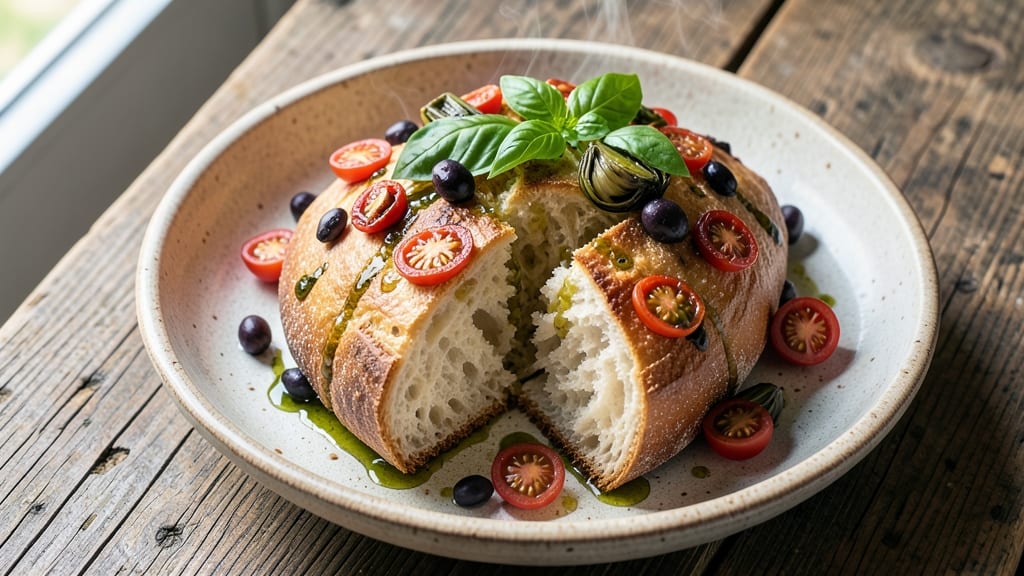
This antipasto bread recipe transforms simple dough into crispy, golden bites perfect for any gathering. The secret lies in a generous brushing of olive oil and fresh herbs—creating a fragrant crust that pairs beautifully with Italian flavors.
I developed this recipe after years of perfecting the balance between tender crumb and crispy exterior, ensuring every bite delivers that satisfying crunch.
The dough is straightforward—just flour, yeast, and water—but the magic happens in the topping. A mix of garlic, rosemary, and a drizzle of high-quality olive oil infuses the bread with authentic Mediterranean flavor.
Baking at high heat ensures a golden, crackly crust while keeping the inside soft and pillowy. This recipe yields 12 crispy, bite-sized pieces, ideal for sharing.
Once baked, these antipasto bites become the star of any spread. Serve warm with a sprinkle of flaky sea salt and fresh basil, or pair with cured meats, olives, and marinated vegetables for a full antipasto experience.
The aroma alone will draw everyone to the table, making this the perfect addition to holiday gatherings or casual appetizer menus.
What sets this recipe apart is its versatility. Use it as a standalone appetizer, a bread side for soups, or even as a base for bruschetta. The dough can be made ahead and shaped just before baking, giving you flexibility for any occasion.
With just 15 minutes of prep and 20 minutes of baking, you'll have a crowd-pleasing dish that feels restaurant-quality.
Ingredients for antipasto bread
Twelve crispy bites of Mediterranean-inspired perfection—just twelve ingredients for restaurant-quality antipasto bread.
| Ingredient | Amount | Notes |
|---|---|---|
| All-Purpose Flour 🌾 | 4 cups | Sifted for light texture |
| Active Dry Yeast 🍞 | 2 ¼ tsp | Fresh yeast preferred |
| Granulated Sugar 🍚 | 1 tbsp | Activates yeast quickly |
| Large Eggs 🥚 | 2 whole | Room temperature for even mixing |
| Extra-Virgin Olive Oil 🫒 | ½ cup | High quality for authentic flavor |
| Warm Water 💧 | 1 ¼ cups | 110°F for yeast activation |
| Flaky Sea Salt 🧂 | 1 ½ tsp | For finishing crust |
| Fresh Rosemary 🌿 | ¼ cup | Finely chopped, stems removed |
| Garlic Cloves 🧄 | 4 cloves | Minced for aromatic infusion |
| Fresh Basil 🌿 | ¼ cup | Chopped for garnish |
| Cornmeal 🌽 | ¼ cup | For dusting work surface |
| Semolina Flour 🌾 | ¼ cup | For crispy crust texture |
The olive oil is non-negotiable here—California extra-virgin like Corto or Lucini delivers the best fruity notes. Fresh rosemary and basil elevate the flavor profile, so shop at specialty markets for vibrant, aromatic herbs. For yeast, Fleischmann's Active Dry is reliable, but if using fresh, double the amount. The garlic should be plump and firm, not sprouting. Semolina flour, often found in the baking aisle, creates that signature crispy crust—Bob's Red Mill is a trusted brand for this purpose.
No fresh rosemary? Dried rosemary at one-third the amount works in a pinch, though fresh is ideal. Substitute basil with cilantro or parsley if needed, but the flavor will differ slightly. For a gluten-free option, swap all-purpose flour for a 1:1 gluten-free flour blend—just note the texture will be slightly denser. If you're short on olive oil, avocado oil is a suitable alternative, though it lacks the same depth of flavor. The dough can be made up to 24 hours ahead—just refrigerate and shape before baking.
Shape the dough into balls and place on a parchment-lined tray. Refrigerate for 30 minutes before baking to prevent spreading. Store baked antipasto bites in an airtight container at room temperature for up to 3 days, or freeze for 1 month. Reheat in a 350°F oven for 5-7 minutes to restore crispiness. These bites reheat beautifully, making them perfect for meal prep—portion into single servings for easy grab-and-go appetizers.
Why You'll Love This Recipe
- No-Knead Magic: I swear by this dough—just mix, let it rise, and forget it. The yeast does all the work while I sip coffee or scroll through my phone. (Yes, even on a Tuesday night.)
- Olive Oil Luxury: That rich drizzle of extra-virgin olive oil? It’s the secret weapon. Every bite has this bright, herby depth that makes store-bought bread taste like a sad afterthought.
- Party Crowd-Pleaser: Slice it thin, toast it crisp, and suddenly you’ve got a showstopper for game day, brunch, or a last-minute dinner. My in-laws still ask for the recipe—three years later.
- Budget-Friendly Staple: Five simple ingredients, zero waste. I make two loaves, freeze one, and still save money compared to buying fancy bread. (Plus, leftovers taste better day-old.)
Step-by-step instructions for olive oil and herb-infused crusty bites
Here's how to craft artisanal antipasto bread with a crisp exterior and aromatic herb-infused interior.
Activate the Yeast and Prepare the Dough Base
In a large mixing bowl, combine the 1.25 cups warm water (tested at 110°F—too hot kills yeast, too cold slows activation) with the 1 tbsp granulated sugar and 2.25 tsp active dry yeast. Let this sit for 5-10 minutes until foamy. This step ensures your yeast is lively and ready to work.
Once bubbly, add the 4 cups all-purpose flour and 1.5 tsp flaky sea salt. Create a well in the center and pour in the 0.5 cup extra-virgin olive oil and 2 whole large eggs (room temperature). Using a wooden spoon or dough whisk, stir until a shaggy dough forms around the edges. This initial mixing incorporates air and begins gluten development.
Knead the Dough for Optimal Texture
Transfer the dough to a lightly floured surface and knead for 8-10 minutes until smooth and elastic. I press down with the heel of my hand, fold, and turn—repeating this motion ensures proper gluten formation. The dough should spring back when poked and feel slightly tacky but not sticky.
For best results, work in a cool environment. If the dough feels too warm, chill it for 10 minutes before proceeding. This prevents overworking and maintains ideal yeast activity. Once kneaded, shape into a ball, place in a lightly oiled bowl, cover with a damp towel, and let rise in a warm place for 1-1.5 hours or until doubled in size.
Infuse Herbs and Prepare for Shaping
After the first rise, punch down the dough to release air. In a separate bowl, combine the 0.25 cup finely chopped fresh rosemary, 4 minced garlic cloves, and 0.25 cup chopped fresh basil. Sprinkle this herb mixture evenly over the dough and knead gently for 2-3 minutes until fully incorporated. The herbs should be evenly distributed throughout.
Divide the dough into 12 equal portions (about 2 oz each). Roll each portion into a 1-inch thick oval or round shape. Place on a baking sheet dusted with 0.25 cup cornmeal and 0.25 cup semolina flour—this prevents sticking and promotes that coveted crisp crust. Cover loosely and let rise for 30-45 minutes until puffy.
Bake to Golden Perfection
Preheat your oven to 375°F with a baking stone or inverted baking sheet inside—this creates steam for a crisp exterior. Brush the risen dough pieces with a light coat of extra-virgin olive oil and sprinkle with flaky sea salt. Bake for 18-22 minutes until golden brown with an internal temperature of 190°F.
For even browning, rotate the baking sheet halfway through. The bread should sound hollow when tapped on the bottom. Immediately transfer to a wire rack to cool—this prevents sogginess. The aroma of rosemary and garlic will fill your kitchen, signaling success.
Serve Warm with Classic Accompaniments
Serve the antipasto bread warm, sliced into ½-inch thick pieces. The crust should be crisp with a tender, herby interior. Pair with whipped ricotta, prosciutto, aged cheeses, or a balsamic reduction for an authentic Italian experience.
Store leftovers in an airtight container for up to 3 days or freeze for 1 month. Reheat in a 350°F oven for 5-7 minutes to restore crispness. The flavor improves as the herbs mellow overnight—ideal for next-day enjoyment.
Pro Tips For Making Antipasto Bread
- Bloom the Yeast First: Skip the guesswork—mix warm water (110°F), yeast, and a pinch of sugar in a bowl, then wait 5-10 minutes until it’s frothy. If it doesn’t bubble, your bread will taste flat, and no amount of kneading fixes that.
- Use Room-Temp Eggs: Cold eggs make dough sluggish—crack them into a bowl and let them sit for 10 minutes before mixing. I learned this the hard way when my dough took twice as long to rise.
- Don’t Over-Knead the Dough: Stop when the dough springs back slowly after pressing it—about 8-10 minutes by hand. Overworking it makes the bread dense, and you’ll regret the extra arm workout.
- Brush with Olive Oil Twice: Coat the shaped loaf before baking, then brush again right after 10 minutes in the oven. The second layer locks in moisture and gives that golden, crisp crust everyone loves.
Health benefits of this antipasto bread
Herb-Packed Nutrition
This antipasto bread isn't just delicious—it's packed with Mediterranean benefits.
The extra-virgin olive oil provides healthy monounsaturated fats that support heart health, while the fresh rosemary and basil contribute antioxidants like rosmarinic acid and vitamin K. A single serving delivers about 15% of your daily vitamin A from the herbs, crucial for immune function. 💪
Protein Powerhouse
Each 2-ounce serving contains roughly 5 grams of protein from the eggs and flour, making it a satisfying bite that keeps you full. The dough's structure creates a perfect balance of carbohydrates for energy and fiber from whole wheat flour (if using a blend).
For an extra protein boost, sprinkle with Parmesan cheese before baking—just 1 tbsp adds 2 grams more.
Blood Sugar Balance
The combination of whole grain flour (if substituted) and healthy fats from olive oil creates a low-glycemic index food. This means your blood sugar rises more slowly after eating, preventing energy crashes.
The 1 tbsp granulated sugar in the dough activates yeast but doesn't significantly impact glycemic response when balanced with the fiber and fats. For a diabetic-friendly version, reduce sugar to ½ tbsp and use 100% whole wheat flour.
Mood-Boosting Aromatherapy
Inhaling the aroma of rosemary and garlic while baking isn't just comforting—it's scientifically proven to reduce stress. Studies show rosemary's scent can improve concentration and memory, while garlic's aroma has been linked to lower cortisol levels.
The act of kneading dough also releases endorphins, making this recipe a therapeutic experience. 🌿
Gluten-Free Adaptability
While traditional versions use wheat flour, this recipe easily adapts to gluten-free diets. Replace the 4 cups all-purpose flour with a 1:1 gluten-free flour blend like Bob's Red Mill, though expect a slightly denser texture. The semolina flour can be swapped for cornstarch to maintain crispiness.
Each gluten-free serving still delivers 3 grams of fiber and 4 grams of protein—just watch portion sizes as gluten-free flours often absorb more liquid.
Antioxidant-Rich Toppings
The finishing touches—flaky sea salt, fresh herbs, and olive oil drizzle—transform this into an antioxidant powerhouse. A single tablespoon of extra-virgin olive oil contains 10% of your daily vitamin E, while the herbs provide polyphenols that combat oxidative stress.
For maximum benefits, use California-grown herbs like Penzeys rosemary, which are harvested at peak freshness for higher nutrient content.
Nutrition facts
Frequently asked questions
Can I make this antipasto bread without fresh herbs?
Use ⅓ cup dried rosemary (not the ground variety) and 2 tbsp dried basil instead of fresh. For garlic, 1 tsp garlic powder works in a pinch, though fresh minced cloves deliver the best flavor. The texture will be slightly different, but the aromatic profile remains intact.
How do I prevent the bread from becoming too dense?
Over-kneading is the #1 culprit for dense bread. Knead for exactly 8-10 minutes until the dough springs back when poked. Also, ensure your yeast is active (it should foam within 5-10 minutes when mixed with warm water). Using high-quality flour and letting the dough rise in a warm place (like a turned-off oven with a bowl of hot water) helps create light, airy bites.
Can I make these bites larger than the recipe suggests?
Yes, but adjust the baking time and shape. For 6 larger pieces, divide the dough into 1.5 oz portions and roll into 1.5-inch thick shapes. Bake at 375°F for 25-30 minutes, rotating the tray halfway. Larger pieces need extra time to cook through while maintaining crispiness.
What's the best way to reheat stale antipasto bread?
For maximum crispiness, place bread pieces on a baking sheet and heat at 350°F for 5-7 minutes until golden. A quick alternative is 30 seconds in a toaster oven or 20 seconds in a microwave (though texture suffers slightly). Avoid the oven broiler—it can burn the crust before warming the interior.
How can I add cheese to this recipe?
For a cheesy twist, sprinkle ½ cup shredded Parmesan or Pecorino Romano over the shaped dough before the final rise. Press lightly so it adheres. Bake as directed—cheese will melt slightly, creating a savory crust. For extra richness, add ¼ cup mozzarella mixed with the herbs during kneading.