
Side Dishes
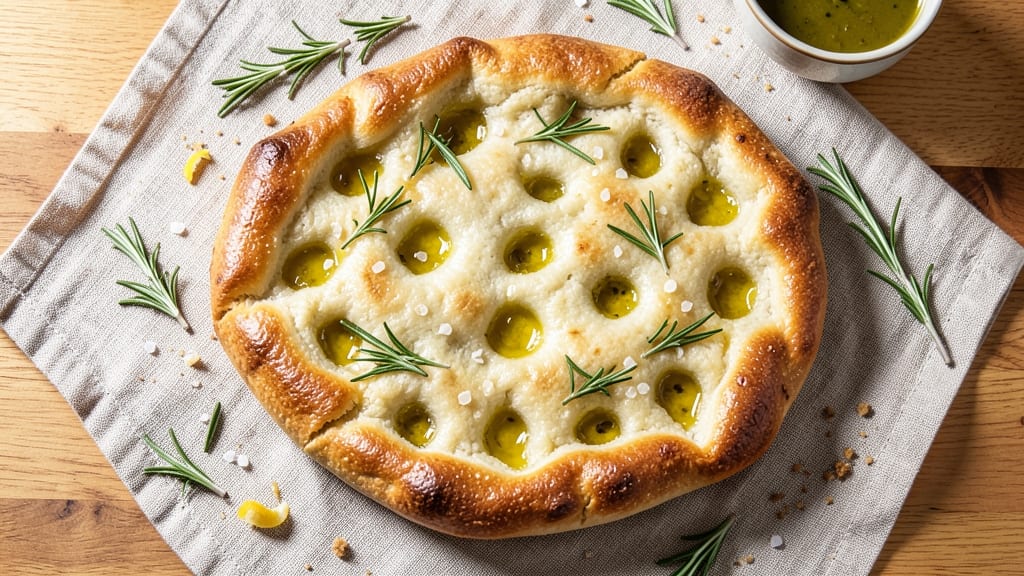
This airy focaccia bread recipe transforms simple ingredients into golden, pillowy bites with a crispy crust and tender interior. The secret lies in olive oil-pooled dough that develops an open, airy texture through proper rising and baking techniques.
I've perfected this method to ensure every slice delivers that signature focaccia experience—no dense, heavy bread here.
What sets this recipe apart is the balance of high-quality olive oil, active dry yeast, and proper hydration. The dough gets its signature airiness from a long, slow rise in the refrigerator, followed by a high-heat bake that creates that coveted crispy exterior.
The result? A loaf with large, irregular holes and a texture that's both sturdy enough for sandwiches and delicate enough to serve as an appetizer.
By the time you pull it from the oven, you'll have a focaccia that's perfectly golden, infused with olive oil aroma, and topped with a generous drizzle of oil and flaky sea salt.
The crust stays crisp while the interior remains soft and pillowy—ideal for dipping in olive oil or pairing with soups and salads. This is the kind of bread that makes every meal feel special.
Ready in about 2 hours from start to finish, this recipe delivers restaurant-quality results with minimal effort. The key is patience during the rising process, which allows the yeast to work its magic and create that signature open crumb structure. Let's get started on creating your perfect focaccia.
Ingredients for airy focaccia bread
Nine simple ingredients transform into golden, pillowy focaccia with crispy edges and an open crumb structure.
| Ingredient | Amount | Notes |
|---|---|---|
| Active Dry Yeast 🍞 | ¼ oz | One packet, room temperature |
| Extra-Virgin Olive Oil 🫒 | 1 ¼ cups | High quality, fruity variety |
| All-Purpose Flour 🌾 | 4 cups | Plus 1 cup for dusting |
| Warm Water 💧 | 1 ¼ cups | 110°F, not hot |
| Fine Sea Salt 🧂 | 1 ½ tsp | Diamond Crystal preferred |
| Granulated Sugar 🍚 | 1 tsp | Helps yeast activation |
| Kosher Salt 🧂 | 1 tsp | For dough and topping |
| Fresh Rosemary 🌿 | ¼ cup | Chopped, stems removed |
| Extra-Virgin Olive Oil (Topping) 🫒 | ¼ cup | For finishing drizzle |
| Flaky Sea Salt (Topping) 🧂 | 1 tsp | For final seasoning |
The olive oil is non-negotiable—look for extra-virgin with a fruity aroma, not the cheap cooking oil. Trader Joe's and Whole Foods have excellent options, or check the Italian section at your local grocery. Fresh rosemary should smell vibrant, not dried out. For the flour, King Arthur or Bread Flour gives the best texture, but all-purpose works in a pinch. The yeast needs to be room temperature—pop the packet in warm water for 5 minutes to activate before mixing. Sea salt matters too: Diamond Crystal dissolves more slowly, giving better flavor development.
No extra-virgin olive oil? Light olive oil works, though it lacks the rich flavor. Short on rosemary? Thyme or oregano add a nice twist. The sugar helps yeast activate—skip it only if using fresh yeast. For the topping, Maldon flaky salt is ideal, but any sea salt with large crystals works. The dough needs to rest 2 hours before baking, so plan ahead. If you're short on time, use instant yeast and cut the wait to 1 hour. The key is patience—the longer it rises, the more open the crumb structure becomes.
Store leftovers wrapped in a clean kitchen towel to keep them soft for 3 days. For longer storage, freeze slices wrapped in parchment—1 month in the freezer. Reheat in a 350°F oven for 5 minutes to restore crispiness. The focaccia reheats beautifully, making it perfect for sandwiches or dipping. Double the batch—it disappears fast around here!
Why You'll Love This Recipe
- No-Knead Magic: I swear by this—just mix, let it rise, and bake. No punchy elbows or waiting hours; the yeast does all the work while I sip coffee.
- Olive Oil Bliss: That first pull-apart bite? Pure satisfaction. The EVOO soaks in overnight, turning every slice into buttery, golden perfection.
- Weeknight Workhorse: Toss it in a basket for bruschetta, freeze slices for toast, or serve it warm with soup. It’s my go-to for lazy nights and dinner parties alike.
- Budget Stretch: Five ingredients, endless uses. A single batch feeds my family for days—crusts for salads, scraps for croutons, and leftovers that vanish faster than I can say "seconds."
Step-by-step instructions for olive oil-pooled focaccia
This method delivers that signature Italian airiness—no kneading, just a simple mix and rise.
Activate the Yeast in Olive Oil
In a large bowl, combine the 1.25 cups extra-virgin olive oil with the 1.25 cups warm water (110°F), 1 tsp granulated sugar, and 0.25 oz active dry yeast. Stir gently until the yeast dissolves completely—you should see small bubbles forming within 5 minutes.
This olive oil-pooled method creates a tender crumb by preventing gluten development. If the yeast doesn't activate (no bubbles after 10 minutes), your water might be too hot—start over with fresh yeast and cooler water.
Mix and Hydrate the Dough
Add the 4 cups all-purpose flour and 1.5 tsp fine sea salt to the yeast mixture. Using a wooden spoon, stir vigorously for 2-3 minutes until a shaggy dough forms that clings to the sides of the bowl. The dough should be sticky but not runny.
Let the dough rest for 10 minutes while you prepare your baking pan. This brief rest allows the flour to fully hydrate and makes shaping easier. Don't skip this—it prevents tearing when you transfer the dough.
Shape and First Rise
Lightly dust a 9x13-inch baking pan with flour and transfer the dough using a wet spatula. Wet your hands and press the dough gently into the pan, spreading it evenly to the edges. Dimple the top with your fingers, creating ½-inch deep indentations every 1 inch.
Cover the pan with a damp towel and let rise at room temperature for 1.5-2 hours until the dough has nearly doubled in volume and the dimples are filled. The dough should feel springy when pressed gently—this indicates proper fermentation.
Second Rise and Rosemary Topping
Preheat your oven to 425°F with a baking stone or inverted baking sheet inside. In a small bowl, mix the 0.25 cup chopped fresh rosemary with 0.25 cup extra-virgin olive oil (topping) and 1 tsp kosher salt.
Drizzle this rosemary mixture evenly over the risen dough, pressing it gently into the surface. Bake immediately for 25-30 minutes until the edges are golden brown and the internal temperature reaches 190°F.
Finish with Flaky Salt and Rest
Remove the focaccia from the oven and immediately sprinkle with 1 tsp flaky sea salt (topping). Let cool in the pan for 5 minutes before transferring to a wire rack. The bread will continue steaming, developing that signature pillowy texture.
Serve warm or at room temperature. The crust should be crisp while the interior remains soft and airy—proof of the olive oil-pooled technique. Store leftovers wrapped in a clean towel to maintain freshness.
Pro Tips For Making Airy Focaccia Bread
- Dissolve the Yeast First: If your yeast is clumping or sinking, skip the warm water and mix it directly into the flour—it’ll activate faster and distribute evenly. I used to worry about overmixing, but this method guarantees a consistent rise without deflating the dough later.
- Use Room-Temp Olive Oil: Cold oil from the fridge will take forever to absorb into the dough, leaving pockets of grease that make the focaccia dense. Let that bottle sit out for at least 30 minutes—your future self will notice the difference in that pillowy texture.
- Dim the Oven Early: Preheat to 475°F (245°C), then immediately turn it down to 425°F (220°C) before baking. The initial blast gets the oil hot enough to crisp the top, but the lower temp prevents a burnt crust while the yeast keeps working its magic inside.
- Stretch, Don’t Poke: After the first rise, dimple the dough with your fingers—not a fork. Poking creates weak spots that tear during baking, while fingers let you control the size of those air pockets. Less mess, more professional-looking dimples.
Common mistakes when making this dish
Overmixing the Dough
Focaccia dough is delicate—overmixing develops too much gluten, resulting in a tough, dense loaf instead of the signature airy texture. I use a wooden spoon to mix just until the flour is incorporated, about 2-3 minutes, stopping when the dough clings to the bowl.
This olive oil-pooled method relies on minimal gluten for that tender crumb. If your dough feels stiff or elastic, you've overworked it. 💡
Skipping the Rest Period
The 10-minute rest after mixing is non-negotiable. This brief pause lets the flour absorb all the liquid, making the dough easier to handle and preventing tears when transferring to the pan.
I've learned the hard way—skipping this step leads to a messy transfer and uneven baking. Think of it as giving the dough a chance to relax and hydrate properly.
Incorrect Yeast Activation
If your yeast doesn't activate (no bubbles within 5-10 minutes), your water might be too hot or the yeast could be old. I always test my yeast first by mixing it with warm water and sugar—if it doesn't foam, replace it.
The ideal water temperature is 110°F, not boiling. Cold water slows activation, while hot water kills the yeast instantly. 🌡️
Underproofing the Dough
Rushing the rise is a common mistake. The dough needs 1.5-2 hours at room temperature to develop proper fermentation and create those signature air pockets. I've seen many home bakers pull focaccia out too early—it'll bake but lack that light, pillowy texture.
The dough should nearly double in size and feel springy when pressed gently. Patience here makes all the difference.
Using Low-Quality Olive Oil
The olive oil isn't just a fat—it's the soul of focaccia. Using anything less than extra-virgin olive oil with a fruity aroma will result in bland, dry bread. I always reach for Trader Joe's or Whole Foods brands, or check the Italian section at my grocery store.
The oil should have a peppery finish and rich flavor that carries through the entire baking process. This is where the magic happens!
Overbaking or Underbaking
Focaccia is done when the edges are golden brown and the internal temperature hits 190°F. Overbaking dries it out, while underbaking leaves it gummy. I set a timer for 25-30 minutes but always check with a thermometer.
The bread should be crisp on the outside and soft inside—like biting into a cloud. If it's not set after 30 minutes, your oven might run hot or the dough was underproofed. ✨
Nutrition facts
Frequently asked questions
Why does focaccia need so much olive oil?
The generous amount of extra-virgin olive oil creates that signature tender crumb and rich flavor. It replaces some of the water in the dough, preventing gluten development while keeping the texture moist and airy. Think of it as the "secret weapon" that makes focaccia so irresistibly soft and flavorful.
Can I make focaccia without rosemary?
Swap rosemary for other herbs like thyme, oregano, or garlic powder for different flavor profiles. You can even skip herbs entirely and focus on the olive oil and salt for a classic Italian taste. The key is using 1.25 cups of olive oil in the dough and 0.25 cup for topping to maintain that signature texture.
How do I store focaccia to keep it fresh?
Wrap cooled focaccia in a clean kitchen towel to maintain moisture for 3 days at room temperature. For longer storage, freeze slices wrapped in parchment paper for up to 1 month. Reheat in a 350°F oven for 5 minutes to restore crispiness. The towel trick prevents sogginess better than plastic bags.
Can I make this focaccia in a different pan?
Yes, but a 9x13-inch pan is ideal for the signature shape. Use a 9-inch round pan for a focaccia pizza-style or a loaf pan for sandwiches. Just adjust baking time—smaller pans may need 5-10 minutes less while larger ones require more. The dough should fill the pan completely for even baking.
What's the best way to tell when focaccia is fully baked?
Look for golden brown edges and an internal temperature of 190°F. Tap the bottom—it should sound hollow. If the top browns too quickly, tent with foil. Underbaked focaccia will be gummy inside, while overbaked bread becomes dry. The 25-30 minute range is flexible, so always check with a thermometer for perfect results.