
Side Dishes
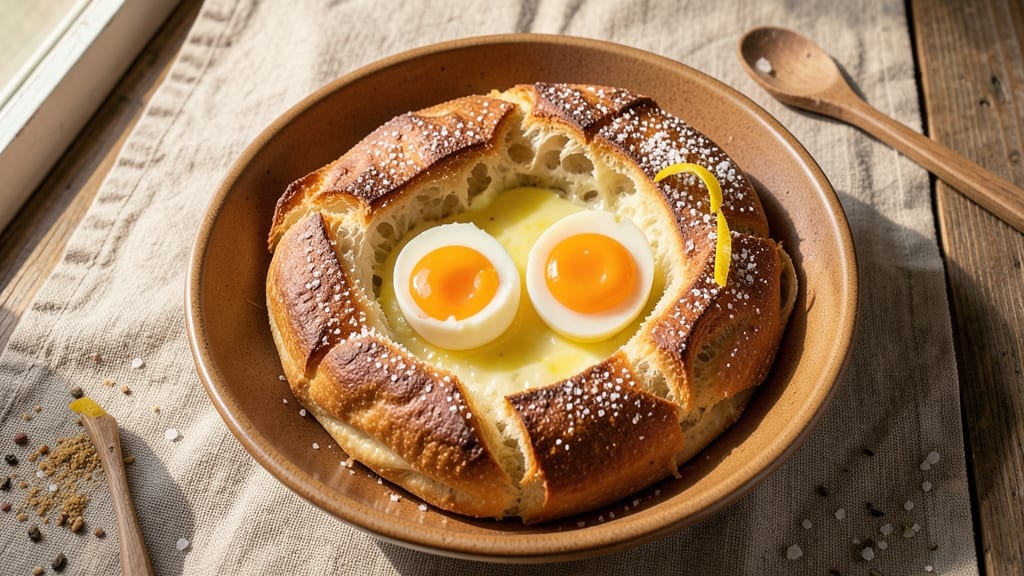
This anda bread recipe delivers the perfect balance of flaky layers and spiced sweetness that makes it a centerpiece for celebrations. The secret lies in wrapping a whole boiled duck egg inside a rich, buttery dough—traditional techniques ensure the egg stays intact while the bread develops golden, crisp layers.
I’ve perfected this method over years of baking, and the aroma alone will transport you to festive tables where this bread is cherished.
The dough combines all-purpose flour, sugar, yeast, and warm milk for a tender yet sturdy texture, while warm spices like cinnamon and cardamom infuse warmth without overpowering. The egg, boiled to perfection, becomes the heart of the loaf, adding a surprise in every bite.
Baking at 350°F for about 45 minutes ensures a crisp crust and a moist interior, with the egg remaining safely enclosed.
What makes this recipe special is the harmony of textures—crispy edges give way to tender layers, and each bite reveals the subtle sweetness of the dough and the rich flavor of the egg.
The bread is versatile: serve it warm with butter, as a dessert with honey, or even as a gift during holidays. The process might seem intricate, but following the steps carefully guarantees a result that’s both impressive and deeply satisfying.
For those looking to modernize the classic, try adding raisins or orange zest to the dough for extra depth. The key is patience—letting the dough rest and baking at the right temperature ensures the egg stays intact while the bread achieves its signature flakiness.
This is bread that tells a story with every bite, and it’s worth every moment of preparation.
Ingredients for anda bread
Sixteen ingredients transform into a showstopping bread with layers of flaky magic.
| Ingredient | Amount | Notes |
|---|---|---|
| All-Purpose Flour 🌾 | 4 cups | Sifted for light texture |
| Unsalted Butter 🧈 | 1 cup | Cold, cubed for flakiness |
| Granulated Sugar 🍚 | ½ cup | Light brown for caramel notes |
| Active Dry Yeast 🍞 | 2 ¼ tsp | Freshly measured, not expired |
| Warm Whole Milk 🥛 | ¾ cup | 110°F for activation |
| Large Duck Eggs 🥚 | 2 whole | Hard-boiled, peeled |
| Ground Cinnamon 🌿 | 1 tsp | Freshly ground preferred |
| Ground Cardamom 🌿 | ½ tsp | Lightly toasted for aroma |
| Salt 🧂 | ½ tsp | Fine sea salt preferred |
| Vanilla Extract 🌸 | 1 tsp | Pure vanilla for depth |
| Raisins 🍇 | ½ cup | Optional, soaked in warm water |
| Orange Zest 🍊 | 1 tbsp | Freshly grated for brightness |
| Egg Wash 🥚 | 1 whole | Beaten with 1 tsp water |
| Coarse Sugar 🍚 | 2 tbsp | For topping before baking |
The butter and flour are your golden duo—European-style butter like Plugrá or Land O'Lakes gives the best flakiness, but any unsalted works. For flour, King Arthur or Gold Medal brands are reliable. The yeast must be fresh; if your package is past its expiration, grab a new one. Cardamom can be tricky to find—Penzeys or the spice aisle at Whole Foods usually have it. Duck eggs add richness, but if you can't find them, large chicken eggs work in a pinch. The key to the dough's success is keeping everything cold until the final mix—this prevents gluten from developing too early, ensuring those signature flaky layers.
No cardamom? Allspice at half the amount mimics its warmth. Substituting raisins for chopped dates or dried cranberries keeps the sweetness. The orange zest is optional but adds a bright contrast to the warm spices. If you're making this ahead, prep the dough up to 24 hours early and let it rest in the fridge—this deepens the flavor. For a richer dough, replace half the milk with heavy cream. The egg wash should be thin enough to brush on easily; if it's too thick, add a splash more water. The coarse sugar topping caramelizes beautifully during baking, adding extra crunch to the crust.
This bread is best baked fresh, but leftovers keep well in an airtight container for 3 days at room temperature. For longer storage, wrap tightly in plastic and freeze for up to 3 months. To reheat, warm in a 350°F oven for 10-15 minutes until the crust is crisp again. The egg inside remains perfectly intact if baked at the correct temperature—350°F is non-negotiable. For gifting, slice the bread into thick pieces and wrap individually with parchment paper. The aroma alone makes it a standout centerpiece for any celebration.
Why You'll Love This Recipe
- No-Knead Magic: I swear by this dough—just mix, let it rise, and shape it. No stand mixer, no arm workout, just a bowl and patience (the good kind). The butter cuts in so smoothly, and the milk keeps it tender without fuss.
- Sweet Butter Bliss: That sugar and butter combo? Pure indulgence. The bread gets this golden, crackly crust with a soft center—like a hug from a bakery, but made with ingredients you already own.
- Breakfast or Snack Hero: Serve it warm with jam for brunch, toast it for lunch, or pack slices for school lunches. My kids fight over it (and that’s never happened before). Even better? It freezes beautifully for lazy mornings.
- Budget Bakery Trick: Uses pantry staples, costs pennies per loaf, and makes two loaves from one batch. Leftovers? Toast them the next day or stash them in the freezer—no sad, stale bread here.
Step-by-step instructions for anda bread
Master the art of creating flaky layers with this precise technique.
Prepare the Yeast Mixture
In a small bowl, combine the 0.75 cup warm whole milk with the 2.25 tsp active dry yeast. Let it sit for 5-10 minutes until it becomes frothy. This indicates the yeast is active and ready to work. I always check for bubbles—if nothing happens, your yeast may be expired or the milk too hot.
While waiting, measure out the 4 cups all-purpose flour and sift it into a large mixing bowl. This aerates the flour and creates a lighter texture for the bread. The sifted flour should look like a soft cloud in your bowl, ready to absorb the other ingredients.
Create the Dough Base
Add the yeast mixture to the sifted flour along with the 0.5 cup granulated sugar, 1 tsp ground cinnamon, 0.5 tsp ground cardamom, and 0.5 tsp salt. Using a wooden spoon or silicone spatula, gently mix until a shaggy dough begins to form. This step is crucial for even distribution of flavors throughout the bread.
Next, add the 1 cup unsalted butter, cut into cubes. I like to work quickly here—the butter should be cold but not frozen, ensuring it creates flaky layers when incorporated. Use your hands to knead the dough for about 5 minutes until it becomes smooth and elastic. The dough should pull away cleanly from the sides of the bowl.
Incorporate Eggs and Raisins
Make a well in the center of the dough and add the 2 whole large duck eggs, 1 tsp vanilla extract, and 1 tbsp orange zest. Gently fold these ingredients into the dough, being careful not to overwork it. The orange zest adds a bright citrus note that complements the warm spices.
Now, fold in the 0.5 cup raisins (if using). I recommend soaking them in warm water for 10 minutes first to plump them up—this prevents them from drying out during baking. Distribute them evenly throughout the dough so each slice gets a taste of sweetness.
First Rise and Preparation
Transfer the dough to a lightly greased bowl, cover it with a clean kitchen towel, and let it rise in a warm place for 1-2 hours or until it has doubled in size. I like to place my oven on its lowest setting with a pan of hot water inside to create a warm, humid environment—this helps the dough rise evenly.
Once the dough has risen, punch it down gently to release any air bubbles. Divide it into 6 equal portions (about 1/6 of the total dough each) and roll each portion into a smooth ball. Arrange them on a parchment-lined baking sheet, leaving about 2 inches between each ball. This spacing allows them to expand during baking.
Layer and Bake for Flaky Perfection
Preheat your oven to 375°F. In a small bowl, beat the 1 whole egg wash with 1 tsp water for the egg wash. Brush each bread ball generously with the egg wash, then sprinkle with 2 tbsp coarse sugar for a sweet, caramelized crust.
Bake for 20-25 minutes until the bread is deep golden brown and sounds hollow when tapped on the bottom. The sugar will melt and create a beautiful caramelized top, while the layers inside stay tender. For even baking, rotate the pan halfway through the baking time.
Pro Tips For Making Anda Bread
- Test the Yeast First: Skip straight to mixing and you might end up with flat, sad bread. Sprinkle that yeast in warm milk with a pinch of sugar, wait 5–10 minutes—if it bubbles like a tiny volcano, you’re golden. No bubbles? Toss it and grab fresh; this isn’t the step to cut corners.
- Chill the Dough Overnight: I used to rush the dough, and the bread turned out dense and chewy. Let it rise in the fridge for 12–16 hours—yes, even with the butter—so the gluten relaxes and the flavor deepens. Wake up to a dough that’s ready to shape without fighting you.
- Don’t Overwork the Butter: The butter should melt into the dough like butter (obviously), but if you knead too hard, you’ll end up with greasy streaks instead of flaky layers. Stop when the dough is smooth but still cool to the touch—it’ll come together without turning into a sticky mess.
- Brush with Milk, Not Water: Water makes the crust tough, but a quick brush of warm milk before baking gives Anda bread that soft, pillowy finish everyone loves. Do it right before sliding it into the oven—just enough to glisten, not drown.
Serving suggestions for anda bread
Warm Butter Spread
Nothing enhances anda bread like a generous spread of warm brown butter—simmer ½ cup unsalted butter in a saucepan over medium heat for 5-7 minutes until golden and nutty. Brush it on fresh slices while still warm for a rich, caramelized flavor that melts into the flaky layers.
For extra decadence, add a pinch of salt and honey to the butter before spreading. 🧈
Honey-Drizzled Serving
Serve anda bread as a sweet treat by drizzling with warm honey (I love Manuka honey for its floral notes) and a sprinkle of toasted sesame seeds or crushed pistachios.
The honey complements the cinnamon and cardamom while adding a glossy finish. For a festive touch, arrange slices on a platter with whole cloves or orange slices for garnish. 🍯
Savory Pairings
While anda bread is traditionally sweet, it also pairs beautifully with sharp cheeses like aged cheddar or goat cheese.
Serve with a side of whipped feta dip (mix ½ cup feta, 2 tbsp Greek yogurt, 1 tbsp olive oil, and lemon zest) for a savory contrast. The egg inside adds a creamy element that balances the tangy dip. 🧀
Coffee or Tea Companion
Anda bread’s warm spices make it the perfect companion to strong black coffee or spiced chai tea. The cinnamon and cardamom in the bread echo the flavors in chai, creating a cozy harmony.
For a dessert twist, serve with espresso and a dusting of cocoa powder for a mocha-inspired bite. ☕
Gift-Worthy Presentation
Slice the bread into thick rounds and wrap each piece in parchment paper, tying with twine and a sprig of rosemary or fresh mint for a giftable treat. The egg inside adds a playful surprise, making it ideal for holiday baskets or housewarming gifts.
Store wrapped slices in an airtight container for up to 5 days to maintain freshness. 🎁
Modern Twist: Chocolate-Dipped
For a fun variation, dip half of each slice into melted dark chocolate (use 70% cocoa for depth) and let it set on parchment-lined trays. The contrast of warm spices and rich chocolate creates a sophisticated dessert.
Add crushed hazelnuts or sea salt flakes** for texture. This version is a crowd-pleaser at dinner parties! 🍫
Nutrition facts
Frequently asked questions
Why does anda bread contain a boiled egg?
Traditionally, the boiled duck egg represents new life and prosperity in many cultures, especially during Easter celebrations. The egg stays intact when baked properly, creating a delightful surprise in every bite. It also adds richness to the bread's texture and flavor, making each slice extra satisfying.
Can I substitute chicken eggs for duck eggs?
Yes, you can use large chicken eggs as a substitute, though duck eggs have a richer, creamier texture. For best results, use 2 large chicken eggs instead of 2 duck eggs. The baking time and temperature remain the same, but the flavor will be slightly lighter.
How do I prevent the egg from breaking during baking?
Wrap the boiled egg tightly in dough before shaping the loaf, ensuring no gaps exist. Bake at 350°F for no longer than 45 minutes—overbaking can cause the egg to crack. Also, avoid opening the oven door during the first 30 minutes of baking to maintain even heat.
Is anda bread gluten-free?
No, traditional anda bread contains wheat flour and is not gluten-free. For a gluten-free version, substitute the all-purpose flour with a 1:1 gluten-free baking blend (like Bob's Red Mill) and add ½ tsp xanthan gum to improve texture. The layers may be slightly less flaky, but the flavor remains delicious.
How long can I store leftover anda bread?
Store in an airtight container at room temperature for up to 3 days for best texture. For longer storage, freeze the bread (unwrapped) for up to 3 months. To reheat, warm in a 350°F oven for 10-15 minutes until crispy again. The egg inside stays safe if properly baked and stored.