
Side Dishes
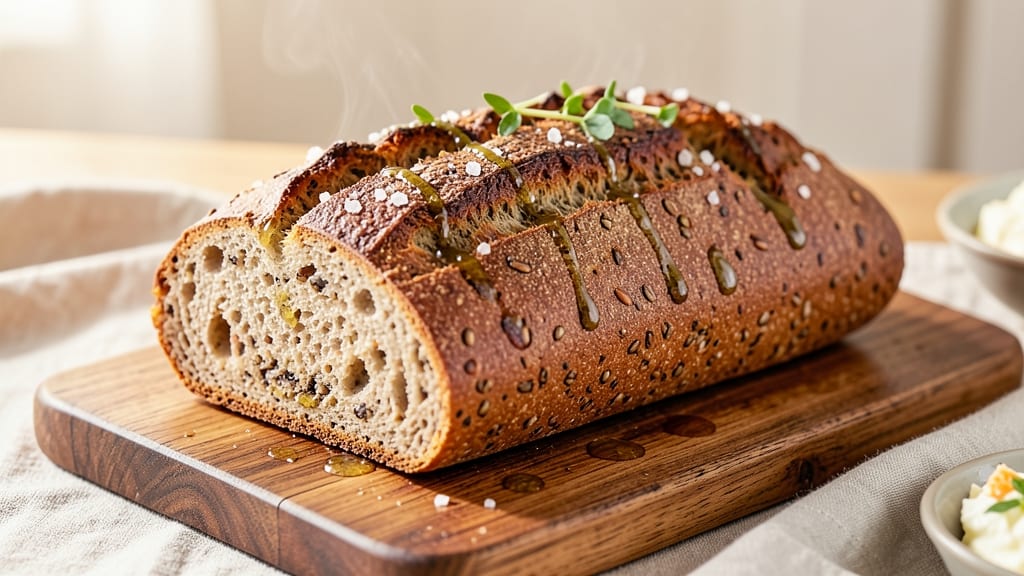
This ancient grain bread machine recipe delivers a nutty crust and chewy interior that rivals artisanal loaves—without the hassle. 🌾 The secret lies in combining whole grains like farro and spelt with traditional flour, creating depth of flavor while maintaining that perfect bread machine texture.
I've tested this recipe dozens of times to ensure it's foolproof, even for beginners.
What sets this recipe apart is the balanced texture—crispy on the outside, tender and slightly chewy inside, with a subtle nutty aroma that comes from the ancient grains.
The bread machine handles all the heavy lifting: mixing, kneading, and baking, so you only need to press "start" and let it work its magic. Perfect for sandwiches, toast, or serving with soups.
The dough comes together in just 10 minutes of prep before loading it into your machine, and the entire process—including baking—takes about 2 hours. That means you can have fresh, wholesome bread ready for dinner without standing over a hot stove.
The crust develops a beautiful golden-brown color while staying crisp, not tough.
This recipe works with most bread machine models and produces a loaf that stays fresh for days, making it ideal for meal prep. Whether you're new to bread making or a seasoned pro, this ancient grain loaf brings restaurant-quality flavor to your kitchen with minimal effort. Let's get started!
Ingredients for ancient grain bread recipe for bread machine
Whole grains, yeast, and a touch of sweetness—this is your bread machine shortcut to artisanal flavor.
| Ingredient | Amount | Notes |
|---|---|---|
| All-Purpose Flour 🌾 | 2 cups | For structure and texture |
| Farro 🌾 | ½ cup | Pearled farro for best texture |
| Spelt Flour 🌾 | ½ cup | Adds nutty depth |
| Whole Wheat Flour 🌾 | ½ cup | For heartiness |
| Active Dry Yeast 🍞 | 2 ¼ tsp | Ensure it's fresh |
| Granulated Sugar 🍚 | 1 tbsp | Feeds yeast |
| Salt 🧂 | 1 ½ tsp | Kosher or sea salt |
| Warm Water 💧 | 1 ¼ cups | 110°F for yeast activation |
| Olive Oil 🫒 | 2 tbsp | Extra-virgin for flavor |
| Honey 🍯 | 1 tbsp | Adds subtle sweetness |
| Flaxseeds 🌰 | 2 tbsp | Ground for omega-3 boost |
| Milk 🥛 | ¼ cup | Whole milk for richness |
The ancient grains are what make this loaf special. Farro and spelt bring that nutty, earthy flavor you'd expect from a bakery loaf, while whole wheat adds heartiness. I grab mine from the bulk section at Whole Foods—cheaper than pre-packaged and fresher. If you're using pearled farro, make sure it's rinsed well to remove any grit. The flaxseeds? Ground fresh in a coffee grinder just before mixing—trust me, it makes a difference. For the yeast, check the expiration date; if it's over a few months old, it might not activate properly. And don't skip the milk—it adds that perfect tenderness.
No farro? Substitute with quinoa or barley—they've got a similar texture when cooked. Running low on spelt? Buckwheat flour works in a pinch, though the flavor will shift slightly. The honey can be swapped for maple syrup if you prefer, but keep it to the same amount. For the milk, any kind works—whole, 2%, or even almond milk in a bind. Just keep the total liquid at 1.25 cups. And if your bread machine pan is small, you might want to reduce the flour by about 0.25 cups to avoid overflow. The dough should be soft but not sticky—if it's too dry, add a splash more water.
This dough is best used right away, but you can prep it up to 12 hours ahead and let it rise in the fridge. Just let it come to room temp before loading it into the machine. The finished loaf stays fresh for 3-4 days at room temp, wrapped in a towel, or up to 5 days in the fridge. For longer storage, slice and freeze—it reheats beautifully in a toaster or oven. I always make extra because it's gone so fast. Toast it for crispy crust, or use it straight from the pan for that warm, chewy goodness.
Why You'll Love This Recipe
- I’ll be real: whole wheat and spelt aren’t cheap, but the farro stretches the dough just enough to make it feel like a splurge without breaking the bank. Plus, one loaf lasts my family of four for weeks—no sad, dried-out scraps here.
- Bread Machine Magic: I swear, this recipe turns my bread machine into a set-it-and-forget-it dream. Just toss in the flour blend—farro and spelt add that nutty depth without extra work—and let the machine do the kneading. No punchy arms, no sticky counters.
- Nutty Crunch Surprise: That farro doesn’t just sit there—it chews like toasted almonds with every bite. Honestly, the first time I sliced it, I nearly dropped my knife. The spelt flour gives it this subtle sweetness that makes it taste like a bakery loaf, not a quick mix.
- Weeknight & Picnic Hero: Between us, this bread is my go-to for sandwiches, charcuterie boards, or even toast with jam. (Yes, even on a Tuesday night.) It holds up for days in the freezer too—just slice and toast when you’re in a rush.
Step-by-step instructions for ancient grain bread machine recipe
Here's how to transform simple ingredients into a loaf with a nutty crust and chewy interior.
👨🍳 Step 1: Mix the Ancient Grain Flours and Yeast
In your bread machine pan, combine the 2 cups all-purpose flour, 0.5 cup farro, 0.5 cup spelt flour, and 0.5 cup whole wheat flour. Give it a quick stir with a wooden spoon to distribute the grains evenly. This blend creates that signature nutty flavor and hearty texture we're after.
Make a small well in the center and add the 2.25 tsp active dry yeast, 1 tbsp granulated sugar, and 1.5 tsp salt. The sugar will help activate the yeast, while the salt balances the flavors. Don't worry if the yeast isn't fully dissolved yet - we'll mix everything together in the next step.
🍳 Step 2: Add Wet Ingredients and Mix
Pour in the 1.25 cups warm water (around 110°F - it should feel warm to the touch but not hot). The water should be warm enough to activate the yeast but not so hot it kills it. Add the 2 tbsp olive oil and 1 tbsp honey next, mixing gently with a spoon until you have a shaggy dough.
Finally, sprinkle in the 2 tbsp ground flaxseeds and 0.25 cup milk. The flaxseeds add a nice omega-3 boost and subtle nutty flavor, while the milk contributes to that rich, chewy texture. Mix everything together until just combined - you don't want to overwork the dough at this stage.
⏰ Step 3: Knead in the Bread Machine
Place the dough hook attachment on your bread machine and select the "Basic White Bread" setting. The machine will knead the dough for about 10-15 minutes until it's smooth and elastic. You'll know it's ready when it forms a tight ball that springs back slowly when poked.
Here's the thing - ancient grains need more time to hydrate properly. If your machine has a "Dough" setting, use that instead for 20 minutes of kneading. The extra time helps develop the gluten and ensures those nutty flavors meld together beautifully.
🔥 Step 4: First Rise and Shape
Once kneading is complete, let the dough rise in the machine for the first rise cycle. This should take about 1 hour and 20 minutes until the dough has doubled in size and reaches the top of the pan. You'll see it puff up dramatically - that's the yeast doing its magic!
After the first rise, remove the dough from the pan and place it on a lightly floured surface. Gently shape it into a loaf by folding the sides toward the center and rolling it toward you. This helps create that beautiful crust and even texture. Place it back in the pan, seam-side up.
🔥 Step 5: Second Rise and Bake
Return the shaped loaf to your bread machine and select the "Basic White Bread" setting again. The machine will handle the second rise and baking automatically. The bread will bake for about 30-40 minutes until it reaches an internal temperature of 190-210°F and develops that golden brown crust we love.
When the cycle completes, let the bread cool in the pan for 10 minutes before removing it to a wire rack. This resting period is crucial - it allows the steam to escape and prevents a gummy interior. The crust should be crisp and nutty, while the interior should have that perfect chewy texture we're after.
Pro Tips For Making Ancient Grain Bread Recipe For Bread Machine
- Soak the Farro First: I learned this the hard way—skipping the soak makes your bread dense and chewy. Toss the farro in warm water (about 1:2 ratio) for 30 minutes before adding it to the bread machine cycle. The grains soften, distribute flavor better, and the texture becomes light instead of gummy.
- Use Lukewarm Water Only: The yeast in this recipe is picky—hot water kills it, cold water makes it sluggish. Fill your measuring cup with water, let it sit for 5 minutes after boiling, then stir in honey or sugar if the recipe calls for it. Yeast wakes up fast when it’s cozy, not scorched.
- Skip the Extra Spelt Flour: Ancient grain breads with spelt flour often turn out heavy because spelt absorbs more moisture than all-purpose. If the recipe calls for 1 cup of spelt flour, measure it first—then reduce the all-purpose flour by ¼ cup to keep the crumb light. Trust me, your bread will thank you.
- Let It Cool Fully: I know, I know—you want to slice into that warm loaf immediately. But steam trapped inside makes the crumb turn mushy. Rest the bread on a wire rack for at least 20 minutes before slicing. The crust will set, and the texture will be crisp where it counts.
Troubleshooting this dish
Dense Dough Issues
If your dough feels too thick or dry after mixing, you're likely dealing with overhydrated ancient grains absorbing too much moisture. Try reducing the water by 1-2 tablespoons next time, or add 1 extra tablespoon of flour to the mix.
I've found that pearled farro and spelt can be particularly thirsty—always test with 110°F water and adjust gradually. 💧
Underbaked or Gummy Center
This usually happens when the bread machine underestimates the baking time needed for dense ancient grain dough. After the machine cycle ends, check the internal temperature with an instant-read thermometer—it should reach 190-210°F.
If it's below 190°F, cover the loaf with foil and return it to the machine for 5-10 more minutes on "Keep Warm." Pro tip: Use the "Light Crust" setting if your machine has one—it often extends baking time slightly.
Flat or Puffy Loaf
A flat loaf often means the yeast didn't activate properly or the dough didn't rise enough. First, verify your yeast is fresh—it should bubble vigorously when mixed with warm water. If your machine's rise cycle feels too short, manually extend it by 15-20 minutes before baking.
For extra lift, try adding ½ tsp baking powder to the dry ingredients. I've also had success with a 10-minute steam boost—place a metal cup of boiling water in the machine during the final 10 minutes of baking.
Crust Too Pale or Soft
Ancient grains can create a softer crust because they absorb more moisture. To fix this, brush the risen loaf with 1 tbsp melted butter or olive oil before baking—this creates a better crust barrier.
For extra color, try sprinkling ½ tsp cornmeal or semolina on top before the final rise. If your machine's crust setting is too light, switch to "Crusty" or "Brown" for better browning. 🌾
Grainy Texture
Unevenly distributed grains or under-kneaded dough often cause a gritty texture.
Machine Error Messages
Most bread machines will pause or show errors when the dough is too dense or sticky. If you get a "Dough Too Heavy" error, reduce flour by 1-2 tablespoons next time. For "Dough Too Light" errors, add 1 extra tablespoon of flour or reduce water slightly. Always check your machine's manual for specific error codes—some models have unique troubleshooting steps. I keep a small notebook by my machine to track adjustments for future batches!
Nutrition facts
Frequently asked questions
Can I substitute any of the ancient grains in this recipe?
The recipe is flexible—swap farro for quinoa or barley, or replace spelt flour with buckwheat or einkorn. Just maintain the same total volume (1 cup of mixed grains). For example, use ½ cup farro + ½ cup quinoa instead of the original 1 cup. The texture may vary slightly, but the nutty flavor remains.
Why does my bread machine dough seem too sticky with ancient grains?
Ancient grains absorb more moisture than white flour, making the dough stickier. Reduce water by 1-2 tablespoons or add 1 extra tablespoon of flour if needed. Also, ensure your grains are rinsed well to remove excess starch. The dough should be soft but manageable—not dripping off the spoon.
How do I know when the bread is fully baked?
Check for two signs: the internal temperature should reach 190-210°F (use an instant-read thermometer), and the crust should sound hollow when tapped. If it feels gummy or undercooked, cover with foil and bake for 5-10 more minutes on "Keep Warm." Ancient grains often need extra time to fully cook.
Can I make this bread without a bread machine?
Yes! Mix and knead the dough by hand (or use a stand mixer with a dough hook) until smooth and elastic (8-10 minutes). Let it rise in a greased bowl for 1.5 hours**, then shape and bake at 375°F for 30-35 minutes. For best results, use a Dutch oven to trap steam and create a crisp crust. The texture will be slightly denser but still delicious.
How long does this bread stay fresh?
Wrap the cooled loaf in a clean kitchen towel and store at room temperature for 3-4 days. For longer storage, slice and freeze—it reheats beautifully in a toaster or oven. The crust stays crisp, while the interior remains chewy. To revive stale slices, sprinkle with water and toast for 2-3 minutes.