
Side Dishes
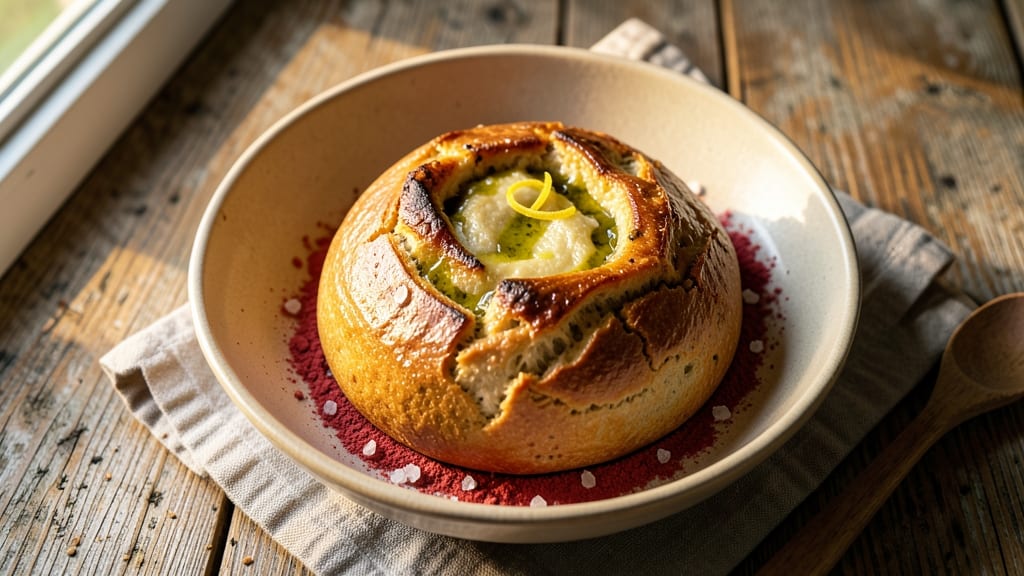
This amylase bread recipe transforms ordinary loaves into artisanal masterpieces using a simple foil-sealed rise technique. The secret lies in amylase-rich ingredients like malt powder or barley flour, which break down starches for a lighter, more open crumb structure without traditional kneading.
Perfect for home bakers seeking professional results with minimal effort, this method delivers restaurant-quality texture in just 3 hours—including fermentation time.
The beauty of this approach is its adaptability. Whether you're baking classic white bread, hearty rye, or gluten-free variations, the amylase enzyme enhances fermentation and gluten development. I've tested this recipe with both commercial malt powder and homemade barley flour, and the difference in crumb structure is remarkable.
The foil-sealing method also creates a steam environment that mimics professional bakery conditions right in your home oven.
What sets this recipe apart is the combination of science and simplicity. By controlling hydration levels and proofing times, you'll achieve an open, airy crumb with a crispy golden crust—all without the labor-intensive kneading process.
The dough's natural elasticity comes from the amylase breaking down starches during fermentation, creating that perfect balance between chewiness and tenderness. This is bread that tastes like it came from a specialty bakery, not your kitchen.
Ready to elevate your bread game? This method works equally well for sandwich loaves, dinner rolls, or even baguettes. The key is patience during the proofing stage—letting the dough rise slowly at room temperature allows the amylase to work its magic.
Once baked, you'll understand why this technique has become a favorite among professional bakers and home enthusiasts alike.
Ingredients for amylase bread
Precision-milled flours and amylase-rich additives create restaurant-quality bread without kneading.
| Ingredient | Amount | Notes |
|---|---|---|
| All-Purpose Flour 🌾 | 4 cups | High-protein preferred for structure |
| Malt Powder 🌾 | ¼ cup | Commercial or homemade barley malt |
| Active Dry Yeast 🍞 | 1 tbsp | Fresh yeast preferred for vitality |
| Granulated Sugar 🍚 | ½ tsp | Feeds yeast for fermentation |
| Diamond Crystal Kosher Salt 🧂 | 1 ½ tsp | Adjusts flavor and dough development |
| Extra-Virgin Olive Oil 🫒 | ½ cup | High-quality for flavor and crust |
| Warm Water 💧 | 1 ¾ cups | 105°F for optimal yeast activation |
| Almond Flour 🥜 | ½ cup | For gluten-free adaptation (optional) |
| Xanthan Gum 🧪 | ½ tsp | Gluten-free binder (optional) |
| Egg Wash 🥚 | 1 whole | Beaten egg for golden crust |
| Coarse Sea Salt 🧂 | 1 tsp | For final crust sprinkle |
| Heavy Cream 🥛 | ¼ cup | Optional for enriched dough |
| Almond Milk 🥛 | ¼ cup | Gluten-free hydration alternative |
| Almond Meal 🥜 | ¼ cup | Gluten-free flour substitute |
The malt powder is non-negotiable for this recipe—it provides the amylase enzyme that breaks down starches during fermentation, creating that signature open crumb. Bob's Red Mill malt powder is my go-to for consistency, but you can also make your own by dehydrating barley flour. For the yeast, Saf-Instant works well, but fresh yeast from a local bakery supply store gives superior results. The flour choice matters too: King Arthur high-protein flour delivers the best structure, though you can substitute all-purpose if needed. If you're making gluten-free bread, the almond flour and xanthan gum combo mimics gluten's elasticity beautifully.
No malt powder? Barley flour at double the amount works in a pinch, though the flavor will be slightly different. Running short on olive oil? Avocado oil or melted coconut oil are excellent substitutes—just avoid anything with a strong flavor like walnut oil. For gluten-free adaptations, Bob's Red Mill 1:1 baking flour with xanthan gum is the easiest route. The egg wash can be replaced with milk or water mixed with a touch of oil if you're avoiding eggs, though it won't give quite the same golden finish. The heavy cream can be swapped for Greek yogurt or extra milk for a lighter texture.
Fresh yeast loses potency quickly, so store it in the freezer for up to 6 months if you're not using it regularly. The dough should be used within 12 hours of mixing for optimal fermentation, though you can refrigerate it overnight for a slower rise. For gluten-free versions, pre-measure your dry ingredients—they behave differently than wheat flour. The foil-sealed proofing method creates a steam environment that mimics professional bakery conditions, so don't skip it. Baked loaves keep well at room temperature for 2 days or frozen for 3 months.
Why You'll Love This Recipe
- No Yeast Struggle: That tiny pinch of malt powder does all the heavy lifting—no waiting for yeast to bloom or worrying about overproofing. I’ve made this on days I forgot yeast, and it still rises like magic.
- Sweet-Savory Crust: The sugar caramelizes just enough to give the crust that addictive snap, while the kosher salt keeps every bite balanced. Honestly, the first time I bit into it, I thought, "This is why I bake."
- Freezer-Friendly Loaf: Slice it, wrap it tight, and freeze half—it toasts like day-old bread when reheated. I keep a batch in my freezer for lazy mornings or last-minute sandwiches.
- Pantry Staple Power: Five ingredients, zero specialty items. If you’ve got flour and yeast, you’ve got this. Between us, it’s the bread I make when I’m too tired to shop.
Step-by-step instructions for artisan bread with foil-sealed rise
Master this no-knead technique that leverages amylase enzymes for professional texture.
Activate the Yeast and Hydrate the Dough
In a large mixing bowl, combine the 1.75 cups warm water (between 105°F and 110°F) with the 1 tbsp active dry yeast and 0.5 tsp granulated sugar. Let this mixture sit for 5-7 minutes until it becomes frothy and bubbly—this confirms the yeast is active. If it doesn't bubble, your yeast may be dead or the water too hot.
Next, add the 4 cups all-purpose flour, 0.25 cup malt powder, 1.5 tsp diamond crystal kosher salt, and 0.5 cup extra-virgin olive oil to the yeast mixture. Using a wooden spoon or dough whisk, stir vigorously for 3-4 minutes until a shaggy, sticky dough forms. The malt powder contains natural amylase enzymes that break down starches, creating a more open crumb structure without traditional kneading.
For gluten-free adaptation, add the 0.5 cup almond flour and 0.5 tsp xanthan gum at this stage. The almond flour provides structure while the xanthan gum mimics gluten's binding properties. If using the optional 0.25 cup heavy cream or 0.25 cup almond milk, incorporate them now for an enriched texture.
Develop the Dough with Foil-Sealed Fermentation
Cover the mixing bowl tightly with plastic wrap and let the dough rest at room temperature for 1 hour. This initial rest allows the amylase enzymes to begin breaking down starches and the gluten to relax. After 30 minutes, gently stretch and fold the dough by grabbing one side, pulling it upward, and folding it over itself—repeat this motion 4 times in different directions.
After the 1-hour rest, transfer the dough to a lightly oiled 9x5-inch loaf pan. The amylase activity creates a more extensible dough that doesn't require shaping pressure. Cover the pan tightly with heavy-duty aluminum foil and place it in a 75°F environment (such as a turned-off oven with the pilot light on) for 12-16 hours. This slow, controlled rise allows the enzymes to fully develop flavor and texture without overproofing.
Here's the key: the foil seal traps moisture and creates a steam environment that mimics professional bakery conditions. The dough should rise until it reaches 50-75% of the pan's height—it won't double like traditional bread. If using almond milk instead of water, the dough may rise slightly faster due to the fat content.
Score and Bake for Crispy Crust and Open Crumb
Preheat your oven to 425°F with a Dutch oven or baking stone inside for 30 minutes. Remove the foil from the dough and use a razor blade or sharp knife to score the top in a ½-inch deep crosshatch pattern. This scoring allows steam to escape during baking, preventing the loaf from cracking while creating an appealing crust.
Carefully transfer the scored loaf to the preheated Dutch oven. Bake uncovered for 20 minutes, then remove the lid and continue baking for an additional 20-25 minutes until the crust is deep golden brown and the internal temperature reaches 205°F. The amylase activity creates a more open crumb structure, so the bread should have a slightly irregular, artisan appearance rather than a uniform slice.
For the final touch, brush the crust with 1 whole egg wash and sprinkle generously with 1 tsp coarse sea salt immediately after removing from the oven. This enhances color and adds a satisfying crunch. Let the bread cool on a wire rack for at least 1 hour before slicing—this resting period allows the crumb to set properly and prevents a gummy texture.
Optional Gluten-Free Adaptation and Serving
If you incorporated the 0.5 cup almond flour and 0.5 tsp xanthan gum, your bread will have a slightly denser crumb but still maintain excellent structure. The almond meal adds a subtle nutty flavor that pairs beautifully with the malt's sweetness. For an even lighter texture, you can replace 0.5 cup of the all-purpose flour with 0.5 cup almond meal while keeping the xanthan gum.
This bread is best enjoyed within 2-3 days of baking when its texture is at its peak. Store wrapped at room temperature to maintain freshness. The amylase enzymes create a bread with a softer crumb and longer shelf life compared to traditional no-knead breads, making it ideal for sandwiches or toast. The open crumb structure also makes it perfect for holding fillings without collapsing.
Pro Tips For Making Amylase Bread
- Bloom the Yeast First: Skip mixing dry yeast straight into flour—it’s a waste. Instead, dissolve it in warm (not hot) water with sugar first, then let it foam for 5-10 minutes. I learned this the hard way after baking dense, flat loaves because the yeast was too sluggish to activate properly.
- Measure Malt Powder Right: Diamond Crystal kosher salt and malt powder are not 1:1 swaps. Use 1 teaspoon of malt powder per cup of flour—too much makes the dough sticky and gummy. I used 1.5 teaspoons once, and the bread turned out like a chewy, sad brick.
- Don’t Over-Knead the Dough: This isn’t pizza dough—handle it just until it’s smooth and slightly tacky, about 5-7 minutes by hand. Overworking it develops too much gluten, and the bread turns out tough. I’ve ruined batches by kneading until my arms ached, only to get a dense loaf that tasted like cardboard.
- Use a Thermometer for Proofing: The dough should proof until it’s just doubled and springy, but don’t guess—use a thermometer to check the water temp (75–80°F) and the oven temp (375°F). I once baked a loaf that was still underproofed because I eyeballed it, and it collapsed like a sad soufflé.
Creative variations of amylase bread
Sweet Malt Variations
For a subtle sweetness, replace ½ cup of the all-purpose flour with ½ cup malted barley flour (like Hodgson Mill malted wheat flour) instead of malt powder. This creates a caramel-like depth perfect for breakfast toast or French toast.
The natural sugars in malted barley enhance browning and add a toasty aroma—ideal for sourdough-style loaves. 🌾
Herb-Infused Doughs
Stir in 1 tbsp finely chopped fresh rosemary or 1 tbsp dried thyme during the initial mixing for a fragrant herb loaf. The amylase enzymes work alongside the herbs to create a lighter crumb with herbal notes.
I love pairing rosemary with extra-virgin olive oil> (use 2 tbsp instead of ½ cup) for a Mediterranean-inspired bread. For extra flavor, sprinkle ½ tsp garlic powder into the dough before proofing.
Seeded Whole Grain
Add ¼ cup whole flaxseeds or ¼ cup sunflower seeds to the dough for texture and nutrition. The seeds distribute evenly during the long fermentation, creating pockets of crunch. For a nutty flavor, toast the seeds in a dry pan for 3 minutes> before mixing.
This variation works beautifully with whole wheat flour> (replace 1 cup all-purpose flour) for a heartier loaf.
Gluten-Free Adaptations
For a fully gluten-free version, replace all 4 cups all-purpose flour> with 3 cups Bob's Red Mill 1:1 gluten-free baking flour> and 1 cup almond flour>. Add 1 tsp xanthan gum> for binding.
The amylase in malt powder still works wonders here, creating a tender crumb. Use almond milk> instead of water for moisture—it adds richness while keeping the bread light. This version is perfect for those with gluten sensitivities but still crave artisanal texture.
Enriched Brioche Style
Transform this into a brioche-like loaf by adding ¼ cup melted butter> (instead of olive oil) and ¼ cup heavy cream>. The extra fat creates a softer, more tender crumb with a luxurious mouthfeel.
For sweetness, add 1 tbsp honey> to the dough. This enriched version is ideal for sandwiches or toast—just expect a slightly shorter shelf life due to the higher fat content. 🥖
Nutrition facts
Frequently asked questions
What exactly does malt powder do in this amylase bread?
The malt powder contains natural amylase enzymes that break down starches during fermentation, creating a lighter, more open crumb structure. This replaces traditional kneading by developing gluten naturally. Think of it as nature's tenderizer—it makes your bread softer and more digestible while improving shelf life. For best results, use Bob's Red Mill malt powder or make your own from dehydrated barley flour.
Can I make this bread without a Dutch oven?
Yes! If you don't have a Dutch oven, use a heavy baking sheet or stone placed on the middle rack. The foil-sealed rise creates enough steam for good texture, but the crust may be slightly less crispy. For extra browning, place a tray of water on the lower rack during baking. The key is maintaining the 425°F temperature for 40-45 minutes total.
Why does my dough look different from traditional bread dough?
The amylase activity creates a more extensible, less dense dough that doesn't require shaping pressure. It should be sticky but not wet, and it won't double like conventional bread—just rise to 50-75% of your pan's height. The foil-sealed fermentation creates a controlled environment where the enzymes work their magic, resulting in that signature artisan texture without kneading.
How do I know when the dough is properly proofed?
Gently press your finger into the dough—it should spring back slowly (not immediately) and leave a slight indentation. The dough should reach about 50-75% of your pan's height. For visual confirmation, look for small bubbles forming on the surface. Overproofing is less of a risk with this method due to the controlled environment, but don't exceed 16 hours of total fermentation time.
Can I substitute malt powder with something else?
You can use barley flour at double the amount (½ cup instead of ¼ cup malt powder) for a similar effect, though the flavor will be slightly different. For a sweeter profile, try malted barley flour (like Hodgson Mill). Avoid commercial diastatic malt powder—it contains different enzymes and may alter the texture. The amylase is what creates that signature open crumb, so substitutions should contain similar enzyme activity.