
Side Dishes
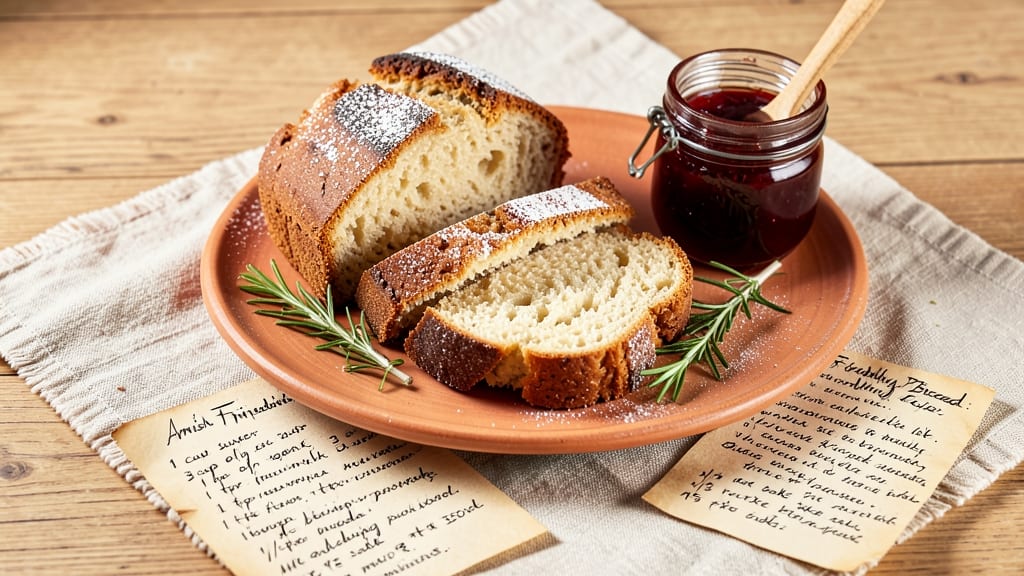
This Amish friendship bread recipe card delivers the warm, buttery pull-apart loaves that became a beloved symbol of community and generosity. 💛 The secret lies in its simple yet precise technique—layering dough, butter, and flour to create that signature tender, flaky texture that makes every bite irresistible.
Originally baked as a gift bread among Amish communities, this recipe preserves tradition while offering modern convenience for home bakers.
The magic happens in the layers: soft, pillowy dough separated by rich butter and flour, baked until golden and just set. Unlike traditional breads, friendship bread relies on its pull-apart structure—no slicing required, just tear and share.
The recipe calls for minimal ingredients but demands patience; letting the dough rise properly ensures that signature softness that makes it worth the wait.
What you’ll end up with is a loaf that’s perfectly balanced—crisp edges giving way to tender, buttery layers inside. The aroma alone will fill your kitchen with warmth, while the texture delivers that satisfying give that makes it impossible to resist.
This isn’t just bread; it’s a tradition you can bake at home, one pull-apart bite at a time.
Whether you’re making it as a gift, for a family gathering, or simply to enjoy, this recipe scales beautifully. Add raisins or cinnamon for variation, but the classic version remains the heart of what makes friendship bread so special. Ready to bake the warmth of community into your kitchen?
Ingredients for amish friendship bread recipe card
Six ingredients create the signature pull-apart texture that makes this bread a gift of warmth and tradition.
| Ingredient | Amount | Notes |
|---|---|---|
| All-Purpose Flour 🌾 | 4 ½ cups | Unbleached preferred for texture |
| Unsalted Butter 🧈 | 1 cup | Cold, cubed for layering |
| Granulated Sugar 🍚 | ¼ cup | White or light brown |
| Active Dry Yeast 🍞 | 2 ¼ tsp | Freshly opened package |
| Warm Water 💧 | ¾ cup | 110°F for yeast activation |
| Salt 🧂 | 1 tsp | Diamond Crystal preferred |
| Heavy Cream 🥛 | ½ cup | Full-fat for richness |
| Vanilla Extract 🍯 | 1 tsp | Pure vanilla preferred |
| Ground Cinnamon 🌿 | 1 tsp | Optional for variation |
| Raisins 🍇 | ½ cup | Optional, seedless preferred |
| Powdered Sugar 🍚 | ¼ cup | For dusting finished loaves |
The flour is non-negotiable—King Arthur or Gold Medal yield the best texture for those signature layers. Butter quality matters too; Land O'Lakes or Plugrá brands deliver consistent richness. Yeast should be freshly opened—old packets lose potency. For the warm water, test temperature with your wrist; it should feel warm but not hot. The cinnamon and raisins are optional but add depth that traditional Amish recipes often include. If substituting flour, cake flour works best for that tender crumb, but all-purpose maintains the classic texture.
No heavy cream? Full-fat sour cream at half the quantity works in a pinch, though texture will differ slightly. The vanilla extract can be swapped for vanilla bean paste if you prefer stronger flavor. For a nutty variation, replace raisins with chopped pecans or walnuts. The powdered sugar topping is optional but enhances presentation—Domino brand dissolves perfectly. If your kitchen runs hot, reduce oven temperature by 25°F to prevent over-browning. The dough should be soft but not sticky; add up to 1 tbsp extra flour if needed.
Freshly baked loaves keep their pull-apart perfection for 3 days at room temperature wrapped in a linen towel. For longer storage, freeze unwrapped on a tray, then transfer to a bag—thaw at room temperature before serving. The butter layers harden in the fridge, so bring to room temperature before slicing. For gifting, wrap in parchment paper with a ribbon; the aroma alone makes it irresistible. Leftovers reheat beautifully in a 350°F oven for 5 minutes to restore that buttery warmth.
Why You'll Love This Recipe
- No Yeast Fuss: I swear by this—just mix the flour, sugar, butter, and yeast with warm water, knead it once, and let it rise. No fancy techniques, no waiting hours. Honestly, my first loaf came out fine even though I didn’t measure the yeast perfectly.
- Sweet Butter Magic: That rich, cold butter folded into the dough? It melts into flaky layers that make every bite taste like a hug. The sugar caramelizes just enough to give it a subtle depth—no overpowering sweetness, just pure, buttery satisfaction.
- Gift-Worthy Loaves: Between us, this bread is the go-to for holidays, showers, or just because. Wrap it in parchment, tie it with twine, and suddenly you’ve got a present that costs pennies but feels special. My neighbor’s kids always ask for it by name.
- Pantry Staple: Flour, butter, sugar, yeast—stuff you already have. It keeps for days in a bread bag, freezes perfectly for emergencies, and turns into toast, French toast, or sandwiches without waste. I make a double batch every Sunday and don’t regret it.
Step-by-step instructions for Amish friendship bread
Here's the method for creating those iconic pull-apart loaves with signature buttery layers.
👨🍳 Step 1: Activate the Yeast and Mix the Dough Base
In a large mixing bowl, combine the 0.75 cup warm water (about 110°F) with the 0.25 cup granulated sugar and 2.25 tsp active dry yeast. Let this sit for 5-10 minutes until frothy—this confirms your yeast is active. If it doesn't bubble, your bread won't rise properly.
In a separate bowl, whisk together the 4.5 cups all-purpose flour and 1 tsp salt. Create a well in the center and pour in the yeast mixture along with the 0.5 cup heavy cream and 1 tsp vanilla extract. Mix with a wooden spoon until a shaggy dough forms. This initial combination is crucial for developing gluten structure.
🍳 Step 2: Incorporate Butter and Raisins for Rich Layers
Cut the 1 cup cold unsalted butter into small cubes and add them to the dough. Using your hands or a dough scraper, work the butter into the dough until fully incorporated. The butter should be distributed as evenly as possible—this creates those signature flaky layers when baked.
If using, fold in the 0.5 cup raisins now. For best results, I recommend soaking them in warm water for 10 minutes first to plump them up. The dough will be quite sticky at this stage, but resist the urge to add extra flour—this can inhibit gluten development and affect texture.
🔪 Step 3: Knead and Shape for Optimal Texture
Turn the dough onto a lightly floured surface and knead for 8-10 minutes until smooth and elastic. You'll know it's ready when it springs back slowly when poked. Divide the dough into 6 equal portions (about 12 ounces each) and shape each into a smooth ball.
Here's the key technique: flatten each ball into a disc about ½-inch thick, then fold it in half like a book. This creates those beautiful layers when baked. Place the shaped dough on a parchment-lined baking sheet, cover with a clean kitchen towel, and let rise in a warm place for 1-2 hours or until doubled in size.
🔥 Step 4: Bake to Golden Perfection
Preheat your oven to 350°F. Once the dough has risen, bake for 25-30 minutes until the loaves are deep golden brown and sound hollow when tapped on the bottom. The aroma should be intoxicating—this is when you know they're done.
Remove from the oven and immediately brush the tops with a mixture of 2 tablespoons melted butter and a pinch of 1 tsp ground cinnamon (if using). This adds that signature Amish flavor. Let cool for 10 minutes before dusting with the 0.25 cup powdered sugar—this is the finishing touch that makes these loaves so special.
Pro Tips For Making Amish Friendship Bread Recipe Card
- MEASURE BUTTER COLD: The butter in this recipe needs to stay firm—don’t let it soften while mixing. Scoop it straight from the fridge and cut it into small cubes (about 1-inch chunks) so it melts evenly during baking. I learned this the hard way when my first batch turned out greasy because I used slightly warm butter.
- TEST YEAST FIRST: Skip the guesswork—proof your yeast before committing. Mix 1 teaspoon of yeast with ¼ cup warm water (110°F) and 1 teaspoon sugar, then wait 5–10 minutes for bubbles. If nothing happens, your yeast is dead, and the bread won’t rise. This saves you from wasting flour and butter when the dough flops.
- PUNCH DOWN HARD: Don’t be gentle—knock that dough down aggressively for 2–3 minutes after the first rise. This develops gluten and ensures a light, fluffy texture. I used to tap it lightly, and my bread always turned out dense. Press with the heel of your hand, fold it over itself, and repeat until it’s smooth and springy.
- BAKE IN TWO STAGES: Preheat your oven to 350°F, bake the bread for 20 minutes, then crank the heat to 400°F for the last 10–15 minutes. This dual approach gives you a golden crust without burning the top. I was skeptical until I tried it—now it’s non-negotiable for crispy edges.
Creative variations of this recipe
Classic Raisin Version
For a nod to traditional Amish recipes, add ½ cup seedless raisins soaked in warm water for 10 minutes before folding them into the dough. The plump raisins create delightful bursts of sweetness that contrast beautifully with the buttery layers.
I like to sprinkle ½ tsp cinnamon over the raisins before baking for an extra aromatic touch. This variation was a staple in Amish households as a gift bread, often served alongside coffee or tea. 🍇
Cinnamon Swirl Loaves
Create stunning visual appeal by mixing ½ cup brown sugar with 2 tbsp ground cinnamon and spreading it between the dough layers before folding. After baking, the swirls create a marbled effect that's both beautiful and delicious.
For extra richness, brush the baked loaves with 2 tbsp melted butter mixed with 1 tbsp cinnamon sugar. This version feels festive and works perfectly for holidays or special occasions.
Nutty Pecan Variation
Swap the raisins for ½ cup chopped pecans for a Southern-inspired twist that adds crunch and depth. Toast the pecans in a dry pan for 3-4 minutes until fragrant before folding them into the dough.
The nuts complement the buttery layers beautifully and add a satisfying texture contrast. I recommend using King Arthur all-purpose flour for this variation to ensure the best crumb structure.
Honey-Glazed Finish
After baking, drizzle the warm loaves with a mixture of ¼ cup honey and 1 tbsp melted butter while still hot from the oven. The honey caramelizes slightly, creating a glossy finish that adds natural sweetness.
This version feels more modern while keeping the traditional pull-apart texture. For extra flair, sprinkle with flaky sea salt before serving to balance the sweetness.
Savory Herb Option
For a non-traditional but delicious variation, replace the sugar with 1 tbsp dried rosemary and 1 tbsp dried thyme in the dough. Add 2 tbsp grated Parmesan cheese to the butter mixture for a savory twist.
This version pairs beautifully with soups or charcuterie boards. The herbs add an earthy aroma that contrasts wonderfully with the buttery layers. 🌿
Mini Gift Loaves
For perfect gift-sized portions, divide the dough into 12 smaller portions (about 6 ounces each) and shape them into mini loaves. Bake at 350°F for 20-25 minutes until golden. These make adorable gifts when wrapped in parchment paper with a ribbon.
The smaller size ensures each piece has that signature pull-apart texture without being overwhelming. Perfect for holiday gatherings or neighborly favors!
Nutrition facts
Frequently asked questions
Why does Amish friendship bread have a pull-apart texture?
The signature texture comes from the butter layers! When you fold the dough in half with cold butter cubes between the layers, they melt during baking but don't fully blend, creating flaky, pull-apart pockets. This technique is similar to puff pastry but simpler—no rolling required.
Can I make this bread without yeast?
Not traditionally, but you could try a quick bread version by replacing the yeast with 1 tsp baking powder and 1 tsp baking soda. However, the rise won't be as dramatic, and the texture will be denser. The classic recipe relies on yeast for that signature soft, airy quality that makes it worth the wait.
How do I know when the bread is fully risen?
Look for dough that has doubled in size and feels light when touched. Gently press your finger into a loaf—if it springs back slowly (not immediately), it's ready. The edges should also pull away slightly from the sides of the pan. Overproofing can cause flat loaves, so check frequently during the last 30 minutes of rising.
What's the best way to store leftover friendship bread?
Wrap cooled loaves tightly in parchment paper or a linen towel to keep them soft. They'll stay fresh for 3 days at room temperature. For longer storage, freeze unwrapped loaves on a tray first, then transfer to a bag. Thaw at room temperature—microwaving can make the butter layers soggy.
Can I make this bread in a Dutch oven?
Yes! The Dutch oven's even heat distribution helps create a perfectly golden crust. Place the shaped loaves directly in the oven and bake at 350°F for 30-35 minutes, covering with the lid for the first 20 minutes to trap steam. Remove the lid for the final 10-15 minutes to get that beautiful browning.