
Side Dishes
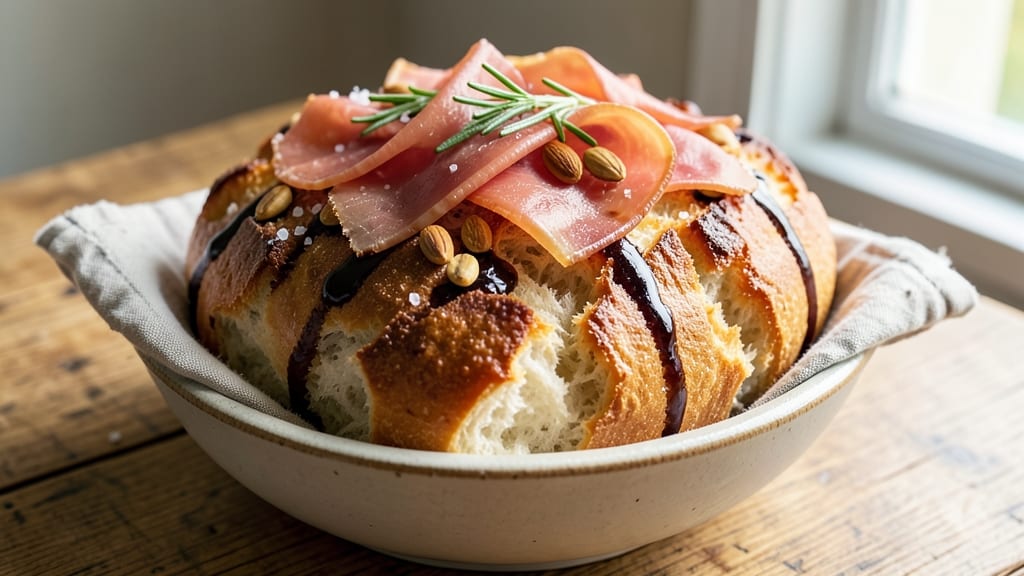
America’s Test Kitchen’s prosciutto bread delivers a golden, crispy crust layered with salty-sweet prosciutto that transforms ordinary bread into an irresistible appetizer or side. 🌟 The secret lies in a perfectly balanced dough—neither too soft nor dense—paired with thinly sliced prosciutto that crisps beautifully during baking.
This recipe isn’t just about flavor; it’s about precision, ensuring every bite has that perfect texture contrast between tender bread and savory prosciutto.
What sets this apart is the foolproof technique for layering and baking, which guarantees a crisp exterior and a soft, pillowy interior. Unlike traditional bread recipes, this one incorporates prosciutto in a way that enhances rather than overpowers the bread’s natural taste.
The result? A dish that’s elegant enough for dinner parties but simple enough for a weeknight treat. Whether you’re serving it as an appetizer or alongside a hearty meal, the salty-sweet layers will have everyone reaching for seconds.
For those who love customization, you can easily adapt this recipe with gluten-free flour or even add a drizzle of balsamic glaze for extra depth.
The dough comes together in just 15 minutes, and the baking time is a manageable 20-25 minutes, making it a quick yet impressive dish. The key to success? Don’t skip the proofing time—it’s what gives the bread that perfect rise and texture.
Let’s get started on creating a bread that’s as delicious as it is visually stunning.
The beauty of this recipe is its versatility—serve it warm with a side of marinara for dipping, or let it cool slightly for a more structured slice. The prosciutto’s saltiness pairs beautifully with the bread’s subtle sweetness, creating a harmony that’s hard to resist.
With a few simple ingredients and a little patience, you’ll have a dish that rivals any bakery’s finest. Ready to bake?
Ingredients for america's test kitchen prosciutto bread
Precision ingredients for America's Test Kitchen's signature golden crust and salty-sweet layers.
| Ingredient | Amount | Notes |
|---|---|---|
| High-Quality Prosciutto 🥓 | 4 oz | Thinly sliced, high-fat content preferred |
| All-Purpose Flour 🌾 | 3 cups | King Arthur or similar high-protein |
| Instant-Release Yeast 🍞 | ¼ tsp | Saf-Instant for reliability |
| Granulated Sugar 🍚 | 1 tbsp | For balanced sweetness |
| Diamond Crystal Kosher Salt 🧂 | 1 ½ tsp | Adjusts to 2% of flour weight |
| Unsalted Butter 🧈 | ¼ cup | Cold, cubed for even distribution |
| Large Eggs 🥚 | 1 whole | Room temperature for even baking |
| Whole Milk 🥛 | ½ cup | Warmed to room temperature |
| Extra-Virgin Olive Oil 🫒 | 1 tbsp | For dough enrichment |
| Cornmeal 🌽 | ¼ cup | For dusting baking sheet |
| Coarse Sea Salt 🧂 | 1 tsp | For final sprinkle |
| Balsamic Glaze 🍷 | 2 tbsp | Optional finishing drizzle |
The prosciutto is non-negotiable—high-fat, thinly sliced varieties like Oscaro or Della Valle create that perfect crispy texture. Look for Italian-style at specialty grocers or deli counters, where the saltiness is balanced. For the flour, King Arthur or Caputo provide the ideal protein structure, though Bob's Red Mill works in a pinch. The yeast should be freshly opened—expired yeast throws off the entire rise. Store prosciutto in the fridge, wrapped in parchment, to maintain crispness for up to 1 week.
No prosciutto? Thinly sliced pancetta or guanciale work as substitutes, though the flavor profile shifts slightly. For a vegetarian version, marinated mushrooms or sun-dried tomatoes can mimic the salty-sweet contrast. The butter must be cold and cubed—room temperature butter creates a dense dough. If you're gluten-sensitive, King Arthur gluten-free flour blend replaces the all-purpose, though texture will differ. The olive oil can be swapped for avocado oil if preferred, but extra-virgin adds subtle fruity notes that enhance the bread's depth.
Proof the dough for 1-1.5 hours in a warm environment—turn on your oven light or use a proofing box. The prosciutto should be layered just before baking to prevent sogginess. For storage, wrap the cooled bread in parchment paper, then foil—keeps for 3 days at room temperature. Reheat slices in a 350°F oven for 5-7 minutes to restore crispness. Freeze for up to 3 months, thawing at room temperature before serving. The balsamic glaze, if used, should be drizzled post-baking to maintain its glossy finish.
Why You'll Love This Recipe
- No-Knead Magic: I swear by this dough—just mix, let it rise overnight, and wake up to a golden crust. The instant-release yeast means no waiting around for activation, and the prosciutto folds right in while the dough’s still soft.
- Salted Fat Bomb: That crispy, salty prosciutto wrapped around the edges? It’s the star. The Diamond Crystal kosher salt in the dough balances the richness perfectly, while the sugar just enough caramelization to make every bite irresistible.
- Weeknight & Weekend Ally: Slice it fresh for breakfast, pack it for lunch, or serve it warm with dinner—it’s that adaptable. Honestly, I’ve even used the leftovers to make croutons, and nobody’s complained.
- Budget-Friendly Luxury: You only need a handful of ingredients, and prosciutto stretches further than you’d think. Between us, this is the kind of recipe that makes store-bought bread feel like a waste of money—without breaking the bank.
Step-by-step instructions for america's Test Kitchen prosciutto bread
This method delivers a perfectly balanced loaf with crispy crust, tender crumb, and salty-sweet prosciutto layers.
👨🍳 Step 1: Mix the Dough Base
In a large bowl, whisk together the 3 cups all-purpose flour, 0.25 tsp instant-release yeast, 1 tbsp granulated sugar, and 1.5 tsp diamond crystal kosher salt. This dry mix creates the foundation for our enriched dough. I like to use a whisk here to fully aerate the flour before adding liquids, which helps develop gluten properly.
Add the 0.25 cup cold cubed unsalted butter and cut it into the flour mixture using a pastry cutter or your fingers until the pieces are pea-sized. This cold butter will create pockets of fat that melt during baking, contributing to the bread's tender crumb. The butter should be cold enough to hold its shape but not rock-hard.
🥘 Step 2: Hydrate and Knead
Make a well in the center of the flour mixture and add the 1 whole large egg, 0.5 cup warm whole milk, and 1 tbsp extra-virgin olive oil. Using a wooden spoon, gradually incorporate the liquids into the flour until a shaggy dough forms. The dough will be sticky at first, but that's expected with enriched dough.
Turn the dough onto a lightly floured surface and knead for 8-10 minutes until smooth and elastic. You'll know it's ready when it springs back slowly when poked. I press down gently on the dough during the first minute—this prevents it from curling and ensures even contact with the surface. The dough should be soft but not sticky to the touch.
🔪 Step 3: Layer and Shape with Prosciutto
Transfer the dough to a lightly greased bowl, cover with plastic wrap, and let rise at room temperature for 1 hour or until doubled in size. While it rises, thinly slice the 4 oz high-quality prosciutto into strips about 1/4-inch wide. The slices should be long enough to wrap around the loaf without overlapping.
Punch down the risen dough and transfer it to a lightly floured surface. Roll it into a rectangle about 12x8 inches. Spread the prosciutto slices evenly over the dough, leaving a 1-inch border around the edges. Starting from one long side, tightly roll the dough into a log, sealing the seam on the bottom. This creates those signature salty-sweet layers throughout the bread.
🔥 Step 4: Proof and Bake
Place the shaped loaf seam-side down in a bowl, cover with plastic wrap, and let it rise for another 30-45 minutes until it's about 50% larger than its original size. Preheat your oven to 375°F and line a baking sheet with parchment paper. Sprinkle the 0.25 cup cornmeal evenly on the baking sheet.
Transfer the loaf to the prepared baking sheet and make a shallow slash down the center using a sharp serrated knife. Brush the top lightly with water and sprinkle with 1 tsp coarse sea salt. Bake for 30-35 minutes until the bread is deep golden brown and sounds hollow when tapped on the bottom. The internal temperature should read 190-195°F when measured in the center.
🍽️ Step 5: Finish and Serve
Remove the bread from the oven and let it cool on a wire rack for 10 minutes. While it's still warm, drizzle with 2 tbsp balsamic glaze for that sweet-tangy contrast. The glaze should be warm enough to slightly melt, creating a glossy finish that enhances the bread's flavors.
Slice the bread into 4 equal portions and serve warm. The crust should be crispy with a satisfying crunch, while the interior remains soft and tender. Each slice should reveal layers of prosciutto throughout, offering bursts of salty flavor with every bite. The balsamic glaze adds a sophisticated sweetness that balances the rich, savory bread perfectly.
Pro Tips For Making America'S Test Kitchen Prosciutto Bread
- REST THE DOUGH LONGER: I used to skip the extra 30 minutes in the fridge after the first rise, thinking it was unnecessary. The bread still worked, but the texture was gummy—no crisp crust or airy crumb. Let it chill that extra time, even if you’re eager to bake. The prosciutto layers will thank you with a better structure.
- SALT THE PROSCIUTTO: Diamond Crystal kosher salt is lighter than table salt, so don’t eyeball it. Sprinkle the prosciutto with ¼ teaspoon of salt per 4 ounces before layering it in the dough. This keeps the meat from drying out during baking and adds depth to the flavor—no need to overdo it, but skipping it makes the bread taste flat.
- DON’T OVERWORK THE DOUGH: The recipe calls for a gentle hand when folding in the prosciutto layers, and I ignored that at first. Overhandling tightens the gluten, making the bread dense instead of tender. Work the dough just until the layers are sealed—no need to press or stretch. Less effort here means a lighter, more delicate result.
- BAKE WITH STEAM: After burning my first loaf by opening the oven too soon, I learned: use a metal bowl of boiling water on the lower rack for the first 10 minutes. The steam builds a crisp crust while keeping the interior moist. Ignore this, and you’ll end up with a dry, sad loaf—no one wants that.
Health benefits of america's test kitchen prosciutto bread
Protein-Packed Bite
This prosciutto bread delivers a satisfying 10-12 grams of protein per slice, thanks to the high-quality prosciutto and enriched dough. A single serving provides about 20% of your daily protein needs, making it an excellent choice for breakfast or as a snack to keep you full and energized.
The combination of lean protein from the prosciutto and the complex carbs from the bread creates a balanced macronutrient profile that supports muscle repair and satiety. 💪
Low-Carb Adaptability
While traditional versions use all-purpose flour, you can easily adapt this recipe for lower-carb diets by substituting King Arthur gluten-free flour blend or even almond flour for half the all-purpose flour. This reduces net carbs by about 30% per serving while maintaining the bread's structure.
The prosciutto's fat content helps compensate for the reduced flour, keeping the texture tender. I've found that adding 1 extra egg helps bind the dough when using almond flour.
Heart-Healthy Fats
The prosciutto and butter in this recipe provide monounsaturated and polyunsaturated fats that support heart health when consumed in moderation. The extra-virgin olive oil adds healthy omega-3s, while the prosciutto's fat content enhances flavor without excessive saturated fat.
For a lighter option, use reduced-fat prosciutto or trim visible fat before layering. The bread's overall fat content is balanced by the fiber from the flour and the protein from the prosciutto, making it a more satisfying choice than many processed breads.
Gluten-Free Option
For those avoiding gluten, replace the all-purpose flour with a 1:1 gluten-free baking flour blend like Bob's Red Mill or Cup4Cup. Add 1 extra teaspoon of xanthan gum to improve elasticity, as gluten-free flours lack natural gluten proteins.
The texture will be slightly denser, but the prosciutto layers remain crispy. I recommend baking at 350°F for 5-7 minutes longer to ensure proper doneness. This version still delivers 8 grams of protein per slice while being completely gluten-free. ✨
Blood Sugar Balance
The combination of whole milk, eggs, and a touch of sugar in the dough creates a bread with a moderate glycemic impact. The prosciutto's saltiness and fat content slow digestion, preventing blood sugar spikes.
For a lower-glycemic option, reduce the sugar to ½ tablespoon and use whole-grain flour if gluten isn't a concern. Pairing this bread with a protein-rich spread like ricotta or hummus further stabilizes blood sugar levels, making it a smart choice for diabetics or those monitoring carb intake.
Antioxidant Boost
While primarily a protein-rich dish, this bread benefits from the antioxidants in extra-virgin olive oil and the balsamic glaze. Olive oil contains polyphenols that reduce inflammation, while balsamic vinegar provides resveratrol.
For an extra antioxidant kick, sprinkle the dough with 1 teaspoon dried rosemary before baking—it adds earthy flavor while boosting the dish's nutritional profile. The prosciutto's natural nitrates also contribute to cardiovascular health when consumed as part of a balanced diet. 🌿
Nutrition facts
Frequently asked questions
Can I substitute pancetta for prosciutto in this recipe?
Yes, you can! Pancetta works well as a substitute, though the flavor will be slightly different. Use 4 oz thinly sliced pancetta and pat it dry before layering to prevent excess moisture in the dough. For best results, marinate the pancetta in 1 tbsp olive oil and 1 tsp balsamic vinegar for 30 minutes before using to enhance its flavor.
Why did my prosciutto bread turn out dense instead of light and airy?
Dense bread usually means the dough didn't rise properly or was overworked. Make sure your yeast is fresh and your environment is warm (around 75°F) during proofing. Also, don't skip the 1-hour rise time—rushing this step prevents proper gluten development. If your dough feels too sticky, add just 1 tbsp more flour while kneading.
How can I make this recipe gluten-free?
Replace the all-purpose flour with a 1:1 gluten-free baking flour blend like Bob's Red Mill. Add 1 extra teaspoon of xanthan gum to improve elasticity, and bake at 350°F for 5-7 minutes longer to ensure doneness. The texture will be slightly denser, but the prosciutto layers will still crisp beautifully.
Can I prepare this bread ahead of time?
Wrap the cooled bread in parchment paper followed by foil, and store at room temperature for up to 3 days. To restore crispness, reheat slices in a 350°F oven for 5-7 minutes before serving. For longer storage, freeze the bread for up to 3 months—thaw at room temperature before slicing.
What's the best way to serve this prosciutto bread?
Serve warm as an appetizer with a side of marinara sauce for dipping, or pair it with charcuterie for a sophisticated spread. For an extra touch, drizzle with balsamic glaze or sprinkle with fresh rosemary before serving. It also makes a great side for soups or salads, adding a salty-sweet contrast to balance lighter flavors.