
Side Dishes
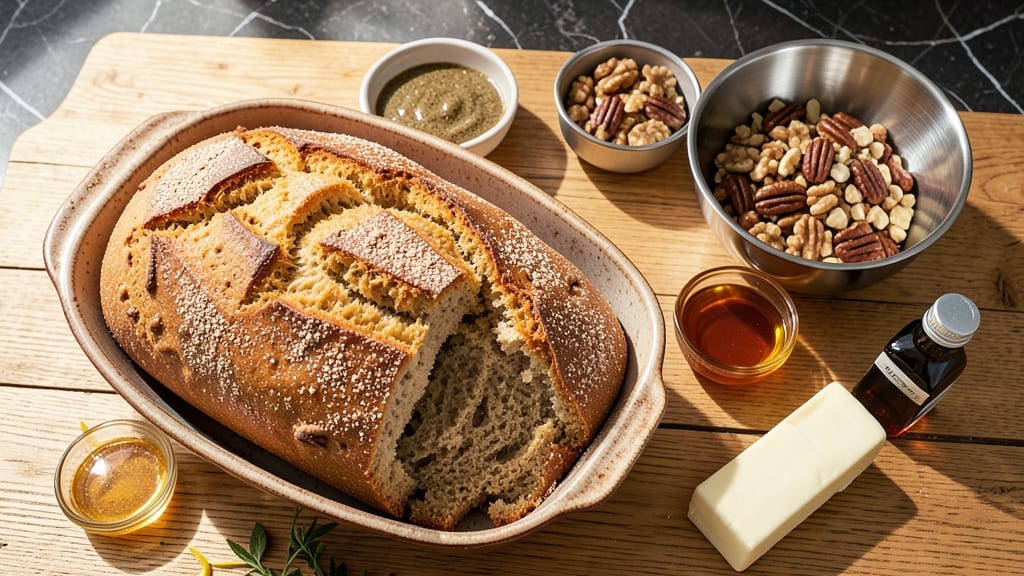
This almond flour nut bread recipe delivers a light, airy loaf without yeast—perfect for those avoiding gluten or fermented ingredients. The secret lies in the right ratio of almond flour to eggs, creating a tender crumb with just the right crunch.
I developed this version after years of experimenting with gluten-free baking, and it’s become a staple in my kitchen for breakfast or sandwiches.
The beauty of this recipe is its simplicity: no yeast means no waiting for dough to rise, and the almond flour keeps it naturally low-carb while adding rich nutty flavor.
A touch of honey or maple syrup balances the earthiness, while a sprinkle of chopped nuts on top adds texture and visual appeal. Baking at 350°F ensures a golden crust without drying out the interior.
What sets this bread apart is its versatility—slice it for toast with butter, use it for sandwiches, or serve it as a side to soups and salads. The recipe yields a loaf that stays fresh for days, making it ideal for meal prep.
Whether you're gluten-free, keto, or simply love nutty bread, this is a game-changer.
For extra flavor, brush the top with melted butter or almond milk glaze before baking. The result is a bread that’s crisp on the outside, tender inside, and packed with nutty goodness. Ready in about 45 minutes, it’s the perfect solution for a quick, satisfying loaf without the fuss.
Ingredients for almond flour nut bread
Eight simple ingredients transform into a tender, nutty loaf without yeast or gluten.
| Ingredient | Amount | Notes |
|---|---|---|
| Almond Flour 🌰 | 2 ½ cups | Finely ground, blanched preferred |
| Large Eggs 🥚 | 6 whole | Room temperature for even mixing |
| Unsalted Butter 🧈 | ½ cup | Cold, cubed for easier mixing |
| Honey 🍯 | ¼ cup | Or maple syrup for vegan option |
| Vanilla Extract 🌿 | 1 tsp | Pure vanilla for best flavor |
| Baking Powder 🌶️ | 1 tsp | Aluminum-free preferred |
| Salt 🧂 | ½ tsp | Fine sea salt preferred |
| Almond Milk 🥛 | ¼ cup | Unsweetened for neutral flavor |
| Chopped Walnuts 🌰 | ½ cup | Or pecans for variation |
| Ground Flaxseed 🌾 | 1 tbsp | For binding without eggs |
| Water 💧 | 3 tbsp | For flax egg mixture |
| Sliced Almonds 🌰 | ¼ cup | For topping, toasted |
Almond flour is the star here—Bob's Red Mill or Anthony's Goods are my go-tos for consistent texture. Look for finely ground, blanched almond flour; it blends better and yields a lighter crumb. The eggs need to be room temperature (pop them out of the fridge 30 minutes before mixing), and cold butter cubes create pockets of steam for that signature airy texture. If your almond flour smells nutty but stale, toast it lightly in a dry pan for 5 minutes to revive the flavor. For extra insurance against dryness, I always mix in unsweetened almond milk—it keeps the crumb moist without adding bulk.
No honey? Maple syrup or agave works 1:1, though honey adds subtle depth. Vanilla extract can be swapped for vanilla bean paste**> if you're feeling fancy, but pure extract is fine. The ground flaxseed acts as a binder—mix it with water first (let it sit 5 minutes to thicken) before adding to the wet ingredients. For nut variations, pecans or hazelnuts work beautifully, but walnuts add a pleasant bite. If you're avoiding nuts entirely, sunflower seed flour**> can replace up to half the almond flour, though texture will differ slightly. Pre-measure everything before starting—this recipe relies on precise ratios for that perfect crumb.
Store the loaf wrapped in parchment paper inside an airtight container at room temperature for 3-4 days—it stays fresher longer than most bread. For extended storage, slice and freeze portions for up to 3 months**>. Reheat slices in a toaster or 350°F oven for 5 minutes to restore crispness. I like to brush the top with melted butter after baking (cool completely first), then sprinkle with extra nuts. The bread reheats beautifully—perfect for toast or sandwiches. If you make a double batch, freeze half immediately; it's a lifesaver for busy mornings.
Why You'll Love This Recipe
- No Mixer Needed: I swear by this—just whisk eggs, fold in almond flour, and let the batter rest. No stand mixer, no stress, just a few minutes of gentle work that actually feels satisfying.
- Honey-Butter Magic: That honey doesn’t just sweeten—it caramelizes just enough in the oven, while the butter keeps the crumb tender but not greasy. It’s the kind of flavor that makes you pause mid-slice.
- Breakfast or Snack: Serve it warm with butter for a lazy weekend brunch, or pack slices for lunch when it’s still fresh. Honestly, I’ve even used it as a base for fancy charcuterie boards—no one questions the almond flour.
- Leftovers That Last: This bread stays moist for days, which means fewer trips to the bakery. I’ll be real: I’ve had it for breakfast on Thursday morning, and it’s still better than store-bought.
Step-by-step instructions for almond flour nut bread
Here's how to create a perfectly light, airy loaf without yeast—every step ensures maximum rise and texture.
Prepare the Flax Egg Mixture
In a small bowl, combine the 1 tablespoon ground flaxseed with the 3 tablespoons water. Stir well and let it sit for 5 minutes until it thickens into a gel-like consistency. This acts as our egg substitute, providing the binding and moisture needed for the bread to hold together.
I like to use a whisk for this step to ensure the flaxseed is fully dissolved. The mixture should resemble raw egg whites in texture—if it's too thick, add a splash more water; if too thin, stir in a bit more flaxseed. This is our foundation, so don't rush it.
Cream Butter and Honey
In a stand mixer fitted with the paddle attachment, beat the 0.5 cup unsalted butter (cold, cubed) with the 0.25 cup honey on medium speed for 3-4 minutes. You're looking for a light, fluffy mixture that nearly doubles in volume. This step incorporates air, which is crucial for that light, airy texture we want in the final loaf.
The butter should be cold when you start—this prevents it from melting too quickly and ensures proper emulsification with the honey. If the mixture looks too thick after mixing, that's normal. The eggs will come next and help lighten it up.
Add Eggs and Dry Ingredients
Add the 6 whole large eggs (room temperature) one at a time, mixing on low speed for 30 seconds after each addition until fully incorporated. Then add the 1 teaspoon vanilla extract and mix for another 30 seconds. This ensures the eggs are fully emulsified with the butter mixture.
In a separate bowl, whisk together the 2.5 cups almond flour, 1 teaspoon baking powder, and 0.5 teaspoon salt. Gradually add this dry mixture to the wet ingredients, mixing on low speed for 1-2 minutes until just combined. Be careful not to overmix—you should still see some streaks of flour. Overmixing develops gluten, which can make the bread dense.
Fold in Wet and Nut Additions
Remove the mixer bowl and gently fold in the 0.25 cup almond milk and the 0.5 cup chopped walnuts using a silicone spatula. The dough will be thick and sticky, almost like a wet batter. This is normal—almond flour absorbs more liquid than traditional flour. Fold just until the walnuts are evenly distributed throughout.
Here's the thing—don't worry if the dough looks too thick. The baking powder will create enough lift to give us that light texture. If you're concerned about the consistency, you can add 1-2 tablespoons more almond milk if needed, but start with what we have.
Prepare and Bake the Loaf
Preheat your oven to 350°F. Grease a 9x5-inch loaf pan generously with butter or line it with parchment paper for easy removal. Pour the batter into the prepared pan and smooth the top with a spatula. Sprinkle the 0.25 cup sliced almonds evenly over the top for that classic nut bread crunch.
Bake for 40-45 minutes, or until a toothpick inserted into the center comes out clean. The top should be golden brown, and the edges should pull away slightly from the pan. If the top browns too quickly, tent the pan with foil to prevent over-browning while ensuring the center is fully cooked.
Cool and Serve
Remove the bread from the oven and let it cool in the pan for 10 minutes. Then transfer it to a wire rack to cool completely. This resting period is crucial—it allows the bread to set properly and prevents it from becoming gummy or falling apart when sliced.
The bread should be light and moist on the inside with a slightly crisp exterior. Slice it into 8 even portions for serving. Store any leftovers in an airtight container at room temperature for up to 3 days, or freeze for longer storage. This bread pairs beautifully with butter, jam, or even as a base for French toast.
Pro Tips For Making Almond Flour Nut Bread
- Mix Butter and Honey First: I learned this the hard way—whipping cold butter into almond flour creates a gritty, uneven batter. Instead, cream the softened butter and honey together until fully combined, then add eggs one at a time. This ensures a smooth, tender crumb that doesn’t turn out dense or crumbly.
- Weigh Your Almond Flour: Scooping almond flour by volume leads to inconsistent results—too much and your bread’s dry, too little and it collapses. Use a kitchen scale for precision; aim for 2 cups (about 200g) packed lightly. Packing it just enough removes air pockets without over-compressing.
- Don’t Overmix the Batter: After adding wet ingredients, mix just until combined—about 10 strokes. Overworking the dough develops gluten in the eggs, which makes the bread tough and rubbery. Stop when the vanilla is evenly distributed, even if a few streaks remain.
- Bake with a Water Bath: Place your loaf pan in a larger roasting pan filled with 1 inch of hot water before baking. The steam keeps the almond flour from drying out too quickly, preventing a dense or cracked crust. Remove the water after 30 minutes to let the top brown properly.
Serving suggestions for this recipe
Toast Perfection
This nut bread toasts beautifully—its dense yet tender crumb holds up perfectly to high heat. For best results, use a lightly oiled toaster basket and toast slices for 2-3 minutes until golden and crisp.
I love it with unsalted butter and a drizzle of local honey for that classic breakfast combo. For extra richness, spread with almond butter or cream cheese before toasting. 🥖
Sandwich Base
The sturdy yet tender crumb makes this bread ideal for sandwiches—it won't fall apart like some gluten-free loaves. Try it with smoked turkey, avocado slices, and spinach for a hearty lunch.
For a sweet version, layer with peanut butter, banana slices, and a sprinkle of cinnamon. The nutty flavor pairs especially well with goat cheese and fig jam for an elegant tea sandwich. 🥪
Soup Companion
Serve warm slices alongside soups to soak up any stray broth. The bread's slight sweetness complements savory dishes like tomato basil soup or creamy mushroom bisque. For a cozy meal, pair it with roasted vegetable soup and a sprinkle of Parmesan cheese.
The texture holds up better than many gluten-free breads when submerged in broth. 🍲
Dessert Twist
Dip warm slices in dark chocolate or caramel sauce for a quick dessert. The nutty flavor balances sweetness perfectly. For a festive touch, brush with melted butter and sprinkle with crushed pistachios before baking.
This bread also makes amazing French toast—soak slices in an egg-milk mixture with vanilla extract and cinnamon, then pan-fry until golden. 🍫
Breakfast Pairings
Serve with scrambled eggs and crispy bacon for a protein-packed morning. The bread's natural sweetness balances savory breakfast meats beautifully. For a lighter option, pair with Greek yogurt and berries. I also love it with turkey sausage and sautéed mushrooms for a hearty brunch. 🍳
Garnish Ideas
Elevate your serving with simple garnishes. A sprinkle of toasted coconut flakes adds tropical flair, while crushed rosemary gives a savory touch. For sweet applications, dust with powdered sugar or drizzle with warm maple syrup.
The nutty flavor also pairs well with fresh thyme leaves for a herbal note. 🌿
Nutrition facts
Frequently asked questions about almond flour nut bread
Why does my almond flour nut bread turn out dense instead of light?
Overmixing the batter or using warm butter are the most common culprits. Almond flour lacks gluten, so avoid mixing beyond just combining ingredients. Use cold butter (cubed) and room-temperature eggs to create air pockets. Also, ensure your baking powder is fresh—old leavening agent won't provide enough lift.
Can I make this nut bread without eggs?
Yes! The recipe already includes a flax egg substitute (1 tbsp ground flaxseed + 3 tbsp water). For extra binding, add 1 extra tbsp flaxseed mixture>. You can also use 1/4 cup unsweetened applesauce> as an egg replacement, though texture may vary slightly. Always let substitutes thicken for 5 minutes> before mixing.
How do I prevent the top from browning too quickly?
Tent the loaf pan with aluminum foil after 20 minutes> in the oven. This traps steam while allowing the center to cook through. For even browning, consider placing the pan on the middle rack. If your oven runs hot, reduce temperature to 325°F> for the last 10 minutes> of baking.
What's the best way to store leftovers?
Wrap cooled slices in parchment paper and store in an airtight container at room temperature for 3-4 days>. For longer storage, freeze slices individually (they reheat beautifully!). To revive stale bread, warm slices in a 350°F> oven for 5-7 minutes> with a damp paper towel on top for extra moisture.
Can I substitute other nuts for walnuts?
Pecans, hazelnuts, or even sunflower seeds work well. For best texture, chop nuts coarsely (walnut-sized pieces). If using seeds, toast them first for enhanced flavor. Note that sunflower seed flour may make the bread slightly heavier—reduce by 1/4 cup> if needed to maintain airiness.