
Side Dishes
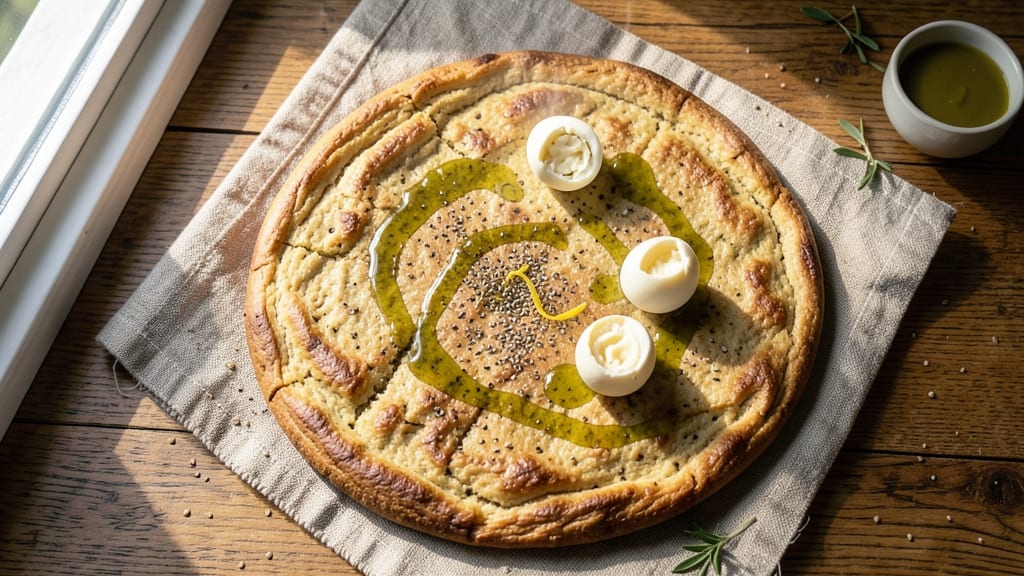
This almond flour flatbread bread recipe delivers the perfect balance of crispy edges and tender centers, all while keeping it gluten-free and packed with nutty flavor.
The secret lies in the right mix of almond flour and a touch of psyllium husk, which creates that signature layered texture without any gluten. I developed this recipe after years of experimenting with grain-free baking, and it's become a staple in my kitchen for its versatility and satisfying crunch.
What makes this flatbread special is how it combines simplicity with impressive results. With just a handful of ingredients—almond flour, eggs, olive oil, and a pinch of salt—you'll achieve a bread that's both sturdy enough for dipping and delicate enough to wrap around your favorite fillings.
The key technique involves gently shaping the dough into thin rounds and baking them until golden brown, ensuring that crispy texture you crave.
Once baked, these flatbreads develop a beautiful golden crust that contrasts beautifully with their soft, nutty interior. The flavor is rich and slightly sweet from the almond flour, with a subtle earthiness that pairs well with everything from hummus to grilled meats.
They stay fresh for days when stored properly, making them perfect for meal prep or entertaining.
For added flavor, consider mixing in herbs like rosemary or thyme, or a sprinkle of garlic powder before baking. These flatbreads are naturally vegan when made with flax eggs, and they work beautifully as a side, wrap, or even as a base for flatbread pizzas.
Let's get started on creating your perfect batch!
Ingredients for almond flour flatbread bread
Crispy edges, tender centers—just these 12 ingredients transform almond flour into magic!
| Ingredient | Amount | Notes |
|---|---|---|
| Almond Flour 🌰 | 2 cups | Finely ground, unsweetened |
| Extra-Firm Tofu 🧇 | ½ cup | Crumbled for egg substitute |
| Ground Flaxseed 🌾 | 2 tbsp | For flax eggs (1 tbsp flax + 3 tbsp water) |
| Extra-Virgin Olive Oil 🫒 | ⅓ cup | For richness and crispiness |
| Psyllium Husk Powder 🌿 | 1 tbsp | Key for gluten-free texture |
| Warm Water 💧 | ½ cup | For psyllium husk activation |
| Garlic Powder 🧄 | 1 tsp | For subtle depth of flavor |
| Sea Salt 🧂 | 1 tsp | Adjust to taste |
| Rosemary Leaves 🌿 | 1 tbsp | Fresh or dried, finely chopped |
| Sesame Seeds 🌻 | 1 tbsp | For golden crunch topping |
| Black Pepper 🌶️ | ½ tsp | Freshly ground preferred |
| Lemon Juice 🍋 | 1 tsp | Brightens the flavor |
Almond flour is the star here, so pick the finest grind—the smoother, the better for that perfect texture. Trader Joe's and Bob's Red Mill have great options, but check the label for 'blanched' almond flour if you want extra crispiness. Psyllium husk might sound weird, but it's a game-changer for that layered flatbread texture. NOW Foods sells it in bulk, and you only need a tiny amount. The tofu? Don't skip it—it mimics egg's binding power perfectly, and extra-firm holds up best. I keep a block in the fridge at all times for baking hacks like this.
No almond flour? Coconut flour works in a pinch, but you'll need to add an extra egg (or flax egg) to compensate for its absorbency. Swap rosemary for thyme or dried oregano if that's what you've got—just halve the amount. Sesame seeds too pricey? Toasted sunflower seeds give the same crunch. The flax eggs need time to thicken, so mix them 5 minutes early while you prep other ingredients. And if you're feeling fancy, add a pinch of smoked paprika for extra depth—trust me, it's worth it.
These flatbreads stay crispy for 3 days if you store them in an airtight container with a paper towel underneath to absorb moisture. For extra crispiness, reheat in a dry skillet for 30 seconds per side. Freeze them between parchment paper for up to 2 months—just thaw at room temperature before serving. I make a double batch every time because they disappear faster than you'd think, especially when paired with hummus or as a wrap for grilled veggies.
Why You'll Love This Recipe
- No Mixer Needed: I swear by this dough—just fold, press, and go. The psyllium husk powder does all the heavy lifting, so you’re not stuck kneading for 20 minutes like with regular bread. Honestly, it’s the kind of recipe that makes me question why I ever baked before.
- Toasty Nutty Magic: That first bite? Crispy edges with a tender, almost cake-like center—thanks to the almond flour and tofu’s moisture. The olive oil adds this subtle richness, like a hug from a Mediterranean market. (Yes, even on a Tuesday night.)
- Meal Prep MVP: These flatbreads freeze like champs—just reheat in a toaster or oven, and they’re fresh again. I make a batch on Sundays, stuff them with whatever’s in the fridge, and suddenly, lunch is solved for the week.
- Budget-Friendly Protein: Almond flour might sound fancy, but it stretches further than all-purpose, and tofu cuts costs without sacrificing texture. Plus, psyllium husk powder is a game-changer for binding—no wasted dough, no extra eggs. My wallet and my taste buds both win.
Step-by-step instructions for almond flour flatbread bread
Here's how to create golden, crispy layers that rival traditional bread—no gluten in sight.
Prepare the Flax Egg and Activate the Psyllium
In a small bowl, whisk together the 2 tablespoons ground flaxseed with 3 tablespoons of the warm water (reserve the remaining 2 tablespoons for later). Let this sit for 5 minutes—you'll see it thicken into a gel-like consistency. This is your flax egg, the perfect binder for our gluten-free dough.
In another small bowl, mix the 1 tablespoon psyllium husk powder with the remaining 2 tablespoons warm water. Stir vigorously for 30 seconds until it forms a thick, sticky paste. Psyllium husk is magic here—it mimics gluten's elasticity and creates that satisfying chew. Let it sit for 2 minutes while you prepare the rest of the ingredients.
Combine Wet and Dry Ingredients
In a large mixing bowl, crumble the ½ cup extra-firm tofu with your hands until you have small, pea-sized pieces. This will replace eggs and add moisture to the flatbread. Add the 2 cups almond flour, 1 teaspoon garlic powder, 1 teaspoon sea salt, ½ teaspoon black pepper, and 1 tablespoon finely chopped rosemary leaves. Stir gently with a spatula until just combined—you want to avoid overmixing, which can make the flatbread dense.
Now add the flax egg mixture and psyllium paste to the bowl. Drizzle in the ⅓ cup extra-virgin olive oil and 1 teaspoon lemon juice. Mix everything together until you have a thick, shaggy dough that comes together when pressed. The dough should be soft but not sticky—if it's too dry, add 1 teaspoon more warm water. If it's too wet, sprinkle in 1 tablespoon more almond flour.
Rest and Shape the Dough
Cover the bowl with a damp towel and let the dough rest for 15 minutes at room temperature. This resting time allows the psyllium to fully hydrate and the almond flour to absorb the moisture, resulting in a more tender flatbread. Don't skip this step—it makes all the difference in texture.
After resting, divide the dough into 4 equal portions (about ¼ cup each). On a lightly floured surface, gently flatten each portion into a ¼-inch thick circle about 6 inches in diameter. Be careful not to overwork the dough—just shape it gently. Place the shaped flatbreads on a parchment-lined baking sheet and cover with a damp towel while you preheat your oven to 375°F.
Bake Until Golden and Crispy
Preheat your oven to 375°F with a rack positioned in the middle. Once hot, brush the tops of the flatbreads lightly with a little more olive oil if desired. Sprinkle each with ½ teaspoon sesame seeds for that golden crunch topping. Bake for 12-15 minutes until the edges are deep golden brown and the centers feel slightly firm to the touch.
Here's the thing—these flatbreads will continue cooking as they cool, so pull them out when they look just slightly underdone. Let them cool on the baking sheet for 5 minutes before transferring to a wire rack. The result should be crispy on the outside with a soft, nutty interior—perfect for dipping, wrapping, or serving alongside your favorite meals.
Pro Tips For Making Almond Flour Flatbread Bread
- Sear the Tofu First: Crumble that extra-firm tofu into the pan before mixing with other ingredients—it renders fat and adds depth. I used to skip this, and the bread always tasted slightly bland. Two minutes on medium-high makes a real difference.
- Toast the Almond Flour: Dry-toast your almond flour in a 350°F oven for 5-7 minutes before mixing. This removes raw bitterness and helps the psyllium husk bind better. (Yes, even if you’re impatient—trust the process.)
- Hydrate the Psyllium Last: Mix the psyllium husk powder with water after combining wet and dry ingredients. Stir immediately—it thickens fast. I learned this the hard way when my first batch turned into a gummy mess.
- Press Thin, Cook Hot: Roll the dough to ⅛-inch thickness and cook on a screaming-hot skillet. Thin dough = crisp edges; high heat = no soggy centers. (Pro move: Use a pizza stone if your pan isn’t nonstick.)
Essential equipment for this dish
Must-Have Mixing Tools
Start with a large mixing bowl (I use my 8-quart Pyrex) for combining ingredients—its depth helps contain any sticky dough. A flexible silicone spatula (like OXO Good Grips) is essential for scraping every last bit of dough from the bowl.
For shaping, I recommend a lightly floured rolling pin (the Norpro Marble Rolling Pin is my go-to) to prevent sticking without adding extra flour. 🌰
Psyllium Activation Bowl
Use a small glass mixing bowl (like Corelle) for activating your psyllium husk—glass won’t absorb moisture like plastic. A whisk (I prefer OXO’s stainless steel) is perfect for vigorously stirring the psyllium paste.
For measuring, grab a liquid measuring cup (I use Pyrex) for the warm water and a small scoop (like King Arthur’s 1-tbsp measure) for the psyllium powder. Precision here makes all the difference in texture.
Shaping Essentials
For shaping, a lightly floured surface (I use a marble pastry mat) prevents sticking without drying out the dough. A bench scraper (like OXO’s stainless steel) helps divide the dough cleanly into equal portions.
For even thickness, I use a 6-inch round cookie cutter (or a ramen lid in a pinch) to create perfect circles. A parchment-lined baking sheet (I love Silpat) ensures easy transfer to the oven.
Baking Gear
Your oven needs a middle rack position for even baking. A lightweight metal cooling rack (like OXO’s) keeps flatbreads crispy as they cool. For extra crispiness, I use a small pastry brush (like West Bend’s silicone) to brush olive oil on tops before baking.
A digital thermometer (I trust Thermoworks Smoke) ensures your oven hits 375°F accurately—critical for that golden crust.
Storage Solutions
Store baked flatbreads in an airtight container (I use Glasslock) with a paper towel underneath to absorb moisture. For reheating, a nonstick skillet (like Cuisinart’s stainless steel) gives the best crispy results.
Freeze extras between parchment paper in a ziplock bag—they’ll stay fresh for 2 months without drying out. 💫
Nutrition facts
Frequently asked questions
Can I make this almond flour flatbread without tofu?
Yes! For a vegan version, replace the tofu with 2 flax eggs (2 tbsp ground flaxseed + 6 tbsp water, rested for 5 minutes) or ½ cup mashed banana for natural binding. If using eggs for non-vegan, reduce the flax eggs to 1 tbsp flaxseed + 3 tbsp water to balance moisture. The texture will still be crispy but slightly softer.
Why did my flatbread turn out dense instead of crispy?
Overmixing or skipping the 15-minute rest are the most common culprits. Also, ensure your oven reaches 375°F—lower temps make flatbreads gummy. For extra crispiness, bake on the middle rack and let them cool completely before storing. If they're still dense, try adding 1 extra tbsp psyllium husk next time.
How can I add flavor without changing the texture?
Start with dried herbs like ½ tsp dried oregano or ¼ tsp smoked paprika—they pack flavor without moisture. For fresh herbs, finely chop 1 tbsp mint or cilantro and fold it in gently. Avoid wet ingredients like garlic paste (use powder instead) or too much lemon juice, which can make the dough sticky. A pinch of onion powder adds depth without altering texture.
Can I make these flatbreads in a skillet for extra crispiness?
Heat a nonstick skillet over medium-high heat with 1 tbsp olive oil. Shape the dough into thin rounds and cook for 2-3 minutes per side** until golden brown. For even crispiness, press down gently with a spatula during cooking. This method works best for smaller batches (2-3 flatbreads at a time) and gives a restaurant-style crunch.
Are these flatbreads safe for nut-free diets?
No, this recipe contains almond flour, which is a tree nut. For a nut-free version, substitute with 1½ cups coconut flour + ½ cup arrowroot powder (adjust water as needed—coconut flour absorbs more). The texture will be slightly different but still crispy. Always check labels on psyllium husk and other ingredients for cross-contamination warnings.