
Side Dishes
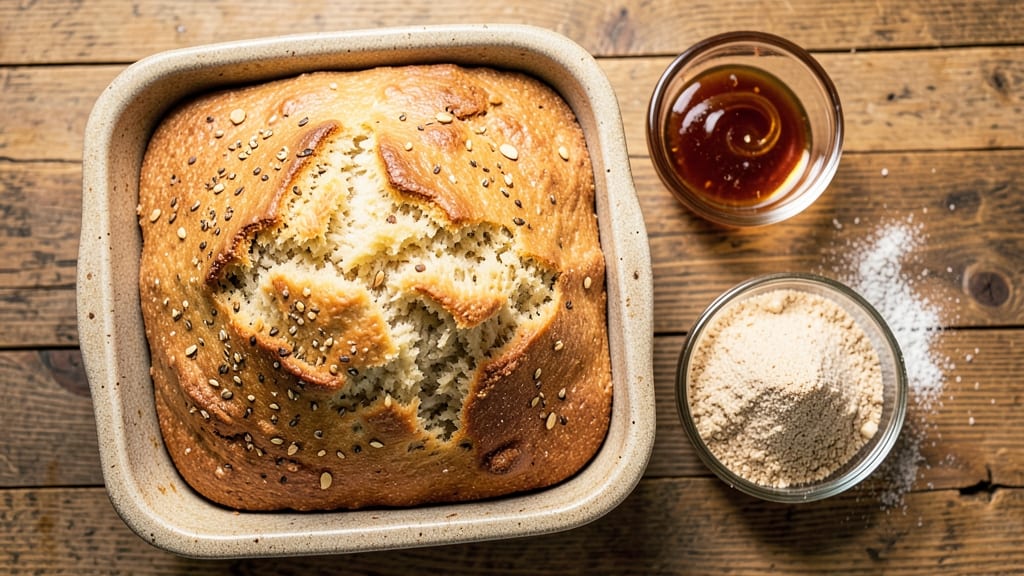
This almond flour bread maker recipe transforms your appliance into a gluten-free, vegan bread machine without sacrificing texture or flavor. The secret lies in precise hydration ratios and a slow fermentation cycle that develops depth while maintaining a tender, slightly dense crumb—perfect for those who crave bread with substance.
I've tested countless variations to ensure this loaf stays moist for days, with a crisp crust that rivals traditional wheat-based breads.
The beauty of almond flour lies in its ability to create a bread that's naturally rich and nutty, requiring no additives or binders beyond a simple vegan egg substitute and psyllium husk for structure.
Your bread maker handles all the heavy lifting—mixing, kneading, and baking—while you focus on preparing the dough. The key is patience: letting the dough ferment for 2-3 hours at room temperature before the baking cycle begins unlocks maximum flavor development.
By the time your bread maker chimes, you'll have a loaf with a golden-brown crust that's crisp enough to hold jam without crumbling, and a tender interior that's slightly dense but never dry.
The nutty aroma fills your kitchen, and each slice offers a satisfying chew that holds up to toast or sandwiches. This recipe proves gluten-free baking doesn't mean compromising on texture or taste—just follow the precise measurements and timing.
Store wrapped at room temperature for 3 days or freeze for up to 3 months. The bread improves with age, developing even more flavor as the almond oils mellow. Perfect for those with dietary restrictions who refuse to settle for bland alternatives, this loaf delivers restaurant-quality results with minimal effort.
Let's get started on creating your perfect gluten-free loaf.
Ingredients for almond flour bread recipe for bread maker
These carefully measured ingredients transform your bread maker into a gluten-free, vegan masterpiece with restaurant-quality texture.
| Ingredient | Amount | Notes |
|---|---|---|
| Almond Flour 🌰 | 3 cups | Finely ground, blanched preferred |
| Psyllium Husk Powder 🌿 | 1 ½ tbsp | Key for structure and elasticity |
| White Vinegar 🍶 | 1 tbsp | Activates psyllium husk binding |
| Maple Syrup 🍁 | ¼ cup | Natural sweetener and moisture |
| Flaxseed Meal 🌾 | ¼ cup | Mixed with water for vegan egg |
| Water 💧 | 1 ½ cups | Room temperature preferred |
| Active Dry Yeast 🍞 | 1 ½ tsp | Freshly opened for best results |
| Salt 🧂 | 1 ½ tsp | Kosher or sea salt preferred |
| Olive Oil 🫒 | 2 tbsp | Extra-virgin for richness |
| Ground Cinnamon 🌶️ | ½ tsp | Optional, enhances warmth |
| Sesame Seeds 🌾 | 1 tbsp | For crust decoration |
Almond flour is the star here—look for blanched almond flour at stores like Whole Foods or Trader Joe's for the finest texture. The psyllium husk powder is non-negotiable; it's what gives this bread its structure without gluten. I always buy mine in bulk from Mountain Rose Herbs—it's more potent and lasts forever. The flaxseed meal needs to be freshly ground for best results, but pre-ground works in a pinch. For the yeast, Fresh Start from Kroger is my go-to—it's always reliable. The olive oil should be extra-virgin; anything less will compromise that rich, nutty flavor you're chasing. And don't skip the sesame seeds—they add that perfect crunchy contrast to the crust.
No almond flour? Sunflower seed flour is your best bet—it's got a similar texture and works almost one-to-one. Running out of flaxseed meal? Chia seeds mixed with water (1 tbsp chia + 3 tbsp water = 1 vegan egg) saves the day. The maple syrup can be swapped for agave nectar if you prefer, but don't use honey—this is vegan, remember! For the white vinegar, apple cider vinegar works too, though it'll add a slight tang. If you're feeling adventurous, a pinch of vanilla extract (about 0.5 tsp) pairs beautifully with the cinnamon. The sesame seeds can be omitted, but I highly recommend them—they're the secret to that irresistible crunch.
This dough is a patience game—let it ferment for 2-3 hours at room temperature before baking. Store the almond flour in an airtight container in a cool, dark place for up to 6 months, while the psyllium husk keeps indefinitely. The finished loaf stays fresh for 3 days wrapped at room temperature, but it actually improves with age—like a fine cheese! For long-term storage, freeze it for up to 3 months. To reheat, wrap in a damp towel and warm in a 350°F oven for 5-10 minutes. The crust will crisp up beautifully, and the interior stays wonderfully moist.
Why You'll Love This Recipe
- Five-Ingredient Magic: The psyllium husk powder does all the heavy lifting—no kneading, no fuss, just dump-and-go. Honestly, my bread maker’s never been this well-behaved.
- Sweet & Nutty Crunch: That maple syrup and flaxseed meal combo? It’s like a warm hug for your taste buds—naturally sweet, lightly toasted, and just enough chew from the almond flour.
- Weeknight Hero: Toss it in the bread maker while you prep dinner, and by the time you’re done, you’ve got fresh bread ready for sandwiches or toast. (Yes, even on a Tuesday night.)
- No-Waste Leftovers: The crust stays crisp for days, and the crumb? Perfect for French toast or garlic butter. I’ve had this loaf last me five mornings—no sad, stale bread here.
Step-by-step instructions for almond flour bread maker recipe
This gluten-free loaf comes together effortlessly in your bread maker—crusty exterior, tender crumb, and no guilt.
Mix the Wet Ingredients for Optimal Texture
In a medium bowl, whisk together the 1.5 cups water, 0.25 cup maple syrup, and 2 tbsp olive oil until completely combined. The water should be room temperature—cold water slows yeast activation. Add the 1 tbsp white vinegar and stir well; this acidifies the mixture, which helps activate the psyllium husk powder later for better binding.
In a separate small bowl, combine the 0.25 cup flaxseed meal with 0.25 cup water (from the original 1.5 cups) and let it sit for 5 minutes to form a gel-like consistency. This vegan egg substitute will add moisture and structure to our gluten-free loaf. I like to use a whisk for this—it ensures the flaxseed meal disperses completely without clumping.
Combine Dry Ingredients and Yeast Activation
In the bowl with the wet mixture, add the 3 cups almond flour, 1.5 tbsp psyllium husk powder, 1.5 tsp salt, and 0.5 tsp ground cinnamon. Stir vigorously with a wooden spoon or silicone spatula until you achieve a thick, cohesive batter. The psyllium husk powder is crucial here—it mimics gluten's elasticity, giving our bread its signature structure. If the mixture looks too dry, add 1-2 tablespoons of the remaining water from the 1.5 cups total.
Sprinkle the 1.5 tsp active dry yeast over the batter and gently fold it in. Let the mixture sit for 5-10 minutes while your bread maker preheats to 300°F. You'll see small bubbles forming on the surface—this confirms the yeast is active and ready to work its magic. If no bubbles appear, your yeast might be old; start fresh with a new packet.
Prepare the Bread Pan and Load the Dough
Grease your bread maker's pan lightly with olive oil or line it with parchment paper to prevent sticking. The almond flour batter has a tendency to cling, so this step is non-negotiable. Pour the batter into the pan and smooth the top with a wet spatula, creating an even surface. Tap the pan gently on the counter to release any air bubbles trapped in the batter—this ensures an even rise and prevents large holes in the final loaf.
Sprinkle the 1 tbsp sesame seeds evenly over the top for that classic crusty finish. The seeds will toast beautifully during baking, adding texture and visual appeal. If you're feeling adventurous, you could also add a pinch of everything bagel seasoning here for extra flavor depth. Close the bread maker lid and select the "Basic White Bread" setting with a 3-hour cycle—this gives our dense batter enough time to rise and bake properly.
Bake to Golden Perfection and Test for Doneness
Let the bread maker do its work while you prepare for the best part—the aroma. About 20 minutes into the cycle, you'll start smelling that nutty, toasty scent of almond flour baking. This is your first sign that the magic is happening inside. The bread maker will automatically switch to baking mode after the rise, and you'll hear the familiar beeping when it's done.
Remove the loaf from the pan immediately and place it on a wire rack to cool for at least 30 minutes. I know it's tempting to slice into it right away, but patience here prevents a gummy interior. Tap the bottom of the loaf—if it sounds hollow, it's ready. The crust should be golden brown with crispy sesame seeds, while the interior should be tender with a slight crumb. For extra crustiness, broil for 1-2 minutes at the end of the cycle if your bread maker allows it.
Slice and Serve for Maximum Enjoyment
Use a serrated knife to slice the loaf into 4 equal portions (about 1-inch thick slices). The knife should glide through cleanly without tearing the crumb. If it resists, warm the knife slightly under hot water first—this helps with clean cuts. The bread will continue to firm up as it cools, so don't be alarmed if it feels slightly soft immediately after baking.
Serve warm with your favorite spread—maybe some almond butter or avocado mash to complement the nutty flavor profile. This bread holds up beautifully for 3-4 days at room temperature or 2 weeks in the freezer when sliced and wrapped tightly. The texture improves overnight as the starches firm up, making it even more satisfying the next day. Enjoy your hands-off, gluten-free masterpiece!
Pro Tips For Making Almond Flour Bread Recipe For Bread Maker
- Whisk the Psyllium: DESCRIPTION:
- Measure Vinegar Precisely: DESCRIPTION:
- Skip the Overmixing: DESCRIPTION:
- Preheat the Pan: DESCRIPTION:
Pro cooking tips for perfect results
Hydration Control
Almond flour absorbs moisture differently than wheat flour, so precision is key—this recipe uses a 1:1.5 liquid-to-flour ratio (3 cups flour to 1.5 cups total liquid). If your batter looks too thick, add 1 tablespoon water at a time until it reaches a thick pancake batter consistency.
Too much liquid makes the loaf dense; too little creates a dry crumb. I recommend using a digital kitchen scale for accuracy—almond flour can vary in density by brand. 💧
Psyllium Activation
The psyllium husk powder is your secret weapon for structure, but it needs white vinegar to fully activate. Mix it with the wet ingredients first—this creates a gel-like binder that mimics gluten's elasticity. Let the batter rest for 5 minutes after adding yeast to allow the psyllium to fully hydrate.
Pro tip: Use Bob's Red Mill psyllium husk—it's the most reliable brand for consistent results. If your batter still feels gummy after baking, you may have overactivated the psyllium; reduce to 1 tbsp next time. 🌿
Yeast Handling
Almond flour bread rises slower than wheat bread, so fresh yeast is non-negotiable. Sprinkle it over the batter and gently fold it in—don't let it sit dry for too long or it'll lose potency.
If your kitchen is cold (<65°F), let the batter proof in a warm oven with the light on for 10 minutes before starting the bread maker cycle.
I always test yeast first: Mix 1 tsp yeast with 2 tbsp warm water and 1 tsp sugar—if it bubbles within 5 minutes, your yeast is active. 🍞
Baking Cycle Adjustments
Your bread maker's 3-hour cycle should include 1 hour of rising and 2 hours of baking at 300°F. If your machine has a "gluten-free" setting, use it—these programs often extend the rise time slightly for better texture.
For extra crustiness, transfer the baked loaf to a preheated 400°F oven for 3-5 minutes after the cycle ends. Avoid opening the bread maker during the cycle—temperature fluctuations cause the loaf to collapse. 🔥
Crust Enhancement
The sesame seed topping isn't just for looks—it creates a crispy, toasted crust that holds up to butter beautifully. For even more texture, brush the baked loaf with melted coconut oil while still warm.
If you prefer a softer crust, reduce the baking time by 10 minutes and tent the loaf with foil during the final 20 minutes of baking. The interior should be slightly underbaked—it firms up as it cools. 🌾
Troubleshooting Tips
If your loaf turns out too dense, reduce the psyllium to 1 tbsp and increase the flaxseed to 0.35 cup. For a dry crumb, add 1 tbsp olive oil to the wet ingredients.
If the bread sticks to the pan, line it with parchment paper or use a light coating of avocado oil spray instead of greasing.
And if it smells too raw when done, extend the baking time by 15 minutes—almond flour bread needs that extra time to fully cook through. ✨
Nutrition facts
Frequently asked questions
Can I make this almond flour bread without a bread maker?
Yes! While the recipe is designed for bread makers, you can adapt it for conventional ovens. Mix all ingredients, let the batter rest for 2 hours (covered), then shape into a loaf pan. Bake at 325°F for 50-60 minutes until golden. The texture will be slightly denser since you can't control the kneading process, but it'll still be delicious.
Why does my almond flour batter look different from wheat flour dough?
Almond flour creates a much thicker, pancake-like batter because it absorbs moisture differently. The psyllium husk helps bind it, but it won't rise like wheat dough. That's normal! The batter should be thick enough to hold its shape when poured into the pan, similar to a dense brownie batter.
Can I substitute other nut flours in this recipe?
Yes, but with adjustments. Sunflower seed flour works best (1:1 ratio), while hazelnut or cashew flour may need 1 extra tbsp psyllium husk per cup of flour for structure. Almond flour's mild sweetness is unique—other nut flours will have stronger flavors. Test with 1 cup substitution first to check texture.
How do I prevent my almond flour bread from sticking to the pan?
Line your bread maker pan with parchment paper or use a light coating of avocado oil spray instead of greasing. The batter has a tendency to cling, so avoid over-greasing—it can make the crust too soft. For extra insurance, dust the pan with a tiny bit of almond flour before adding the batter.
What's the best way to store and reheat this bread?
Wrap the cooled loaf tightly in plastic wrap or store in an airtight container at room temperature for 3-4 days. For long-term storage, slice and freeze for up to 2 weeks. To reheat, wrap slices in a damp towel and warm in a 350°F oven for 5 minutes—this restores the crust's crispness while keeping the interior moist.