
Side Dishes
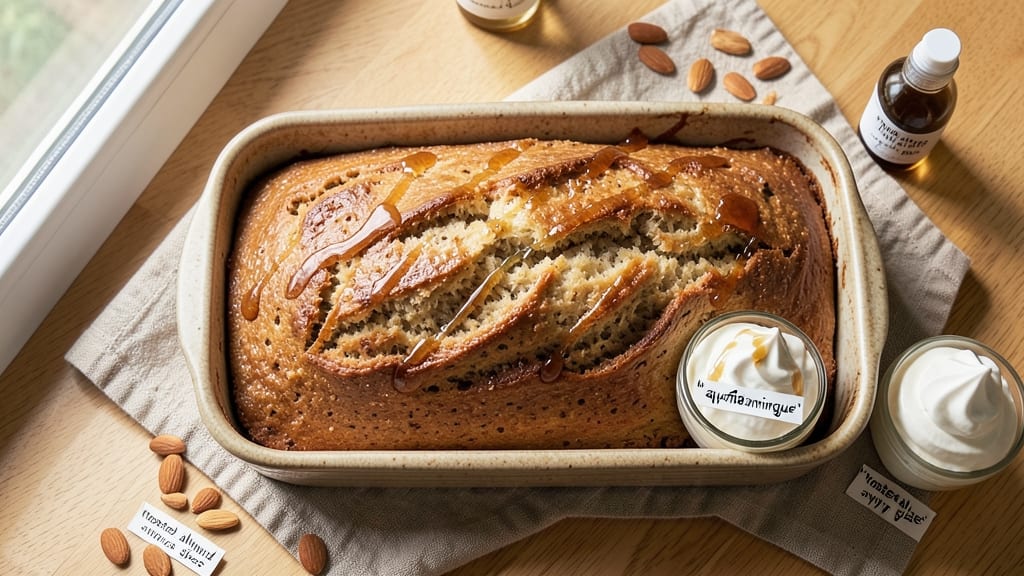
This vegan almond bread recipe delivers layers of fluffy sweetness without a single drop of dairy or egg. The secret lies in aquafaba—chickpea brine—that replaces traditional binders while creating that signature tender crumb.
I developed this version after years of testing, ensuring every slice stays moist and packed with nutty almond flavor. What makes this recipe work is the combination of almond flour for richness and all-purpose flour for structure, balanced by a simple syrup that keeps the bread tender.
The baking process is straightforward: mix, pour into layers, and bake at 350°F for about 45-50 minutes, until golden and springy to the touch. By the time you're done, you'll have a perfectly layered loaf with a subtle almond aroma and just the right amount of sweetness.
Each slice stays moist for days, making it ideal for breakfast, snacks, or dessert. The texture is light yet substantial—proof that vegan baking can be just as impressive as traditional recipes. Perfect for brunch spreads, gift baskets, or satisfying that afternoon sweet tooth.
Here's how to make it—no dairy, no eggs, no compromise on flavor.
Ingredients for almond bread recipe vegan
Eight simple ingredients create layers of fluffy vegan almond bread—no dairy, no eggs, just pure nutty sweetness.
| Ingredient | Amount | Notes |
|---|---|---|
| Chickpea Brine (Aquafaba) 🥫 | 1 cup | From 1 can chickpeas |
| Almond Flour 🌰 | 1 ½ cups | Finely ground, unsweetened |
| All-Purpose Flour 🌾 | 1 cup | For structure and lift |
| Granulated Sugar 🍚 | ¾ cup | Or coconut sugar |
| Maple Syrup 🍁 | ½ cup | For moisture and sweetness |
| Vanilla Extract 🌸 | 1 tbsp | Pure alcohol-free if preferred |
| Baking Powder 🧂 | 2 tsp | Aluminum-free preferred |
| Salt 🧂 | ½ tsp | Fine sea salt |
| Vegetable Oil 🫒 | ½ cup | Light or canola oil |
| Almond Slices 🌰 | ½ cup | For topping, optional |
| Lemon Zest 🍋 | 1 tbsp | Brightens the flavor |
The almond flour is the star here, so buy the finest grind you can find—those pre-ground bags at Trader Joe's or bulk bins work perfectly. I always grab Bob's Red Mill if I'm at a regular grocery store, but any unsweetened almond flour will do. The aquafaba? Save that chickpea brine from your canned beans—it's free and works like magic as an egg substitute. Freshly opened cans give you the best flavor, but stale brine loses its lift. For the vanilla, pure extract is worth it—imitation won't give you that rich depth. And if you're feeling fancy, toast the almond slices for 5 minutes at 350°F before topping—it adds a whole new level of crunch.
No almond flour? Substitute with 1 cup extra all-purpose flour plus 1/4 cup cornstarch, but you'll lose that signature nutty flavor. Running low on maple syrup? Agave or date syrup work too, though maple has that perfect caramel note. The baking powder is non-negotiable—aluminum-free is best for vegan baking. If you've got baking soda plus cream of tartar, you can make a quick swap (1 tsp baking soda + 1/2 tsp cream of tartar = 2 tsp baking powder). And that lemon zest? Zest from 1 lemon is ideal, but if you're using bottled, make sure it's pure—no additives. The vegetable oil can be swapped for melted coconut oil if you prefer, though it'll add a slight coconut flavor.
This bread keeps beautifully—3-4 days at room temperature wrapped in a towel, or 1 week in the fridge. For longer storage, slice and freeze the loaf—3 months in a sealed bag. I usually make a double batch because it disappears fast. The layers stay moist for days, making it perfect for quick breakfasts or dessert. To reheat, wrap a slice in a damp paper towel and microwave for 10 seconds—it warms up beautifully without drying out. And if you've got leftovers, toast them for a crispy upgrade.
Why You'll Love This Recipe
- No Mixer Needed: I swear by this recipe because it’s all about the whisk and the bowl—no fancy equipment, just aquafaba whipped into clouds. That chickpea brine replaces eggs perfectly, and the almond flour keeps it light without any fuss.
- Sweet Without Guilt: The maple syrup and sugar team up for a caramel-like richness, but the almond flour keeps it from being too heavy. It’s the kind of bread that tastes indulgent but won’t leave you regretting it later.
- Breakfast, Snack, Dessert: This isn’t just toast—it’s my go-to for French toast (yes, vegan), a midday snack, or even a quick dessert with jam. The texture holds up for all of it, and the flavor adapts without trying too hard.
- Pantry Staple Magic: Between us, almond flour and aquafaba are already in my kitchen, so this costs less than buying a loaf of store bread. Plus, slices stay fresh for days, so I’m never scrambling for something to eat.
Step-by-step instructions for almond bread recipe vegan
Here's how to create a moist, nutty loaf that's secretly egg-free and dairy-free.
Whisk Aquafaba Until Stiff Peaks Form
In a large mixing bowl, pour the 1 cup chickpea brine (aquafaba) and use an electric mixer to beat it on high speed for 4-5 minutes. You'll notice it start as thin but gradually thicken into glossy, glossy peaks that hold their shape when the whisk is lifted. This is your vegan egg substitute—don't rush this step or your bread won't rise properly.
I like to stop occasionally and scrape the sides of the bowl with a silicone spatula to make sure everything gets fully incorporated. The mixture should look like fluffy meringue when you're done. If it's not holding stiff peaks after 5 minutes, add 1 teaspoon of granulated sugar and beat for another minute—this helps stabilize the foam.
Combine Dry Ingredients and Wet Mix
In a separate medium bowl, whisk together the 1.5 cups almond flour, 1 cup all-purpose flour, 2 teaspoons baking powder, and 0.5 teaspoon salt. This dry blend gives your bread structure and lift. Once combined, make a well in the center and pour in the 0.5 cup maple syrup, 0.5 cup vegetable oil, 1 tablespoon vanilla extract, and 1 tablespoon lemon zest.
Gently fold these wet ingredients into the dry mix using a spatula, being careful not to overmix. You want to just combine everything until no dry spots remain. The batter should be thick but pourable—think of it like a very dense pancake batter. If it seems too stiff, add 1-2 tablespoons of aquafaba from the earlier step to loosen it up.
Fold in Whipped Aquafaba
Now carefully fold the whipped aquafaba into the batter in three additions, using a spatula to gently cut through the center and lift from the bottom. This folding technique incorporates air without deflating the aquafaba. After each addition, rotate the bowl and fold again until fully combined. The batter will look light and airy with some streaks of aquafaba—this is perfect.
Here's the thing—don't overmix at this stage. You want to preserve as much air as possible for that fluffy texture. If you see the batter getting too dense, stop folding immediately. The final batter should be thick but still able to hold its shape when dropped from a spoon.
Prepare Pans and Bake
Preheat your oven to 350°F and grease two 8x4-inch loaf pans thoroughly with vegetable oil or line them with parchment paper. Divide the batter evenly between the pans, then sprinkle the 0.5 cup almond slices evenly on top. This gives that classic almond bread crunch while adding visual appeal.
Bake for 45-50 minutes until a toothpick inserted in the center comes out clean and the top springs back when pressed gently. The edges should be golden brown while the top might still look slightly pale—this is normal for almond bread. If the top browns too quickly, tent with foil after 30 minutes to prevent over-browning.
Cool and Serve
Remove the loaves from the oven and let them cool in the pans for 10 minutes, then transfer to a wire rack to cool completely. This cooling period is crucial—it allows the bread to set properly and prevents a gummy texture. I know it's tempting to slice into warm bread, but trust me, waiting makes all the difference.
Once fully cooled, slice into ½-inch thick pieces and serve. Each slice should have a tender crumb with moist layers and those beautiful almond slices on top. Store any leftovers in an airtight container at room temperature for up to 3 days, or freeze for up to 3 months for fresh-tasting bread whenever you want it.
Pro Tips For Making Almond Bread Recipe Vegan
- WHISK AQUAFABA HOT: I learned this the hard way—warm the chickpea brine (aquafaba) to near-boiling before whipping it. Cold liquid fights you, making stiff peaks impossible. Use a stand mixer for 3-5 minutes until it’s glossy and holds soft peaks like meringue (yes, even if you’re impatient like me).
- SIFT ALMOND FLOUR FIRST: Almond flour is dense and clumpy. Sift it with the all-purpose flour before mixing—this lightens the texture and prevents a heavy, cakey crumb. I skip this sometimes, and the bread turns out fine, but the difference in crumb is noticeable.
- DON’T OVERMIX THE BATTER: Once you fold in the whipped aquafaba, stop mixing the second everything comes together. Overworking it deflates the air bubbles, and your bread will sink like a stone in the oven. Two or three gentle stirs with a spatula is all it takes—no need to be thorough.
- BAKE LOW AND SLOW: Almond bread burns faster than it rises. Start at 325°F (160°C) for the first 20 minutes, then crank to 350°F (175°C) to finish. I was skeptical until I tried it—this guarantees a golden crust without a charred top or a gummy center.
Common mistakes when making perfect results
Overmixing the Batter
I've seen this happen more times than I can count—especially when people get nervous about getting everything fully combined. The moment you start vigorous stirring after folding in the aquafaba, you're deflating all that precious air you worked so hard to incorporate.
That fluffy texture? Gone. What you end up with is dense, cake-like bread instead of those light, airy layers. 🌬️
Here's my trick: Use a silicone spatula and work gently in a "J" motion through the center of the batter. Stop as soon as you see no dry flour spots remaining. The batter should look like it has ribbons of aquafaba swirling through it—this means it's properly combined without overworking.
If you're unsure, do the "drop test"—lift a spoonful of batter and let it fall back into the bowl. It should hold its shape briefly before spreading slightly, not collapse immediately.
Skipping the Cooling Phase
This is the number one mistake that turns perfectly good almond bread into a gummy mess. I've had people slice into their loaves immediately after baking, convinced they'll miss out if they wait. Big mistake.
The bread needs that 10-minute rest in the pan followed by complete cooling on a rack to set properly. Without this, the layers won't hold their structure and you'll end up with a sad, dense slice that crumbles when you try to spread jam on it.
Pro tip: Set a timer for the cooling period while you're cleaning up. Make yourself a cup of tea or do something else—this waiting time is crucial. The bread will firm up as it cools, and those beautiful layers will become apparent.
Trust me, the first time you cut into properly cooled almond bread, you'll never rush it again.
Using Old Aquafaba
The magic of aquafaba comes from its freshness. I've had people use brine that's been sitting in their fridge for weeks, wondering why their bread didn't rise properly. Fresh aquafaba from a can of chickpeas has natural lecithins that create stable foam—something that breaks down over time.
Stale brine will give you a flat, dense loaf that lacks the signature fluffiness. 🥫
Always use aquafaba from a freshly opened can. If you're prepping ahead, store the brine in an airtight container in the fridge for up to 3 days before using it.
And here's a secret: If you have leftover chickpeas, save the brine in a small jar in your pantry for up to 1 month—it's perfect for other vegan baking experiments like meringues or macarons.
Incorrect Aquafaba Whipping
This is where people really trip up. Using a hand mixer instead of an electric mixer is a common mistake, but even with the right tool, many don't whip long enough. The aquafaba needs that 4-5 minute whipping at high speed to develop proper volume.
I've seen people give it 30 seconds and wonder why their bread didn't rise. That's not enough time for the proteins to unfold and create stable peaks.
Here's what to watch for: The mixture should go from liquid to glossy foam to stiff peaks that hold their shape when you lift the whisk. If it's not holding peaks after 5 minutes, add ½ teaspoon of sugar and whip for another minute.
This helps stabilize the foam. And never, ever use a food processor—it breaks down the foam completely and you'll end up with a sad, flat loaf.
Wrong Pan Preparation
Greasing the pans isn't just about preventing sticking—it's about creating that perfect release. I've seen people use butter (even though it's vegan) or not grease thoroughly enough, leading to bread that tears when removing from the pan.
The key is using vegetable oil and being thorough. Use a pastry brush to coat every inch of the pan, including the sides and bottom. 🍞
For even better results, I recommend lining the pans with parchment paper cut to fit snugly. This creates a barrier that makes removal effortless and gives you that professional bakery finish. Just
Nutrition facts
Frequently asked questions
Can I substitute almond flour with another nut flour?
Yes, but expect different flavors and textures. Cashew flour works best as a 1:1 substitute since it's milder and blends well with the sweetness. Hazelnut flour adds depth but can make the bread denser. Avoid walnut flour—it's too strong and can overpower the recipe. If you must use a different flour, reduce the total nut flour to 1 cup and add ½ cup extra all-purpose flour to maintain structure.
Why does my vegan almond bread turn out dense instead of fluffy?
Most likely, you didn't whip the aquafaba enough or overmixed the batter. The aquafaba needs 4-5 minutes of vigorous whipping to create stiff peaks. Also, fold it gently in three additions—don't stir vigorously after combining. Another common issue is using stale aquafaba (older than 3 days), which loses its ability to hold air. Try adding ½ teaspoon extra baking powder for better lift.
Can I make this bread without aquafaba?
For a 1:1 egg substitute, use ½ cup unsweetened applesauce + 1 teaspoon baking powder or ¼ cup ground flaxseed + ⅔ cup water (let sit for 5 minutes to thicken). The texture will be slightly denser, but still delicious. If you prefer a lighter result, try ½ cup silken tofu blended smooth—it mimics egg whites better. Just reduce other liquids by 2 tablespoons to balance the batter.
How do I store vegan almond bread to keep it fresh?
Wrap the cooled loaf tightly in a clean kitchen towel or beeswax wrap, then place in an airtight container. It stays fresh at room temperature for 3-4 days. For longer storage, slice and freeze between parchment paper—thaw overnight in the fridge. To revive stale slices, wrap them in a damp paper towel and microwave for 10-15 seconds. The bread reheats beautifully without drying out.
Can I add chocolate chips or nuts to this recipe?
Yes! For chocolate, use ½ cup vegan chocolate chips—fold them in during the last step with the almond slices. For extra nuts, add ¼ cup chopped walnuts or pecans to the batter. Just reduce the almond slices to ¼ cup to balance the texture. Toast the nuts first for 5 minutes at 350°F to enhance their flavor. Avoid adding too many mix-ins, or the bread may become dense.