
Side Dishes
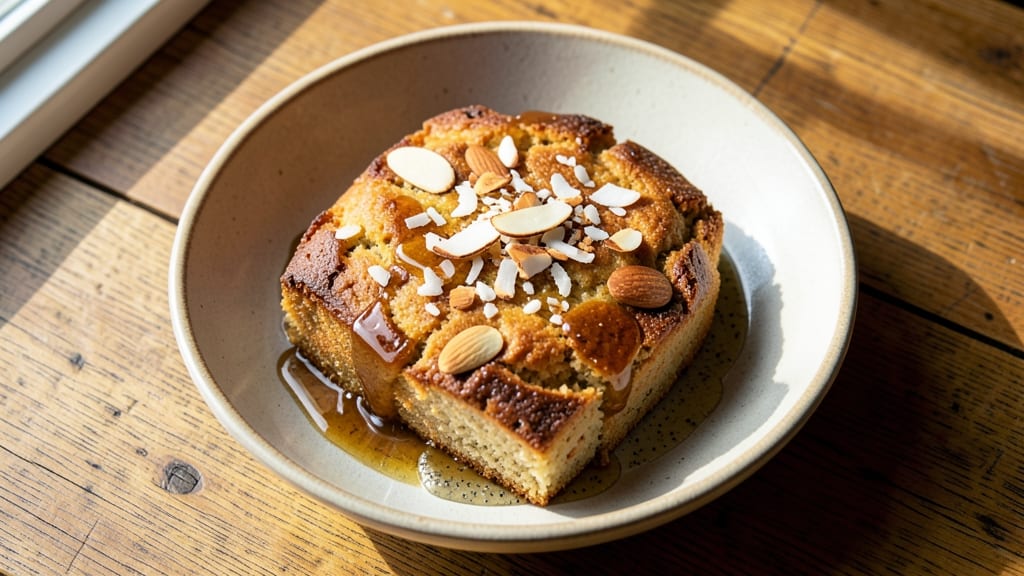
This almond and coconut flour bread recipe delivers a grain-free, nutty-crunch loaf that rivals traditional bread in texture and flavor. The secret lies in balancing these two flours—almond flour adds richness while coconut flour absorbs moisture perfectly, creating a loaf with a tender crumb and satisfying crunch.
I developed this recipe after years of experimenting with gluten-free baking, and it’s finally the one that doesn’t taste like a compromise.
The process is straightforward but requires patience—mixing the flours with eggs and coconut milk creates a dough that needs to rest before baking. At 350°F for 40-45 minutes, the bread develops a golden crust and a moist interior, thanks to the coconut flour’s ability to hold moisture.
The result? A loaf that’s light yet sturdy, perfect for sandwiches or toast, with a subtle sweetness from the coconut that pairs beautifully with savory fillings.
What makes this recipe stand out is its versatility—it’s vegan-friendly, gluten-free, and packed with protein and healthy fats. The almond flour gives it a delicate crumb, while the coconut flour ensures it doesn’t crumble like other grain-free loaves.
Best of all, it keeps well for days, making it ideal for meal prep or gifting.
Whether you’re baking for dietary restrictions or simply craving something different, this bread is a game-changer. The nutty flavor and satisfying texture prove that grain-free doesn’t mean giving up on comfort. Let’s get baking!
Ingredients for almond and coconut flour bread
Balanced flours and simple binders create this nutty, sturdy grain-free loaf with restaurant-quality texture.
| Ingredient | Amount | Notes |
|---|---|---|
| Almond Flour 🥜 | 2 ½ cups | Finely ground, unsweetened preferred |
| Coconut Flour 🥥 | ½ cup | Unsweetened, finely milled |
| Large Eggs 🥚 | 4 whole | Room temperature for even mixing |
| Unsweetened Coconut Milk 🥥 | 1 can | Full-fat for best moisture retention |
| Pure Maple Syrup 🍁 | ¼ cup | Grade A or B preferred |
| Extra-Virgin Olive Oil 🫒 | ¼ cup | For tender crumb and moisture |
| Baking Powder 🍞 | 1 tbsp | Aluminum-free for best results |
| Salt 🧂 | ½ tsp | Fine sea salt preferred |
| Apple Cider Vinegar 🍎 | 1 tbsp | Activates baking powder |
| Flaxseeds 🌾 | 2 tbsp | Ground into meal for binding |
| Water 💧 | ¼ cup | Room temperature for flax gel |
| Vanilla Extract 🌸 | 1 tsp | Pure, high-quality preferred |
The almond flour is non-negotiable here—Bob’s Red Mill or Anthony’s Goods brands yield the finest grind for that delicate crumb. Coconut flour absorbs moisture like a sponge, so measure it precisely—don’t pack it down. For the eggs, pasture-raised adds subtle richness, but any large eggs work. The coconut milk can be full-fat canned or homemade—just ensure it’s unsweetened. Trader Joe’s carries excellent options at a reasonable price. Store both flours in airtight containers away from heat to prevent rancidity, which ruins the nutty flavor profile.
No almond flour? Cashew flour at a 1:1 ratio mimics the texture, though the flavor shifts slightly toward sweetness. Substituting coconut flour? Oat flour works at half the amount, but texture will be denser. For the eggs, flax eggs (1 tbsp ground flax + 3 tbsp water = 1 egg) maintain binding without compromising flavor. The apple cider vinegar can be swapped for lemon juice at equal parts, though flavor will differ slightly. Need to reduce fat? Cut the olive oil by 2 tbsp and add 1 tbsp more coconut milk. The vanilla extract is optional but enhances the coconut’s subtle sweetness—Nielsen-Massey is a reliable brand for quality.
This dough requires 30 minutes of resting—don’t rush it. Store the dry ingredients (flours, baking powder, salt) in a cool, dark place for up to 6 months, while wet ingredients (coconut milk, olive oil, maple syrup) keep in the fridge for 2 weeks. Once baked, the loaf stays fresh at room temperature for 3 days when wrapped tightly in foil. For longer storage, slice and freeze portions for up to 3 months. Reheat slices in a toaster or oven for that fresh-baked crunch. The bread gains moisture over time, so slice just before serving for optimal texture.
Why You'll Love This Recipe
- Here’s what sold me: this bread stays fresh for days if stored right (airtight container, room temp). I’ve made a batch on Sunday and still had slices by Friday—no sad, stale ends. Plus, the ingredients are budget-friendly staples, so you’re not breaking the bank for a loaf that lasts.
- No-Fuss Mixing: I swear by this recipe because it’s basically hands-off after the first step. Just toss the almond flour, coconut flour, and eggs into a bowl—no sifting, no measuring cups, no mess—and let the coconut milk and maple syrup do the rest. The batter’s thick but forgiving, so no stress if you overmix or underbeat.
- Nutty-Sweet Magic: Between the toasty almond flour and the subtle coconut sweetness, this bread has a depth that’s ridiculously satisfying. The maple syrup adds just enough caramel warmth without overpowering, and honestly? It tastes like a cross between a croissant and a muffin—rich but not heavy.
- Breakfast to Snack: This bread isn’t just for toast. I’ve used it for French toast (dipped in coconut milk + cinnamon), as a base for avocado smash, or even sliced thin for charcuterie boards. It holds up to everything—no crumbling, no soggy edges—and the flavor shines in every bite.
Step-by-step instructions for almond and coconut flour bread
This grain-free loaf delivers a tender crumb with nutty depth—follow these precise steps for perfect texture every time.
Prepare the Flaxseed Gel Binding Agent
In a small bowl, combine the 2 tablespoons flaxseeds with the 0.25 cup water. Let this mixture sit for 10 minutes while you prepare the remaining ingredients. You'll see it thicken into a gel-like consistency—this is what replaces traditional gluten in our binding. The gel should resemble a thick pudding rather than a runny liquid.
I always use room-temperature water for this step because cold water slows the gel formation. If you notice the mixture isn't fully thickened after 10 minutes, give it another 2-3 minutes. This flax gel is the foundation of our bread's structure, so don't rush this preparation.
Whisk Wet Ingredients to Homogeneous Mixture
In a large mixing bowl, whisk together the 4 whole large eggs, 1 can unsweetened coconut milk, 0.25 cup pure maple syrup, 0.25 cup extra-virgin olive oil, 1 tablespoon apple cider vinegar, and 1 teaspoon vanilla extract until completely combined. The mixture should be smooth with no visible streaks of egg whites.
This is where the science happens—the coconut milk adds necessary moisture while the vinegar activates the baking powder later. I like to whisk for about 2 minutes to ensure all ingredients are fully incorporated. The mixture should be slightly thick but pourable—if it looks too thin, we'll adjust with the dry ingredients in the next step.
Combine Dry Ingredients and Flax Gel
In a separate bowl, sift together the 2.5 cups almond flour and 0.5 cup coconut flour to aerate them. Add the 1 tablespoon baking powder and 0.5 teaspoon salt, whisking gently to distribute evenly. This prevents dense pockets in your final loaf.
Gradually add the dry mixture to the wet ingredients while folding gently with a spatula. After about half is incorporated, add the flax gel you prepared earlier. The batter will become thick and dough-like—this is normal. Be careful not to overmix, as coconut flour develops gluten-like properties when worked too much.
Bake in Loaf Pan for Perfect Rise
Preheat your oven to 350°F and lightly grease a 9x5-inch loaf pan with olive oil. Pour the batter into the prepared pan and smooth the top with a spatula. Tap the pan gently on the counter twice to release any air bubbles that may have formed.
Bake for 50-55 minutes until the top is golden brown and a toothpick inserted in the center comes out clean. The bread should spring back slightly when pressed gently in the center. I've found that almond flour bread benefits from this slightly longer bake time—it ensures even cooking through the dense nut flour.
Cool and Slice for Maximum Tenderness
Remove the bread from the oven and let it cool in the pan for 10 minutes. Then transfer to a wire rack to cool completely for at least 30 minutes before slicing. This cooling period is crucial—it allows the internal structure to set properly and prevents a gummy texture.
Slice with a sharp serrated knife for clean cuts. The interior should reveal a tender crumb with subtle pockets of moisture from the coconut milk. For best results, store wrapped at room temperature for up to 3 days or freeze for longer storage. The flavor actually improves slightly as it sits overnight!
Pro Tips For Making Almond And Coconut Flour Bread
- Mix the flours first: Coconut flour absorbs way more liquid than almond flour—don’t just toss everything in the bowl at once. Whisk the coconut flour with the almond flour before adding wet ingredients, or you’ll end up with a gummy mess that won’t hold together. (Yes, even if the recipe says otherwise.)
- Use room-temperature eggs: Cold eggs make the batter separate and can cause dense, rubbery bread. Let them sit out for 30 minutes before cracking them in—especially in a cold kitchen. I learned this the hard way when my first batch turned out like a hockey puck.
- Don’t overmix the batter: Almond and coconut flour bread relies on structure, not gluten. Mix just until the dry ingredients disappear—about 10 strokes max. Overmixing makes it tough and chewy, and no one wants that. (Your mixer’s timer is your friend here.)
- Bake at 325°F, not higher: This isn’t wheat bread—it burns fast. I used to blast the oven to 350°F like normal bread, and the outside would char before the center set. Stick to 325°F and check for doneness at 30 minutes with a toothpick. If it’s crumbly but moist, it’s done.
Serving suggestions for this almond and coconut flour bread
Toast Toppings
This bread's nutty crunch makes it perfect for avocado toast—mash ½ ripe avocado with ½ lemon juice, salt, and black pepper, then spread on thick slices.
For extra richness, add crumbled feta or smoked salmon. I love drizzling with chili crisp—just 1 teaspoon adds a perfect kick. 🌿
Sandwich Game-Changer
Use this bread for grain-free sandwiches that hold up beautifully. Try a Mediterranean wrap with hummus, sliced cucumber, kalamata olives, and spinach. Or make a PB&J alternative with almond butter, sunflower seed butter, and sliced strawberries. The coconut flavor balances sweet and savory perfectly. 🥪
Breakfast Pairings
Serve warm slices with vegan butter and a sprinkle of cinnamon for a quick breakfast. I also love pairing it with scrambled tofu—just ½ block firm tofu, 1 tbsp nutritional yeast, and turmeric for color.
The bread soaks up any extra sauce beautifully. For a sweet option, top with almond butter and sliced banana. 🍌
Dessert Twist
Dip slices in dark chocolate melted with coconut milk for a decadent dessert. Or make cinnamon sugar bread pudding—toss cubed bread with 1 cup coconut milk, 2 eggs, 2 tbsp maple syrup, and 1 tsp cinnamon, then bake at 350°F for 25 minutes.
The coconut flavor shines in both applications. 🍫
Meal Prep Hack
Slice the bread and store in an airtight container with parchment paper between layers. Toast individual slices in the morning for quick breakfast wraps or open-faced sandwiches.
I keep a stash of pre-sliced bread in the freezer—just thaw for 10 minutes before toasting. The texture stays perfect even after freezing. ❄️
Savory Dipping
Serve with vegan ranch (mix ½ cup coconut yogurt, 1 tbsp apple cider vinegar, 1 tsp garlic powder, and salt) or spicy mayo (mix ¼ cup vegan mayo with 1 tsp sriracha).
The bread's sturdy texture handles dips without falling apart. Perfect for game day or snack platters! 🏈
Nutrition facts
Frequently asked questions
Why does this bread need coconut flour if almond flour is already included?
Coconut flour adds essential structure and moisture retention that almond flour alone can't provide. The almond flour delivers richness and nutty flavor, while coconut flour absorbs liquid like a sponge and creates that satisfying crumb. Together, they balance texture perfectly—almond keeps it tender, while coconut prevents dryness.
Can I make this bread without eggs?
Yes! Replace the 4 eggs with 4 flax eggs (1 tbsp ground flaxseed + 3 tbsp water per egg). Let the mixture sit for 10 minutes to thicken before using. The flax gel works as a natural binder, though the texture may be slightly denser. For extra moisture, add 1 extra tablespoon coconut milk.
Why does my bread turn out gummy or dense?
Overmixing the batter or skipping the 30-minute rest time often causes gummy texture. Also, coconut flour absorbs moisture—if your batter looks too wet, add 1-2 extra tablespoons of almond flour before baking. Always use room-temperature ingredients and bake until a toothpick comes out clean.
How do I store this bread to keep it fresh?
Wrap the cooled loaf tightly in foil or store in an airtight container at room temperature for up to 3 days. For longer storage, slice and freeze portions in a sealed bag for 3 months. Toast frozen slices directly—they'll crisp up perfectly. The coconut flavor actually develops more depth as it sits!
What's the best way to test if it's fully baked?
Insert a toothpick into the center—it should come out clean with no wet batter clinging. The top should also be golden brown and spring back slightly when pressed gently. If unsure, bake 5 more minutes—almond flour bread benefits from slightly longer baking to ensure even cooking through the dense nut base.