
Side Dishes
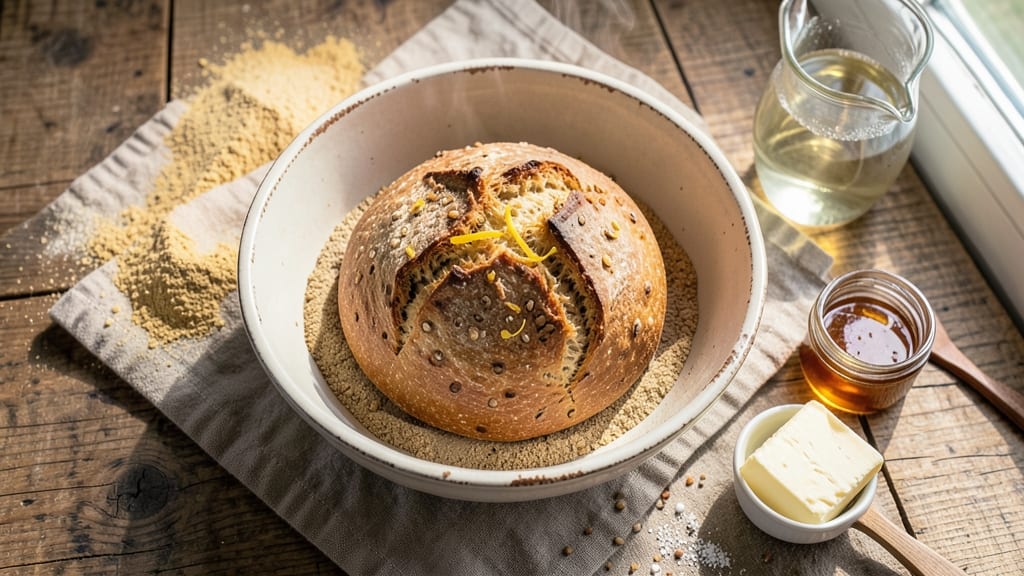
This all-wheat bread recipe delivers the perfect balance of hearty texture and nutty flavor without the fuss of traditional kneading. The secret lies in a simple no-knead method that develops deep, artisan-like depth while keeping the process accessible for home bakers.
I've perfected this recipe over years of baking, ensuring every loaf emerges with a crisp crust and tender, open crumb that's impossible to resist.
The beauty of this recipe is its versatility—it works beautifully as a side for soups, sandwich bread, or even toasted with butter. Whole wheat flour provides natural sweetness and a satisfying chew, while a touch of honey enhances browning and flavor.
The dough requires just 10 minutes of prep before resting overnight, allowing flavors to meld naturally for a rich, complex result.
What you'll achieve is a loaf with a golden-brown crust that crackles when broken, and a soft yet sturdy interior with pockets of air. The aroma alone as it bakes will transform your kitchen into a bakery.
This recipe also adapts easily to vegan diets by using flax eggs and plant-based milk, making it inclusive without sacrificing quality.
Whether you're baking for a family meal or treating yourself to homemade bread, this method guarantees consistent results every time. The optional additions of seeds or herbs open up creative possibilities while keeping the process straightforward. Let's get started on creating your perfect loaf.
Ingredients for all wheat bread
Whole wheat flour, yeast, and honey create the heart of this no-knead artisan loaf.
| Ingredient | Amount | Notes |
|---|---|---|
| All-Purpose Flour 🌾 | 2 cups | For structure and lightness |
| Whole Wheat Flour 🌾 | 2 cups | For nutty flavor and texture |
| Active Dry Yeast 🍞 | ¼ oz | Or 1 packet (2.25 tsp) |
| Warm Water 💧 | 1 ¼ cups | 110°F for optimal yeast activation |
| Honey 🍯 | 2 tbsp | For browning and sweetness |
| Unsalted Butter 🧈 | ¼ cup | Cold, cubed for flavor |
| Salt 🧂 | 1 ½ tsp | Diamond Crystal preferred |
| Olive Oil 🫒 | 1 tbsp | For dough elasticity |
| Sesame Seeds 🌱 | 1 tbsp | Optional for topping |
| Poppy Seeds 🌱 | 1 tbsp | Optional for topping |
| Large Egg 🥚 | 1 whole | For crust shine |
| Milk 🥛 | 2 tbsp | For crust softness |
The yeast is critical—use King Arthur or Saf-Instant for reliable activation. Bob's Red Mill whole wheat flour delivers the best nutty flavor, though any 100% whole wheat works. Honey enhances browning and flavor, but maple syrup is a suitable substitute. The butter should be cold when added to prevent overdevelopment. For yeast activation, test water temperature with your finger—it should feel warm but not hot to the touch. If your kitchen is cold, warm the water slightly longer.
No honey? Agave nectar or brown sugar works in a pinch, though honey's unique enzymes create better crust color. Substitute oat milk for regular milk if needed, though it may slightly alter crust texture. For a vegan version, replace the egg with 1 tbsp ground flaxseed + 3 tbsp water (let sit 5 minutes). The seeds are optional but add beautiful texture—sesame and poppy complement the wheat flavor perfectly. If you prefer a different seed blend, sunflower or flaxseeds work equally well.
This dough requires overnight refrigeration for optimal flavor development. Store shaped loaves in the fridge for up to 3 days or freeze for 3 months by wrapping tightly in plastic. For best results, let dough come to room temperature before baking. The crust stays fresh for 2 days at room temperature, though it's best enjoyed fresh from the oven. Slice with a serrated knife for clean cuts through the dense crumb.
Why You'll Love This Recipe
- No-Knead Magic: I swear by this—just mix, let it rise, and bake. The yeast does all the work while I’m sipping coffee, and honestly? That golden crust? Worth every 10 minutes of hands-off time.
- Honey’s Secret Boost: That spoonful of honey isn’t just sweet—it keeps the bread moist for days and gives it a subtle caramel depth. The whole wheat flour adds nuttiness, but the honey rounds it out like a warm hug.
- Weeknight Workhorse: I make a loaf on Sundays, slice it into sandwiches, and it lasts until Thursday. Toast it for breakfast, stuff it with PB&J for lunch, or serve it with soup—it’s the bread equivalent of a good pair of jeans.
- Budget-Friendly Staple: Whole wheat flour and honey stretch my grocery budget without sacrificing flavor. Plus, one batch feeds my family for days, so I’m not scrambling to buy bread every week—just slice, toast, and enjoy.
Step-by-step instructions for no-knead all wheat bread
This method transforms simple ingredients into artisan-quality bread without the effort.
Activate the Yeast and Mix Wet Ingredients
In a large bowl, dissolve the 0.25 oz active dry yeast in 1.25 cups warm water (about 110°F) with 2 tbsp honey. Let sit for 5-10 minutes until frothy—this confirms the yeast is alive. If it doesn't bubble, your bread won't rise properly.
In a separate bowl, whisk together 2 tbsp milk, 1 whole large egg, 1 tbsp olive oil, and 1.5 tsp salt. The olive oil helps create a tender crumb, while the egg adds shine to the crust. Keep these wet ingredients at room temperature for best results.
Combine Flours and Incorporate Wet Mixture
Add 2 cups all-purpose flour and 2 cups whole wheat flour to the yeast mixture. The whole wheat flour gives depth of flavor but can make the dough denser, so we balance it with all-purpose flour for structure. Mix just until combined—overmixing develops gluten too early, which can make the bread tough.
Gradually pour in the wet ingredients while stirring with a wooden spoon. The dough will be shaggy and sticky, but that's normal. Avoid adding extra flour at this stage—it will prevent proper gluten development during the long fermentation.
Let the Dough Rest and Develop
Cover the bowl with plastic wrap and let the dough rest at room temperature for 1 hour. This initial rest allows the flour to fully hydrate and the gluten to begin forming naturally. You'll notice the dough slowly rise and become more cohesive as the yeast activates.
After 1 hour, fold the dough over itself 4-5 times to strengthen the gluten. This step mimics kneading without the effort. The dough should feel smoother and more elastic after folding. Cover again and let rise for another 1 hour at room temperature.
Shape and Second Rise
Lightly grease a 9x5-inch loaf pan with 1 tbsp olive oil or line it with parchment paper. Transfer the dough to the pan and shape it gently by pressing down on the edges to fill the pan completely. The dough will still be soft and sticky—this is expected with whole wheat flour.
Cover the pan with a damp towel and let the dough rise at room temperature for 2-3 hours, or until it has nearly doubled in size and springs back slowly when pressed. The longer it rises, the more flavorful the bread will be. If your kitchen is cold, place the pan in a warm oven with the light on for even rising.
Prepare the Egg Wash and Bake
Preheat your oven to 375°F. In a small bowl, whisk together 1 whole large egg, 2 tbsp milk, and 1 tbsp olive oil to create the egg wash. Brush this generously over the risen dough, including the sides. This creates a golden, crisp crust and adds shine.
Sprinkle 1 tbsp sesame seeds and 1 tbsp poppy seeds evenly over the top, pressing them lightly into the dough. Bake for 45-50 minutes until the bread is deep golden brown and sounds hollow when tapped on the bottom. For extra crispiness, bake for an additional 5 minutes with the oven door slightly open.
Cool and Serve
Remove the bread from the pan and let it cool on a wire rack for at least 30 minutes before slicing. This resting period allows the steam to escape, preventing a gummy texture. The bread will continue to firm up as it cools, developing a perfect crumb.
Slice the bread into ¼-inch thick pieces and serve warm. The crust should be crisp and golden, while the interior remains soft and slightly chewy. Store any leftovers wrapped in a clean kitchen towel to keep it fresh for up to 3 days. For longer storage, freeze the bread in slices and toast directly from frozen.
Pro Tips For Making All Wheat Bread
- Mix the Flours First: Whole wheat flour absorbs water like a sponge, so toss both flours together before adding liquid—this keeps the dough from turning into glue. I learned this the hard way when my first batch collapsed into a sad, sticky mess.
- Use a Thermometer for Water: Yeast hates extremes, and warm water isn’t just "hot enough"—it needs to be 105–110°F. Too hot? You’ll kill the yeast. Too cold? It’ll take forever to activate. A cheap thermometer solves guesswork.
- Skip the Over-Kneading: Whole wheat dough is tougher than all-purpose, so knead just until it springs back when poked—about 8–10 minutes. I used to overwork mine, thinking more = better, but it just made the bread dense and chewy.
- Proof in a Warm Drawer: If your kitchen’s drafty, proof the dough in a turned-off oven with a bowl of hot water inside. The trapped heat keeps it consistent—no more waiting hours for a lukewarm rise. (Yes, even if you’re impatient like me.)
Health benefits of these flavors
Whole Grain Nutrition
This all-wheat bread is a nutrient powerhouse packed with the benefits of whole grains. The 2 cups of whole wheat flour provide 40% of your daily fiber in a single loaf, supporting digestive health and keeping you full longer.
Whole grains also deliver B vitamins like thiamine and niacin, which convert food into energy and help maintain healthy skin. 🌾
Heart-Healthy Benefits
The soluble fiber in whole wheat helps lower LDL cholesterol by binding to bile acids in your digestive tract. Studies show that replacing refined grains with whole grains can reduce heart disease risk by up to 25%.
The magnesium in whole wheat also supports healthy blood pressure levels. I notice my energy levels stay steadier when I include whole grain bread in my meals.
Natural Sweetness
Unlike white bread, this recipe uses honey instead of refined sugar, providing natural sweetness with antioxidant benefits. The 2 tbsp honey not only enhances flavor but also contains trace minerals like zinc and potassium.
Even better, the low glycemic index of whole wheat means blood sugar spikes are minimal compared to white bread.
Protein-Rich Foundation
While not a complete protein source, whole wheat flour contributes significant plant-based protein—about 12 grams per serving. This helps with muscle maintenance and repair, especially when paired with other protein sources like peanut butter or eggs.
The egg wash in this recipe adds an extra 6 grams of complete protein to your loaf.
Digestive Wellness
The prebiotic fibers in whole wheat flour feed your gut microbiome, promoting healthy digestion and reducing bloating. For even better gut health, consider adding 1 tbsp ground flaxseeds to the dough—they're packed with omega-3s and extra fiber.
I've found this makes the bread slightly denser but adds wonderful crunch and nutrition. 💪
Low-Calorie Density
Despite its hearty texture, this bread offers better calorie efficiency than white bread. A single slice contains about 120 calories while delivering 4 grams of fiber—that's 33% of your daily fiber needs per serving.
The combination of whole wheat and all-purpose flour creates a lighter texture while maintaining the satisfying chew of traditional whole grain bread.
Nutrition facts
Frequently asked questions
Why does my all-wheat bread turn out dense instead of light?
Whole wheat flour absorbs more water and has less gluten than all-purpose flour, which can make bread denser. To prevent this, balance the flours (use 50% whole wheat and 50% all-purpose as in this recipe) and avoid overmixing. The long fermentation time helps develop gluten naturally for a better crumb. Also, don't skip the 1-hour rest after mixing—it's crucial for hydration and texture.
Can I make this bread without a loaf pan?
Shape the dough into a free-form loaf on a baking sheet lined with parchment paper. For extra crustiness, bake it on a preheated 450°F stone or steel for 10 minutes before reducing heat to 375°F for the remaining 35-40 minutes. Brush with egg wash and sprinkle seeds as directed. The shape will be rustic but delicious!
How do I store all-wheat bread to keep it fresh longer?
Wrap the cooled loaf in a clean kitchen towel instead of plastic to prevent sogginess. Store at room temperature for 2-3 days or freeze slices for up to 3 months. For reheating, toast frozen slices directly in the toaster or warm at 350°F for 5-7 minutes wrapped in foil. The towel method preserves moisture better than plastic.
What can I substitute if I don't have honey?
Use 2 tbsp maple syrup or 1.5 tbsp brown sugar dissolved in warm water as a substitute. Honey's enzymes help with browning and flavor, but these alternatives work well. For a vegan option, agave nectar is another good choice. Just note that maple syrup or agave may create a slightly darker crust than honey.
Can I add extra seeds or nuts to this recipe?
Yes! Try adding 1 tbsp ground flaxseeds (for nutrition) or ½ cup chopped walnuts (for crunch). For seeds, stick to 1-2 tbsp total to avoid overpowering the dough. Soak nuts for 10 minutes in warm water first to prevent them from absorbing too much moisture. Toast them lightly before adding for extra flavor!