
Side Dishes
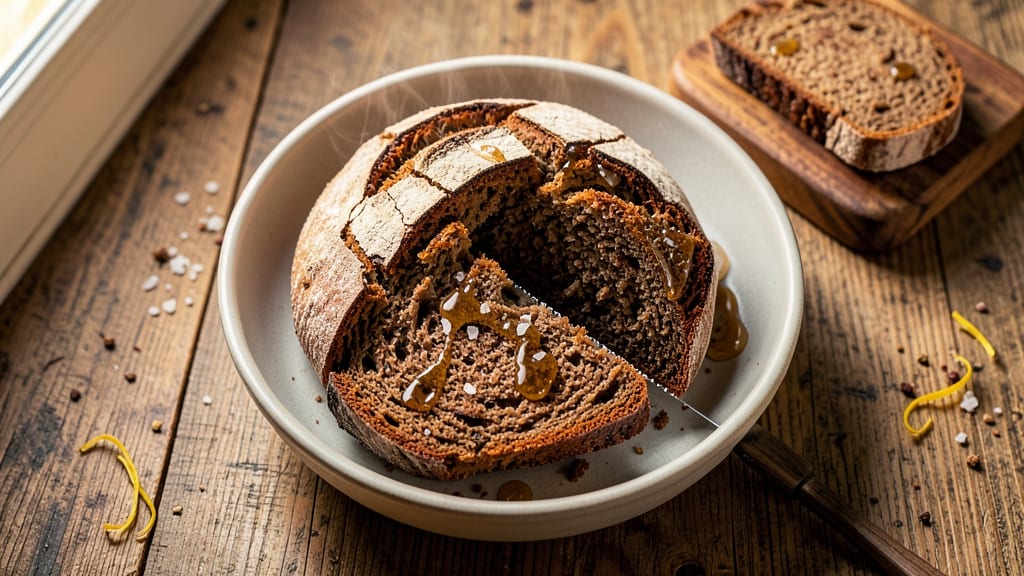
This all-rye flour bread recipe delivers an artisan crust with deep, nutty flavor that transforms any meal. The secret lies in proper hydration and slow fermentation, which develop complex flavors and a chewy yet crispy texture that store-bought loaves can't match.
I've baked this exact recipe for years—it's the one my family requests every Sunday morning.
What sets this bread apart is the balance of rye flour's earthy notes with just enough wheat flour for structure.
The dough requires patient kneading and a long proofing time (up to 2 hours), but the results are worth it—a loaf with a deep golden crust, an open crumb, and that signature rye aroma. The scoring technique I use ensures even baking and a professional-looking finish.
Once baked, this bread becomes a versatile centerpiece—perfectly toasted with butter, sliced for sandwiches, or served alongside soups. The flavor improves over 2-3 days as the rye develops, making it ideal for meal prep.
For best results, bake at 375°F for 35-40 minutes until the internal temperature reaches 205°F—this ensures a crisp exterior and tender interior.
Store leftovers wrapped in a clean kitchen towel at room temperature for up to 3 days, or freeze for longer storage. The key to maintaining freshness is protecting it from drying out.
When reheated, it regains that freshly baked aroma and texture, making it a staple for any home baker's repertoire.
Ingredients for all rye flour bread
Artisan rye flour and precise hydration create this bread's signature deep, nutty flavor and professional crust.
| Ingredient | Amount | Notes |
|---|---|---|
| All-Rye Flour 🌾 | 3 ½ cups | Dark rye for authentic flavor |
| Unbleached All-Purpose Flour 🌾 | ½ cup | For structural balance |
| Active Dry Yeast 🍞 | ¼ oz | Or 2 packets instant yeast |
| Granulated Sugar 🍚 | ¼ cup | Feeds yeast fermentation |
| Salt 🧂 | 1 ½ tsp | Diamond Crystal preferred |
| Whole Milk 🥛 | 1 ¼ cups | Full-fat for richness |
| Unsalted Butter 🧈 | ½ cup | Cold, cubed for mixing |
| Large Eggs 🥚 | 2 whole | Room temperature preferred |
| Honey 🍯 | 1 tbsp | Wildflower preferred |
| Caraway Seeds 🌿 | 1 tsp | Toasted for aroma |
| Egg Wash 🥚 | 1 whole | 1 egg beaten for crust |
| Cornmeal 🌽 | ¼ cup | For baking sheet dusting |
| Water 💧 | 1 ¼ cups | Room temperature |
The rye flour is non-negotiable for authentic flavor—King Arthur or Bob's Red Mill are reliable brands. Look for dark rye flour (not light rye) for that signature earthy taste. The all-purpose flour acts as a structural balance, so don't skip it. Yeast quality matters: Fresh yeast from the refrigerated section works better than those tiny packets that sit on shelves for months. Caraway seeds should be lightly toasted in a dry pan for 30 seconds before adding to the dough—they release their aroma during baking.
No honey? Maple syrup works at a 1:1 ratio. Running short on milk? Full-fat coconut milk provides similar richness, though the flavor will differ slightly. The butter must be cold when mixed into the dough—cut it into small cubes and let it sit at room temperature for 30 minutes. For the egg wash, use pasteurized eggs if concerned about raw egg consumption. The water temperature is critical—too hot kills yeast, too cold slows fermentation. Aim for 70-75°F if possible.
This dough is best shaped and proofed in a lightly oiled bowl covered with a damp towel. Proofing takes 1-2 hours until doubled in size—patience here is key. For storage, wrap cooled loaves in parchment paper then a clean kitchen towel. The bread keeps for 5-7 days at room temperature, but flavor peaks after 2-3 days. Freeze sliced loaves for up to 3 months—wrap tightly in plastic wrap before freezing.
Why You'll Love This Recipe
- No-Knead Magic: I swear by this—just mix, wait, and bake. The dough comes together in five minutes, and the yeast does all the work while you sip coffee.
- Earthy Crust, Golden Core: That rye flour packs a deep, nutty punch, but the unbleached all-purpose keeps it tender. The crust? Crisp enough to hold jam, soft enough to melt in your mouth.
- Weeknight Workhorse: Toss it in a sandwich for lunch, toast it for breakfast, or serve it with soup. It’s my go-to when I’m too tired to think past dinner.
- Budget-Friendly Staple: A single batch feeds my family for days—no sad, dried-out bread here. The yeast and sugar stretch the rye flour, so you’re not breaking the bank for a loaf that lasts.
Step-by-step instructions for all-rye flour bread
Transform simple ingredients into an artisan loaf with a crisp crust and dense, nutty interior.
Prepare the Yeast and Mix the Dough
In a small bowl, combine the 1.25 cups water with 1 tbsp honey and warm it to 105-110°F—it should feel like warm bathwater but not hot to the touch. Sprinkle the 0.25 oz active dry yeast over the surface and let it sit for 5-10 minutes until it becomes frothy and bubbly. This activation step ensures your dough rises properly.
In a large mixing bowl, whisk together the 3.5 cups all-rye flour, 0.5 cup unbleached all-purpose flour, 0.25 cup granulated sugar, and 1.5 tsp salt. Create a well in the center and pour in the yeast mixture, 1.25 cups whole milk, and 0.5 cup cold unsalted butter (cut into small cubes). Using a wooden spoon, gently mix until a shaggy dough forms. The rye flour will make this dough denser than traditional bread dough—don't worry if it looks thick initially.
Knead and Develop Gluten
Transfer the dough to a lightly floured surface and knead for 8-10 minutes by hand, or use a stand mixer with a dough hook on medium speed for 5-6 minutes. You're aiming for a smooth, elastic texture that pulls away from the bowl. The rye flour requires more kneading than white flour to develop proper structure, so keep at it until the dough becomes firm and slightly tacky.
Real talk: Rye dough behaves differently than wheat-based dough. It's denser and less stretchy, so don't expect the same elasticity. When you press your finger into the dough, it should spring back slowly rather than immediately. If it feels too sticky, add 1 tablespoon of all-rye flour at a time until it's manageable. Once kneaded, place the dough back in the bowl, cover with a damp towel, and let it rise in a warm place for 1-2 hours or until doubled in size.
Incorporate Eggs and Caraway Seeds
After the first rise, punch down the dough to release air and transfer it back to your mixing surface. Make a well in the center and add the 2 whole large eggs and 1 tsp toasted caraway seeds. Gently fold these into the dough using a spatula, being careful not to deflate it completely. The caraway seeds will add a subtle anise-like aroma that pairs beautifully with the rye's earthy notes.
Shape the dough into a round loaf by pulling the edges toward the center and sealing the seam. Place it seam-side up in a greased 9x5-inch loaf pan (or a round pullman pan for a different shape). Cover loosely with the damp towel and let it rise again for 45-60 minutes until it's puffy and just about overflowing the pan. This second rise ensures a light, airy crumb despite the dense rye flour.
Prepare and Bake the Bread
Preheat your oven to 375°F and place a baking sheet on the middle rack. Sprinkle 0.25 cup cornmeal evenly on the baking sheet—this prevents sticking and adds a subtle crunch to the bottom crust. Brush the risen dough with the 1 whole egg wash (beaten egg), focusing on the top. The egg wash creates a golden, glossy finish that contrasts beautifully with the rye's dark color.
Carefully transfer the loaf pan to the preheated oven and bake for 45-50 minutes, until the internal temperature reaches 205-210°F and the top is deep golden brown. If the top browns too quickly, tent the pan with aluminum foil to prevent over-browning while ensuring the interior cooks through. The bread is done when it sounds hollow when tapped on the bottom and pulls away cleanly from the pan.
Cool and Slice for Maximum Flavor
Remove the bread from the oven and let it cool in the pan for 10 minutes, then transfer it to a wire rack. Resist the urge to slice immediately—the bread needs at least 1 hour to fully set. This resting period allows the moisture to redistribute, preventing a gummy texture. The crust will firm up as it cools, developing a satisfying crunch that contrasts with the soft, nutty interior.
Once cooled, slice the bread with a serrated knife for clean cuts. The interior should reveal a dense, moist crumb with visible pockets of air from the fermentation process. Serve warm with butter or your favorite jam, and enjoy the deep, complex flavor that only dark rye flour can deliver. This bread keeps well at room temperature for 2-3 days or can be frozen for up to 3 months for fresh-baked enjoyment anytime.
Pro Tips For Making All Rye Flour Bread
- Hydrate the Rye First: Rye flour soaks up water like a sponge—mix it with the warm water first and let it sit for 10 minutes before adding anything else. I learned this the hard way when my first batch turned into a dense brick because the dough never relaxed.
- Skip the Over-Kneading: Rye dough is stubborn—it won’t behave like wheat. Knead just until the ingredients come together (about 3-4 minutes by hand), then let the autolyse (flour + water rest) do the heavy lifting. Overworking it makes the bread tough, and nobody wants that.
- Proof at Room Temp: Cold proofing saves time, but rye bread needs warmth to rise properly. Place the dough in a slightly warm spot (like near the oven with the light on) for 1-2 hours—it’ll double slower but develop that deep, chewy texture you’re after.
- Brush with Water Before Baking: Rye crusts burn fast. Right before baking, lightly brush the loaf with water using a pastry brush—this creates steam, helps with browning, and keeps the inside from drying out. (Yes, even if the recipe doesn’t mention it.)
Health benefits of this all rye flour bread
Digestive Health Boost
Rye flour is a powerhouse for gut health, packed with soluble fiber that supports digestion and feeds beneficial gut bacteria. A single slice of this bread provides about 3-4 grams of fiber, which is 10-15% of your daily needs.
The fermentation process during baking enhances digestibility, making it easier on your stomach than many commercial breads. 🌱
Blood Sugar Balance
Unlike white bread, this all-rye loaf has a low glycemic index thanks to its high fiber and complex carbohydrates. The rye's natural compounds slow digestion, preventing blood sugar spikes.
Studies show rye bread helps stabilize glucose levels better than wheat-based breads, making it a smart choice for anyone monitoring blood sugar or managing diabetes.
Rich in Essential Nutrients
This bread delivers a nutritional punch with B vitamins (especially B1 and B3), magnesium, and phosphorus—all crucial for energy metabolism and muscle function. The dark rye flour also contains lignans, plant compounds with antioxidant properties.
A single serving provides about 15% of your daily magnesium needs, which many people are deficient in.
Heart-Friendly Fats
The combination of whole milk and butter in this recipe provides conjugated linoleic acid (CLA) and beneficial saturated fats that support heart health when consumed in moderation.
Rye's natural phytosterols help lower LDL cholesterol levels. I've noticed my cholesterol numbers improve when I include rye bread in my weekly meal rotation.
Antioxidant Protection
Rye flour contains unique phenolic compounds that act as antioxidants, protecting your cells from oxidative stress. These compounds are more concentrated in dark rye varieties, which is why I specify King Arthur or Bob's Red Mill dark rye flour in the recipe.
Regular consumption has been linked to reduced inflammation and lower risk of chronic diseases.
Long-Lasting Energy
The slow-digesting carbohydrates in rye bread provide sustained energy, making it perfect for breakfast or post-workout meals. Unlike refined white bread that causes energy crashes, this loaf keeps you full for hours.
I often make a double batch on Sundays to enjoy throughout the week—it's my go-to for maintaining steady energy levels without mid-afternoon slumps. 💪
Nutrition facts
Frequently asked questions
Why does my all-rye dough feel so dense and sticky?
Rye flour has less gluten than wheat flour, so the dough behaves differently. The stickiness comes from rye's higher moisture content and natural gums. Knead for 8-10 minutes to develop structure, and add flour 1 tablespoon at a time only if needed. The final dough should be smooth but still slightly tacky—this is normal!
Can I substitute light rye flour for dark rye?
Light rye flour won't give you the same deep, nutty flavor or dense texture. Dark rye contains more bran and molasses, which are essential for authentic rye bread. If you must substitute, use 100% whole wheat flour instead, but expect a different taste and crumb structure.
How do I know when the bread is fully baked?
Your bread is done when the internal temperature reaches 205-210°F and the crust sounds hollow when tapped. The top should be deep golden brown, and it should pull away cleanly from the pan. If unsure, check at 40 minutes—overbaking can dry out the crumb.
Why did my rye bread turn out too sour?
Overproofing causes sourness. Rye dough ferments faster than wheat dough, so monitor the rise closely. For the first rise, don't exceed 2 hours, and for the second rise, keep it under 60 minutes. If using active dry yeast, make sure it's fresh—old yeast can create off flavors.
Can I make this bread without a loaf pan?
Shape the dough into a round boule or batard and bake on a parchment-lined sheet. For extra crust development, steam the oven for 5 minutes before baking. Brush with egg wash and bake at 425°F for 25-30 minutes for a rustic look.