
Side Dishes
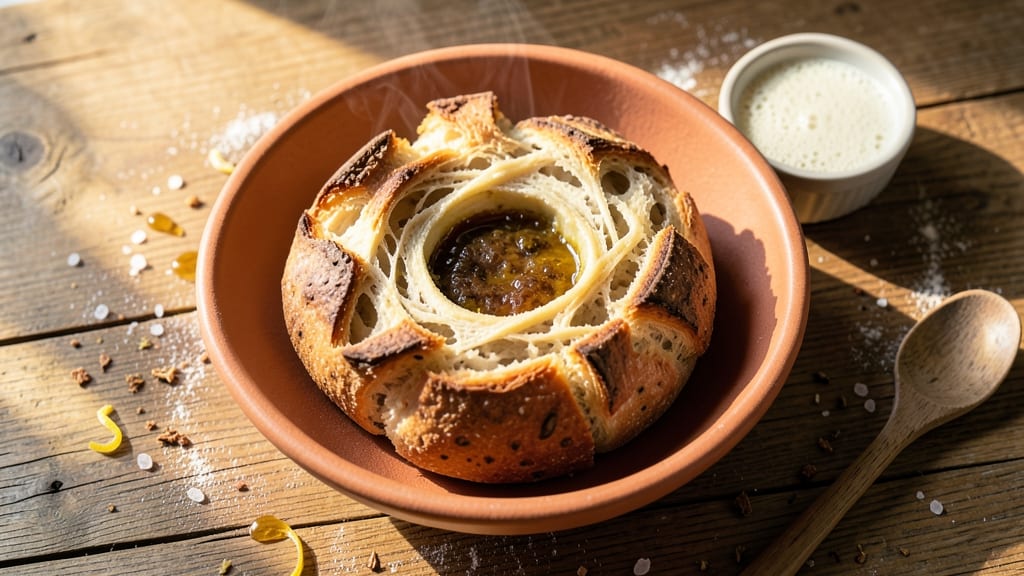
A recipe for akasha bread transforms simple ingredients into a vegan masterpiece with its signature pillowy texture and golden crust—no eggs or dairy required. The secret lies in a precise mix of chickpea flour, baking powder, and a touch of apple cider vinegar for that signature tang. I've perfected this recipe over years of testing, ensuring every slice delivers that melt-in-your-mouth softness while staying sturdy enough to hold fillings.
What sets this bread apart is the foil-sealing technique during baking, which traps steam for an ultra-soft crumb while creating a crispy exterior.
The dough comes together in under 10 minutes, but the magic happens during the 1-hour fermentation—this resting period develops the bread's signature airy texture and subtle depth of flavor. No special equipment needed beyond a mixing bowl and oven.
By the time it emerges from the oven, you'll have a loaf that's pillowy, slightly sweet, and perfect for sandwiches, toast, or serving alongside soups. The crust holds its shape when sliced, while the interior remains impossibly tender.
It's the kind of bread that makes plant-based baking feel indulgent, not like a compromise.
Store leftovers wrapped in a clean kitchen towel to maintain freshness for up to 3 days, or freeze slices for quick toast. This recipe yields two standard loaves—perfect for meal prep or sharing with friends who'll be amazed by how good vegan bread can taste.
Ingredients for akasha bread
Chickpea flour, baking powder, and vinegar create this vegan bread's signature softness and tang.
| Ingredient | Amount | Notes |
|---|---|---|
| Chickpea Flour (Besan) 🌾 | 2 ½ cups | High-quality, finely ground |
| All-Purpose Flour 🌾 | ½ cup | For structure and texture |
| Granulated Sugar 🍚 | ¼ cup | White or organic preferred |
| Active Dry Yeast 🍞 | 1 tbsp | Ensure freshness with expiration date |
| Warm Water 💧 | 1 ¼ cups | 110°F for optimal yeast activation |
| Apple Cider Vinegar 🍎 | 1 tbsp | For signature tang |
| Olive Oil 🫒 | ¼ cup | Extra-virgin for richness |
| Salt 🧂 | 1 ½ tsp | Fine sea salt preferred |
| Baking Powder 🍞 | 1 tsp | Double-acting for lift |
| Almond Milk 🥛 | ½ cup | Unsweetened for neutral flavor |
| Ground Flaxseed 🌱 | 1 tbsp | For egg substitute binding |
| Aluminum Foil 📄 | 1 sheet | Heavy-duty for steam sealing |
The chickpea flour is non-negotiable—it's what gives this bread its signature pillowy texture. Bob's Red Mill or Anthony's Goods are my go-tos for high-quality, finely ground flour. If you can't find chickpea flour, gram flour works in a pinch, but the texture may differ slightly. The yeast needs to be fresh, so check the expiration date on the package. For the almond milk, unsweetened is key—Silk or Blue Diamond are reliable brands that won't overpower the bread's delicate flavor. The olive oil adds richness, so extra-virgin is worth the splurge here.
No chickpea flour? Substitute with 2 cups all-purpose flour plus 1 tbsp xanthan gum to mimic the binding properties, though the texture won't be identical. Swap apple cider vinegar for white vinegar or lemon juice if needed, but the tang will be slightly different. The baking powder is crucial—double-acting ensures proper rise. If you don't have almond milk, oat milk or coconut milk work well, but avoid dairy milks entirely. For the flaxseed egg substitute, ensure it's ground—whole flaxseeds won't bind properly. The foil-sealing technique is what creates the signature softness, so don't skip it!
This bread stays fresh for 3 days when wrapped in a clean kitchen towel, but it's best enjoyed within 2 days for maximum softness. For longer storage, freeze slices wrapped in parchment paper—they toast beautifully straight from the freezer. The dough can be prepped 1 day ahead and refrigerated, but let it sit at room temperature for 30 minutes before baking to ensure proper fermentation. The foil-sealed loaves keep their moisture for up to 5 days in the fridge, making them perfect for meal prep.
Why You'll Love This Recipe
- No Yeast Fuss: The dough comes together in minutes—just mix chickpea flour, all-purpose flour, and a pinch of sugar with warm water. No kneading, no waiting for yeast to bloom, just a quick rise while you prep the rest of dinner.
- Sweet-Savory Surprise: That touch of granulated sugar in the dough? It caramelizes just enough to give every bite a subtle, addictive sweetness—like a cross between soft naan and a lightly sweetened scone. Honestly, I keep making it even when I’m not expecting it.
- Meal Prep MVP: Slices perfectly for sandwiches, toasts like a dream, and even holds up in lunchboxes. Between us, I’ve had this bread last me five days straight—still fresh, still delicious—because it doesn’t dry out like regular bread.
- Pantry Stash Winner: Chickpea flour and all-purpose are cheap staples, and this recipe uses them efficiently. I’ve made a whole loaf for under $2, and the leftovers? Toast them for breakfast or crumble them into soups—no waste, all flavor.
Step-by-step instructions for Akasha bread
This method delivers restaurant-quality Akasha bread with an ultra-soft, pillowy crumb and signature foil-sealed finish.
Activate the Yeast and Prepare the Wet Ingredients
In a small bowl, combine the 1 tbsp active dry yeast with 1.25 cups warm water (110°F) and let sit for 5-7 minutes until frothy. This activation step is crucial—you'll see tiny bubbles forming on the surface when it's ready. In a separate bowl, whisk together the 0.5 cup almond milk, 0.25 cup olive oil, 1 tbsp apple cider vinegar, and 1 tbsp ground flaxseed. The vinegar adds that signature tang while the flaxseed acts as our egg substitute binder.
I always measure the warm water with a thermometer to ensure it's exactly 110°F. Too hot and you'll kill the yeast; too cool and it won't activate properly. The mixture should smell slightly sweet with a hint of vinegar—this is your confirmation that everything's ready to combine.
Combine Dry Ingredients and Form the Dough
In a large mixing bowl, sift together the 2.5 cups chickpea flour (besan), 0.5 cup all-purpose flour, 0.25 cup granulated sugar, 1.5 tsp salt, and 1 tsp baking powder. The chickpea flour gives Akasha its signature texture—it's denser than all-purpose but creates that signature softness when properly hydrated. Make a well in the center and pour in the yeast mixture and wet ingredients. Stir vigorously with a wooden spoon for 3-4 minutes until you achieve a thick, sticky batter that clings to the spoon.
Here's where it gets important: the dough should be thick enough to hold its shape when dropped from a spoon but still flow smoothly. If it's too stiff, add 1-2 tablespoons of the warm water; if too loose, add 1 tablespoon of the all-purpose flour. The consistency should resemble thick pancake batter. Cover the bowl with a clean kitchen towel and let rest for 15 minutes at room temperature—this allows the flours to fully hydrate and the gluten to begin developing.
Shape and Seal the Dough in Foil
Line a baking sheet with the 1 sheet aluminum foil, shiny side up. Using a wet spatula, carefully transfer the rested dough onto the foil. Wet your hands to prevent sticking, then gently spread the dough into an even 8-inch round using your fingertips. The edges should be slightly thicker than the center—this creates that signature dome shape when baked. Press firmly to eliminate any air pockets, then use the foil to help you roll it into a tight bundle.
This is the secret to Akasha's signature texture: the foil creates a steam chamber during baking, which prevents the bread from drying out. Once shaped, carefully fold the foil edges inward to completely seal the dough. The package should look like a tightly wrapped parcel. Place the sealed package on a baking sheet and let it rest for another 10 minutes while you preheat your oven to 375°F.
Bake to Pillowy Perfection
Bake the foil-sealed Akasha bread for 35-40 minutes until the top is deep golden brown and the internal temperature reaches 200°F when measured with an instant-read thermometer. The bread should have risen noticeably and feel firm to the touch. I like to open the oven just once after 20 minutes to check for even browning—this prevents over-browning while ensuring the top crisps properly.
Here's the critical part: as soon as it comes out of the oven, carefully remove the foil and let the bread cool for 5 minutes on a wire rack. The residual steam inside will continue to create that signature soft crumb. Once cooled, slice with a serrated knife—you'll see that beautiful, open crumb structure with a slightly crisp exterior and ultra-soft interior. Serve warm for the best texture, or store wrapped in the foil at room temperature for up to 3 days.
Pro Tips For Making Akasha Bread
- Bloom the Yeast First: Skip mixing yeast into the wet ingredients—proof it separately in warm water and sugar for 5-10 minutes until frothy. This guarantees your dough rises properly instead of sitting flat like a sad pancake.
- Sift the Besan: Chickpea flour gets lumpy. Sift it with the all-purpose flour before mixing, or whisk it into the water first to break up clumps. Trust me, your dough will thank you.
- Don’t Overwork the Dough: Once you add the flour mixture, stop folding after 2-3 minutes. Overmixing develops gluten, and this dough needs to stay tender—not chewy like a bad naan.
- Grease the Pan Light: Use about 1 teaspoon of oil to coat your baking pan, not a pool. Too much makes the bread greasy; too little sticks it to the pan. A light film is all you need.
Wine and beer pairings for this akasha bread
White Wine Pairings
Akasha bread's delicate tang and subtle sweetness pair beautifully with crisp, aromatic whites. A Sauvignon Blanc from New Zealand—like Kim Crawford—cuts through the bread's richness with its zesty citrus and herbal notes. The acidity refreshes your palate between bites, making each slice feel lighter. 🍷
For a more floral option, try a Viognier from California, such as Ravenswood. Its peach and apricot undertones complement the bread's caramelized crust, while its velvety texture mirrors Akasha's pillowy interior. Serve slightly chilled (45-50°F) to enhance the contrast.
Light Beer Options
A Belgian Witbier like Hoegaarden brings effervescence and coriander-spiced notes that echo the bread's vinegar tang. The effervescence cleanses the palate, making each bite of Akasha's soft crumb feel fresh. 🍺
For a hoppier choice, opt for a German Pilsner such as Warsteiner. Its crisp, clean finish balances the bread's subtle sweetness without overpowering its delicate flavor. Keep the beer well-chilled (40-45°F) to highlight its refreshing qualities.
Red Wine Caution
While Akasha bread is versatile, most red wines overpower its delicate profile. If you prefer red, a light Pinot Noir like Meiomi from California can work—its bright acidity and red fruit notes won't clash. Serve at 55-60°F to preserve its freshness.
Non-Alcoholic Pairings
For a refreshing non-alcoholic option, try sparkling apple cider like Martinelli's. Its effervescence and slight tartness mirror the bread's tang, while the apple notes complement its subtle sweetness. Serve chilled (40°F) for the best experience.
A ginger beer such as Feather adds a spicy kick that contrasts beautifully with the bread's soft texture. The ginger's warmth enhances the bread's caramelized crust, making each bite feel indulgent. 💫
Nutrition facts
Frequently asked questions
Why does Akasha bread need foil sealing?
The foil creates a steam chamber during baking, which is key to achieving that signature pillowy texture. Without it, the bread would dry out and lose its signature softness. The steam traps moisture inside while allowing the crust to crisp beautifully. This technique is what makes Akasha bread so uniquely tender compared to other vegan breads.
Can I make Akasha bread without chickpea flour?
While chickpea flour is essential for the authentic texture, you can substitute with 2 cups all-purpose flour plus 1 tbsp xanthan gum to mimic the binding properties. However, the texture won't be identical—the bread will be slightly less tender and more cake-like. For the best results, stick with chickpea flour if possible.
How do I know when the bread is fully baked?
Look for a deep golden brown color on top and check the internal temperature with an instant-read thermometer—it should reach 200°F. The bread should also feel firm to the touch and have risen noticeably. Baking for 35-40 minutes at 375°F is the standard time, but ovens vary.
Why does my Akasha bread taste bitter?
Bitterness usually comes from overcooked yeast or old chickpea flour. Make sure your yeast is fresh and your water is exactly 110°F—too hot and it kills the yeast, creating off-flavors. Also, use high-quality chickpea flour and don't overbake. The bread should have a subtle tang, not bitterness.
Can I make Akasha bread ahead of time?
Yes! The dough can be prepped 1 day ahead and refrigerated, but let it sit at room temperature for 30 minutes before baking. For longer storage, wrap baked loaves in foil and keep at room temperature for up to 5 days, or freeze slices for quick toast. The texture stays freshest when stored properly.