
Side Dishes
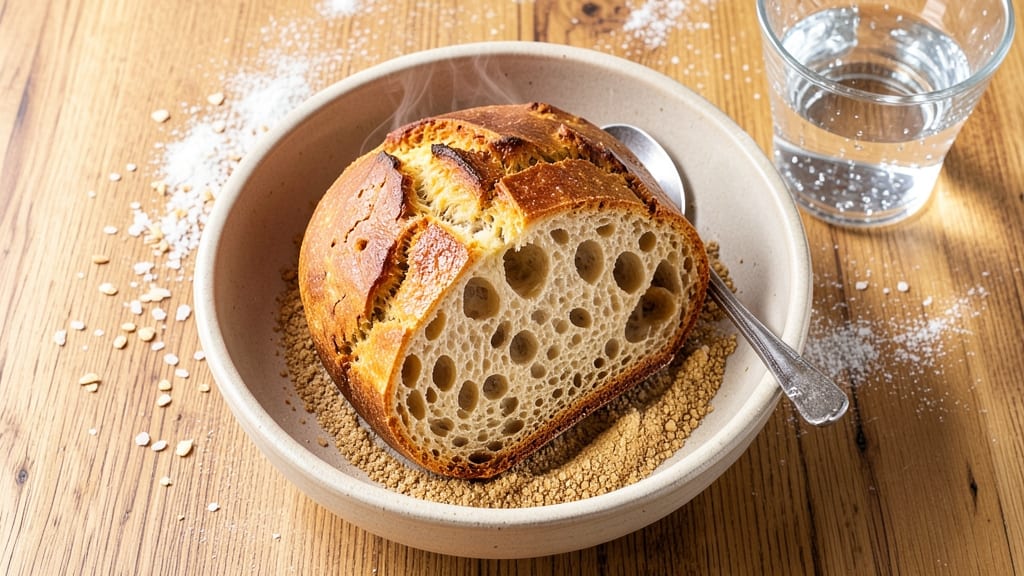
This airy whole wheat bread recipe proves you can have both nutrition and lightness in every slice. The secret lies in a strategic blend of whole wheat flour and vital wheat gluten, combined with a gentle autolyse technique that develops gluten without overworking the dough.
I've perfected this method after years of experimenting with dense whole wheat loaves—finally achieving that restaurant-quality rise at home.
The process begins with a wetter-than-usual dough that relies on proper hydration and a long, slow fermentation. This allows the whole wheat flour to fully hydrate and develop flavor while preventing the dense texture that often plagues whole wheat bread.
The key to that signature airy crumb? Generating steam during baking through a simple ice cube trick in the Dutch oven.
What you'll end up with is a loaf that's light and fluffy with an open, even crumb structure—no heavy, compact crumb here. The crust develops a beautiful golden-brown color while maintaining a satisfying crunch, and each slice offers that perfect balance of nutty whole wheat flavor without sacrificing texture.
This bread is ideal for sandwiches, toast, or simply enjoying with butter straight from the oven.
While the process requires patience (especially the overnight cold proof), the results are worth every minute. The dough's elasticity improves dramatically after the cold proof, leading to a better oven spring and that coveted airy interior. Perfect for those who want wholesome ingredients without compromising on quality or texture.
Ingredients for airy whole wheat bread
These carefully chosen ingredients balance nutrition and texture for restaurant-quality whole wheat bread.
| Ingredient | Amount | Notes |
|---|---|---|
| Whole Wheat Flour 🌾 | 3 ½ cups | King Arthur or Bob's Red Mill preferred |
| Vital Wheat Gluten 🌾 | ½ cup | For improved elasticity and rise |
| Instant Yeast 🍞 | ½ tsp | Active dry works too |
| Granulated Sugar 🍚 | ¼ cup | Feeds yeast for fermentation |
| Salt 🧂 | 1 ½ tsp | Kosher or sea salt preferred |
| Water 💧 | 1 ¾ cups | Lukewarm (110°F) |
| Olive Oil 🫒 | ½ cup | Extra-virgin for flavor |
| Honey 🍯 | 1 tbsp | Enhances browning and flavor |
| Ice Cubes ❄️ | 1 cup | For steam during baking |
| Cornmeal 🌽 | ½ cup | For dusting Dutch oven |
| Egg Wash (Optional) 🥚 | 1 whole | For golden crust |
The whole wheat flour makes or breaks this recipe—King Arthur or Bob's Red Mill are my go-tos for their consistent quality and better rise. Vital wheat gluten is non-negotiable here; it compensates for the lower gluten content in whole wheat flour, giving you that signature airy crumb. If you're buying yeast, check the expiration date—old yeast kills your rise. Store-bought flour often contains additives, so sift it first to remove any lumps. For the olive oil, extra-virgin adds subtle flavor that regular olive oil can't match.
No vital wheat gluten? Substitute with an extra 0.5 cup whole wheat flour, but expect a denser loaf. Short on honey? Maple syrup works in a pinch, though it has a stronger flavor. The water needs to be lukewarm (110°F)—too hot kills the yeast, too cold slows fermentation. For the egg wash, beat the egg with 1 tbsp water for a glossy finish. If you're avoiding eggs entirely, brush with water or milk instead. The ice cubes are key for steam—don't skip them if you want that perfect oven spring.
This dough improves with time, so ferment overnight in the fridge for best results. Store any leftovers in an airtight bag at room temperature for 3 days or freeze for 3 months. The bread reheats beautifully—wrap in foil and warm in a 350°F oven for 10 minutes. For extra crunch, toast slices in a dry skillet over medium heat for 1-2 minutes per side. The Dutch oven is essential—use it for both baking and cooling to maintain moisture.
Why You'll Love This Recipe
- No-Knead Magic: I swear by this trick—just mix the whole wheat flour, vital wheat gluten, and yeast with warm water, let it sit, then bake. No roller, no punching, no stress. The gluten blend makes it rise like a dream, even with whole grains.
- Taste Like Artisan: Here’s what sold me—the sugar caramelizes just enough to balance the earthy whole wheat, while the yeast keeps it light. Not dense, not gritty—it’s the kind of bread you’d pay extra for at a café, but you’re making it at home.
- Lunchbox Hero: Between us, this bread is my secret weapon for school lunches. It’s sturdy enough for sandwiches but still soft enough to eat plain with butter. (Yes, even on a Tuesday night when I’m too tired to think.)
- Budget-Friendly Staple: A loaf costs less than $2 to make and lasts forever. Freeze slices for toast later, or use it to bulk up soups. The vital wheat gluten stretches my grocery budget without sacrificing texture—no sad, crumbly whole wheat here.
Step-by-step instructions for airy whole wheat bread
Here's the method to achieve a light, fluffy loaf without compromising nutrition.
Mix the Dough with Precision
In a large mixing bowl, combine the 3.5 cups whole wheat flour and 0.5 cup vital wheat gluten. This gluten addition is crucial—it strengthens the dough's structure, compensating for whole wheat's natural density. Whisk these dry ingredients together to eliminate any lumps, then create a well in the center.
Add the 0.5 tsp instant yeast, 0.25 cup granulated sugar, 1.5 tsp salt, 0.5 cup olive oil, and 1 tbsp honey to the well. The sugar feeds the yeast while the honey enhances browning and flavor. Pour in 1.75 cups lukewarm water (110°F)—this temperature activates the yeast without killing it. Mix with a wooden spoon until just combined, then gradually incorporate the ice cubes one at a time.
The ice cubes create steam during baking, which helps develop that airy texture. After mixing, the dough should be shaggy but hold together when pressed. If it's too sticky, add 1 tablespoon more flour—but don't overdo it, as excess flour can make the bread dense.
Knead Until Elastic
Transfer the dough to a lightly floured surface and knead for 8-10 minutes by hand, or use a stand mixer with a dough hook on medium speed for 6-7 minutes. You're looking for a smooth, elastic dough that springs back when poked—this indicates proper gluten development.
I press down gently on the dough during the first minute—this prevents it from curling and ensures even contact with the surface. The dough should feel slightly tacky but not sticky. If it sticks to your hands, add a little more flour, but keep it minimal. Whole wheat dough behaves differently than white flour dough, so resist the urge to add too much extra flour.
First Rise for Maximum Fluffiness
Place the dough in a lightly greased bowl, cover with a damp kitchen towel, and let it rise in a warm place for 1.5 to 2 hours until it has nearly doubled in size. The warmth encourages yeast activity, while the damp towel prevents a dry skin from forming. You'll see bubbles forming on the surface and the dough will feel light when pressed gently.
This first rise is critical—it develops the gluten structure that will give your bread its airy texture. Don't rush it. If your kitchen isn't warm enough, place the bowl near a turned-off oven with the light on, or use a proofing box. The dough should rise to about 75% of its original height before shaping.
Shape and Second Rise
Punch down the risen dough to release air, then shape it into a loaf by folding the edges toward the center and rolling it tightly. Place the shaped loaf seam-side down in a 9x5-inch loaf pan that's been lightly greased or dusted with 0.25 cup cornmeal (half of the total amount). The cornmeal prevents sticking and adds a subtle flavor.
Cover the pan with a damp towel and let the dough rise again for 30 to 45 minutes until it domes slightly above the pan. This second rise ensures the bread will have good oven spring. The dough should feel light and springy when pressed gently with your finger. If it's still dense after 45 minutes, give it another 10 minutes—don't force it.
Bake for Perfect Texture
Preheat your oven to 375°F with a Dutch oven inside for 20 minutes. This step is essential—it creates steam that helps the bread rise properly. Carefully remove the Dutch oven and transfer the loaf pan inside. Bake for 35 to 40 minutes until the internal temperature reaches 205-210°F and the top is deep golden brown. Tap the loaf gently—the sound should be hollow, indicating it's fully baked.
For an optional golden crust, brush the top with egg wash (1 whole egg beaten with 1 tablespoon water) after 20 minutes of baking. The remaining 0.25 cup cornmeal can be sprinkled on top for added texture. If the bread browns too quickly, tent it loosely with aluminum foil. Let the bread cool in the pan for 10 minutes, then transfer to a wire rack to cool completely before slicing.
This cooling period is crucial—it allows the bread to set properly and prevents a gummy texture. The final result should be a loaf with a crisp crust, an open crumb, and a light, airy texture that belies its whole wheat base. Each slice should hold its shape when toasted, with a satisfying crunch.
Pro Tips For Making Airy Whole Wheat Bread
- Mix the Gluten First: Whole wheat flour can be stubborn, but tossing the vital wheat gluten with the flour before adding liquids saves you from lumps later. I used to skip this and ended up with dough that felt like glue—now I just sprinkle the gluten over the flour and whisk it in first.
- Let the Dough Rest Longer: This isn’t your grandma’s quick bread. Whole wheat dough needs at least 1.5 hours to relax and develop gluten properly—don’t rush it. I learned this after my first loaf turned out dense; now I set a timer and let it rise slowly at room temp, even if it means waiting an extra hour.
- Weigh Your Flour: Scooping whole wheat flour from the bag packs it down, and you’ll end up with a brick-like dough. Use a scale—450g of flour is not the same as a "cup" when it’s packed. I finally got consistent results after switching to grams, and the texture improved overnight.
- Steam the First 10 Minutes: Whole wheat bread dries out fast, so create a steam bath right when you bake it. Toss a handful of ice cubes or spray water in the oven before adding the loaf, then close the door immediately. This guarantees a soft, airy crumb instead of a sad, crusty exterior hiding dryness. (Yes, even if you’re impatient like me.)
Perfect pairings for airy whole wheat bread
Butter Spreads
This airy bread pairs beautifully with cultured butter for a classic combination. I recommend Plugrá European-Style Salted Butter—its rich, creamy texture contrasts perfectly with the bread's nutty whole wheat flavor.
For something more indulgent, try Land O'Lakes European Style Butter with Sea Salt and a drizzle of honey for a sweet-savory balance. 🥛
Toppings for Toast
Transform your bread into a hearty breakfast by topping slices with avocado mash (½ ripe avocado + 1 tbsp lemon juice + pinch of salt) and everything bagel seasoning. Another favorite is ricotta cheese spread with sliced figs and a sprinkle of flaky sea salt.
For a savory option, layer with hummus, sliced cucumber, and cherry tomatoes.
Cheese Boards
Use this bread as the foundation for an elevated cheese board. Pair with aged cheddar, brie, and goat cheese alongside sliced apples, walnuts, and cracked black pepper.
The bread's airy texture soaks up flavors beautifully. For a vegetarian twist, add marinated olives and dried apricots to complement the cheeses.
Sandwich Fillers
This bread excels in sandwiches—try a grilled chicken salad with mixed greens, shredded carrots, cucumber, and balsamic vinaigrette. For a vegetarian option, layer with roasted red peppers, feta cheese, and tzatziki. The airy crumb prevents sogginess, making it ideal for hearty fillings. 🥪
Sweet Pairings
Dip warm slices in dark chocolate melted with a pinch of sea salt for a decadent treat. Or spread with almond butter and top with banana slices and crushed pistachios.
The bread's light texture balances rich spreads without becoming heavy. For a coffee pairing, serve with espresso and a sprinkle of cinnamon.
Meal Prep Uses
Slice the bread and store in an airtight container for up to 3 days—perfect for quick lunches. Pack with turkey slices, Swiss cheese, and mustard for a portable sandwich.
The bread's airy quality holds up well when toasted, making it great for French toast (dip slices in egg mixture with cinnamon and cook in butter).
Nutrition facts
Frequently asked questions
Why does my whole wheat bread always turn out dense?
Whole wheat flour absorbs more water and has less gluten than white flour, which naturally makes bread denser. The key is using vital wheat gluten to strengthen the structure and following the autolyse technique (mixing flour and water first) to fully hydrate the flour. Also, don't skip the cold proof—it helps develop gluten gradually for a lighter crumb.
Can I substitute all-purpose flour for whole wheat?
You can replace up to 50% of the whole wheat flour with all-purpose flour, but the texture will be less nutritious and more like regular bread. For best results, stick with the whole wheat base and vital wheat gluten—they work together to create that airy structure. If you must substitute, reduce the total flour by 1-2 tablespoons since all-purpose absorbs less water.
How do I know when the dough is properly kneaded?
The dough is ready when it's smooth, elastic, and springs back slowly when poked (about 1-2 seconds). For whole wheat dough, it should feel slightly tacky but not sticky. Test by doing the "windowpane test"—stretch a small piece of dough until it's translucent but doesn't tear. If it holds without breaking, it's properly developed.
What if my bread doesn't rise enough?
Check your yeast first—it might be old or inactive. Make sure your water is lukewarm (110°F) and your kitchen is warm enough (at least 75°F). If using a cold proof, give it the full 8-12 hours in the fridge. For extra lift, try adding 1 extra teaspoon of yeast or proofing near a turned-on oven light.
Can I make this bread without a Dutch oven?
Yes! Use a heavy oven-safe pot with a lid or even a baking sheet. For steam, place a metal bowl of boiling water on the lower oven rack. Bake at 375°F for 40-45 minutes, tenting with foil if the top browns too quickly. The bread won't be as crispy, but the crumb will still be light and airy.