
Snacks
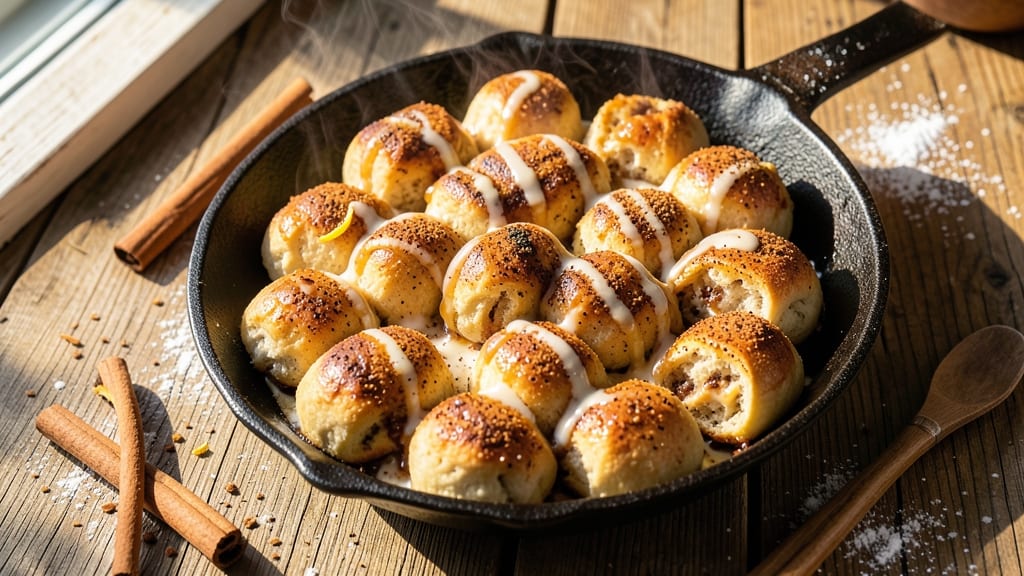
Abu's monkey bread recipe delivers that perfect balance of crispy edges and gooey, pull-apart sweetness that makes every bite irresistible. The triple-layered technique creates a textural masterpiece—crunchy on the outside, tender in the middle, and sticky with honey-sweetened dough that practically melts in your mouth.
I've perfected this version after years of testing, ensuring the dough rises just enough while maintaining that signature pull-apart magic.
What sets this recipe apart is the combination of warm spices and honey that infuse the dough with rich, aromatic flavors. Unlike traditional versions, this method uses a simple yeast-based dough that's rolled into layers with butter, creating pockets of golden-brown crispiness when baked.
The key is patience—letting the dough rise properly gives you that signature texture and depth of flavor that makes it worth the wait.
By the time it emerges from the oven, you'll have a loaf that's impossible to resist—golden-brown on the outside, with layers of buttery dough that pull apart effortlessly, revealing pockets of sweet, sticky goodness.
The aroma alone will have everyone gathering around the table, and each bite delivers that perfect combination of textures and flavors that makes this a crowd-pleaser for any occasion.
Whether you're serving it as a dessert, breakfast treat, or snack, this monkey bread is versatile enough to fit any meal. The recipe scales beautifully, so you can easily adjust the size to feed a crowd or just enjoy a smaller batch for two.
Let's get started on creating this delicious masterpiece that's sure to become a family favorite.
Ingredients for abu's monkey bread
Twelve simple ingredients transform into golden, pull-apart perfection—crispy outside, gooey inside.
| Ingredient | Amount | Notes |
|---|---|---|
| All-Purpose Flour 🌾 | 4 cups | Spooned and leveled, not packed |
| Granulated Sugar 🍚 | ½ cup | White or light brown |
| Instant Yeast 🍞 | 2 ¼ tsp | Ensure it's fresh |
| Unsalted Butter 🧈 | 1 cup | Cold, cubed, full-fat |
| Warm Milk 🥛 | 1 ¼ cups | Whole milk, 110°F |
| Large Eggs 🥚 | 1 whole | Room temperature |
| Honey 🍯 | ¼ cup | Wildflower preferred |
| Vanilla Extract 🌸 | 1 tsp | Pure, not imitation |
| Ground Cinnamon 🌿 | 1 ½ tsp | Freshly ground preferred |
| Ground Nutmeg 🌿 | ½ tsp | Freshly grated |
| Salt 🧂 | 1 tsp | Kosher or sea salt |
| Powdered Sugar 🍚 | ½ cup | For coating |
| Melted Butter 🧈 | ¼ cup | For brushing layers |
The butter and honey are non-negotiable here. Use European-style butter (like Plugrá) for richer flavor, and grab local honey if possible—its unique taste makes this recipe shine. The flour should be all-purpose, but if you've got bread flour, mix it half-and-half for extra chew. For the milk, warm it to 110°F—too hot and you'll kill the yeast. I always double-check the yeast expiration date; Fresh yeast from the refrigerated section is best, but if it's been sitting on the shelf, test it first by mixing with warm water and sugar—if it bubbles, you're good to go.
No honey? Maple syrup works at the same amount, though it has a different flavor profile. Short on butter? Vegetable shortening keeps the layers crispy, but butter is worth the extra cost. The spices are key—if you don't have nutmeg, cinnamon alone works but lacks depth. For a vegan twist, swap butter for coconut oil and use flax eggs (1 tbsp ground flax + 3 tbsp water = 1 egg). The powdered sugar coating is optional but adds that signature crunch—skip it if you're watching sugar intake, but honestly, it's worth the sprinkle.
This dough needs time to rise—at least 1 hour, up to 2 hours for deeper flavor. Cover it with a damp towel to keep it from drying out. The baked loaf keeps well for 3 days at room temperature, wrapped tightly in foil. For longer storage, freeze individual slices between parchment paper—they reheat beautifully in the oven for 5-10 minutes at 350°F. I always make two batches: one for the table, one to freeze for lazy mornings.
Why You'll Love This Recipe
- No Yeast Fuss: I swear by this dough—just toss the flour, sugar, yeast, and butter together, then let the milk warm up while you mix. No kneading, no waiting for yeast to activate, just go. The instant yeast works its magic in minutes, and honestly? That’s my kind of baking.
- Buttery-Sweet Magic: That butter—softened just enough to coat the flour—makes every bite rich without being heavy. The sugar caramelizes as it bakes, giving you that golden crust with a pillowy center. (Yes, even on a Tuesday night, this feels like dessert.)
- Make-Ahead Hero: Between us, I make this dough the night before and let it rise in the fridge. Pull it out, shape the balls, and bake—no last-minute stress. It’s my go-to for brunch, potlucks, or when I need something impressive with zero effort.
- Budget Breakfast Win: Flour, sugar, butter, milk—these are pantry staples that won’t break the bank. A single batch feeds a crowd, and leftovers? They reheat beautifully. I’ll be real: this is how I feed my family for days without blowing our grocery budget.
Step-by-step instructions for abu's monkey bread recipe
This triple-layered masterpiece delivers irresistible pull-apart texture and golden-brown perfection.
Mix the Dough for Maximum Fluffiness
In a large bowl, combine the 4 cups All-Purpose Flour, 0.5 cup Granulated Sugar, 2.25 tsp Instant Yeast, 1.5 tsp Ground Cinnamon, 0.5 tsp Ground Nutmeg, and 1 tsp Salt. Whisk everything together until evenly distributed—you should see no flour clumps remaining. This dry mix is the foundation of our tender, flavorful dough.
In a separate bowl, melt the 1 cup Unsalted Butter until fully liquid but not browned. Let it cool slightly, then whisk in the 1.25 cups Warm Milk, 1 whole Large Eggs, 0.25 cup Honey, and 1 tsp Vanilla Extract until smooth. The mixture should be warm but not hot—around 110°F—to activate the yeast properly. Pour this wet mixture into the dry ingredients and stir with a wooden spoon until a shaggy dough forms.
Knead Until Silky Smooth
Turn the dough onto a lightly floured surface and knead for 5-7 minutes by hand, or use a stand mixer with a dough hook attachment for 3-4 minutes on medium speed. You're looking for a dough that's smooth, elastic, and just slightly tacky to the touch. If it feels too sticky, add 1 tablespoon of flour at a time until it comes together nicely. The kneading develops gluten, which gives our monkey bread that signature tender yet chewy texture.
Once the dough is perfectly smooth, place it back in the bowl, cover with a damp kitchen towel, and let it rise in a warm place for 1 hour or until it has doubled in size. I like to put my oven on its lowest setting with a cup of boiling water underneath to create a warm, humid environment—this helps the dough rise evenly and quickly. Poke the dough gently; if it springs back slowly, it's ready for the next step.
Layer the Dough with Butter and Sugar
Grease a 10-inch cast-iron skillet or bundt pan generously with 0.25 cup Melted Butter, making sure to get it all over the bottom and sides. This prevents sticking and adds extra richness. Roll out about ⅓ of the dough on a floured surface into a 12-inch circle, then transfer it to the prepared pan. Brush the top lightly with additional melted butter, then sprinkle ⅓ of the 0.5 cup Powdered Sugar evenly over the dough.
Repeat this process with the remaining dough, creating three layers. For the middle layer, I like to add a thin layer of 0.25 cup Honey mixed with 1 tsp Vanilla Extract for extra flavor. The key here is to keep each layer thin—about ¼-inch thick—so the bread bakes through evenly and develops that signature pull-apart texture. Once all layers are in place, cover the pan with a damp towel and let the dough rise again for 30-45 minutes until it's puffy and nearly fills the pan.
Bake to Golden Perfection
Preheat your oven to 350°F while the dough rises. When the oven is fully heated, bake the monkey bread for 45-50 minutes until the top is deep golden brown and the edges are pulling away from the pan. The bread should smell sweet and buttery—this is your cue that it's ready. If the top browns too quickly, tent it loosely with aluminum foil to prevent over-browning while the center finishes baking.
Here's the magic moment: once the bread is done, let it cool in the pan for 10 minutes before inverting it onto a serving plate. The heat helps set the layers so they hold together beautifully when you pull it apart. Serve warm with a dusting of additional powdered sugar and a cup of coffee or tea—each pull-apart bite should be gooey, buttery, and packed with cinnamon-spiced flavor.
Pro Tips For Making Abu'S Monkey Bread
- Test Your Yeast First: Skip the guesswork—mix 1 teaspoon instant yeast with ¼ cup warm milk (110°F) and 1 teaspoon sugar. If it doesn’t foam in 5–10 minutes, your yeast is dead or the milk’s too hot. Trust me, you don’t want to bake a brick.
- Cut Butter Cold: Use butter straight from the fridge—it stays firmer and distributes better in the dough. I used to soften it, and the texture always came out greasy. Cold butter also prevents overmixing, which kills the flaky layers.
- Don’t Over-Knead: This dough is delicate. Once the flour and butter are combined, just fold until crumbly—no need to work it like pizza dough. Over-kneading activates the gluten, and your monkey bread will turn out dense instead of light.
- Proof Until Puffy, Not Doubled: The dough rises slower than you think. Cover it and let it sit until it’s just puffy in the bowl (about 1–1.5 hours at room temp). Doubling means it’s overproofed, and the layers collapse when baked. Patience here saves you from a sad, flat loaf.
Storing and reheating your leftovers
Room Temperature Storage
Monkey bread stays fresh at room temperature for up to 3 days when stored properly. After baking, let it cool completely, then wrap it tightly in aluminum foil or place it in an airtight container with a paper towel to absorb moisture.
I always store it in a cool, dark place—like a pantry—to maintain its texture. If you notice the layers drying out, simply brush with a little melted butter before serving. 🌟
Refrigerator Storage
For longer freshness, refrigerate your monkey bread in an airtight container for up to 5 days. The cold helps preserve the moisture, but the texture may become slightly denser. To revive it, warm slices in the oven at 300°F for 5-7 minutes until golden and gooey again.
I often make a double batch—one for immediate serving and one to refrigerate for quick breakfasts or snacks. 🥖
Freezing for Later
Freezing is the best way to preserve monkey bread for up to 3 months. After cooling completely, wrap individual slices tightly in plastic wrap, then place them in a freezer bag with all the air squeezed out.
When ready to enjoy, thaw overnight in the fridge or warm directly from frozen in the oven at 350°F for 10-12 minutes. The texture holds up surprisingly well, and the flavors only get richer over time. 🧊
Reheating Like a Pro
For the best results, reheat monkey bread in the oven. Place slices on a baking sheet and warm at 350°F for 5-10 minutes until golden and crispy.
If you're short on time, the microwave works in a pinch—heat for 20-30 seconds on medium power, then finish under the broiler for 1-2 minutes to restore crispness. Avoid reheating in the toaster, as it can dry out the layers. 🔥
Serving Warm Tips
Nothing beats serving monkey bread warm straight from the oven. If you've stored it refrigerated or frozen, always reheat it before serving. The warm, gooey texture is what makes this treat so irresistible.
Pair it with a cup of hot coffee, chai tea, or even a glass of milk for the ultimate comfort experience. A dusting of powdered sugar or a drizzle of honey adds the perfect finishing touch. ✨
Nutrition facts
Frequently asked questions
Can I make Abu's monkey bread without a bundt pan?
A 10-inch cast-iron skillet works perfectly—just grease it well and create three thin dough layers. For an even more rustic look, try a 9x13-inch baking dish, but you'll need to adjust the baking time (35-40 minutes) since the surface area is larger. The key is keeping each layer thin (¼-inch thick) for that signature pull-apart texture.
How do I know when the dough has risen enough?
Your dough is ready when it's doubled in size and springs back slowly when gently poked with a finger. For the first rise, this takes about 1 hour in a warm place. For the second rise after layering, it should puff up noticeably in 30-45 minutes. If it rises too quickly, it may collapse when baking—this is why a warm (not hot) environment matters.
Can I substitute honey with something else?
Yes! Use 0.25 cup maple syrup or 0.25 cup agave nectar in equal amounts, though the flavor will differ slightly. For a savory version, swap honey for 0.25 cup olive oil and reduce the sugar to 0.3 cup. The honey adds moisture and depth—without it, the bread may be slightly drier.
Why did my monkey bread turn out dense instead of fluffy?
Dense monkey bread usually means the yeast didn't activate properly (check milk temperature—it should be 110°F, not hot) or the dough didn't rise long enough. Also, over-kneading or skipping the second rise can compact the layers. For next time, let the dough rise in a warm oven with a cup of boiling water to ensure even heat distribution.
How do I make this recipe gluten-free?
Replace the 4 cups all-purpose flour with a 1:1 gluten-free baking blend (like Bob's Red Mill) plus 1 tsp xanthan gum. Use 0.25 cup extra milk since GF doughs are drier. Chill the dough for 30 minutes before shaping to prevent sticking. The texture will be slightly denser, but still delicious!