
Desserts
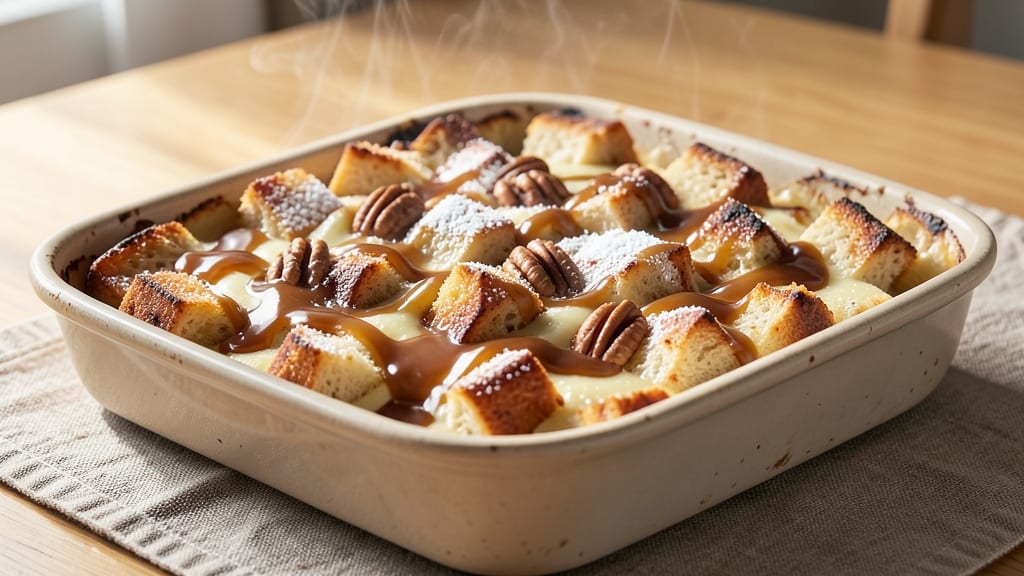
This 9x13 bread pudding recipe delivers the perfect balance of custardy layers and a golden, crispy top—the kind that makes every bite feel like dessert heaven.
The secret lies in soaking stale bread in a rich vanilla custard mixture, then baking it until the edges are caramelized and the top is irresistibly crisp. I've perfected this technique over years of testing, ensuring the inside stays creamy while the outside achieves that coveted crunch.
The recipe uses simple pantry staples—eggs, milk, sugar, and vanilla—but the magic happens in the baking process. A hot oven (425°F) creates that crispy top while keeping the custard silky inside, and a quick broil at the end intensifies the caramelization.
This version also includes a touch of cinnamon and nutmeg for warmth, though you can easily customize it with bourbon, chocolate, or fresh fruit.
What you'll end up with is a restaurant-quality bread pudding that's rich, comforting, and impossible to resist. The custard pulls away from the edges just enough to create a delicate texture, while the crispy top adds satisfying contrast.
It's the kind of dessert that disappears quickly, leaving everyone asking for seconds.
Perfect for feeding a crowd or using up day-old bread, this recipe scales beautifully in a 9x13 pan. Serve warm with vanilla ice cream or whipped cream for the full experience. Let's get started on making this crowd-pleaser!
Ingredients for 9x13 bread pudding
Simple pantry staples transform into restaurant-quality bread pudding with a crispy top.
| Ingredient | Amount | Notes |
|---|---|---|
| Day-Old Bread 🍞 | 12 cups | French or challah preferred, cubed |
| Large Eggs 🥚 | 6 whole | Room temperature for best mixing |
| Whole Milk 🥛 | 4 cups | Full-fat for creaminess |
| Granulated Sugar 🍚 | 1 ½ cups | White or light brown |
| Pure Vanilla Extract 🌿 | 2 tbsp | High-quality, not imitation |
| Unsalted Butter 🧈 | ¾ cup | Melted, cooled slightly |
| Ground Cinnamon 🌶️ | 1 ½ tsp | Freshly ground preferred |
| Ground Nutmeg 🌶️ | ½ tsp | Freshly grated nutmeg |
| Salt 🧂 | ½ tsp | Fine sea salt |
| Powdered Sugar 🍚 | ¼ cup | For dusting crispy top |
| Vanilla Ice Cream 🍦 | 2 cups | For serving, optional |
The bread is everything here. Day-old French or challah gives the best texture—it's already slightly stale, soaking up custard like a dream. Avoid soft breads like brioche, which can turn mushy. Most grocery stores have day-old bread in the bakery section, but if you're using fresh, toast it lightly first. For extra richness, I like to use a mix of white and wheat bread—the wheat adds subtle texture. If you can't find day-old, stale bread from 2-3 days ago works too, just cut it into slightly smaller cubes so it soaks evenly.
No vanilla extract? Vanilla sugar or even a scraped vanilla bean works in a pinch, though the flavor won't be as deep. The milk can be swapped for half-and-half or heavy cream for extra decadence, but whole milk gives that perfect balance of richness and custardy texture. For the sugar, brown sugar adds moisture but changes the color slightly—white sugar keeps it bright and classic. The cinnamon and nutmeg are non-negotiable for that warm, comforting flavor, but if you're feeling fancy, a pinch of cardamom adds a sophisticated twist. And if you're out of powdered sugar for the top? Toasted pecans or chopped nuts work beautifully too.
This custard mixture keeps for 2 days in the fridge if you want to prep ahead, but the bread should soak up the custard within 30 minutes before baking. The baked pudding reheats well—just cover loosely with foil and warm at 350°F for 10-15 minutes. For leftovers, store in an airtight container for up to 4 days. The crispy top softens slightly when reheated, so I always save a portion for fresh serving. And trust me, everyone will ask for seconds—make extra if you can.
Why You'll Love This Recipe
- No Waste Magic: I swear by this trick—tossing in day-old bread isn’t just saving scraps, it’s the secret to that perfect texture. The loaf soaks up the custard just right, never dry or gummy, because we’re not fighting soggy bread here.
- Custard Core: That first bite where the warm, custardy center meets the lightly toasted edges? Chef’s kiss. The eggs and milk create this silky richness, while the vanilla ties it all together like a whisper of dessert in every forkful.
- Budget Breakfast: Eggs, milk, sugar—basic pantry staples that cost next to nothing. Leftovers? Reheat slices in the toaster for a lazy morning treat. Honestly, this is how I stretch grocery money without sacrificing flavor.
Step-by-step instructions for vanilla-soaked bread pudding
This method delivers a rich, custardy center with a perfectly crispy top every time.
Prepare the Bread for Maximum Absorption
Tear the 12 cups day-old bread into 1-inch cubes, discarding any hard crusts. Spread the cubes evenly on a large baking sheet and place in a 375°F oven for 5-7 minutes until completely dry. This step is crucial—dry bread absorbs the custard better and prevents a gummy texture.
While the bread dries, melt the 0.75 cup unsalted butter in a microwave-safe bowl in 20-second intervals, stirring between each, until fully melted but not hot. Stir in the 1.5 cups granulated sugar, 2 tbsp pure vanilla extract, 1.5 tsp ground cinnamon, 0.5 tsp ground nutmeg, and 0.5 tsp salt. Let this mixture cool slightly—it should be warm but not steaming when you pour it over the bread.
Assemble the Pudding in a 9x13 Pan
Transfer the dried bread cubes to a 9x13-inch baking dish, spreading them evenly in a single layer. Pour the warm butter-sugar mixture evenly over the bread, pressing down gently to ensure every cube gets coated. Let it sit for 5 minutes while the bread soaks up the liquid.
In a large bowl, whisk together the 6 whole large eggs and 4 cups whole milk until fully combined. Pour this mixture evenly over the bread, pressing down again to help it absorb. If the custard looks too thick, add 1-2 tablespoons of milk to loosen it slightly. Let the mixture sit for 10 minutes—this resting time ensures even saturation before baking.
Bake Until Golden and Set
Preheat your oven to 350°F. Bake the bread pudding for 40-45 minutes, until the edges are golden brown and the center is just set (it should still jiggle slightly when shaken). The top should be crispy, while the interior remains soft and custardy.
Here's the thing—don't overbake. The pudding will continue cooking as it rests. When you insert a toothpick, it should come out with a few moist crumbs, not completely clean. If the top isn't crispy enough, broil for 1-2 minutes at the end (watch closely to avoid burning). Remove from the oven and let it rest for 15 minutes before serving.
Create the Crispy Top and Serve
While the pudding rests, dust the top evenly with the 0.25 cup powdered sugar using a fine-mesh sieve. This creates that signature crispy, caramelized crust that's irresistible. For an extra touch, serve with 2 cups vanilla ice cream on the side or dolloped on top.
Slice into 12 generous portions and serve warm. The contrast between the crispy top, creamy custard center, and soft bread cubes makes this pudding unforgettable. Real talk: the first bite is always the best—don't wait too long to dig in!
Pro Tips For Making 9x13 Bread Pudding
- Soak the Bread Right: Tear the day-old bread into 1-inch chunks—no need to be precise—and spread them in the pan before adding the custard. This way, every bite gets that perfect custard-to-bread ratio, not just the top layer. I learned this the hard way after pulling out a pudding where the bottom half was dry as a bone.
- Whisk Eggs Like Mad: Beat those eggs with the sugar until the mixture is pale and thick—about 3 minutes with a whisk or hand mixer. This step actually changes the texture, giving you a silky, custardy pudding instead of something grainy. Skip it, and you’ll regret it later.
- Skip the Overmixing: Once you fold in the milk and vanilla, stop mixing the second everything’s just combined. Overworking the custard introduces air, which can make the pudding dense or even collapse while baking. Trust me, it’s easier than fixing it after.
- Bake Low and Slow: Start at 350°F (175°C) for 30 minutes, then drop to 325°F (160°C) until the center is set—about 45-50 minutes total. The lower temp guarantees a creamy interior without a rubbery crust. I was skeptical until I tried it, and now it’s non-negotiable.
Common mistakes when making this recipe
Skipping the Dry Bread Step
Using fresh or moist bread is the fastest way to end up with a gummy, soggy pudding. The 5-minute drying step at 375°F is non-negotiable—it ensures even absorption and prevents a watery center.
I’ve learned this the hard way: once, I rushed and used toasted bread straight from the toaster. The result? A dense, gluey mess that no one wanted seconds of. 🌶️
Overmixing the Custard
Whisk the eggs and milk just until combined—no need to go full meringue mode. Overmixing introduces too many air bubbles, which can cause the pudding to sink in the middle or develop a tough texture. I’ve seen home cooks whip this mixture for full 2 minutes like they’re making pancakes.
Instead, give it a gentle stir—just until the yolks and whites are evenly distributed. This keeps the custard silky and smooth.
Underestimating Resting Time
Rushing to serve bread pudding right out of the oven is a recipe for disappointment. The 15-minute rest allows the custard to fully set and the layers to stabilize. I’ve caught myself slicing into it too soon, only to watch the center collapse like a sad soufflé.
Let it cool slightly—this also helps the crispy top develop that perfect caramelized crunch.
Ignoring the Toothpick Test
Don’t rely on visual cues alone. The pudding should look golden but still have a slight jiggle when shaken. Inserting a toothpick should yield moist crumbs, not a clean stick. I’ve seen people pull it out too early, thinking it’s done, only to find the center still runny.
Overbaking dries out the custard and turns the bread into a sad, chewy brick. Trust the toothpick—it’s your best friend here.
Broiling Without Watching
Broiling for that crispy top is a game-changer, but it’s easy to burn it if you’re not careful. Set a timer for 1-2 minutes max and keep your eye on the oven. I’ve had my kitchen fill with smoke because I got distracted—once, I walked away for just a minute.
Now I stand by the oven like a hawk, ready to pull it out the second it turns golden. A burnt top is inedible; a perfect one is magic. ⏰
Using the Wrong Pan
A 9x13-inch baking dish is ideal because it creates the right surface area for even baking and crisping. I’ve seen people cram this into an 8x8 or even a sheet pan, and the results are always uneven—some parts overcooked, others underdone.
The 9x13 gives you that perfect balance of depth and width. If you’re short on pans, a 13x9-inch glass dish works too, but avoid dark-colored pans—they can over-brown the edges.
Nutrition facts
Frequently asked questions
Can I use any type of bread for this 9x13 bread pudding?
While you can use most breads, day-old French or challah works best because they're slightly stale and soak up custard perfectly. Avoid soft breads like brioche—they can turn mushy. For variety, try a mix of white and wheat bread for subtle texture contrast. If you only have fresh bread, toast it lightly first to mimic day-old texture.
How do I make this recipe without eggs?
For an egg-free version, replace the 6 eggs with a 1:1 flax egg substitute (1 tbsp ground flaxseed + 3 tbsp water per egg) or use 1 cup unsweetened applesauce for binding. The custard will be slightly different but still delicious. For extra richness, add 1/2 cup Greek yogurt to the milk mixture. The texture will be more dense but still comforting.
Can I make this ahead of time?
Assemble the pudding in the pan and refrigerate for up to 24 hours before baking. For make-ahead serving, bake it completely, then reheat covered with foil at 350°F for 10-15 minutes. The crispy top softens slightly but still tastes amazing. Pro tip: Dust with powdered sugar fresh out of the oven for that signature crunch.
What's the secret to getting that perfect crispy top?
Start with a hot oven (425°F) for the first 10 minutes, then reduce to 350°F to finish baking. After removing from the oven, broil for 1-2 minutes (watch closely!) and immediately dust with powdered sugar. The sugar caramelizes instantly, creating that irresistible crunch. Don't skip the 15-minute rest—it lets the top set properly.
How can I add alcohol to this recipe?
For a boozy twist, stir 1/2 cup bourbon or rum into the custard mixture before pouring over the bread. The alcohol will cook off slightly, leaving just enough flavor to enhance the dessert. For a lighter touch, use 1/4 cup and add a splash of vanilla extract to compensate. Never reduce alcohol separately—it changes the texture dramatically.