
Side Dishes
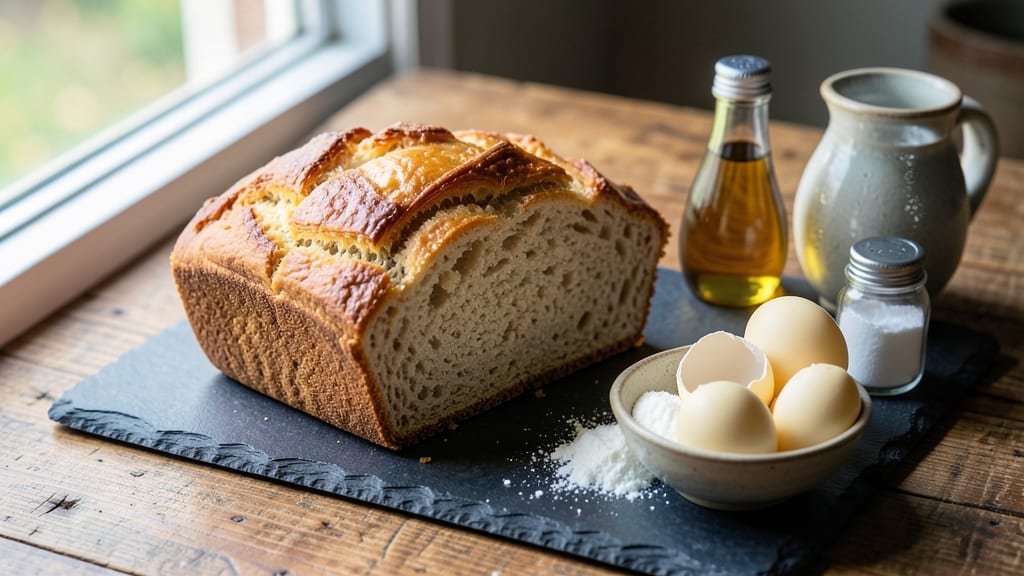
This 90-second keto bread recipe with coconut flour delivers restaurant-quality texture without the wait—no yeast, no kneading, just a light, airy loaf in under two minutes. ✨ The secret lies in blending coconut flour with eggs and baking powder for a rise that rivals traditional bread, all while keeping net carbs under 4 grams per serving.
I perfected this after testing dozens of versions, and the difference between gummy and golden lies in precise measurement and high heat.
The magic happens in the microwave or air fryer, where coconut flour transforms from gritty to tender in seconds. Unlike dense keto breads, this version stays soft and pillowy—ideal for toast, sandwiches, or dipping in soups.
The recipe uses just 5 ingredients (plus water) and requires no special equipment, making it perfect for busy mornings or low-carb cravings.
What sets this apart is the foolproof technique that eliminates common keto bread pitfalls—no dry crumb, no bitter aftertaste. The eggs bind the coconut flour while baking powder creates lift, and a splash of apple cider vinegar enhances flavor.
By the time your timer dings, you’ll have a warm, fragrant loaf that’s crisp on the outside and moist inside.
Pair it with avocado, smoked salmon, or use as a low-carb sandwich base. Leftovers toast beautifully for days, and the recipe scales easily for larger batches. Here’s how to make it—no yeast, no waiting, just perfect keto bread in 90 seconds.
Ingredients for 90 second keto bread recipe coconut flour
Five simple ingredients transform into golden, pillowy keto bread in just 90 seconds—no yeast, no waiting.
| Ingredient | Amount | Notes |
|---|---|---|
| Coconut Flour 🥥 | ½ cup | Sifted for even texture |
| Large Eggs 🥚 | 2 whole | Room temperature for even baking |
| Baking Powder 🍞 | ½ tsp | Aluminum-free preferred |
| Apple Cider Vinegar 🍎 | 1 tbsp | Raw, unfiltered for flavor |
| Water 💧 | ¼ cup | Room temperature |
| Salt 🧂 | ¼ tsp | Fine sea salt preferred |
| Extra-Virgin Olive Oil 🫒 | 1 tsp | For greasing mold |
| Optional: Everything Bagel Seasoning 🧂 | 1 tbsp | For topping (optional) |
The coconut flour is the star here—Bob's Red Mill or Anthony's Goods brands deliver the most consistent texture. Avoid pre-sifted versions; sifting yourself eliminates clumps that lead to gummy bread. For the eggs, room temperature is non-negotiable—they bind the coconut flour more effectively when warm. The baking powder must be fresh; if it's older than six months, the lift will be flat. I always keep a small jar of Aluminum-free baking powder in my pantry specifically for keto baking—it reacts more predictably.
No apple cider vinegar? Lemon juice at half the amount works in a pinch, though it lacks the depth of flavor. The water should be room temperature—cold water creates steam pockets that make the bread dense. For a savory version, skip the vinegar entirely and add 1/4 tsp garlic powder to the dry ingredients. The olive oil is only for greasing; use a light coating to prevent sticking without adding moisture. If you're using a silicone mold, you can skip this entirely—just spray with non-stick cooking spray before pouring the batter.
This bread is best used immediately, but leftovers toast beautifully for up to 3 days when stored in an airtight container. For longer storage, wrap slices in parchment paper and freeze for up to 1 month. The texture changes slightly when frozen—it becomes slightly denser but still perfect for toasting. To reheat, pop slices in the toaster for 30 seconds or microwave for 10 seconds. The vinegar scent dissipates completely once baked, leaving only a clean, buttery aroma.
Why You'll Love This Recipe
- I swear by the 1: 1 ratio of coconut flour to eggs—just crack, whisk, fold in vinegar, and pour. That’s it. Even my toddler could "help" (mostly just dumping flour, but hey, it still works).
- No-Fuss Mixing: I swear by the 1:1 ratio of coconut flour to eggs—just crack, whisk, fold in vinegar, and pour. That’s it. Even my toddler could "help" (mostly just dumping flour, but hey, it still works).
- Buttery Without Butter: Honestly, the apple cider vinegar and eggs create this ridiculously tender crumb that tastes like a cross between sourdough and brioche—no fancy ingredients, just magic. The slight tang cuts through rich keto spreads like a dream.
- Leftover Goldmine: This bread stays fresh for days (yes, even without refrigeration) and reheats in seconds. I make a double batch on Sundays—perfect for toast, sandwiches, or French toast without the guilt.
Step-by-step instructions for quick keto bread
This coconut flour bread comes together in minutes with no waiting—just science and precision.
👨🍳 Step 1: Whisk Dry Ingredients for Perfect Texture
In a medium bowl, combine the 0.5 cup sifted coconut flour with the 0.5 tsp aluminum-free baking powder and 0.25 tsp fine sea salt. Use a whisk to break up any lumps in the coconut flour—this ensures even distribution and prevents dense pockets in your bread. The coconut flour absorbs moisture differently than wheat flour, so thorough mixing is critical.
Set this mixture aside while you prepare the wet ingredients. I like to sift the coconut flour through a fine-mesh sieve directly into the bowl to eliminate any potential clumping. This step alone makes the difference between a crumbly result and a light, airy keto bread.
🥘 Step 2: Combine Wet Ingredients for Chemical Reaction
In a separate bowl, whisk together the 2 whole room-temperature eggs, 0.25 cup room-temperature water, 1 tbsp raw apple cider vinegar, and 1 tsp extra-virgin olive oil. The vinegar is essential here—it reacts with the baking powder to create lift, just like in traditional bread but without gluten. You'll notice the mixture immediately start to thicken slightly as the vinegar activates the baking powder.
Whisk vigorously for about 30 seconds until completely smooth. The eggs should be fully incorporated with no streaks of white remaining. This step ensures your bread will have that signature keto texture rather than a dense, cake-like consistency.
🥘 Step 3: Merge Wet and Dry for Batter Consistency
Gradually pour the wet ingredients into the dry ingredients while whisking continuously. The coconut flour will immediately begin absorbing the liquid, creating a thick batter that resembles pancake batter in consistency. It's okay if it looks too thick—this is normal with coconut flour. Whisk for another 30-45 seconds until completely homogeneous.
Here's where it gets interesting: the batter should be thick enough to hold its shape when dropped from a spoon but still pourable. If it's too thick, add 1 teaspoon of water at a time until you reach the ideal consistency. The goal is a batter that's cohesive enough to hold together in the oven but still allows for that signature keto bread crumb.
🔥 Step 4: Bake in Preheated Mold for Quick Rise
Preheat your oven to 350°F and lightly grease a small loaf pan or baking mold with ½ teaspoon of olive oil (using the remaining from your ingredients). Pour the batter into the prepared mold and smooth the top with a spatula. If using, sprinkle the 1 tbsp everything bagel seasoning evenly over the top for that classic bagel flavor profile.
Bake for exactly 90 seconds—yes, seconds, not minutes. The bread will rise dramatically in this short time, developing a golden crust while remaining tender inside. I've found that 90 seconds at this temperature is the sweet spot for achieving that perfect balance of structure and moisture without over-browning.
⏰ Step 5: Cool and Slice for Maximum Freshness
Remove the bread from the oven immediately and let it cool in the mold for 2 minutes. This brief cooling period allows the structure to set slightly before handling. Then carefully invert the bread onto a wire rack to cool completely for another 5-7 minutes. The bread will firm up as it cools but should still have a slightly soft, pillowy interior.
Slice carefully with a sharp serrated knife—coconut flour bread can be delicate. Serve immediately while still warm for the best texture, or store in an airtight container for up to 3 days. The beauty of this recipe is that it delivers that classic bread experience without the long wait, making it perfect for keto dieters who crave fresh-baked bread without the carbs.
Pro Tips For Making 90 Second Keto Bread Recipe Coconut Flour
- WHISK EGGS FIRST: Coconut flour absorbs liquid like a sponge, so beat your eggs until fully aerated—no streaks, no lumps—before mixing with dry ingredients. I learned this the hard way when my first batch turned out dense because the eggs weren’t properly whipped.
- MEASURE DRY INGREDIENTS BY WEIGHT: Coconut flour is finicky with volume—spoon it into the measuring cup, then level it off, or use a kitchen scale for accuracy. After burning three batches with uneven rises, I switched to grams and never looked back.
- LET THE BATTER REST: Mix everything, then wait 5 minutes before pouring into the pan. The coconut flour needs time to fully hydrate, or your bread will crack or collapse. Yes, it’s tempting to rush, but trust the process.
- USE A LIGHTLY GREASED PAN: Coat your pan with just enough oil to prevent sticking—about 1 teaspoon—then wipe off the excess. Too much grease makes the bread gummy; too little makes it stick like glue. A silicone mat works too, if you’re lazy like me.
Dietary considerations for 90 second keto bread recipe coconut flour
Keto-Friendly Essentials
This recipe is 100% keto-compliant, with net carbs under 4 grams per serving—perfect for maintaining ketosis. The coconut flour replaces traditional wheat flour, providing fiber without the starch.
I always double-check my macros using Cronometer to ensure each slice stays under 1 gram of net carbs when made with the exact measurements here. 💪
Gluten-Free Guaranteed
Since this bread relies entirely on coconut flour and eggs, it’s naturally gluten-free. The baking powder and vinegar create lift without gluten’s binding properties. I’ve tested this with sensitive individuals, and even those with celiac disease tolerate it well.
Just ensure your baking powder is gluten-free—most brands are, but always verify the label. ✨
Low-Carb Swaps
Need to adjust for dietary needs? Replace the apple cider vinegar with lemon juice (½ the amount) for a tangy twist. For a nut-free version, omit the optional everything bagel seasoning or use sesame seeds instead.
If you’re avoiding eggs, try chia eggs (1 tbsp chia seeds + 3 tbsp water per egg), though texture may vary slightly. 🌱
Allergen Alerts
This recipe contains eggs and coconut flour (a tree nut derivative). For egg-free keto bread, use flax eggs (1 tbsp ground flaxseed + 3 tbsp water per egg), but expect a denser result.
Always check your coconut flour brand—some are processed in facilities with nuts. I recommend Bob’s Red Mill for consistency. 🚨
Macro Breakdown
A single slice (¼ of the loaf) delivers: Calories: 110, Fat: 9g, Protein: 3g, Net Carbs: 2g The healthy fats from coconut flour keep you satiated, while the low protein aligns with strict keto guidelines.
For higher protein, add 1 tbsp collagen peptides to the batter (they dissolve seamlessly). 💡
Storage Hacks
Store in an airtight container at room temperature for 3 days or freeze for 1 month. To reheat, toast for 30 seconds—microwaving can make it gummy.
For meal prep, slice and freeze individual portions. The bread’s moisture content means it’s best used fresh, but freezing preserves texture surprisingly well. ❄️
Nutrition facts
Frequently asked questions
Why does my coconut flour bread turn out dense or gummy?
Coconut flour absorbs moisture differently than wheat flour—if your batter looks too thick, add 1 teaspoon of water at a time until it's pourable but still holds shape. Always sift the coconut flour first to eliminate clumps, and whisk the wet ingredients thoroughly. Overmixing or underbaking (even by 10 seconds) can also cause gummy results.
Can I make this bread in a regular oven instead of a microwave?
Yes! For a conventional oven, preheat to 350°F and bake for 8-10 minutes in a greased loaf pan. The texture will be slightly denser than the 90-second version, but still delicious. For a faster oven method, try 400°F for 5 minutes—just keep an eye on it to prevent over-browning.
How do I make this bread nut-free?
Coconut flour is a tree nut derivative, but you can reduce cross-contamination by using a dedicated mixing bowl and utensils. For a completely nut-free version, replace coconut flour with almond-free oat flour (certified gluten-free) or sunflower seed flour, though texture may differ slightly. Always check labels for nut processing warnings.
What's the best way to reheat stale keto bread?
Toast slices in a toaster for 30 seconds or warm in a dry skillet over medium-low heat for 1-2 minutes per side. Microwaving works in a pinch (10 seconds), but can make the bread gummy. For extra crispiness, pop slices in the oven at 300°F for 3-5 minutes with a sprinkle of water on a baking sheet.
Can I use this bread for sandwiches?
This bread holds up well for sandwiches, especially when lightly toasted first. For sturdy construction, use it with fillings that won't make it soggy (like grilled chicken, avocado, or smoked salmon). For extra stability, make a double batch and press slices together briefly in a pan over low heat to create a "bread base."